
Best 20 profitable online course ideas in 2026! All tested and tried!
Explore 20 proven online course ideas to launch a profitable digital business. Learn how to choose, validate, and scale the right course idea in 2026.


It’s no secret that online courses can be profitable. YouTube, for example, is filled with creators sharing how you can make lots of money selling courses.
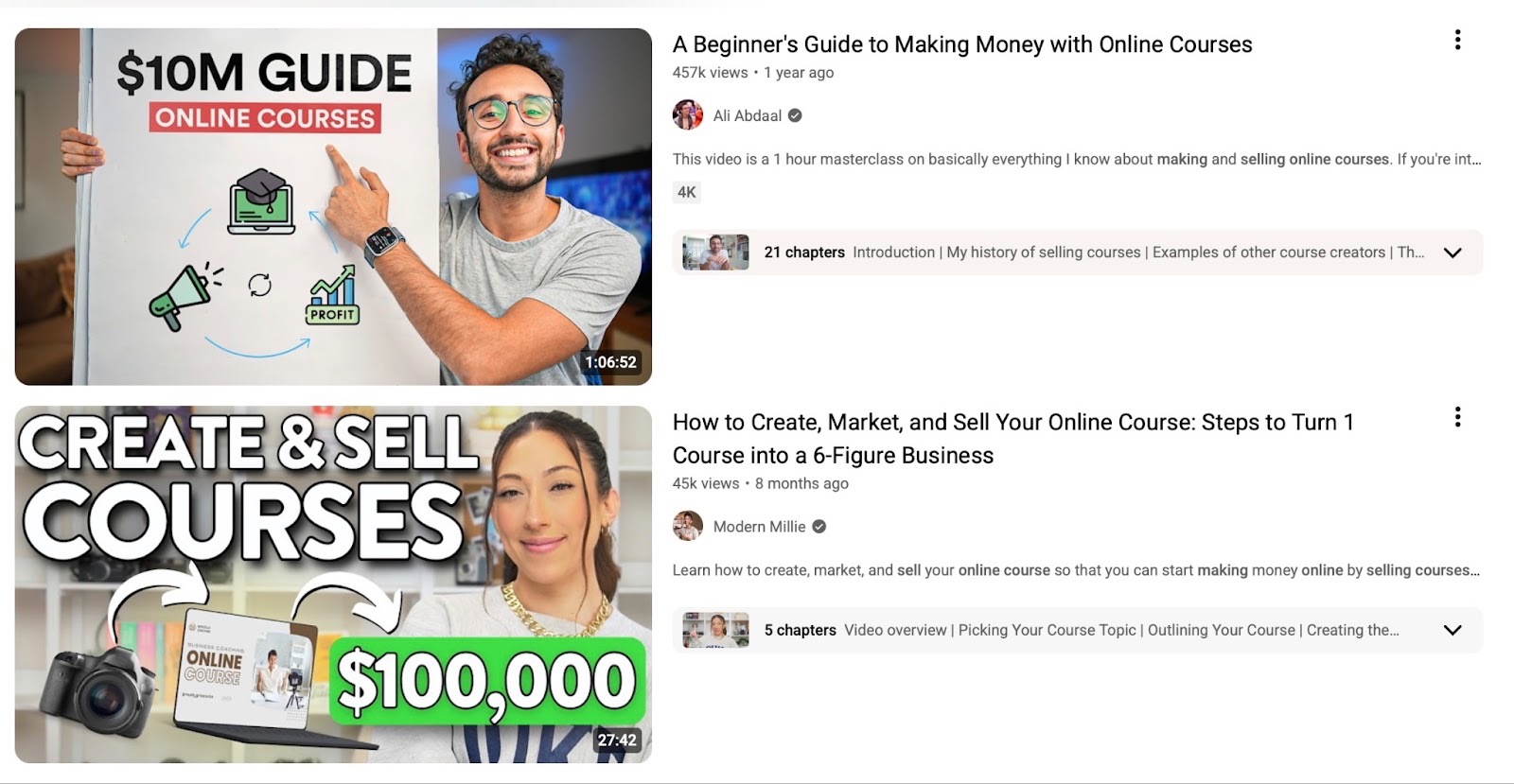
But the challenge is making that course that generates income. And sometimes creators test a dozen ideas before one finally makes them big bucks.
You don't have to suffer like that. That’s why I’ve carefully selected and researched 20 profitable online course ideas that are worth your time.
I’ll also give some pointers about what makes them profitable so you can assess your own ideas. Then I’ll offer some tips and discuss four factors to help you choose the right online course idea.
Let's get into it, shall we?
TL;DR
- A profitable online course idea is one that is in high demand, that teaches practical skills, and is scalable.
- Profitable online course ideas fall into categories, like:
- 1. AI and technology courses
- 2. Digital marketing courses
- 3. Business and entrepreneurship courses
- 4. Creative and design courses
- To choose a profitable online course idea, you should identify your expertise, research market demand, solve a specific problem, and validate the idea.
20 profitable online course ideas
A. AI and technology courses
[fs-toc-omit]1. AI for beginners
In this age of technology, an AI for beginners course is probably one of the best online course ideas. It teaches people the basics of artificial intelligence and how tools like ChatGPT work.
If you understand AI concepts, you can create your own course without needing to teach coding.
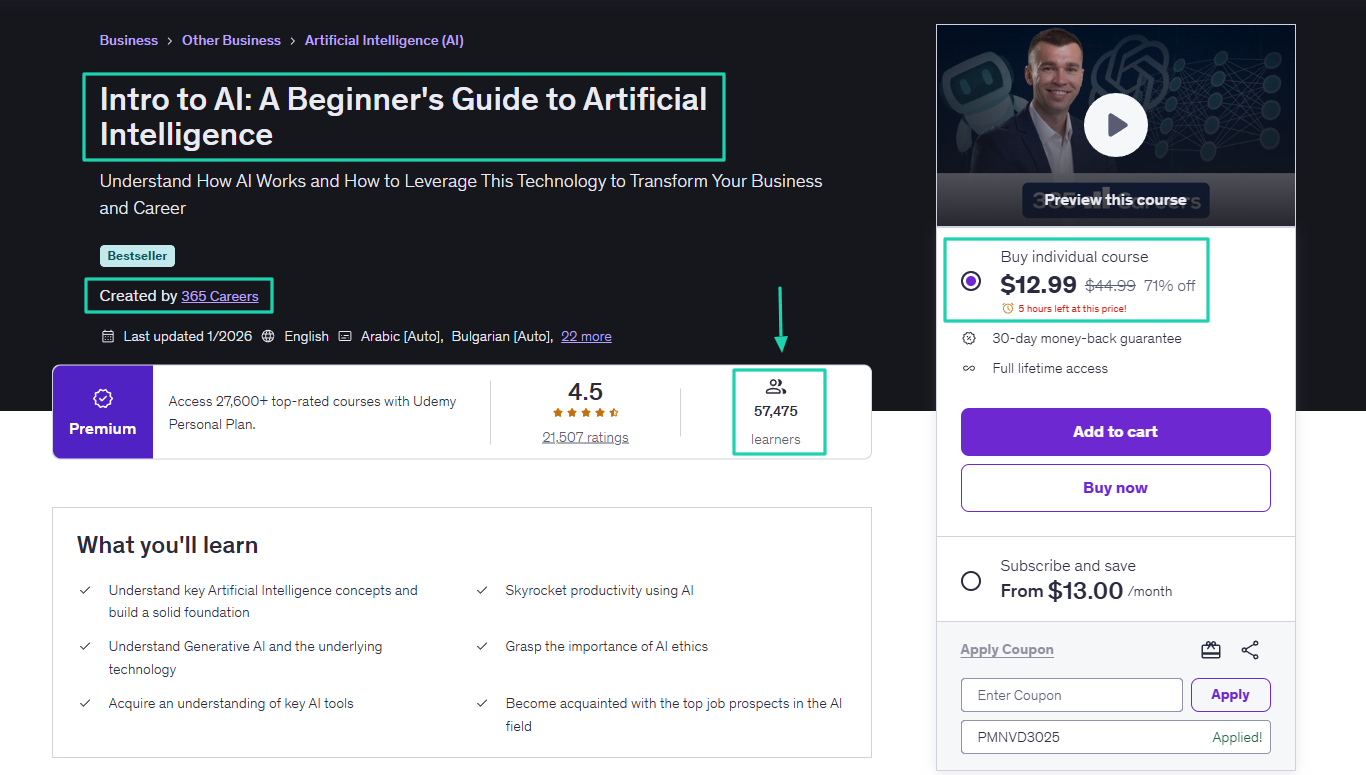
There is this course, “Intro to AI: A Beginner’s Guide to Artificial Intelligence,” created by 365 Careers. It already has 57,475 learners and costs $12.99.
That’s over $700,000 this creator will generate!
- What you need to start: A laptop, AI knowledge, and screen-recording software.
- How much it costs: $0–$200.
- How much you can earn: $1,000–$20,000+ per course launch.
- Time to first revenue: 1–3 months
- Main growth and marketing channels: YouTube, LinkedIn, X (Twitter).
- How to start: Create lessons explaining AI basics, choose a course platform like Easytools to upload to, and promote.
[fs-toc-omit]2. Prompt engineering for AI tools
The way you structure your prompts will determine the results AI tools generate. With prompt engineering, you teach people how to ask AI tools the right questions to get the best results.
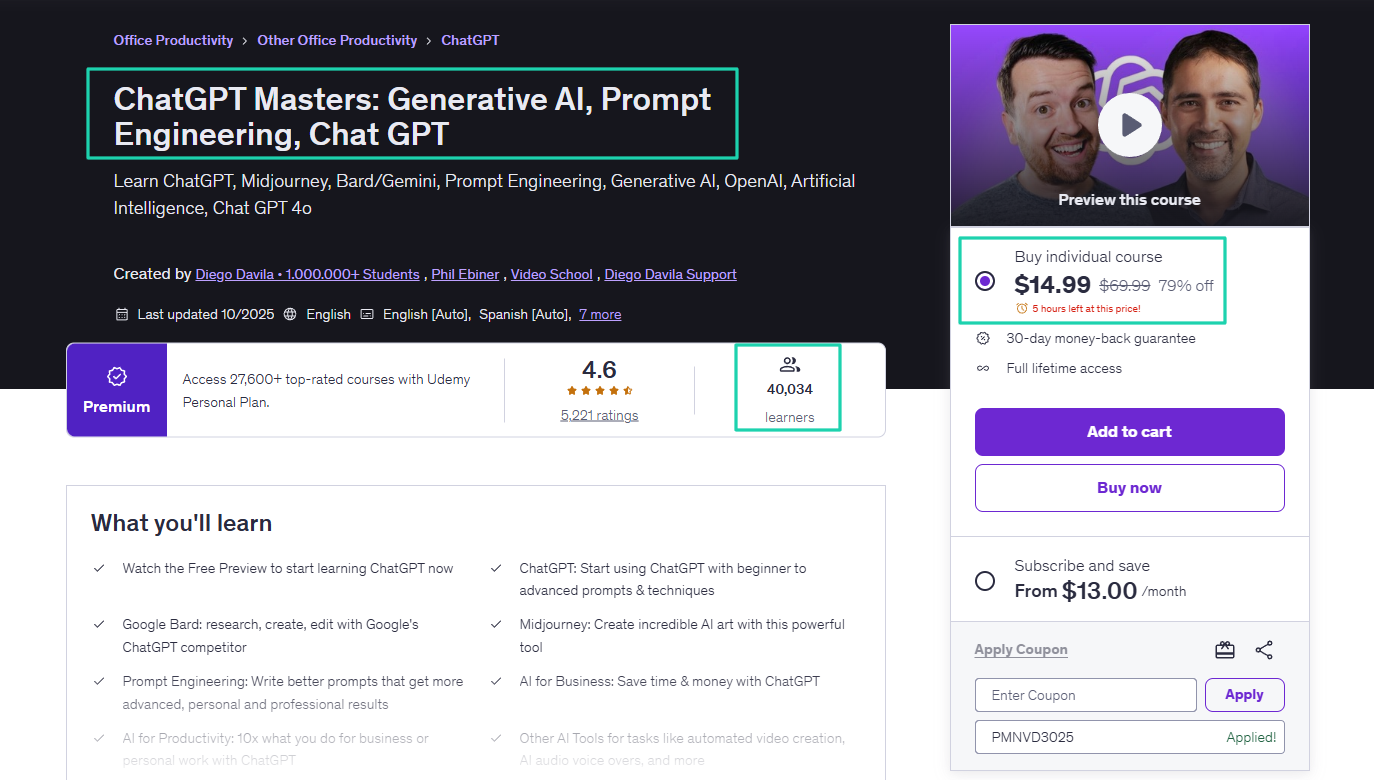
An example is Diego Davilla. He sells ChatGPT Masters on Udemy, an online course that teaches people generative AI and prompt engineering.
The course is at $14.99 and has about 40,034 students enrolled, which translates to over $600,000.
- What you need to start: A laptop and knowledge of AI tools (ChatGPT, Claude, Gemini).
- How much it costs: $0–$100.
- How much you can earn: $500–$20,000+ per launch.
- Time to first revenue: 1–2 months.
- Main growth and marketing channels: X (formerly Twitter), YouTube tutorials, LinkedIn.
- How to start: Create lessons showing different prompt frameworks, upload them to a course platform, and market them.
[fs-toc-omit]3. AI automation for businesses
Businesses want to save time by automating repetitive tasks. Teaching them AI automation is actually showing them how to do so with the help of AI and automation tools.
You can, for example, teach how to automate workflows like creating marketing content, responding to customer emails, or generating reports.
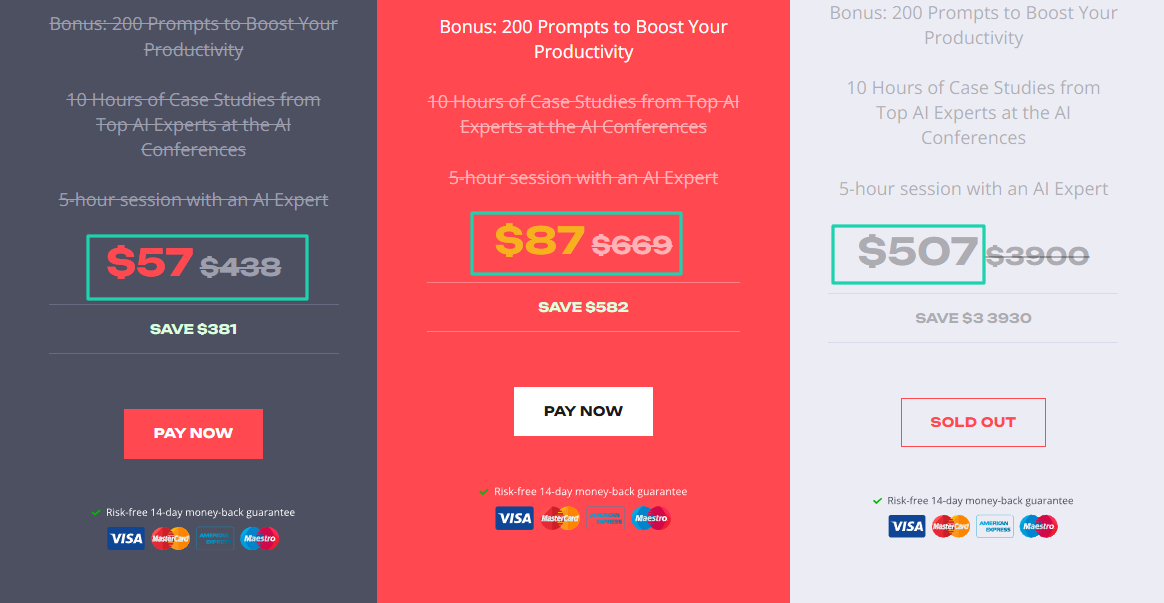
Take the example of AI.ME Academy. They sell an AI automation course called AI For Marketers. They believe this course will teach you how to delegate your marketing routine to AI.
It’s a successful course considering the number of students(1 million).
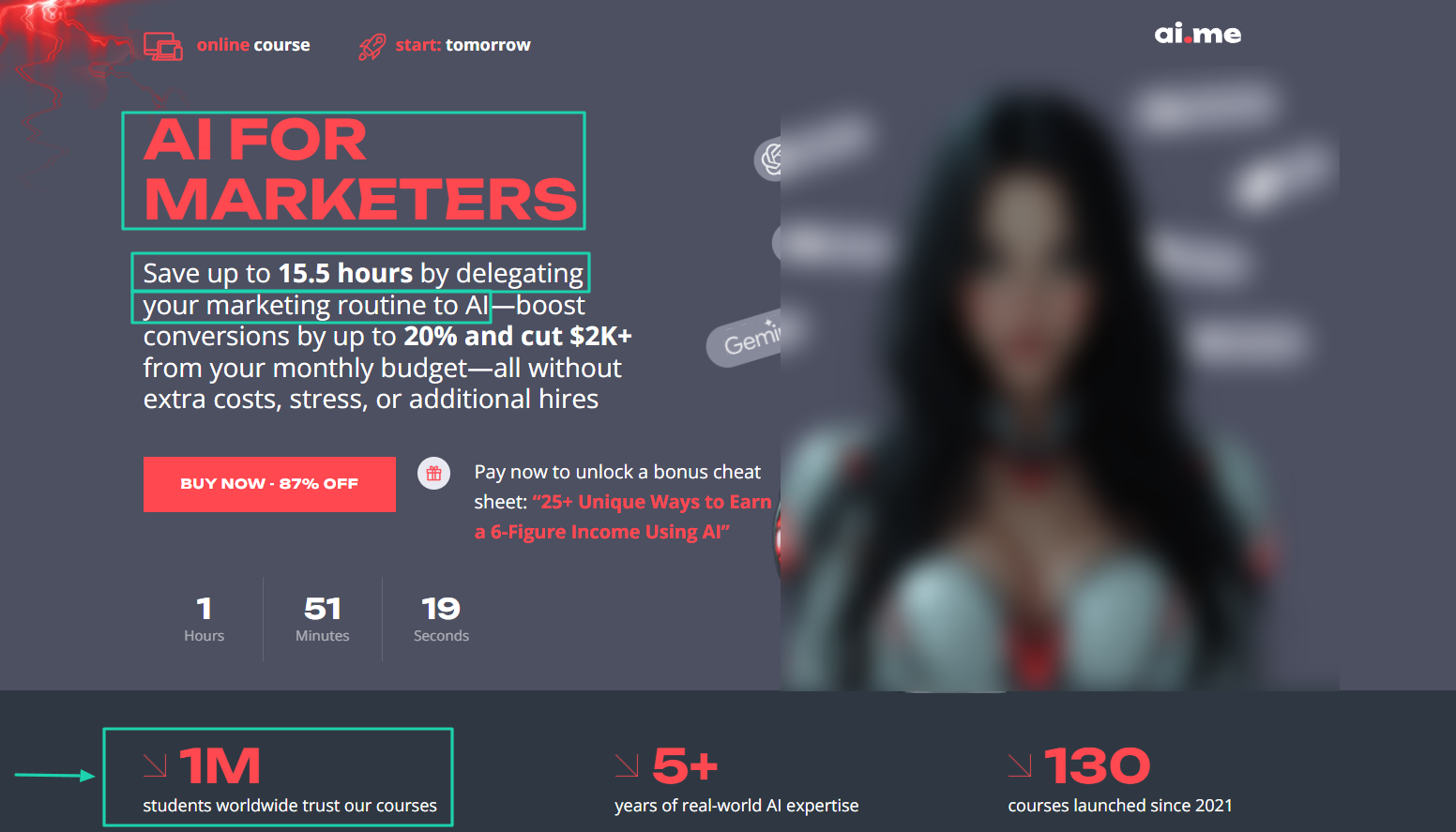
The Academy has three plans for this course, and the highest, which costs $507, is already sold out.
- What you need to start: A laptop and knowledge of AI and automation tools like Zapier, n8n, or Make.
- How much it costs: $0–$150.
- How much you can earn: $2,000–$30,000+ per course launch.
- Time to first revenue: 2–3 months.
- Main growth and marketing channels: YouTube, LinkedIn, webinars
- How to start: Create tutorials showing how businesses can automate simple workflows with AI tools. Then upload them to a course platform like Easytools and promote and market them.
[fs-toc-omit]4. No-code app development
Not everyone is tech-savvy, but that shouldn’t be an issue. You can teach non-technical people how to build apps, websites, or AI agents without writing code.
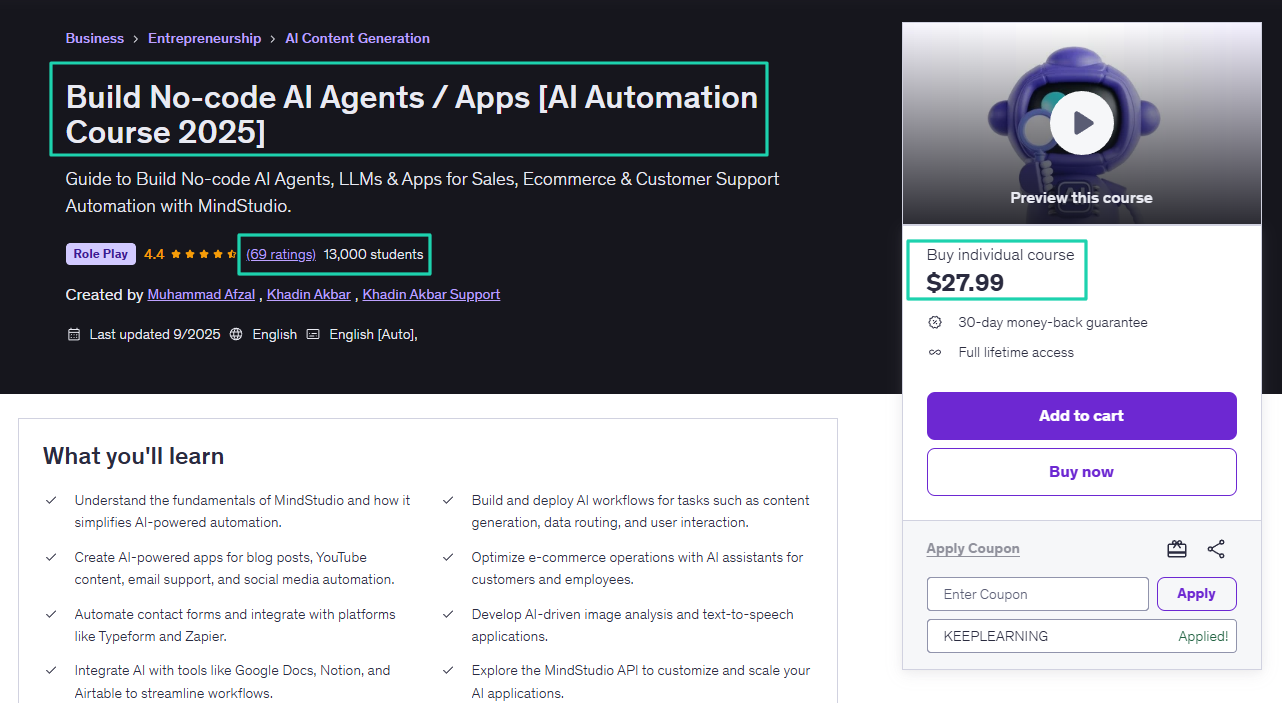
Take the “Build No-Code AI agents and Apps” course on Udemy. Priced at $27.99, it has attracted 13,000 students with 69 ratings.
Looking at those numbers, the course has made over $500,000 in revenue.
- What you need to start: A laptop and knowledge of no-code tools like Bubble, Glide, or Softr
- How much it costs: $50–$200.
- How much you can earn: $2,000–$60,000+ per launch
- Time to first revenue: 2–4 months.
- Main growth and marketing channels: YouTube, newsletters, Product Hunt, and LinkedIn.
- How to start: Create a course showing how to build simple apps using drag-and-drop tools, and use all the marketing channels to promote it.
[fs-toc-omit]5. Cybersecurity basics for small businesses
Small businesses are likely to fall victim to cyberattacks because they remain vulnerable and don’t understand basic cybersecurity principles.
That’s why it’s profitable to create a course teaching them how to protect their websites, customer data, and internal systems.
The National Cybersecurity Alliance does this.
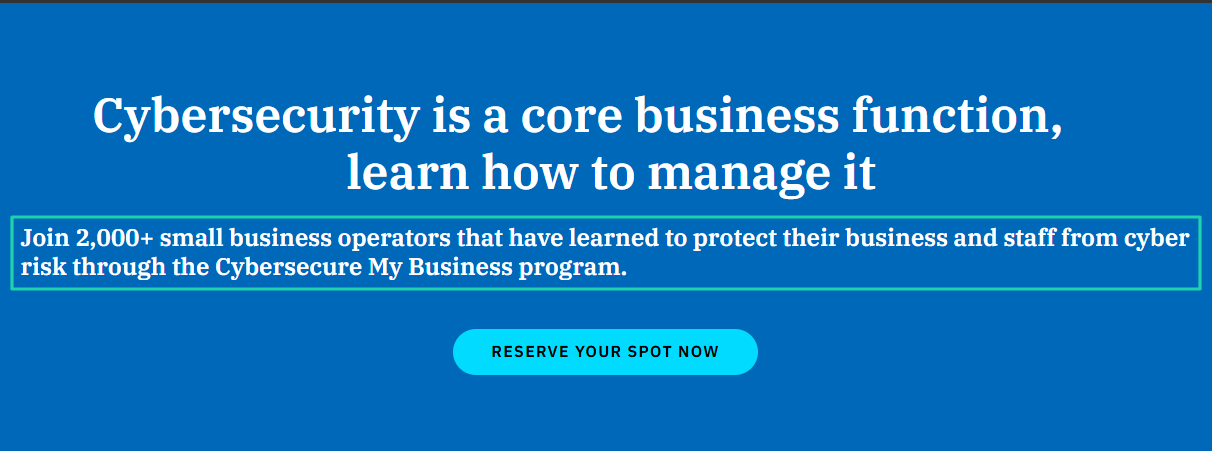
It teaches 2,000+ small business operators how to protect their business and staff from cyber risk through their course “Cybersecure My Business program”.
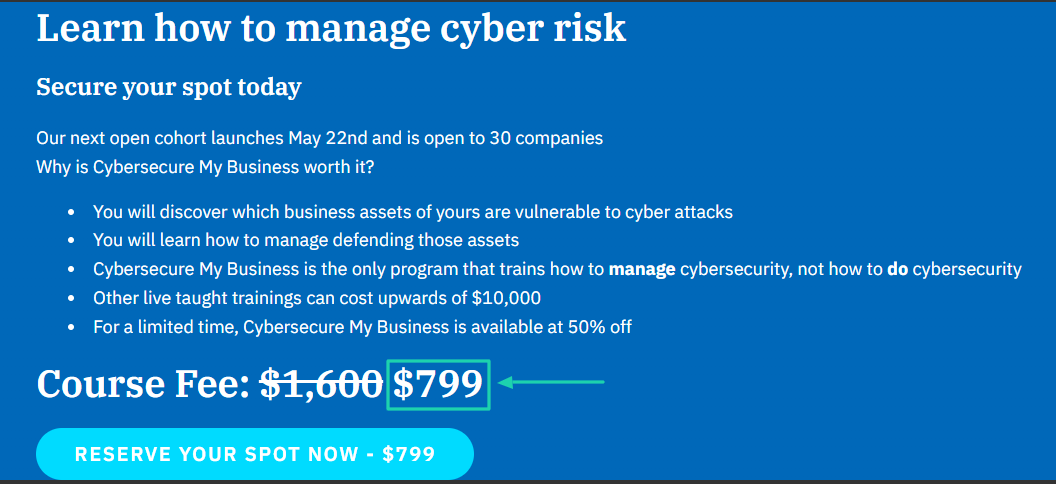
The course was previously priced at $1,600 but now costs $799. And all these small businesses are still willing to pay for it.
- What you need to start: A laptop and cybersecurity skills.
- How much it costs: $0–$200.
- How much you can earn: $1,000–$30,000+ per course launch.
- Time to first revenue: 2–3 months.
- Main growth and marketing channels: LinkedIn, webinars, and YouTube.
- How to start: Teach simple cybersecurity practices that small businesses can implement immediately, create a website, upload your course, and promote it.
B. Digital marketing courses
[fs-toc-omit]6. SEO for beginners
First, SEO stands for Search Engine Optimization. Teaching this as a beginner course means showing people how to drive traffic from Google.
They can learn concepts like keyword research, writing optimized content, building backlinks, and more.
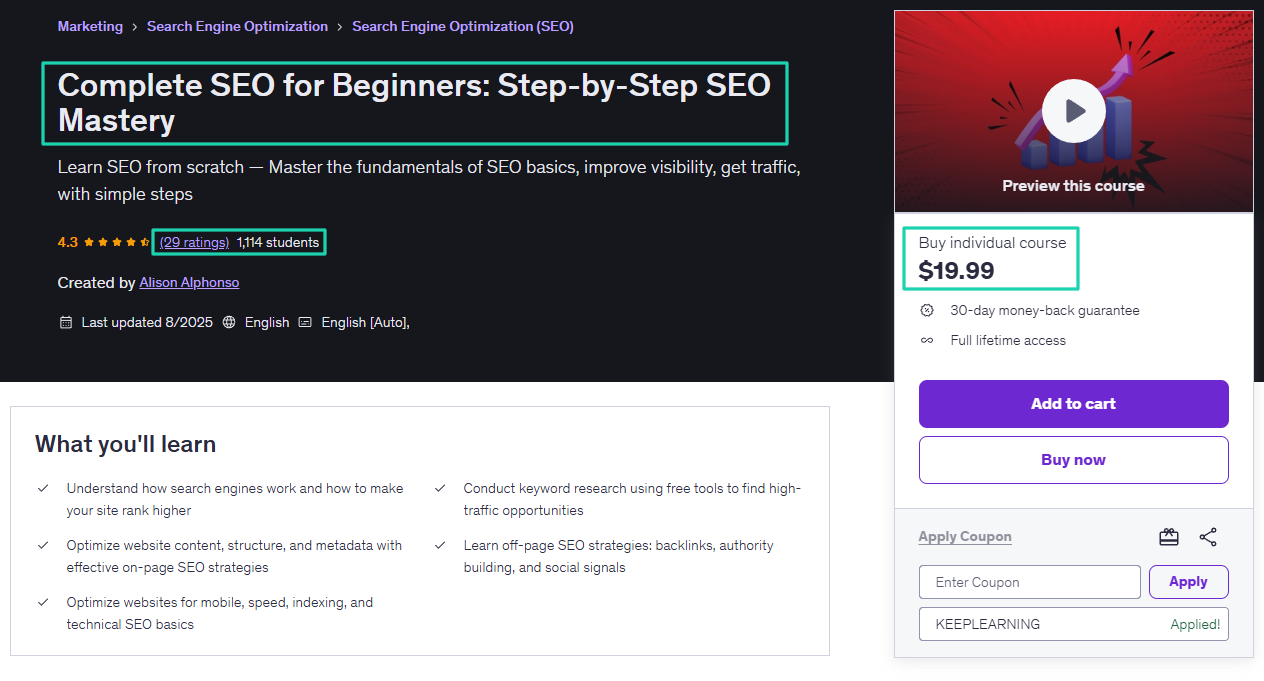
Alison Alphonso’s SEO course on Udemy has 1,114 students with 29 ratings. It’s a complete SEO course for beginners that covers the fundamentals of SEO, including how to improve visibility and get traffic.
The course costs $19.99. If you do the math, Alison has so far earned over $22,000.
- What you need to start: A laptop, SEO skills, and tools (Google Search Console, Semrush, or Ahrefs).
- How much it costs: $0–$200.
- How much you can earn: $1,000–$20,000+ per course launch.
- Time to first revenue: 1–3 months.
- Main growth and marketing channels: YouTube, blogging, and SEO.
- How to start: Teach keyword research, on-page SEO, and how to rank articles on Google. Then use a course platform like Easytools to upload your course and promote it.
[fs-toc-omit]7. Content marketing strategy
People and businesses need more customers. To attract those customers, they need a great content marketing strategy.
This is a great online course idea! You can teach them how to create helpful content such as blog posts, videos, or guides.
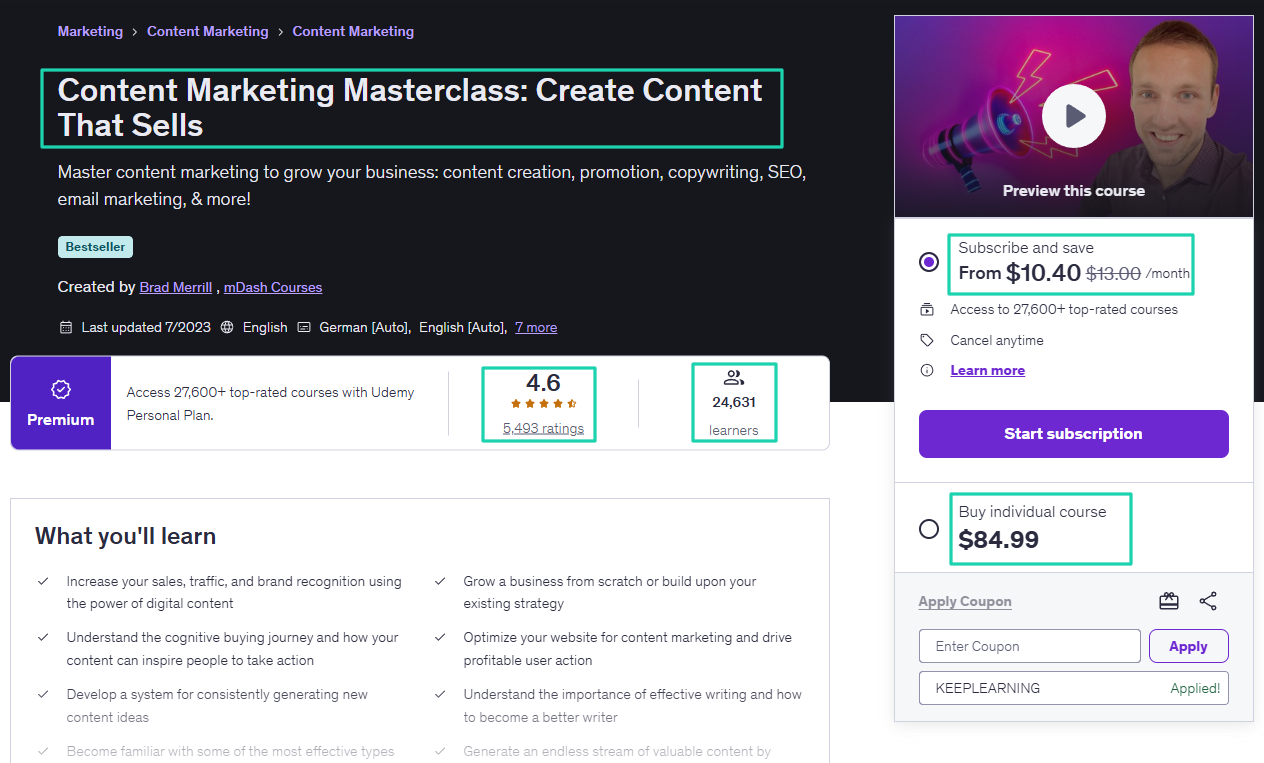
So, like Brad Merrill, you can teach people to create content that sells. This got him 24,631 students and 5,493 ratings.
To access his course, Brad offers a monthly subscription for $10.40 or a one-time payment of $84.99.
While the subscription generates over $250,000, she makes $2M+ with the one-time payment. It’s highly profitable!
- What you need to start: Laptop, writing tools, proven examples of successful content strategies, and analytics software.
- How much it costs: $0–$150.
- How much you can earn: $1,000–$10,000+ per launch.
- Time to first revenue: 1–2 months.
- Main growth and marketing channels: LinkedIn, blogging, and newsletters.
- How to start: Create lessons explaining content planning, SEO, and distribution strategies. Then market and promote them.
[fs-toc-omit]8. Social media marketing for businesses
If you’re already good at growing an audience on social media, you can create a course out of it.
You will teach businesses how to grow their audiences and drive sales through platforms like Instagram, TikTok, and LinkedIn.
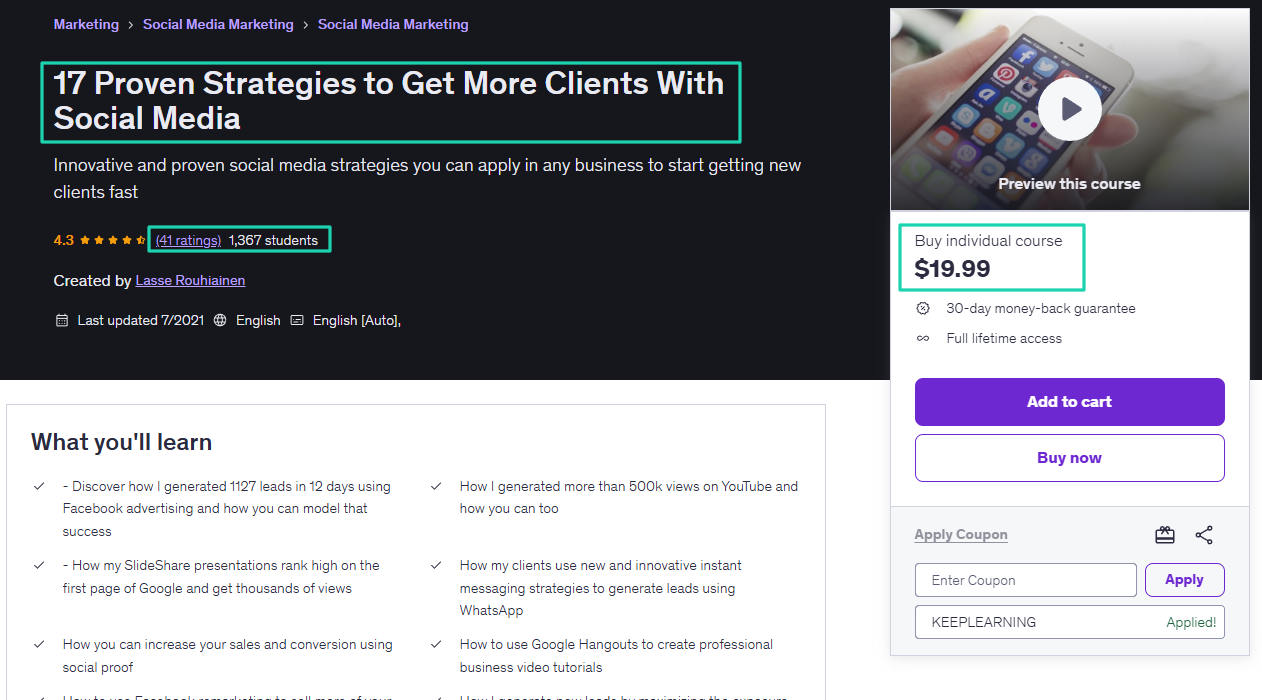
That’s what Lasse Rouhiainen did with his course “17 Proven Strategies to Get More Clients With Social Media”. It costs $19.99 and has 1,367 students with 41 reviews.
Considering these numbers, Lasse has made $27,000+ so far.
- What you need to start: A laptop, successful social media marketing strategies, and analytics tools.
- How much it costs: $0–$300.
- How much you can earn: $1,000–$30,000+ per launch.
- Time to first revenue: 1–2 months.
- Main growth and marketing channels: Instagram, LinkedIn, TikTok.
- How to start: Teach businesses how to create content, grow followers, and convert them into customers, create a landing page, and promote your course.
[fs-toc-omit]9. Email marketing mastery
This course teaches people how to build an email list and send messages that turn subscribers into customers. They’ll learn how to send promotional emails, for example, or create newsletters.
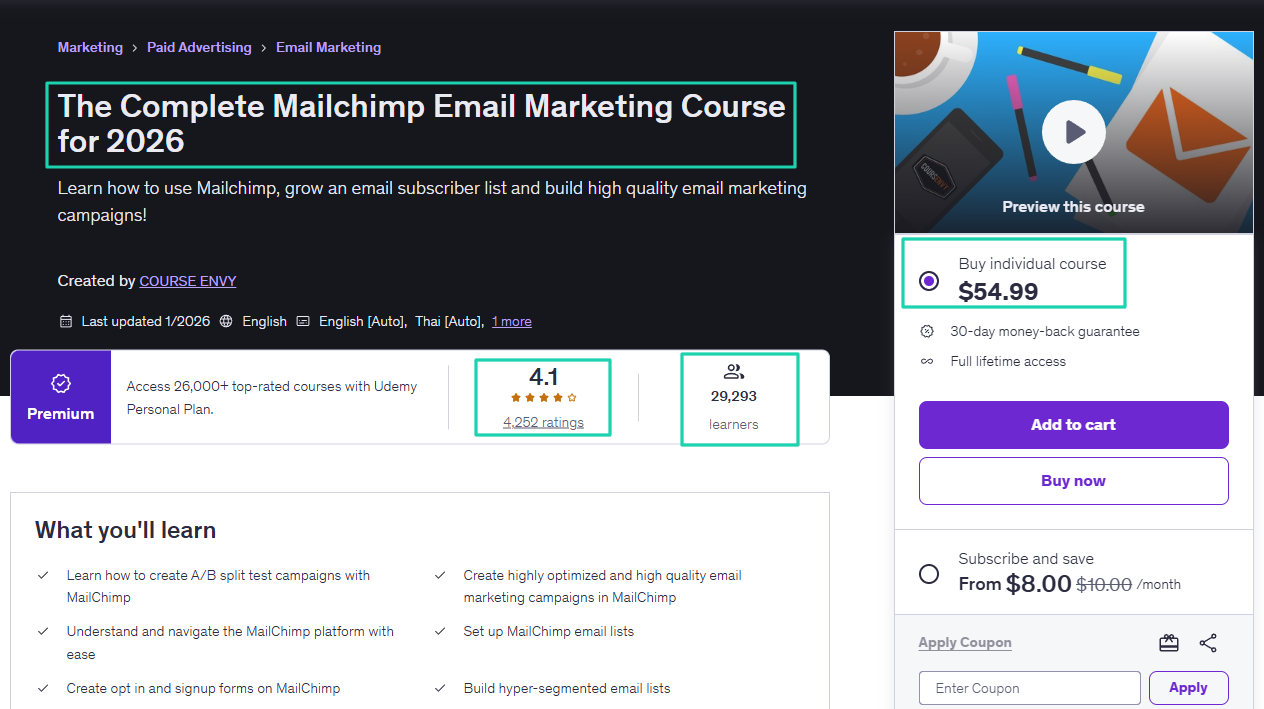
If you master a tool like Mailchimp, you can create a course around it and sell it as COURSE ENVY did in Udemy.
The course is sold at $54.99, has over 4,000 ratings, and has 29,293 students.
- What you need to start: A laptop and email tools like Mailchimp or ConvertKit.
- How much it costs: $0–$250.
- How much you can earn: $2,000–$20,000+ per launch.
- Time to first revenue: 1–2 months.
- Main growth and marketing channels: YouTube, LinkedIn, and newsletters.
- How to start: Teach list building, email sequences, and marketing automation, and use all the marketing channels at your disposal.
[fs-toc-omit]10. Affiliate marketing for beginners
One way people can make money is through affiliate marketing. But many don’t know where to start.
With this online course idea, you can teach them how to promote other companies’ products and earn a commission on every sale they generate.
Take this beginner affiliate marketing course on Coursera created by Priyanka Mehta. About 4,550 have already enrolled, even though the course hasn’t been launched yet.
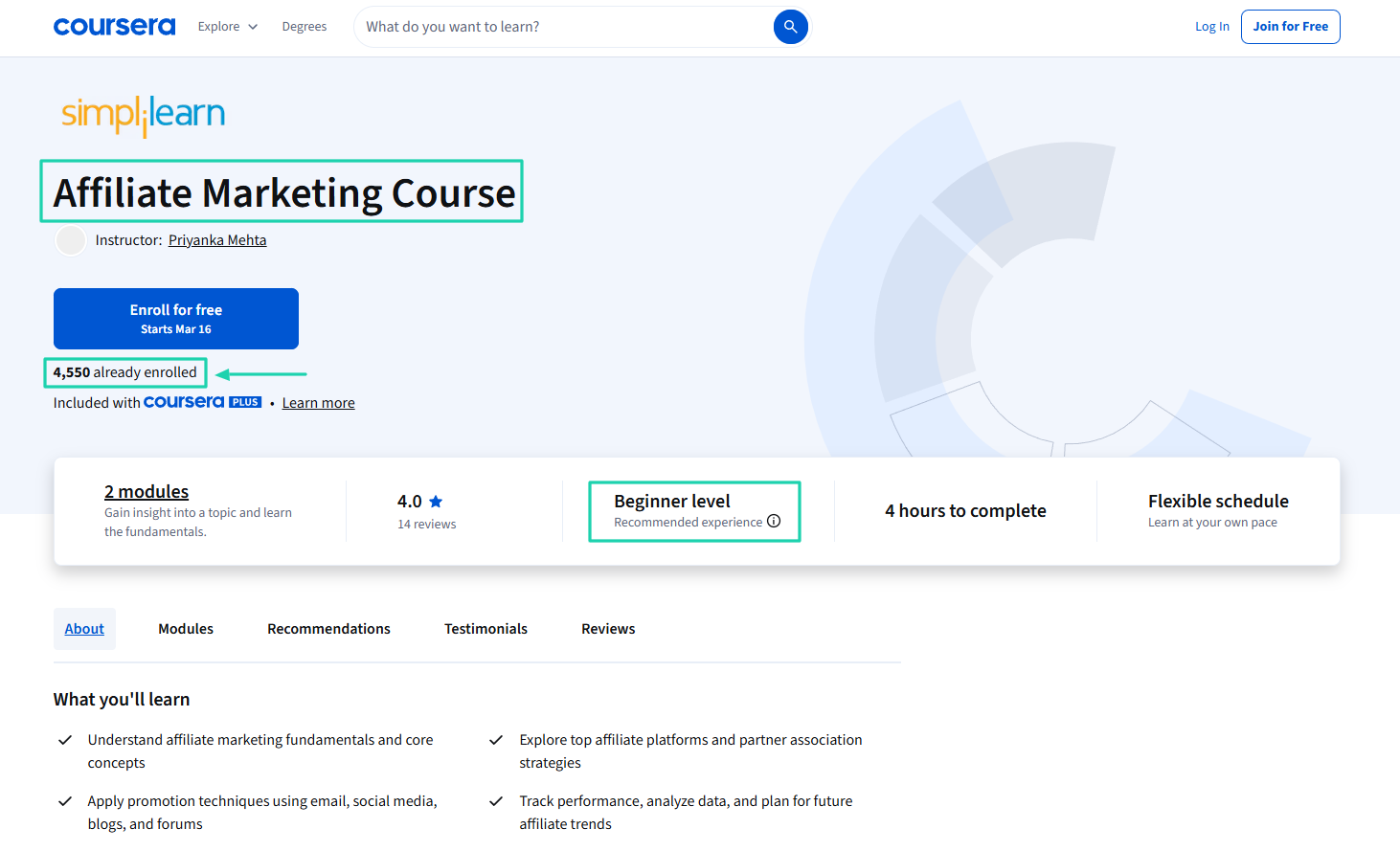
This shows the demand is huge!
- What you need to start: A laptop, a website, or a strong presence on social media, and knowledge in affiliate marketing.
- How much it costs: $0–$100
- How much you can earn: $500–$10,000+ per launch.
- Time to first revenue: 3 weeks–2 months
- Main growth and marketing channels: Blogging, YouTube, and email marketing.
- How to start: Teach how affiliate links work, how to pick products, and how to promote them ethically. Upload your course to Easytools. Then promote it!
C. Business and entrepreneurship courses
[fs-toc-omit]11. How to start an online business
Starting an online business means building a company that operates primarily online. You can sell products, services, or other digital goods, like e-books and guides.
You can teach beginners how to bring their ideas to life, choose a target market, set up a website, and make their first sale.
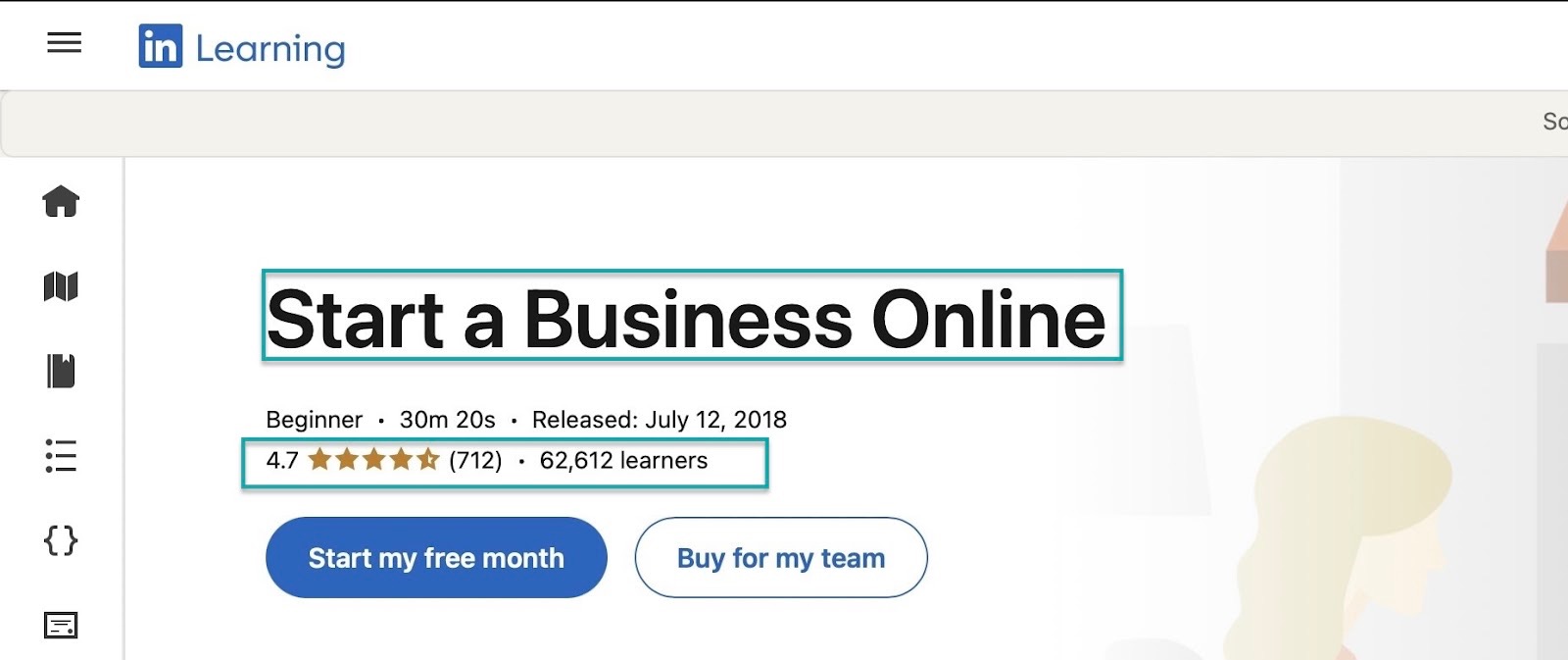
Blogger, entrepreneur, and author Naomi Simson has an online course like this on LinkedIn Learning.
It’s titled “Start a Business Online,” has a 4.7-star rating with 712 reviews, and has had 62,612 learners so far.
- What you need to start: A laptop, a camera, a microphone, screen-recording software, a course platform (like Easytools), and experience launching an online business.
- How much it costs: $0–$200+ if you already own basic equipment
- How much you can earn: $500–$5,000+/month
- Time to first revenue: 2–6 weeks
- Main growth and marketing channels: YouTube, LinkedIn, email newsletters
- How to start: Create a beginner outline that covers brainstorming ideas through the first sale. Then turn each stage into course modules.
[fs-toc-omit]12. Dropshipping and e-commerce fundamentals
Dropshipping is an e-commerce business model where you sell products online without maintaining a physical inventory.
Because it doesn’t require much capital to get started, dropshipping remains one of the most sought-after online course ideas.
So you can easily plug into this idea to teach students how to research products, choose suppliers, build a store, and market products using platforms like Easytools.
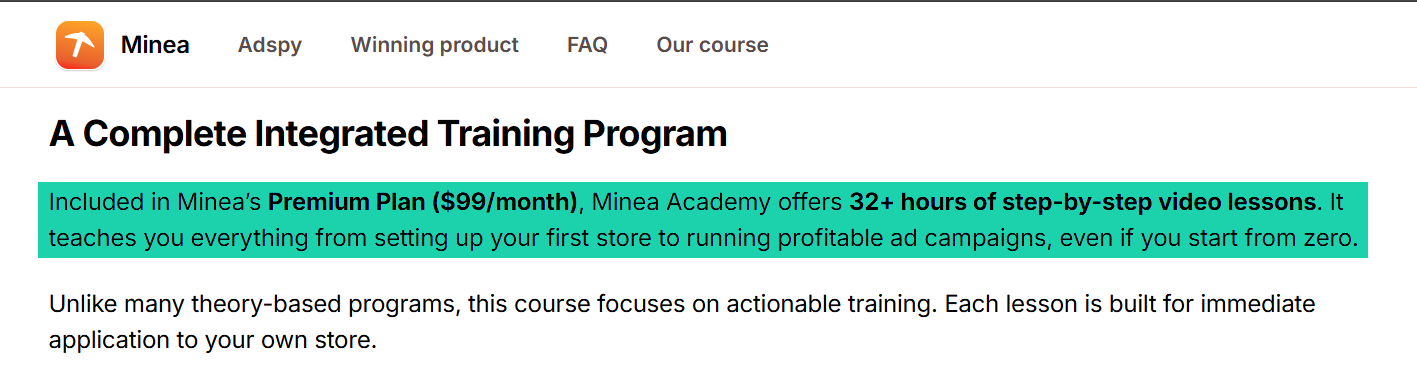
Platforms like Minea have created educational content on dropshipping, offering training and courses for entrepreneurs.
Minea offers it as part of its Premium Plan because the platform knows this online course idea is in high demand.
- What you need to start: A laptop, a camera, a microphone, slide presentation tools, and a course platform
- How much it costs: $50–$300
- How much you can earn: $1,000–$10,000+
- Time to first revenue: 1–2 months
- Main growth and marketing channels: TikTok, YouTube, LinkedIn
- How to start: Create modules, from product research to launching and marketing your store
[fs-toc-omit]13. Freelancing for beginners
Freelancing is the practice of offering services independently rather than working for a single employer.
According to Upwork, 58% of workers are considering switching to freelancing. So there’s a large market of people actively looking to learn how to get started.

You can teach beginners how to identify profitable skills, build a portfolio, price services, and find their first customers.
- What you need to start: A laptop, webcam, document creation software, templates, and a course platform.
- How much it costs: $0–$150
- How much you can earn: $500–$5,000+
- Time to first revenue: One month
- Main growth and marketing channels: LinkedIn, YouTube, and X.
- How to start: Develop a course outline on topics like building portfolios, pricing work, and marketing.
[fs-toc-omit]14. Personal branding for entrepreneurs
Personal branding is the process of building a recognizable and positive reputation around your personality.
It’s an especially useful course to teach, as entrepreneurs are increasingly relying on online platforms to attract more business opportunities.
With this online course idea, you can teach creators to develop a unique voice, create consistent content, and build trust with their audience.
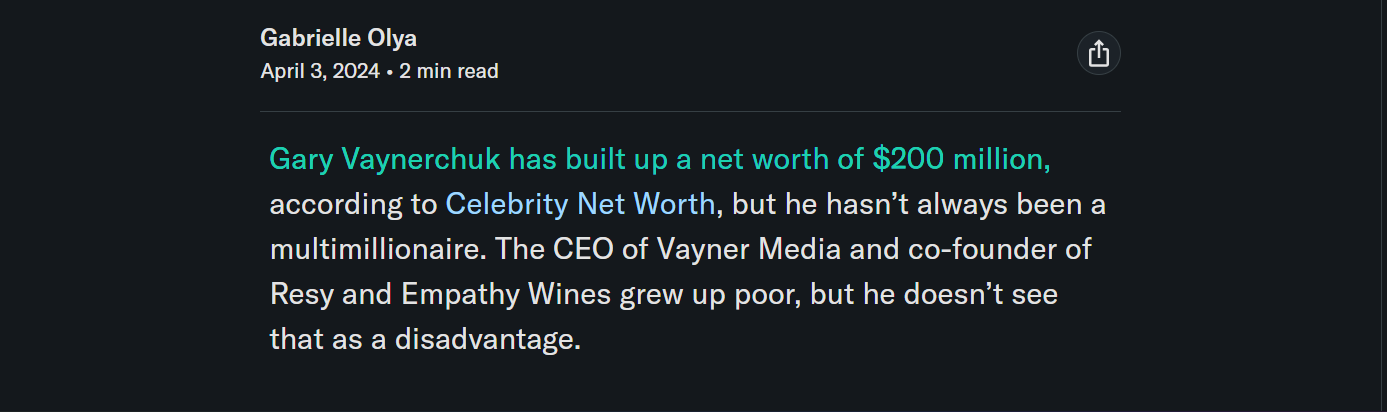
Take Gary Vaynerchuk. He commercialized his personal branding strategy so others can hire his teams to replicate it.
He has built a massive personal branding empire, amassing a reported net worth of $200 million.
- What you need to start: A laptop, content planning tools, slide software, and a course hosting platform
- How much it costs: $0–$500
- How much you can earn: $1,000–$20,000+
- Time to first revenue: 2–3 months
- Main growth and marketing channels: LinkedIn, Instagram, X, podcasts, YouTube
- How to start: Have a niche positioning, create modules
[fs-toc-omit]15. Financial literacy for entrepreneurs
Financial literacy is learning how to manage money, track expenses, and make smart financial decisions.
For entrepreneurs, it’s an important skill to have, making it one of the most useful online course ideas you can teach. And there are several topics to choose from, including budgeting, cash flow management, and basic accounting.
Take finance influencer, Humphrey Yang, for example. He has built a massive audience of more than 54 million followers across platforms like Instagram and TikTok.

This shows how strong the demand is for accessible financial knowledge.
- What you need to start: A laptop, a microphone, spreadsheets or finance templates, and a course platform
- How much it costs: $0–$200
- How much you can earn: $1,000–$10,000+
- Time to first revenue: 3–6 weeks
- Main growth and marketing channels: LinkedIn, YouTube, podcasts, X, TikTok
- How to start: Create lessons around budgeting, pricing strategies, taxes, and cash flow
D. Creative and design courses
[fs-toc-omit]16. Graphic design for beginners
Graphic design is the creation of visual content, like logos, social media graphics, presentations, and marketing materials.
It’s one of the most practical online course ideas for creative professionals, especially because businesses and creators always need visual content.
You can teach several areas of graphic design, including typography, layout, and creating professional graphics.
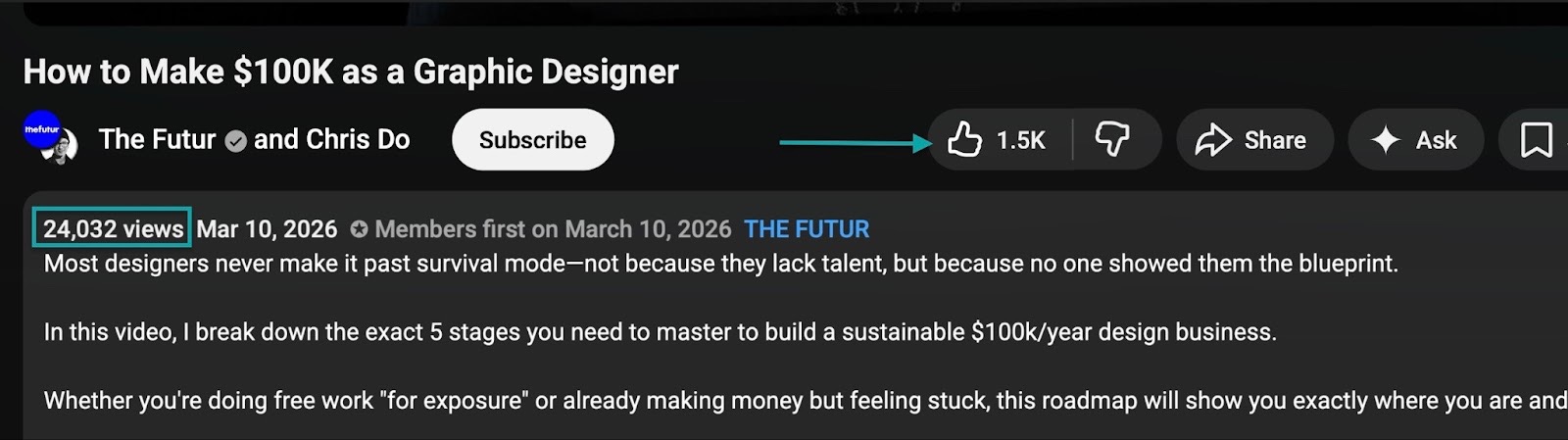
For example, Emmy-award-winning director and designer Chris Do launched his online education platform “The Futur” in 2016.
It offers courses for designers and creators who want to build businesses. He even has a YouTube video that teaches how to make $100,000 as a graphic designer.
The video is 46:56 minutes long and has 24,000+ views and 1,000+ likes so far.
- What you need to start: Laptop, design software (like Canva or Adobe tools), presentation slides, and a course platform like Easytools
- How much it costs: $0–$200, depending on the software used
- How much you can earn: $1,000–$10,000+
- Time to first revenue: 3–6 weeks
- Main growth and marketing channels: YouTube, Instagram, design communities
- How to start: Build lessons around design basics and develop a content plan for your channels
[fs-toc-omit]17. Video editing for social media creators
Video editing involves turning raw footage into engaging content by adding effects and music.
With short-form video taking over platforms like TikTok and Instagram, it has become one of the most useful skills.
This online course idea can teach beginners how to edit videos quickly, add captions, use transitions, and optimize content for social media platforms.
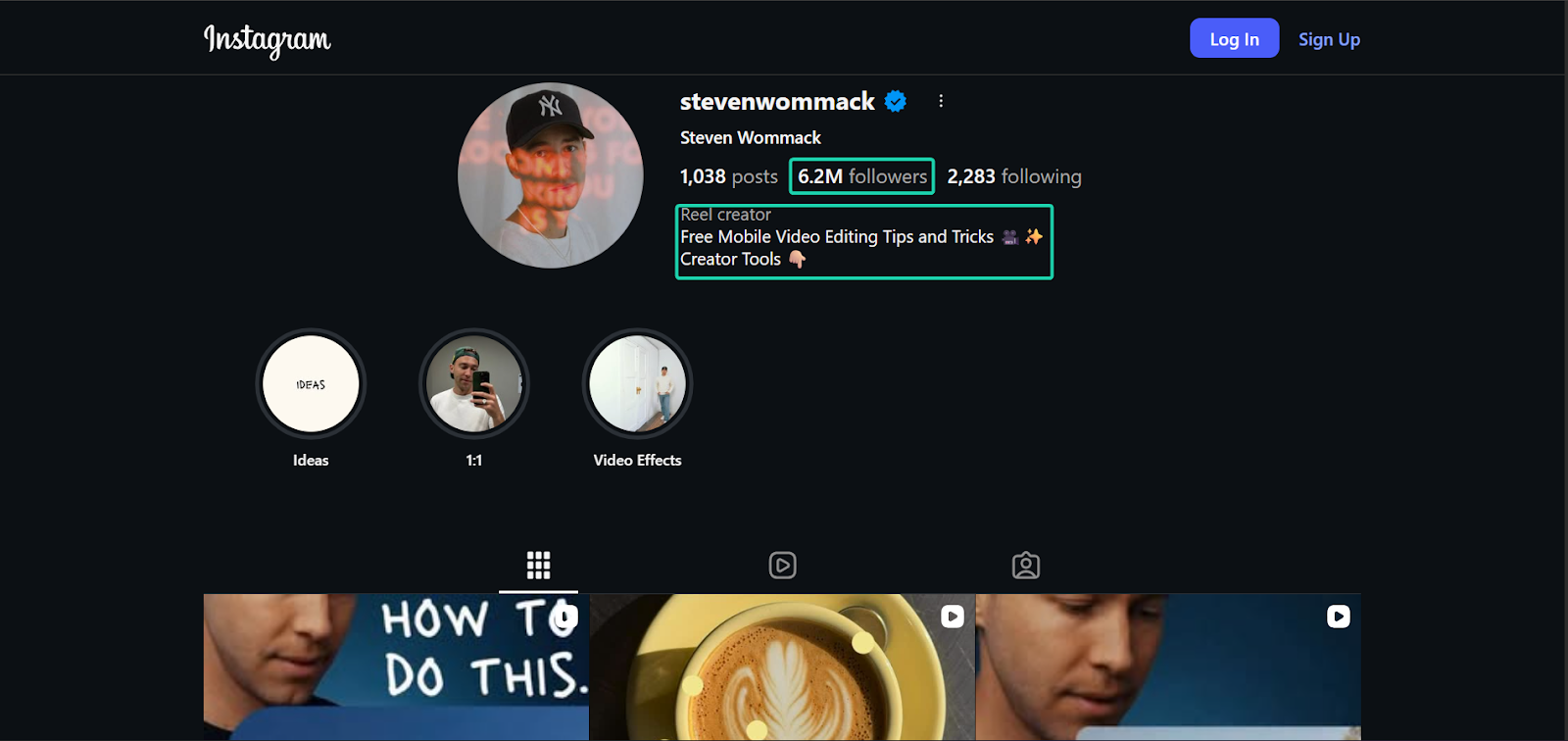
Steven Wommack, for example, has built a big audience by teaching these skills. He’s gained over 6M+ Instagram followers by sharing simple video editing tips.
- What you need to start: A laptop, a mobile phone, editing software (like CapCut or Premiere Pro), a microphone, and sample video files.
- How much it costs: $0–$250
- How much you can earn: $1,000–$15,000+
- Time to first revenue: 2–8 weeks
- Main growth and marketing channels: YouTube, TikTok, Instagram, creator communities
- How to start: Create modules covering editing basics and storytelling. Purchase video editing software.
[fs-toc-omit]18. Photography for content creators
As social media and digital marketing become more popular, learning how to take high-quality photos has become an increasingly valuable skill.
If you’re an expert in photography, you can use this online course idea to teach creators how to shoot professional photos for social media, products, and personal brands using simple equipment and editing techniques.
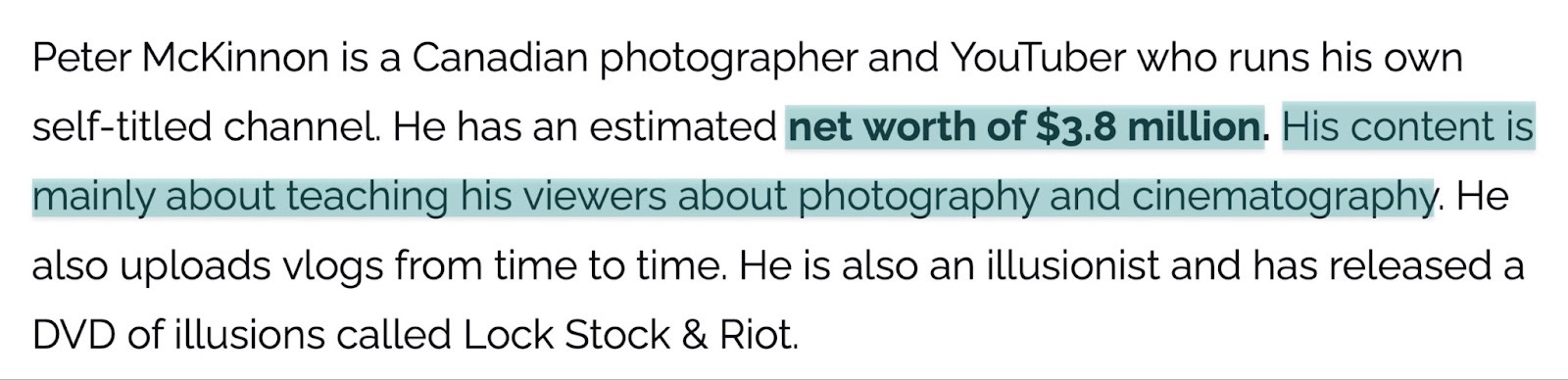
Photography content creator Peter McKinnon has an estimated net worth of $3.8 million from various income streams, including YouTube.
- What you need to start: Camera or smartphone, tripod, lighting setup, laptop, photo editing software, and a course platform like Easytools
- How much it costs: $0–$500+
- How much you can earn: $1,000–$12,000+
- Time to first revenue: 3–8 weeks
- Main growth and marketing channels: Instagram, YouTube, photography communities
- How to start: Purchase camera equipment, photo editing software, and build lessons around topics like lighting, editing, and shooting.
[fs-toc-omit]19. YouTube channel growth strategy
You can also create online courses on YouTube channel growth strategies.
Basically, that includes how to create content that attracts viewers, ranks in search, and keeps audiences engaged.
With this online course idea, you can teach topics like content strategy, creating compelling thumbnails, audience retention, and YouTube analytics.
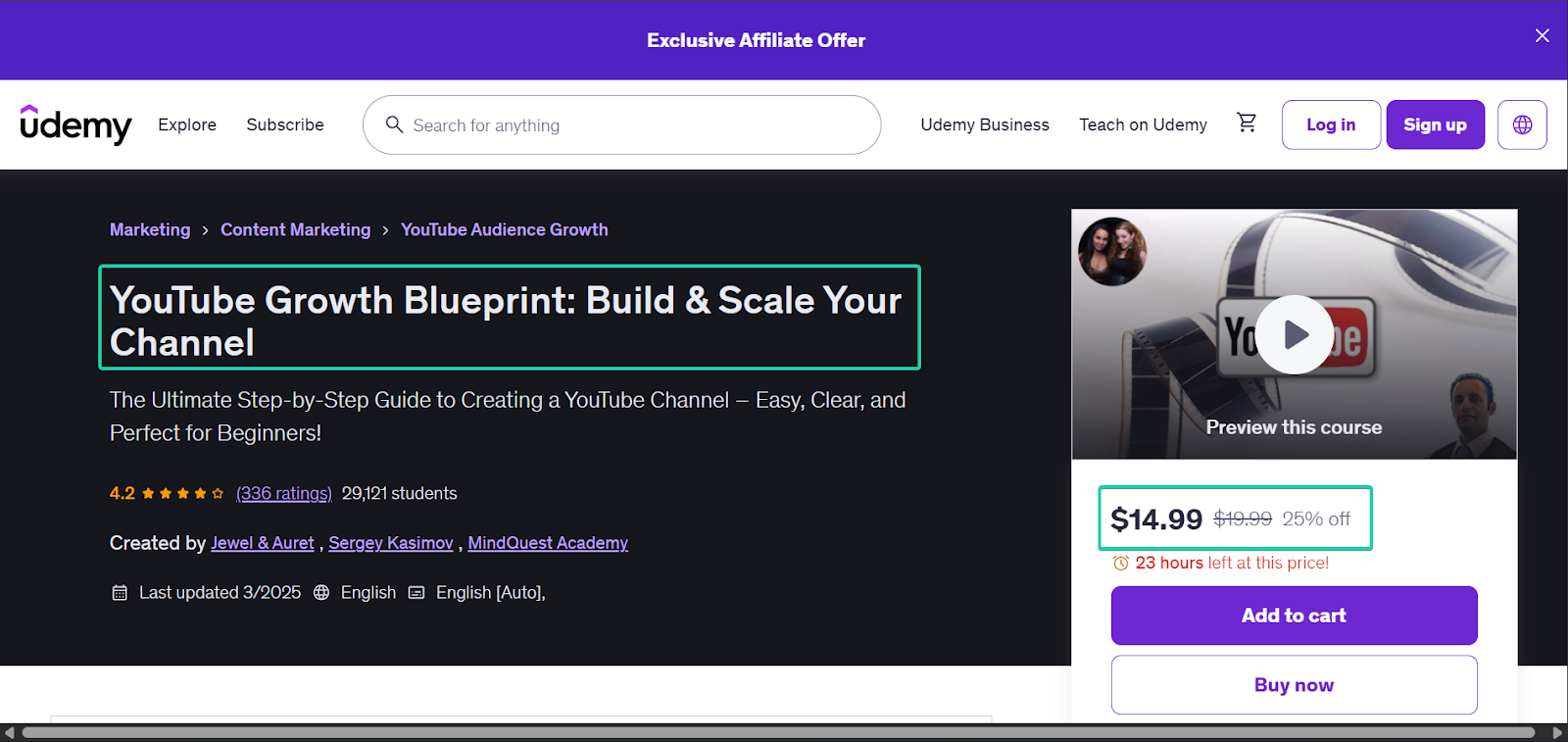
This Udemy course on YouTube growth sells for $19.99 and has attracted over 20,000 students.
That’s likely above $400,000 in potential revenue.
- What you need to start: Laptop, camera or smartphone, microphone, editing software, presentation slides
- How much it costs: $0–$300
- How much you can earn: $1,000–$25,000+
- Time to first revenue: 4–8 weeks
- Main growth and marketing channels: YouTube, X
- How to start: Develop a course outline, purchase software, and other equipment
[fs-toc-omit]20. Podcast creation and monetization
Podcasting is creating audio content around a specific topic and distributing it on platforms like Spotify or Apple Podcasts.
You can teach beginners how to plan episodes, record high-quality audio and video content, distribute podcasts, and how to monetize through sponsorships or ads.
Platforms like Podcraft Academy show the demand for this skill. It offers podcasting courses priced from $55 to $595, depending on the plan.
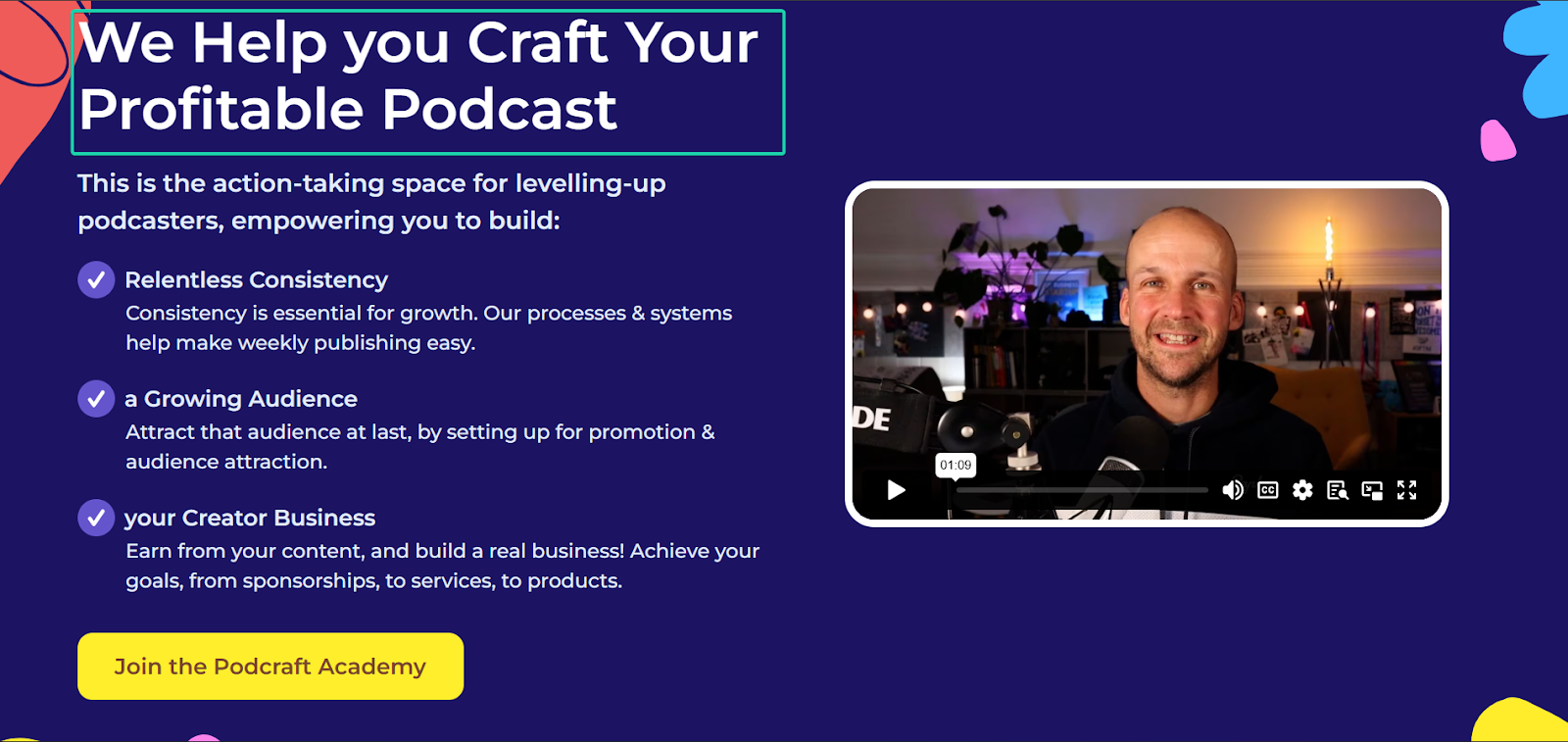
This helps aspiring podcasters learn how to build and grow successful shows.
- What you need to start: A laptop, a microphone, headphones, audio recording software, a podcast hosting platform, and a course platform.
- How much it costs: $50–$300
- How much you can earn: $1,000–$20,000+
- Time to first revenue: 4–8 weeks
- Main growth and marketing channels: YouTube, website
- How to start: Prepare a course outline, purchase equipment, and software
Now, that's out of the way. I’m sure you have a couple of questions.
Maybe you’d like to know what makes online courses profitable. Well, here goes.
What makes an online course profitable?
Profitable online courses:
- Have market demand
- Skill relevance
- Are scalable
Here’s what I mean.
a. Market demand
Online courses that solve real problems have a market demand. One creator that comes to mind is Marie Poulin.
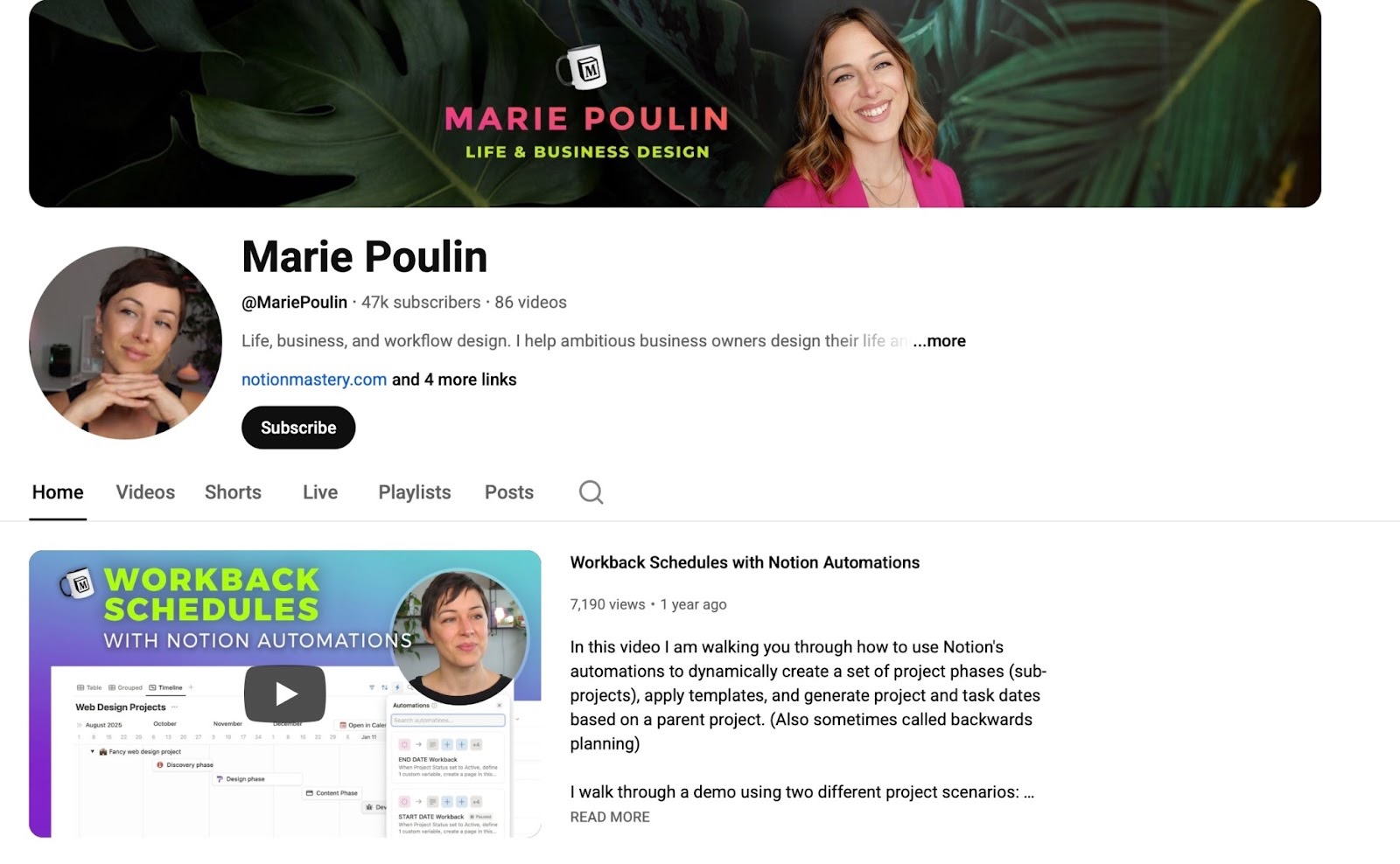
She discovered Notion in 2018. She found the software was quite helpful, so she started sharing tips and tricks on YouTube.
She then received requests (demand) from her YouTube subscribers for a course. So she created Notion Mastery.
The course teaches people how to use Notion to manage tasks, documents, and workflows.
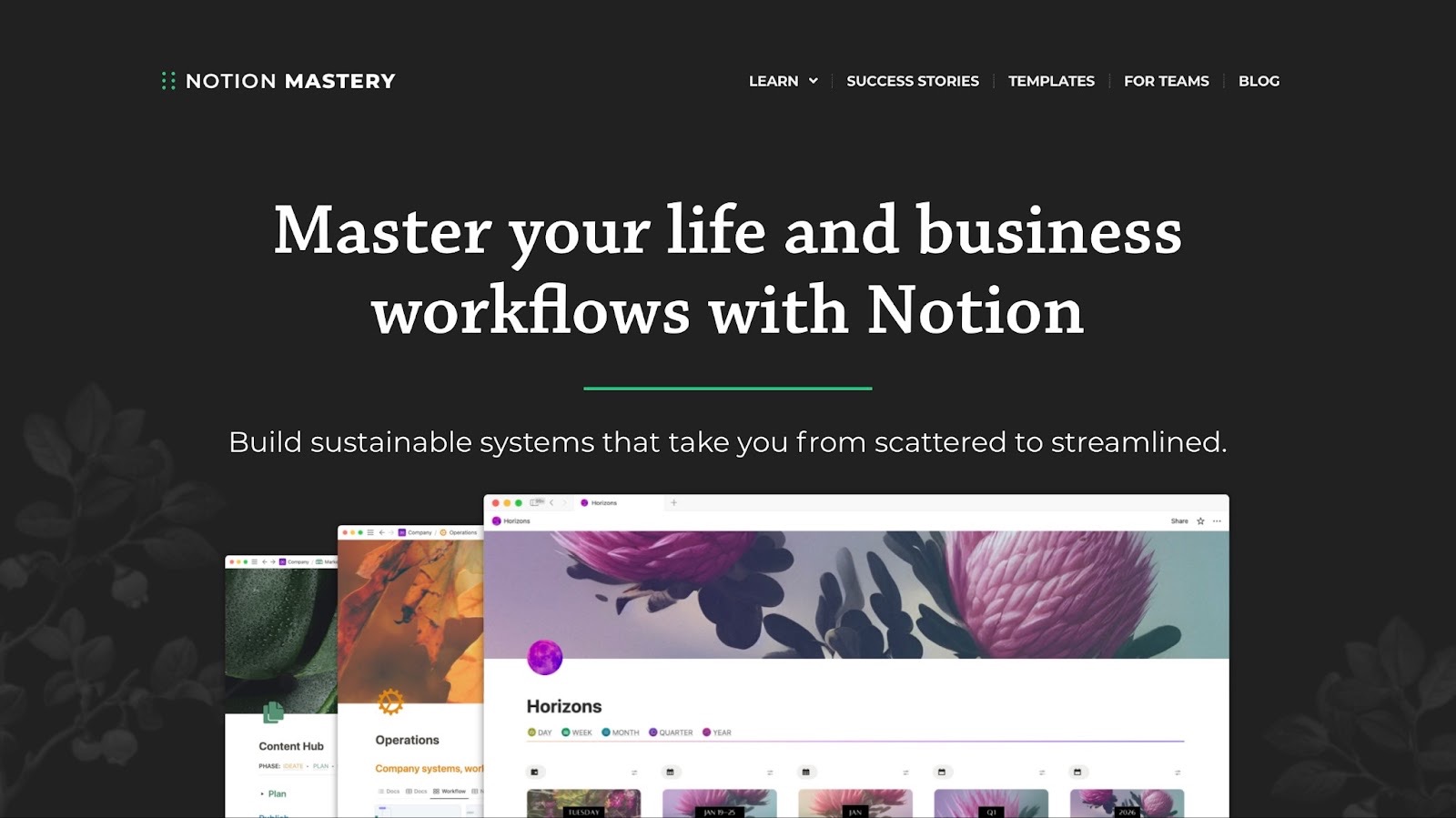
It already had some initial demand. But because it solved a real productivity problem, market demand grew quickly.
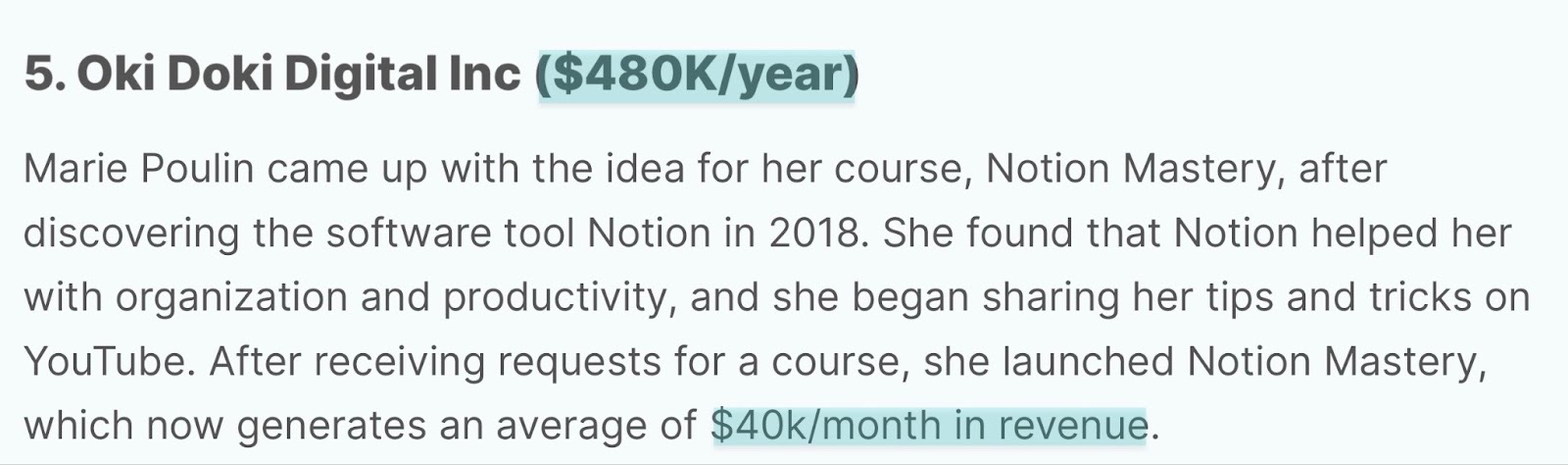
Today, Notion Mastery brings in $40,000 per month and $480,000 annually.
b. Skill relevance
Not only should the course be in high demand, but it should also teach practical skills.
A few in-demand skills are:
- Generative AI and prompt engineering
- Cybersecurity
- Web development
- Cloud computing
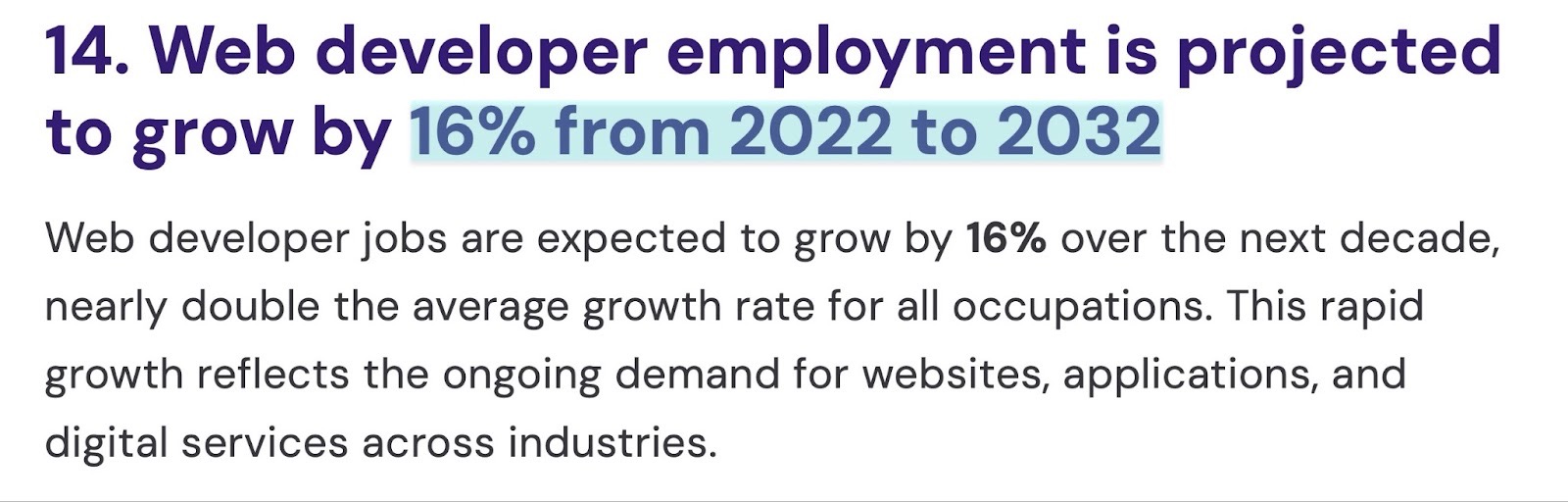
According to Hostinger, web developer jobs are expected to grow by 16% till 2032.
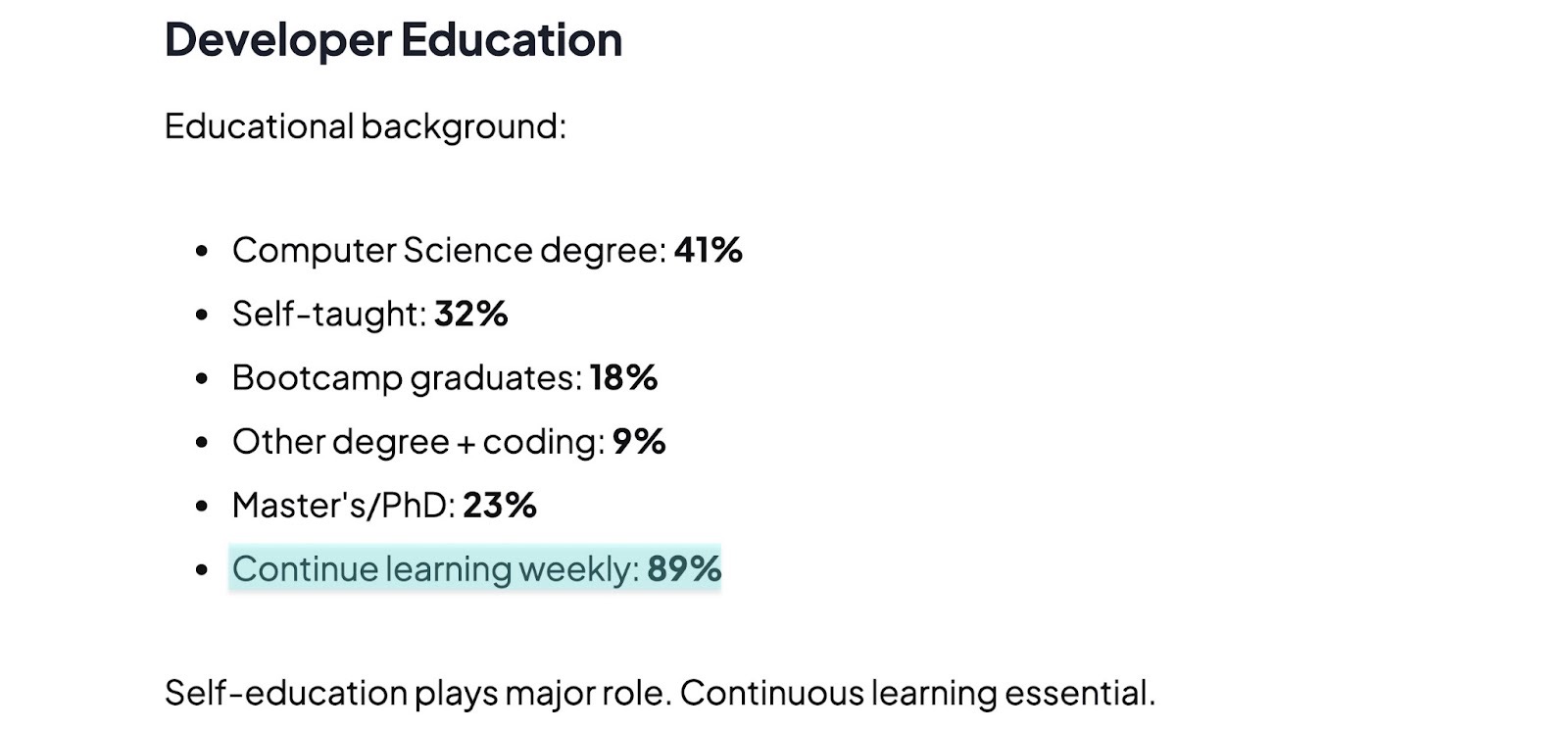
And since about 89% of web developers are continuously learning, launching a web development course is profitable.
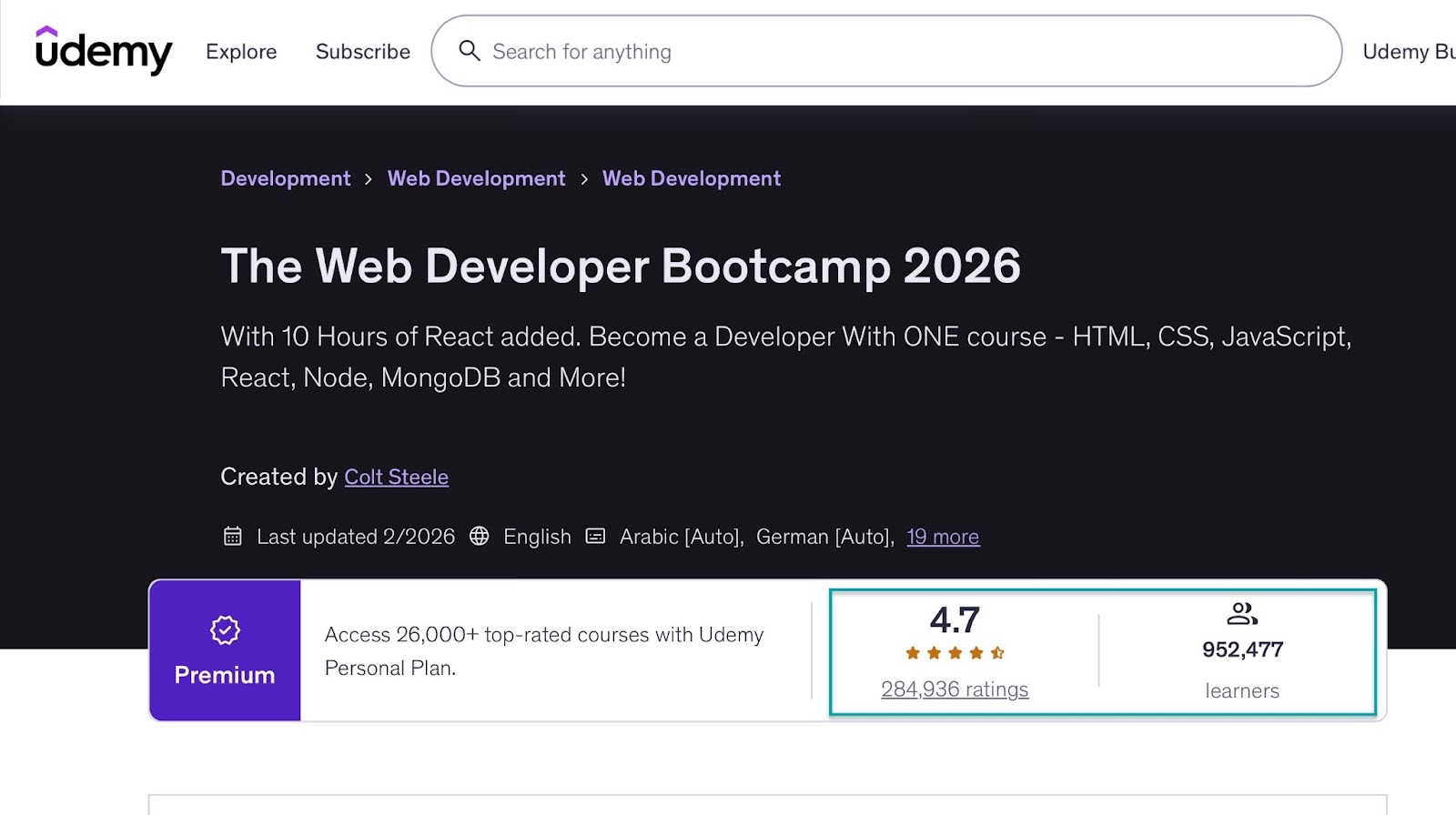
Probably why Colt Steele’s course, The Web Developer Bootcamp on Udemy, is such a hit. It has a 4.7-star rating with 284,936 reviews and 952,000+ learners.
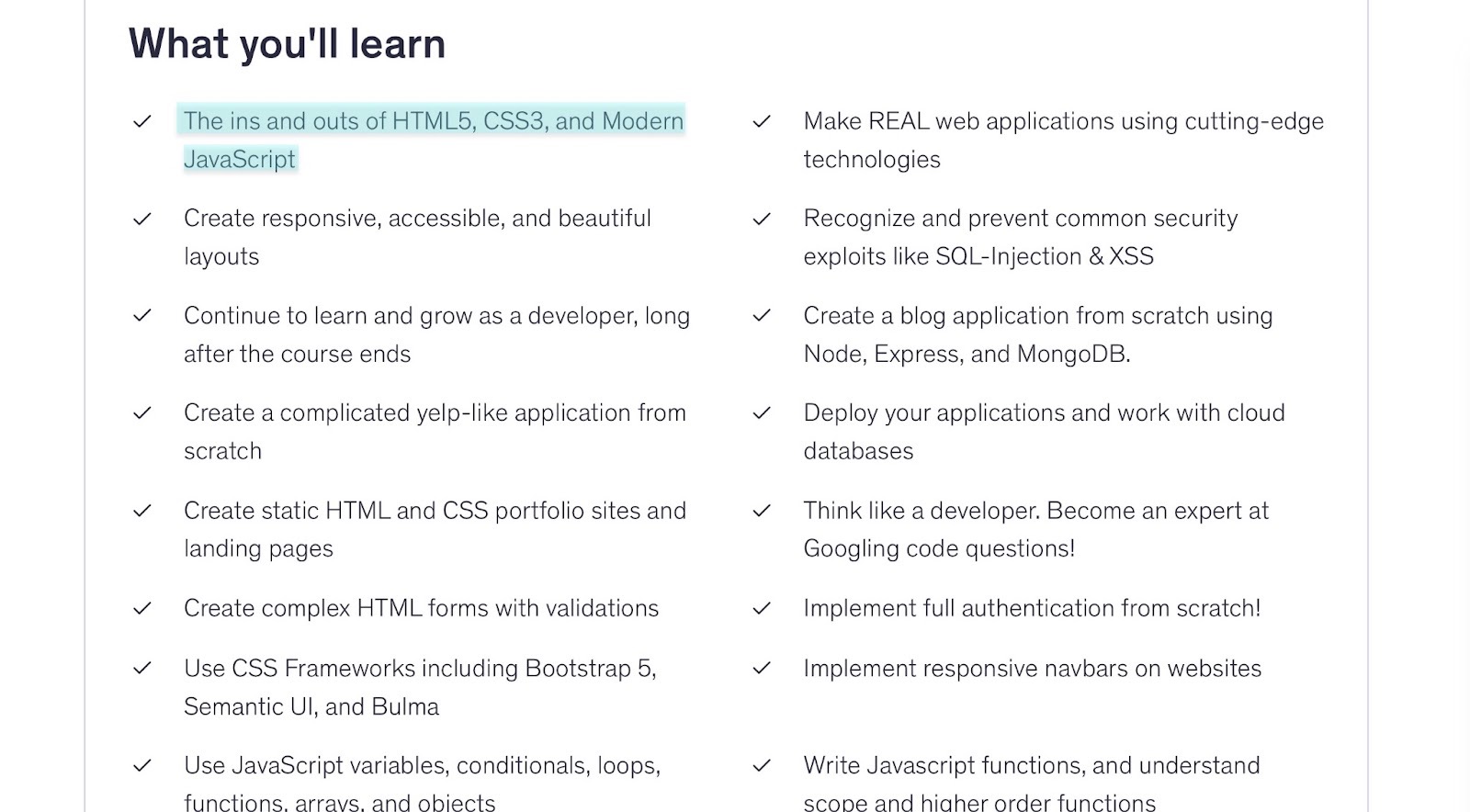
Steele’s course teaches practical skills like:
- HTML5
- CSS3
- “Modern” JavaScript
- Backend development basics
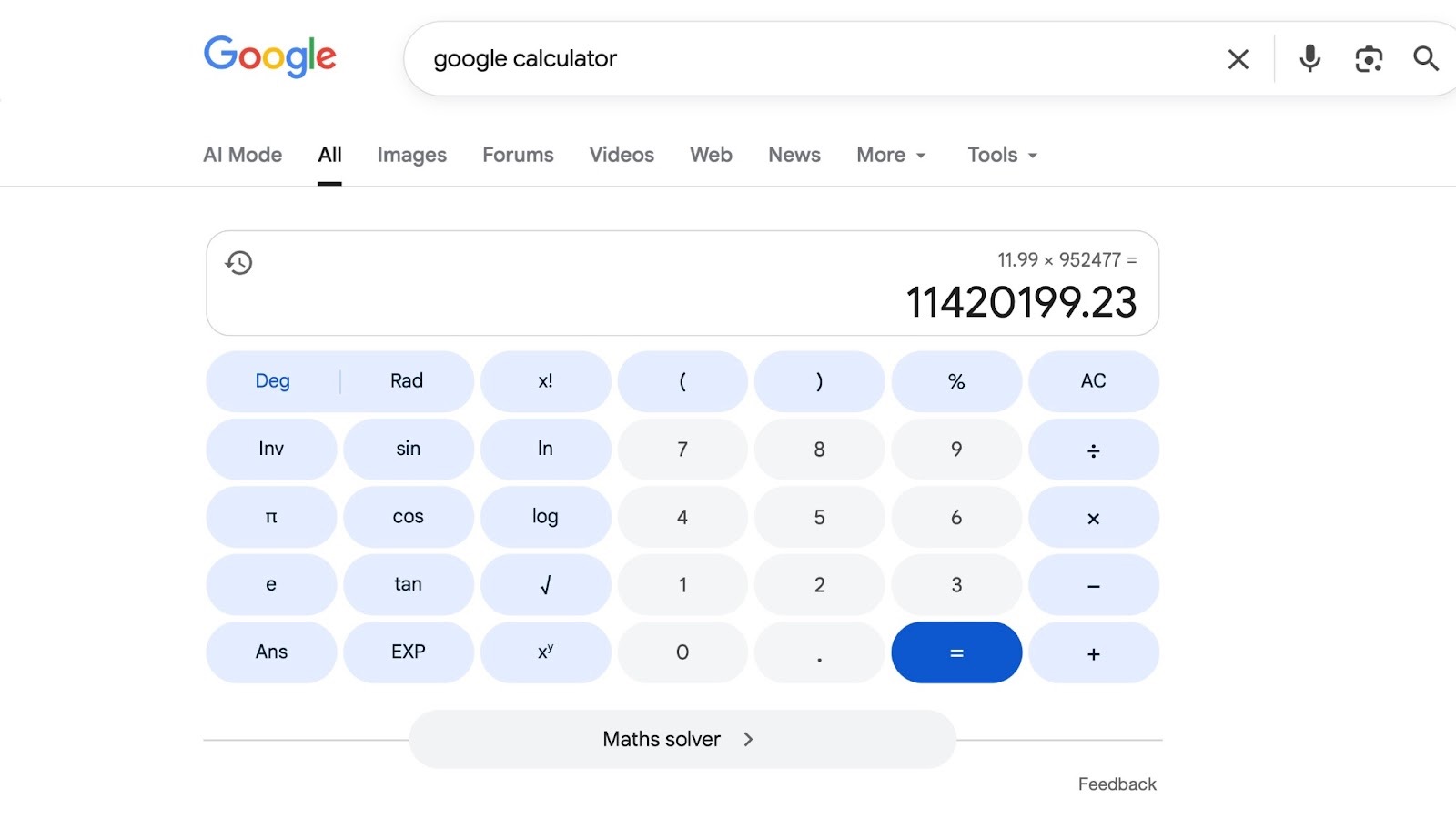
The course sells for $11.99. Multiply that by the number of students, and that’s 11M+ made so far.
c. Scalability
Also, a course is considered scalable if it generates passive income once it’s created. Passively earning from your course means you don’t have to be actively involved in its delivery.
You may update it occasionally, but you can sell it without creating new content each time.
That’s why you should opt for self-paced online courses. You can use pre-recorded videos and add PDFs and quizzes.
If you use the right platform, you can:
- host course videos and files
- paywall your courses
- track student progress
- automatically issue certificates upon completion
- automate checkout and course delivery
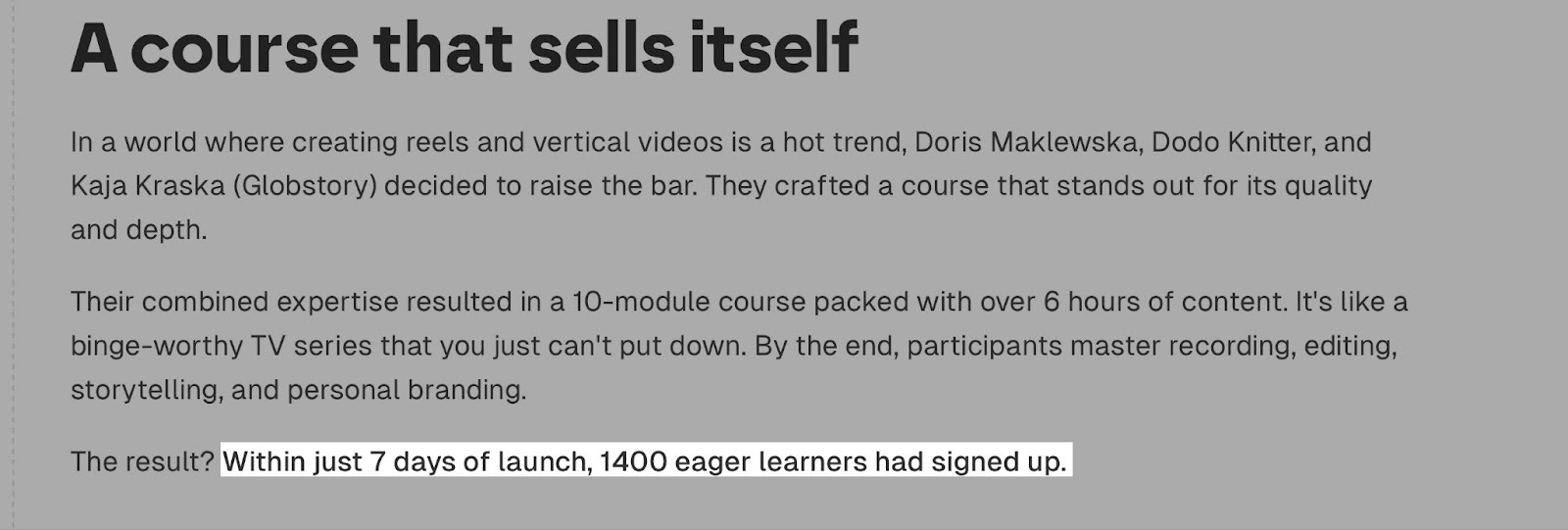
A typical example is Vertical Filming by Dodo, Doris, and Kaja.

Because it’s self-paced and sold with a conversion-focused checkout, it scaled to 1,400 learners in its first week.
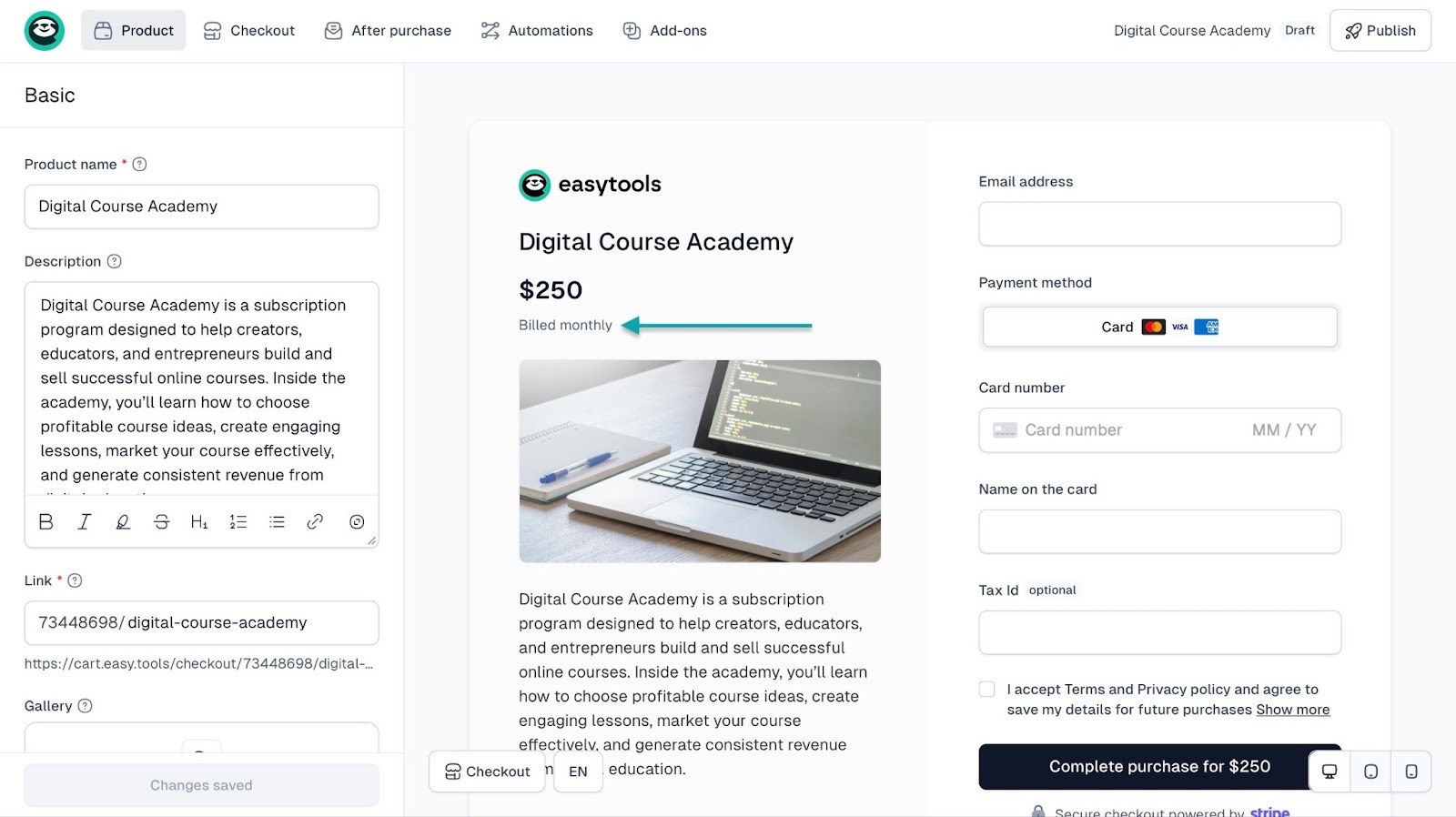
You can also create membership online courses. Students will pay a subscription fee to access your library of pre-recorded lessons.
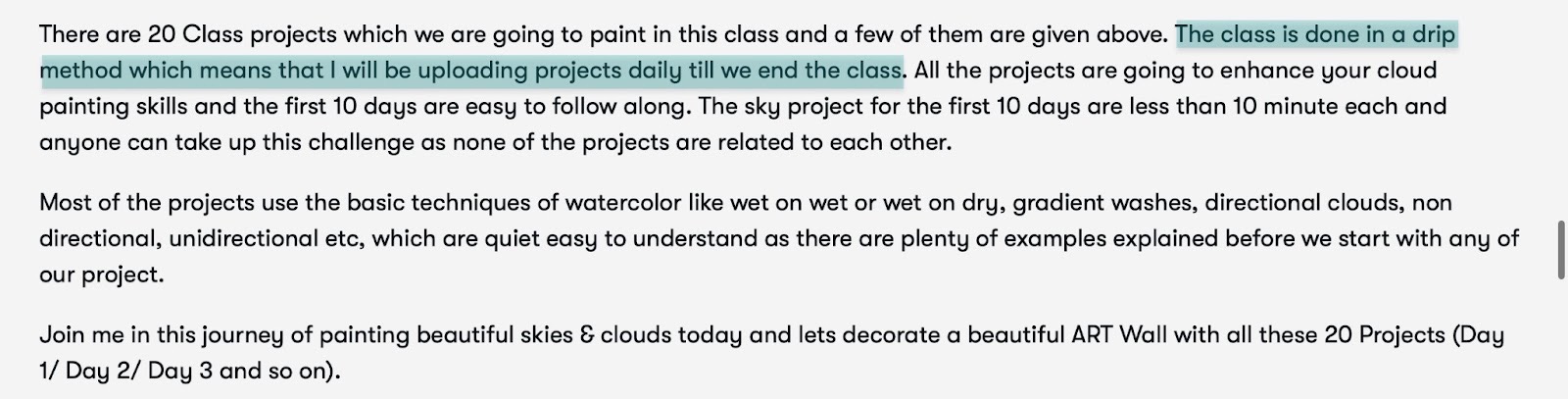
Drip courses are also scalable. Although you release lessons gradually (like drips), they are still pre-recorded, so you don’t have to teach live.
An example is Dhritikana Nath’s “Beginner's Skyscape Challenge for 20 Days” course on Skillshare.
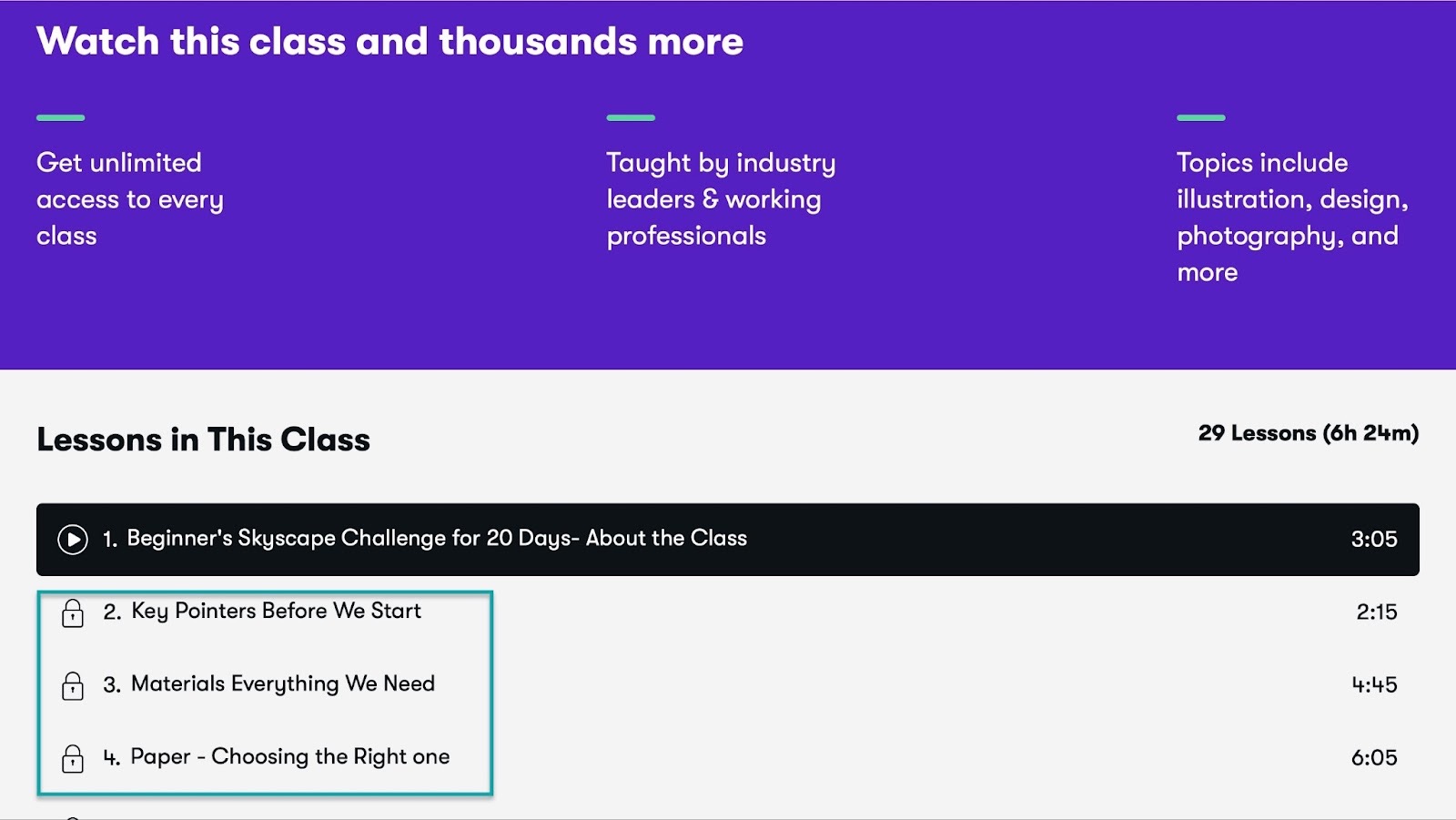
It unlocks lessons every day until completion. In Dhritikana’s case, she said she’ll upload lessons daily.
You could create cohort courses if you have a team. If it’s just you, scaling could be challenging.
Because you have to host live sessions, review assignments, and interact with students.
But cohort-based courses can be profitable when you work with a team. You can charge more because of additional offers, like live Q&A sessions, access to your learning community, and more.
Take Przeprogramowani. It’s a cohort-based course, but with these additional offers and, of course, a good platform, its first edition made $400,000+.
It also scaled to 1,250 participants at the first launch.

Here’s a simple table. I’ve added two more course types: mini course and template course.
It should help you properly understand what I mean.
Honestly, any online course that brings in a good income so that you can comfortably ditch your 9-to-5 is profitable.
But with these three points, I hope you can identify profitable courses from the get-go without any trial-and-error.
I’m not done, though. Keep reading for tips on creating successful online courses.
{{cta-banner-1}}
Tips for creating a successful online course
You now know what makes an online course idea profitable. Here are five tips for creating a successful online course:
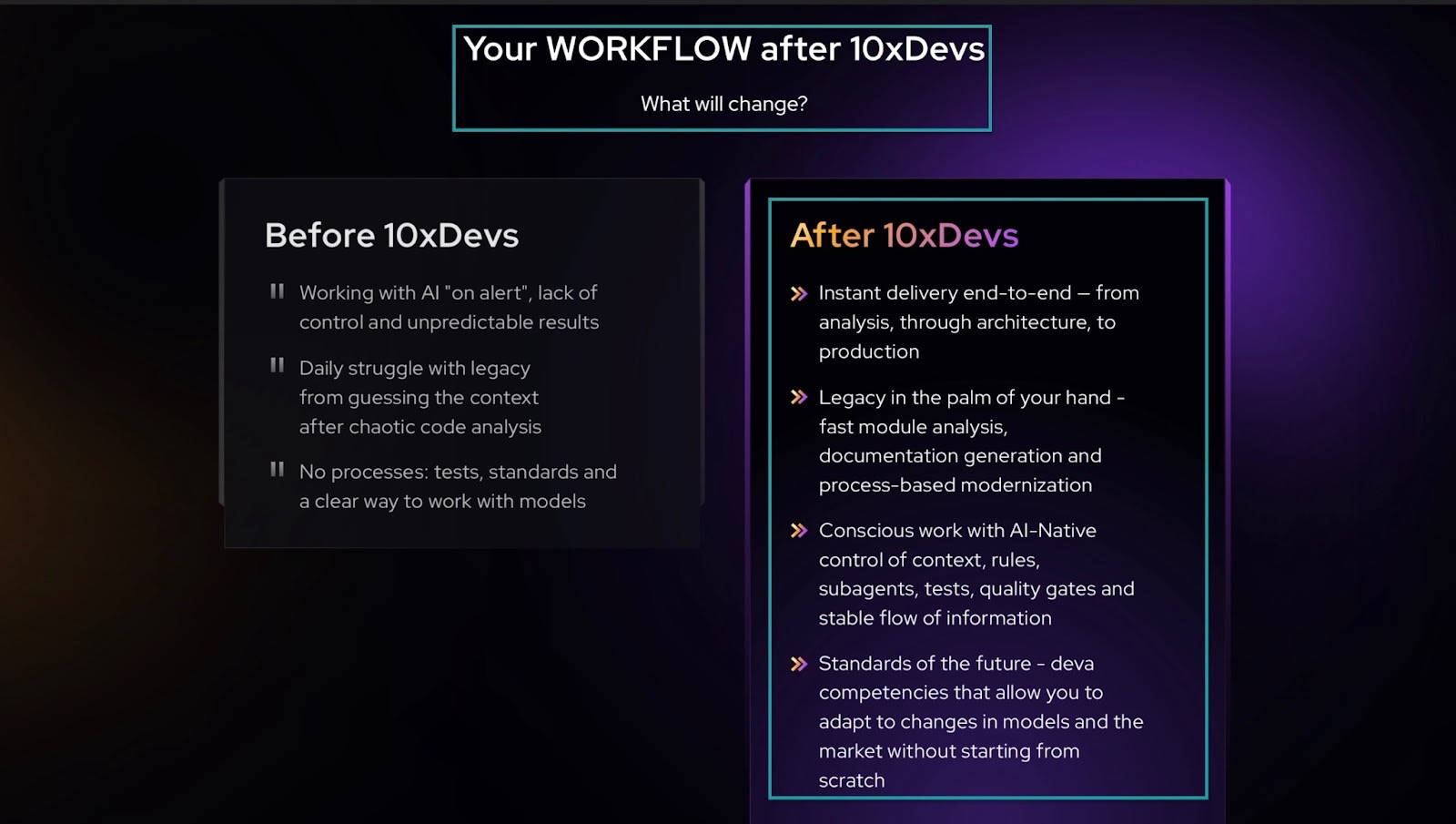
1. Focus on clear learning outcomes: 10xDevs creators, Marcin and Przemek, list the outcomes of their course clearly on its landing page.
2. Use engaging video lessons: Use short and engaging, professionally edited videos to teach students.
If you use screen recordings, make sure all text is legible and easy to follow.
Easytools lets you add links from popular video platforms like YouTube, Vimeo, Wistia, and more.
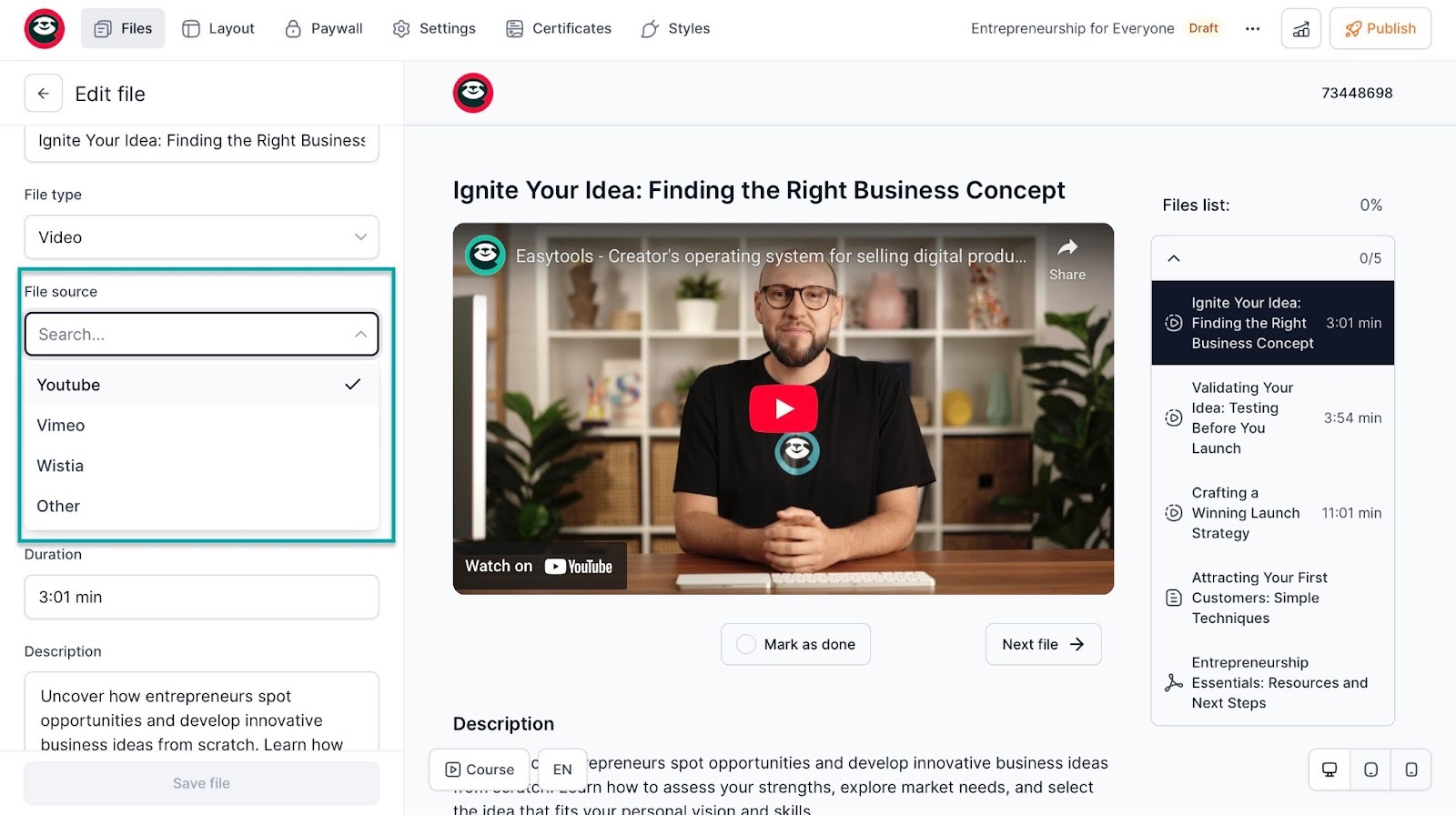
And these third-party video hosting platforms help preserve video quality. So you can share 4K videos without worrying about the platform compressing or downgrading them.
3. Provide worksheets and assignments: Students have to apply what they learn. Worksheets and assignments help students accomplish this.
This, in turn, will help them retain information more effectively and gain new skills. Most course creators actually add these learning resources as selling points to their courses.
Matthew Machalski, creator of Creative Typography, for example, promises his students assignments after each lesson module.
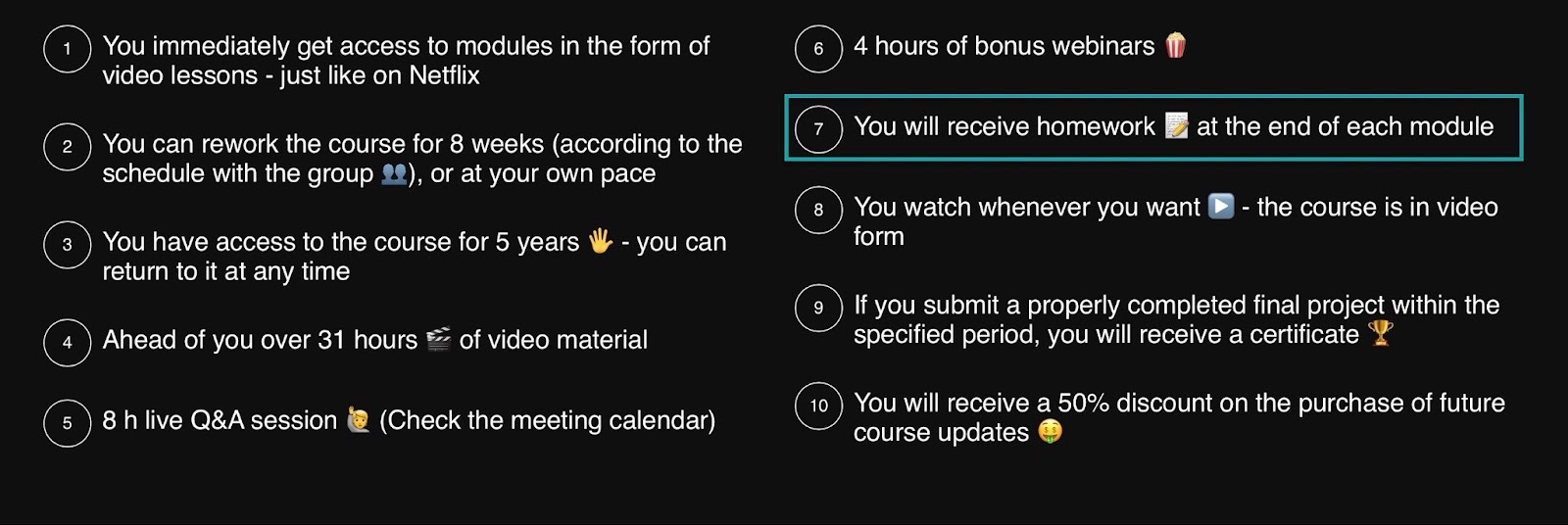
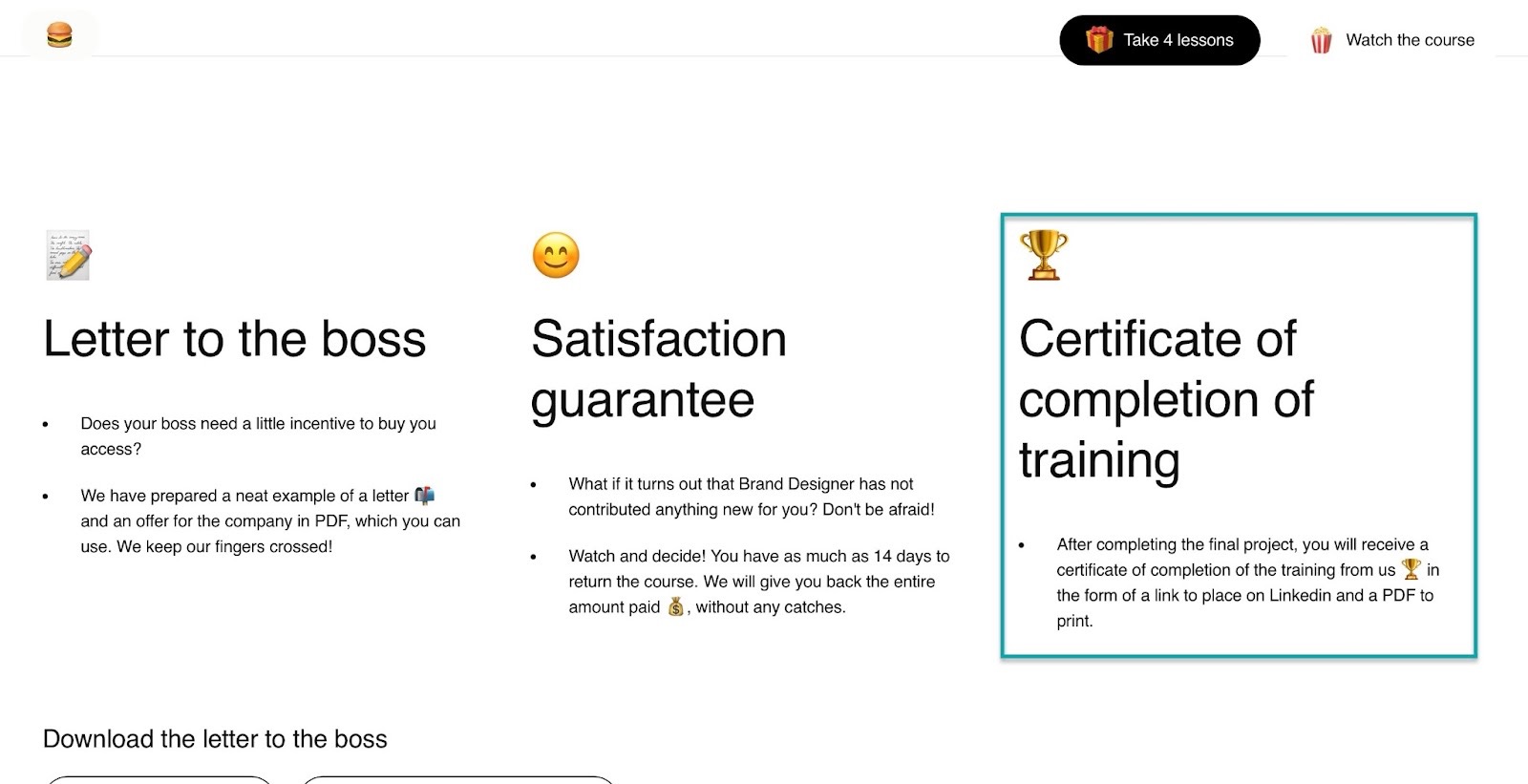
4. Offer certificates or completion badges: Students will be motivated to complete your course if you reward them with certificates or completion badges. They’ll also feel more accomplished.
That’s why Michał Mierzwa offers certificates upon completion of his Brand Designer course.
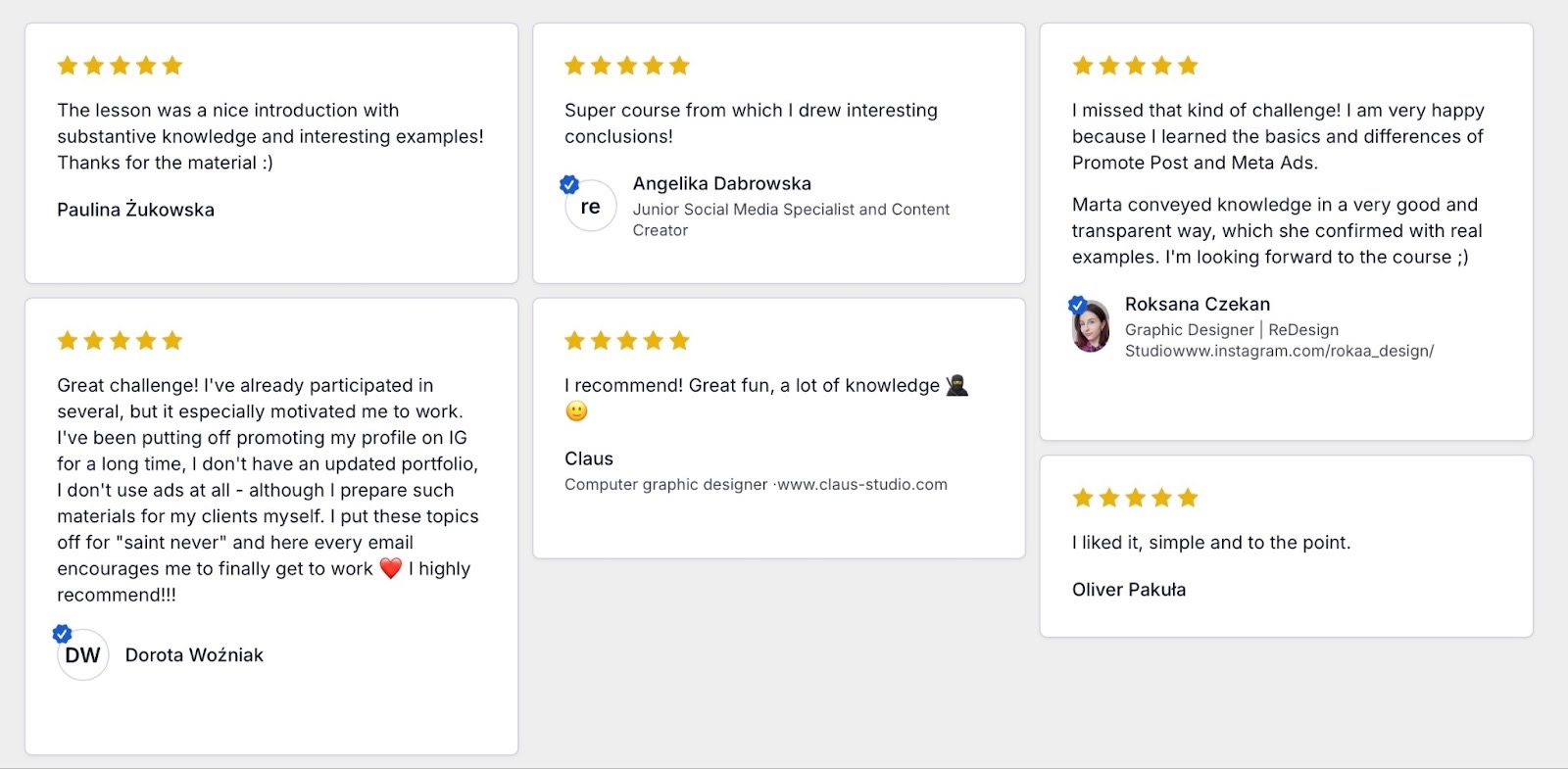
5. Gather feedback to improve the course: Feedback is how you improve your online course. It’s therefore important that you gather feedback.
You can ask students to leave reviews with Easytools’ testimonial feature. Creator, Martha Krawczyk, displays reviews on the landing page of her Ads for Creatives course.
How to choose a profitable online course idea
To choose a profitable online course idea, you should
- Identify your expertise
- Research the market demand for the online course idea
- Solve a specific problem
- Validate the idea
Now, let's take a closer look at each of these points.
1. Identify your expertise
Identifying what you already know well is the first step in choosing the right online course idea.
And the truth is, your expertise doesn't always have to come from a formal degree. It could be years of experience.
Or professional work, hobbies, and skills you've developed over time.
For example, you don’t need a degree to teach a freelancing for beginners online course. Hisham Sarwar and Irfan Malik teach this free freelancing course on DigiSkills.
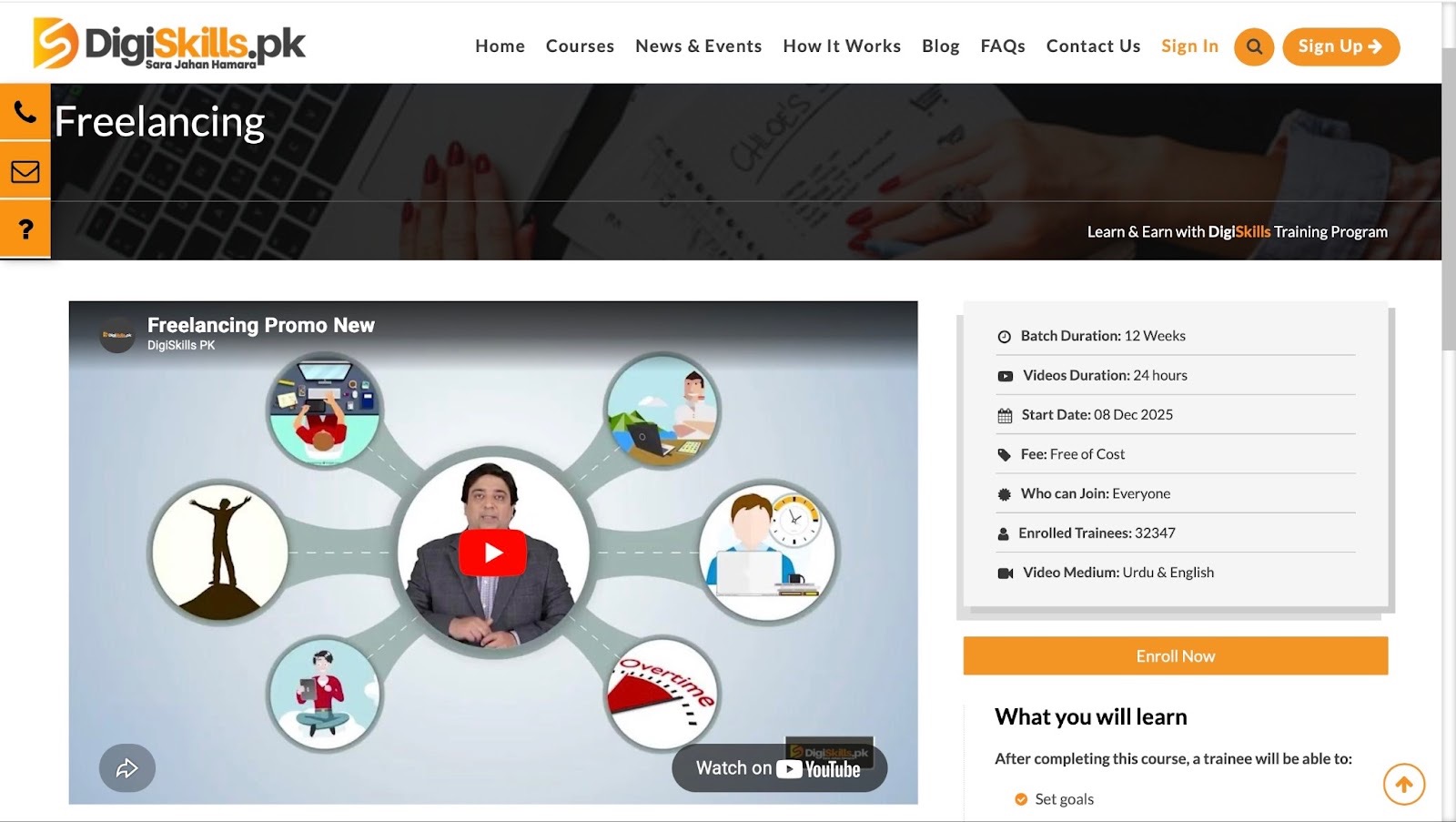
Hisham is a seasoned freelancer, and Irfan has the Top Rated Plus badge on Upwork. That’s enough reason for them to choose freelancing as an online course idea.
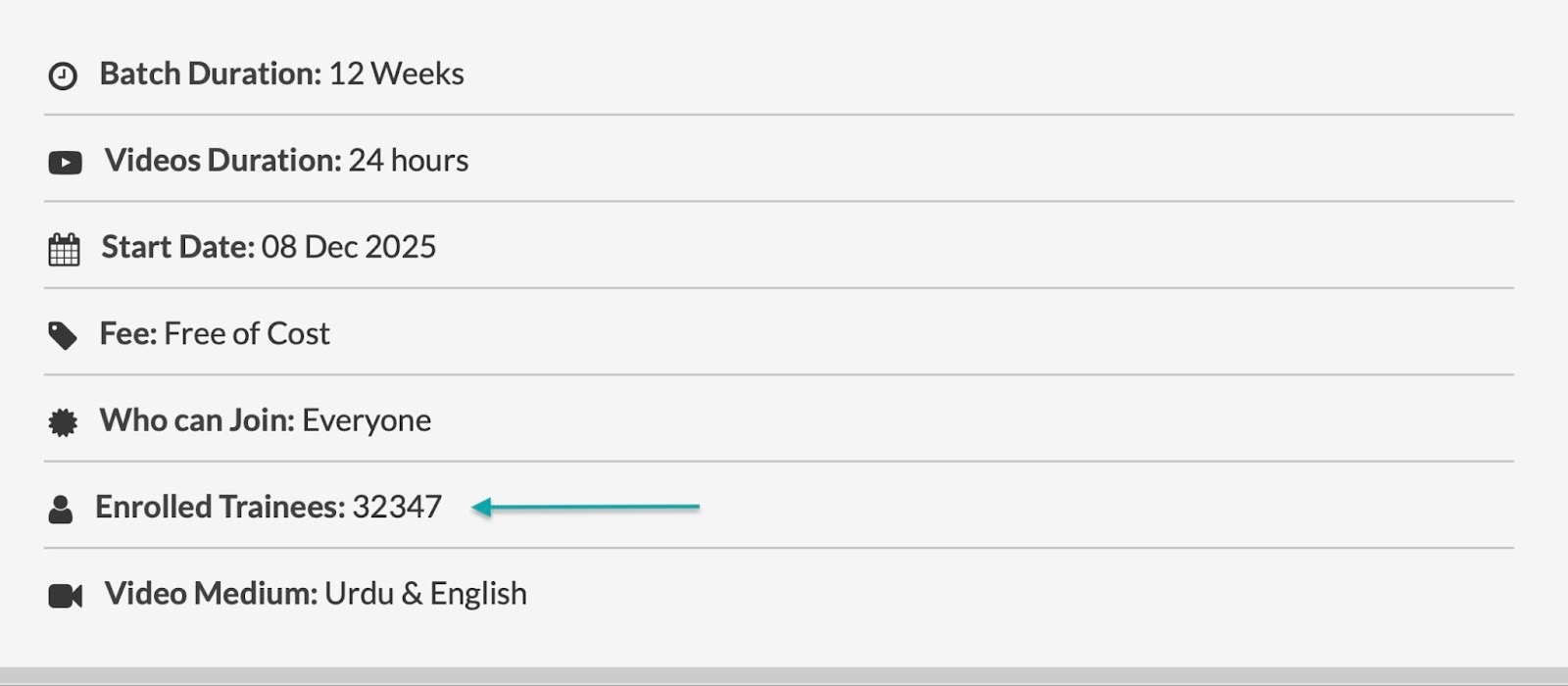
It’s free, but with 32,347 trainees, can you imagine how much they’d be making if the course were going for $5?
So, if you're a digital marketer, you could teach how to run Facebook and Instagram ads. Or you could create a course on generating leads using tools like HubSpot.
A fitness enthusiast could teach a structured workout program that focuses on leg exercises for beginners.
Also, if you’ve had success doing ( or selling) something, you could create a course to help others achieve similar or better results.
Modest Mitkus, for example, made $1M creating and selling Notion templates.
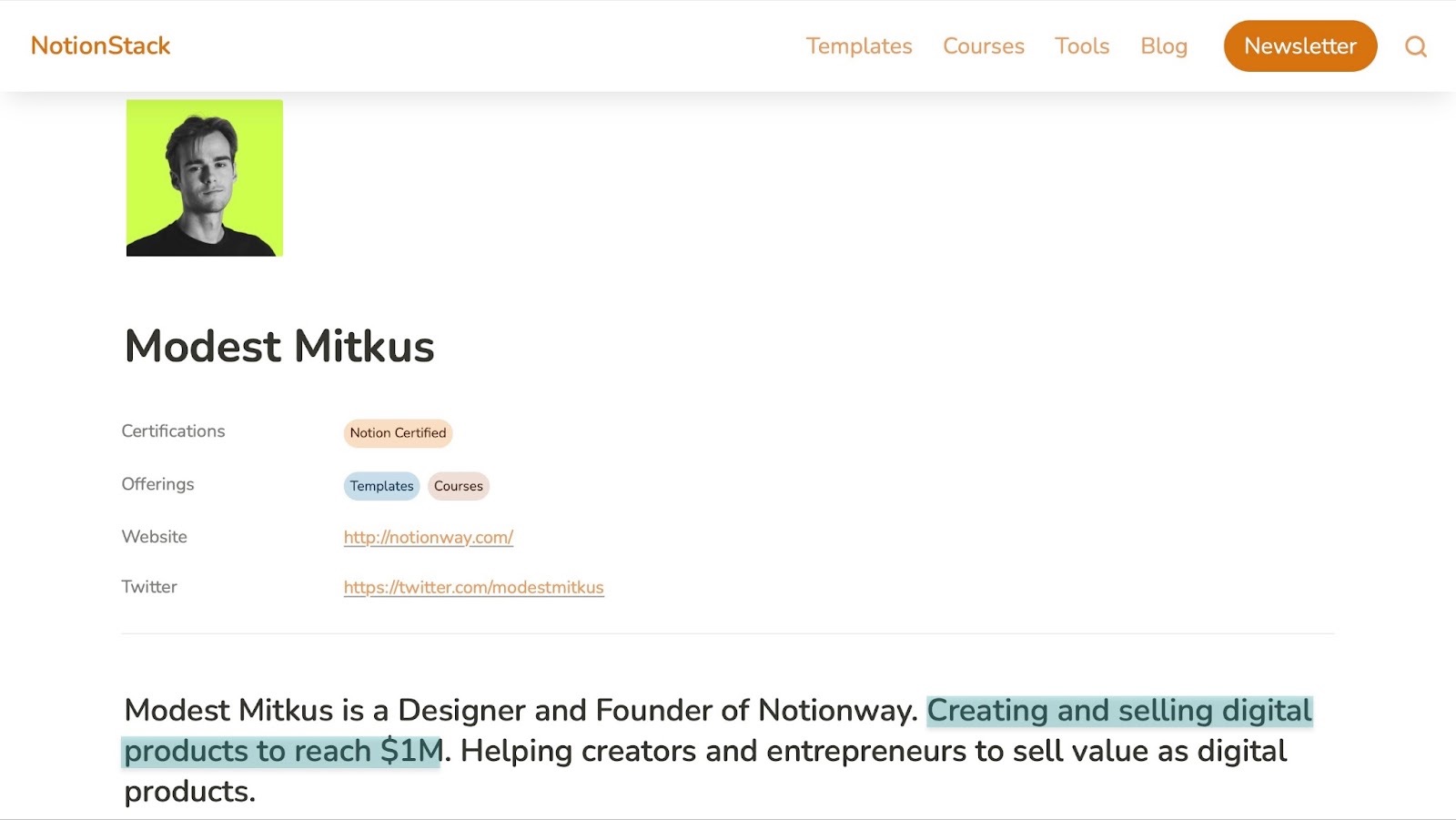
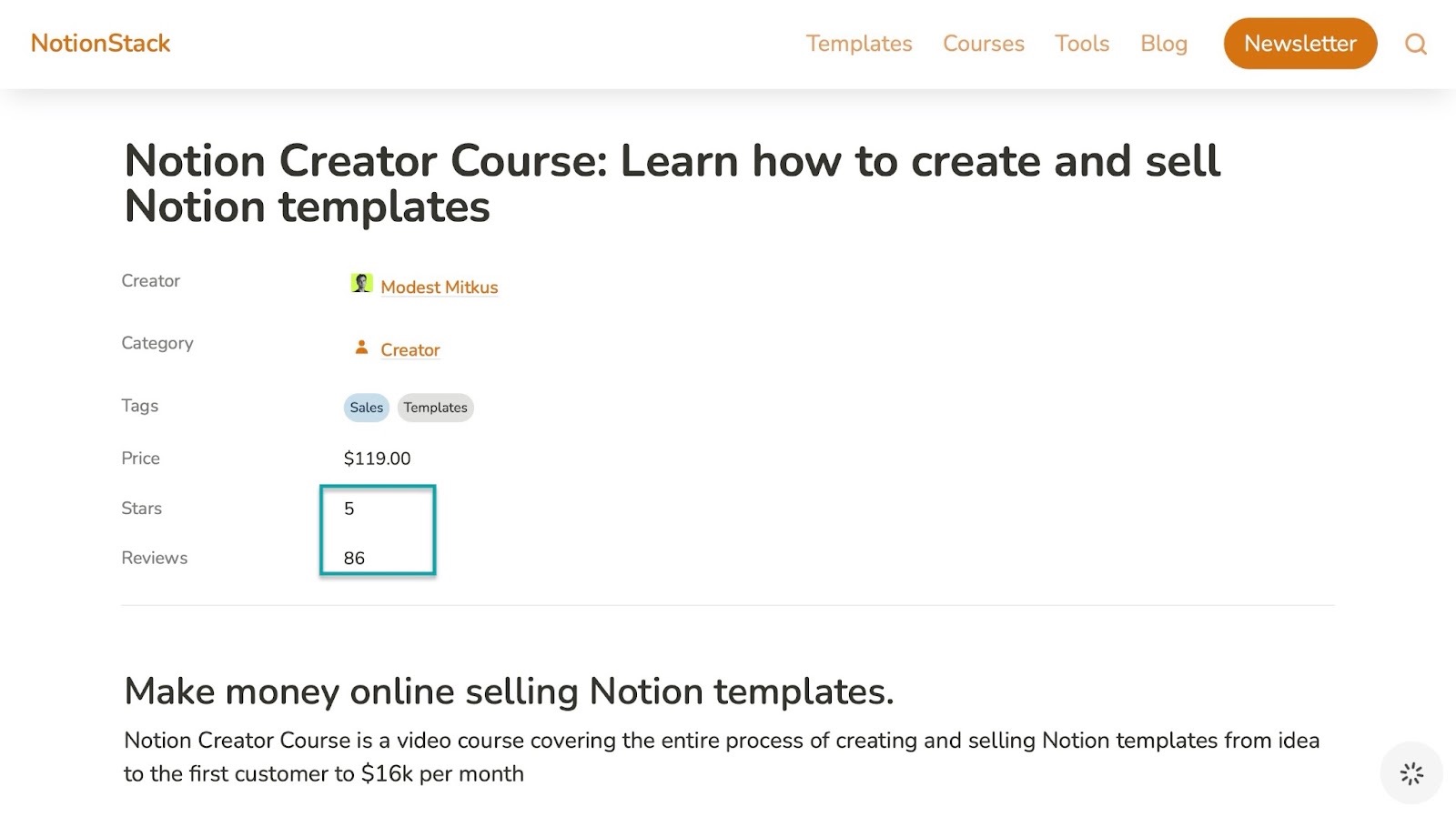
So he launched a course to teach others how to create and sell Notion templates. His course is 5-star rated with 86 reviews.
Now, in case you're unsure about your expertise, here are four questions to help you figure it out:
- What skills do people often ask you for help with?
- Which tasks do you perform easily, but others struggle with?
- What professional tools do you use regularly?
- What problems have you solved in your career?
Answering these should help you identify your strongest skills. And once you've done that, narrow them down into specific online course ideas.
The next step after this would be to research market demand for your idea.
2. Research market demand
After identifying your expertise, research the market demand for the online course idea you choose.
It’s just to confirm that people are actually interested in learning it. Like I’ve already said, high market demand is one of the factors that make a course profitable.
You may be highly skilled in a topic, but it’s not profitable if only a few people want it. So how do you research market demand?
Start by checking popular online learning platforms like Udemy, Skillshare, Coursera, and more.
All you have to do is visit the platform, type the online course idea, and hit the enter key on your device. On Skillshare, you don’t even have to sign up to do this.
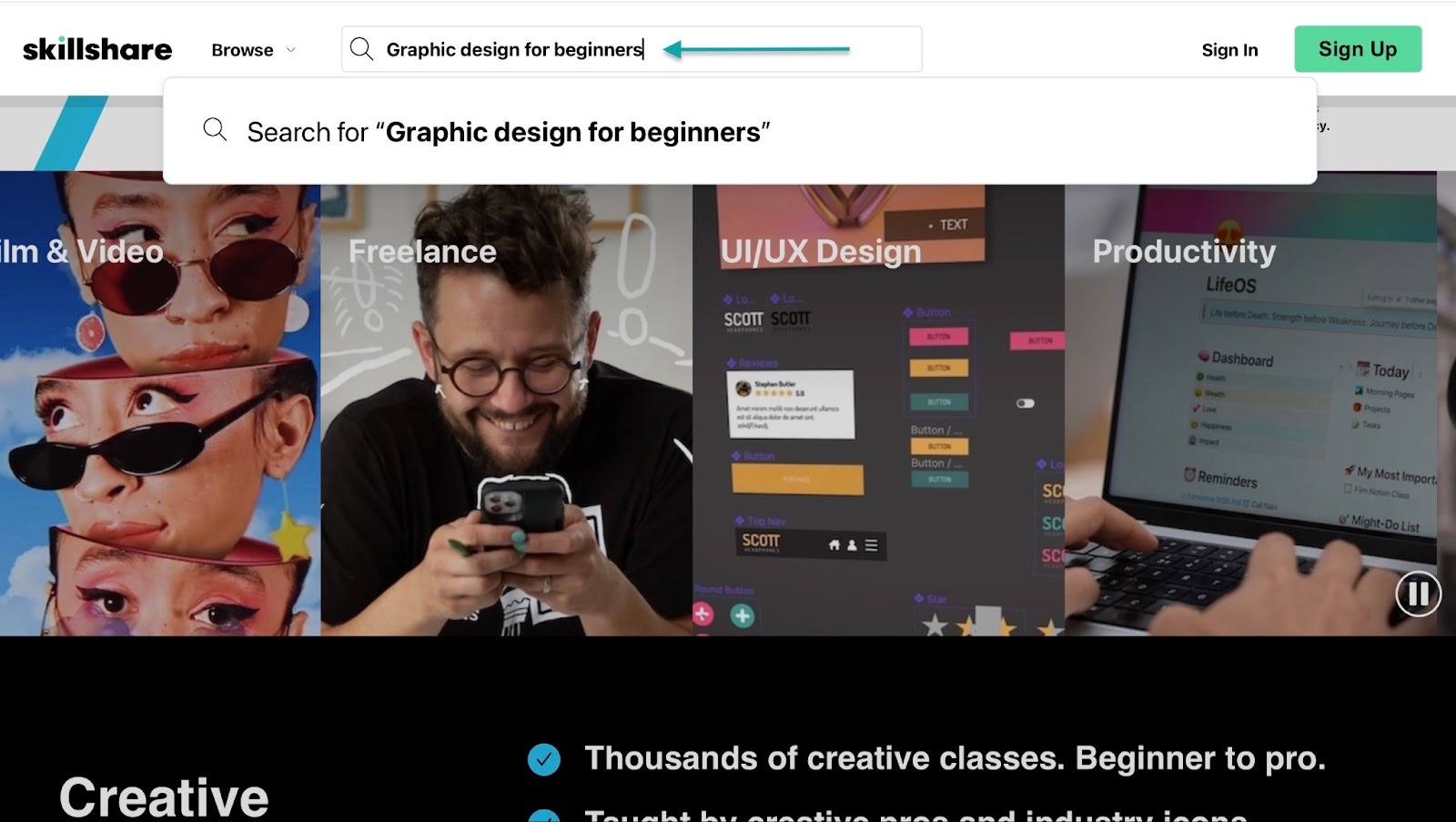
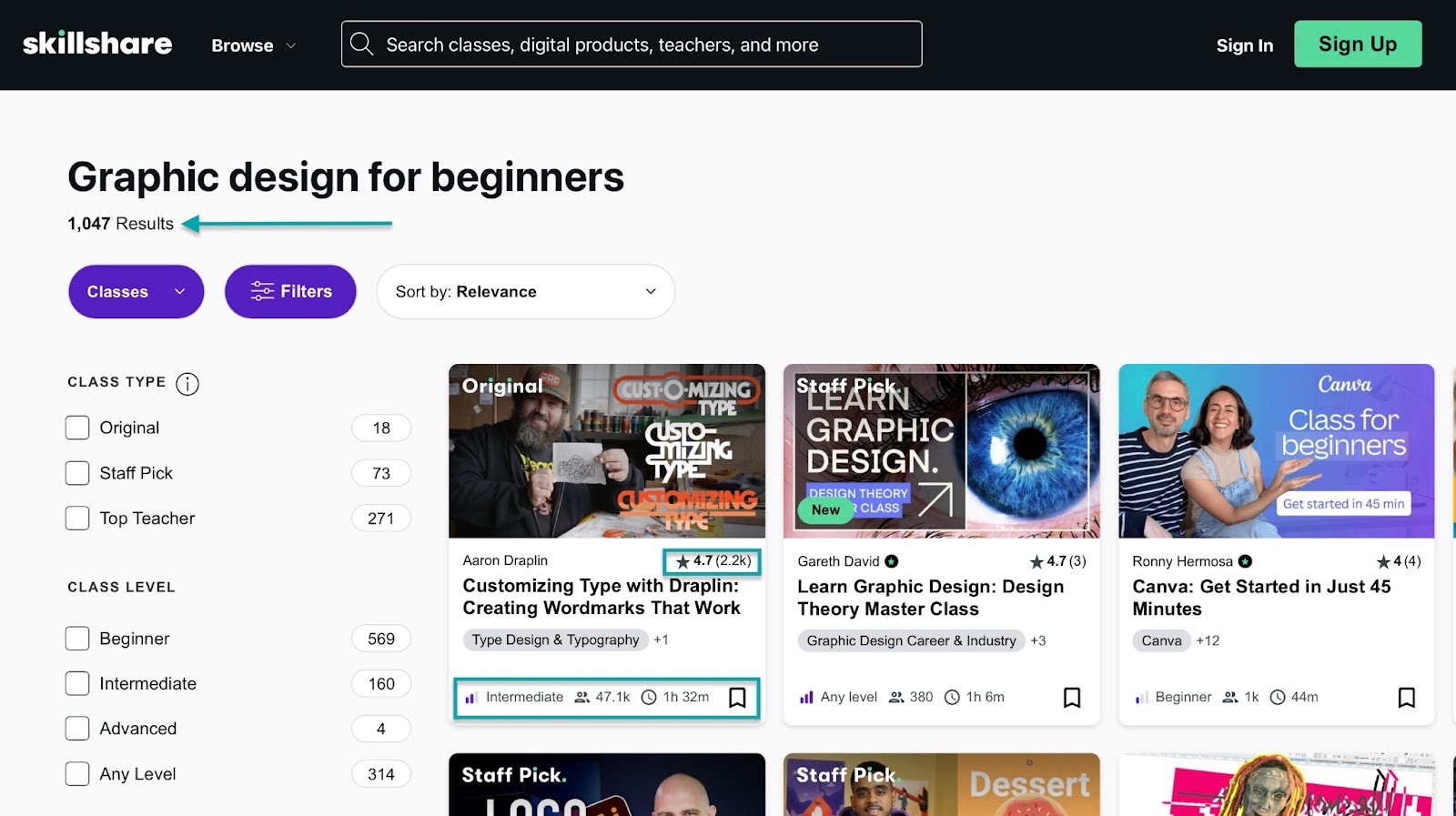
Many courses created for a particular topic with lots of enrolment show it’s in high demand.
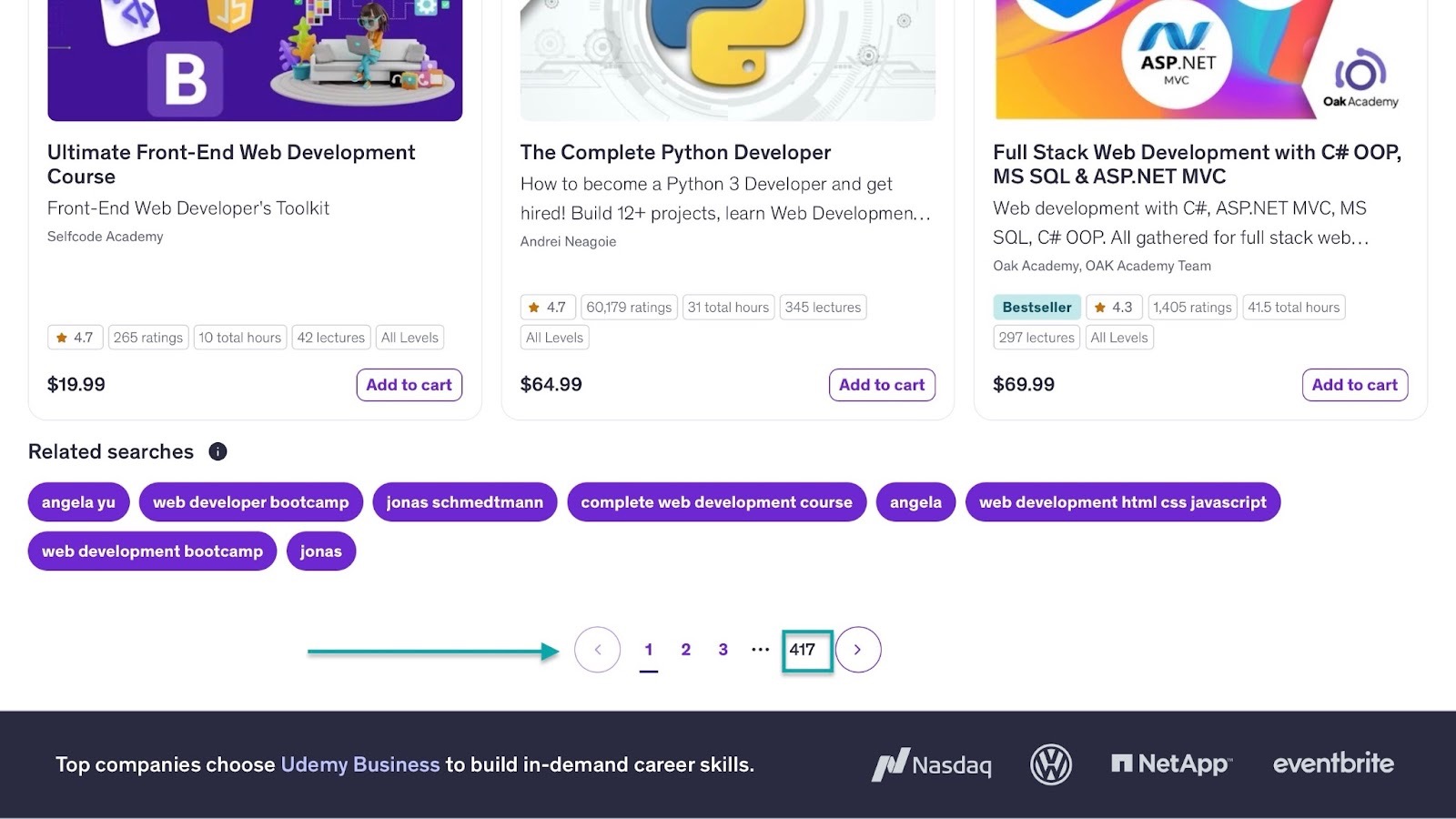
On Udemy, there are about 417 pages of search results for “web development.”
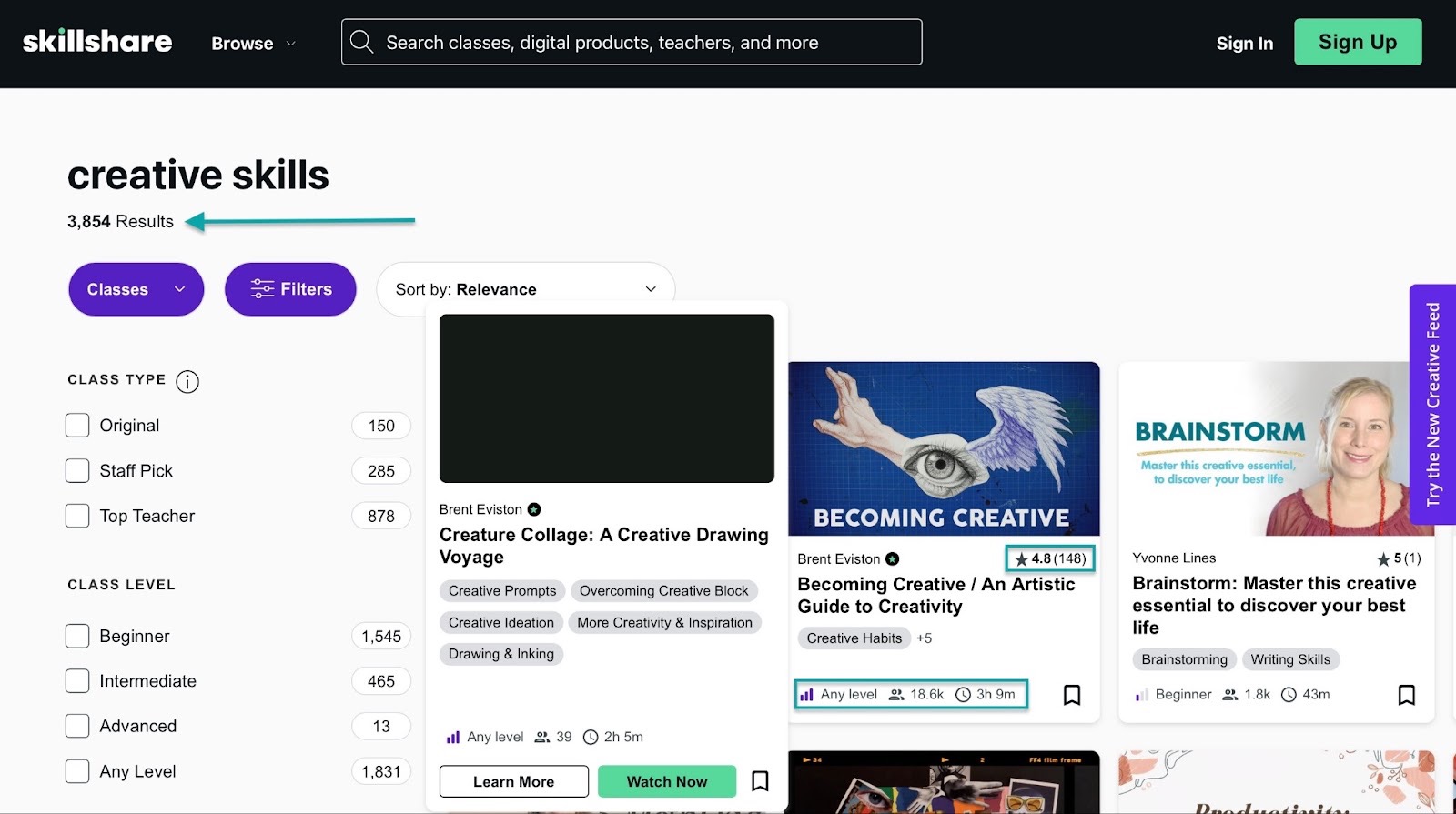
A search term like “Graphic design for beginners” might have yielded 1,047 results, but “creative skills” shows about 3,854 courses.
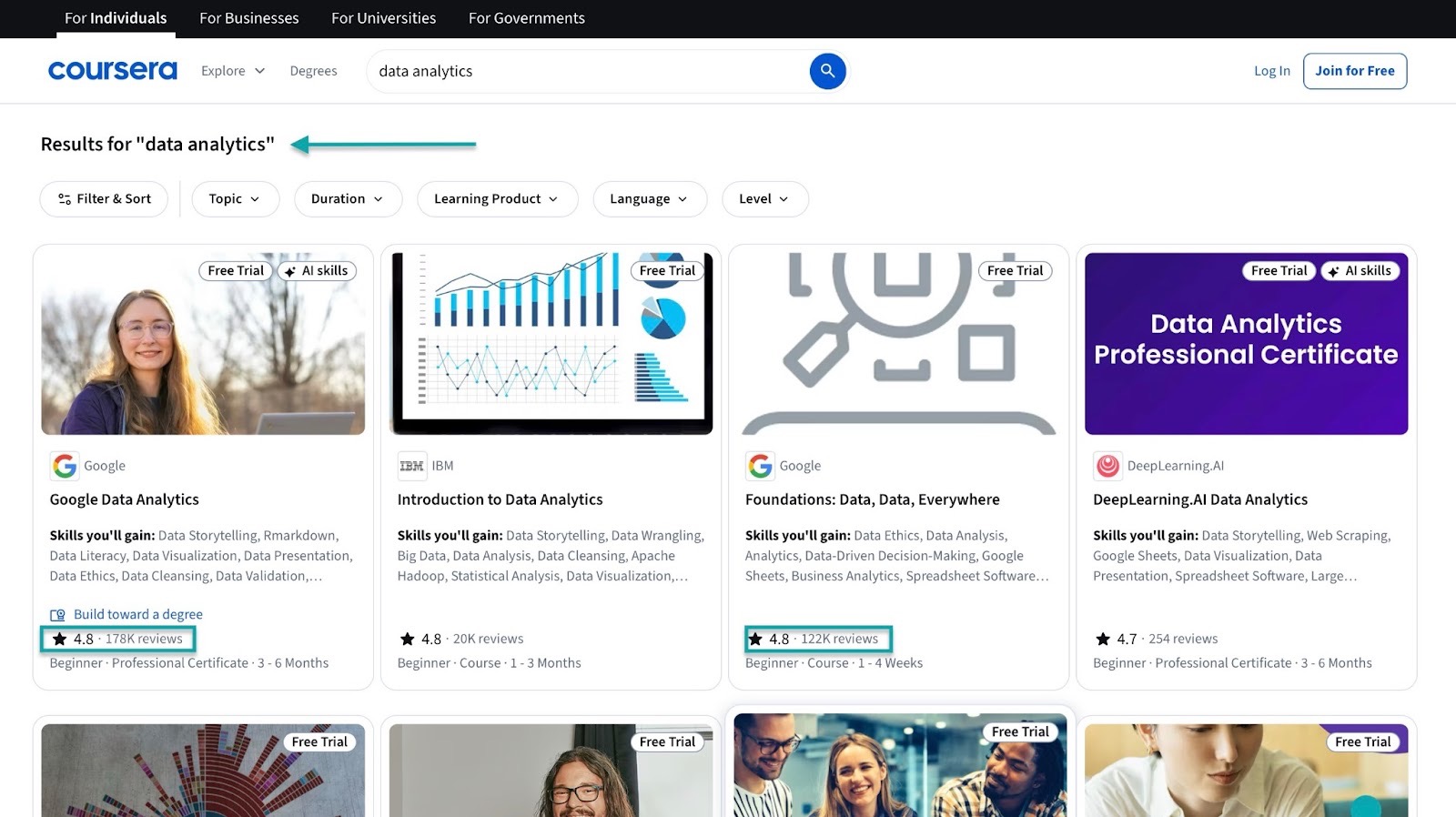
On Coursera, there’s a strong interest in data analytics, cloud computing, and project management.
A certificate course on Google Data Analytics, for example, has a 4.8-star rating, 3M+ enrolments, and 177,687 reviews.
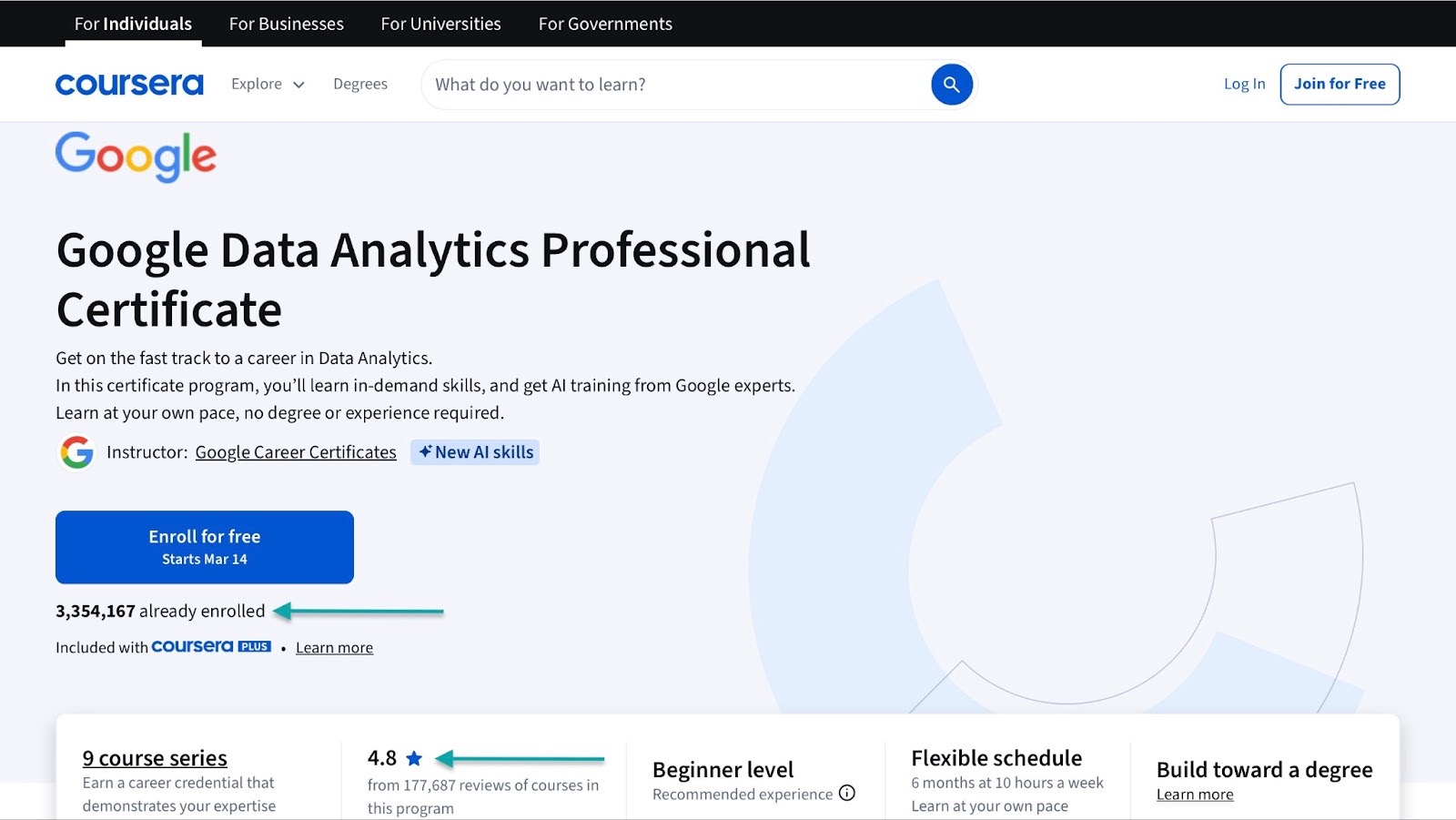
That gives a solid idea of the high demand for courses in the data analytics niche.
Now, for market demand in the business and entrepreneurship niche, I’d recommend you search LinkedIn Learning.
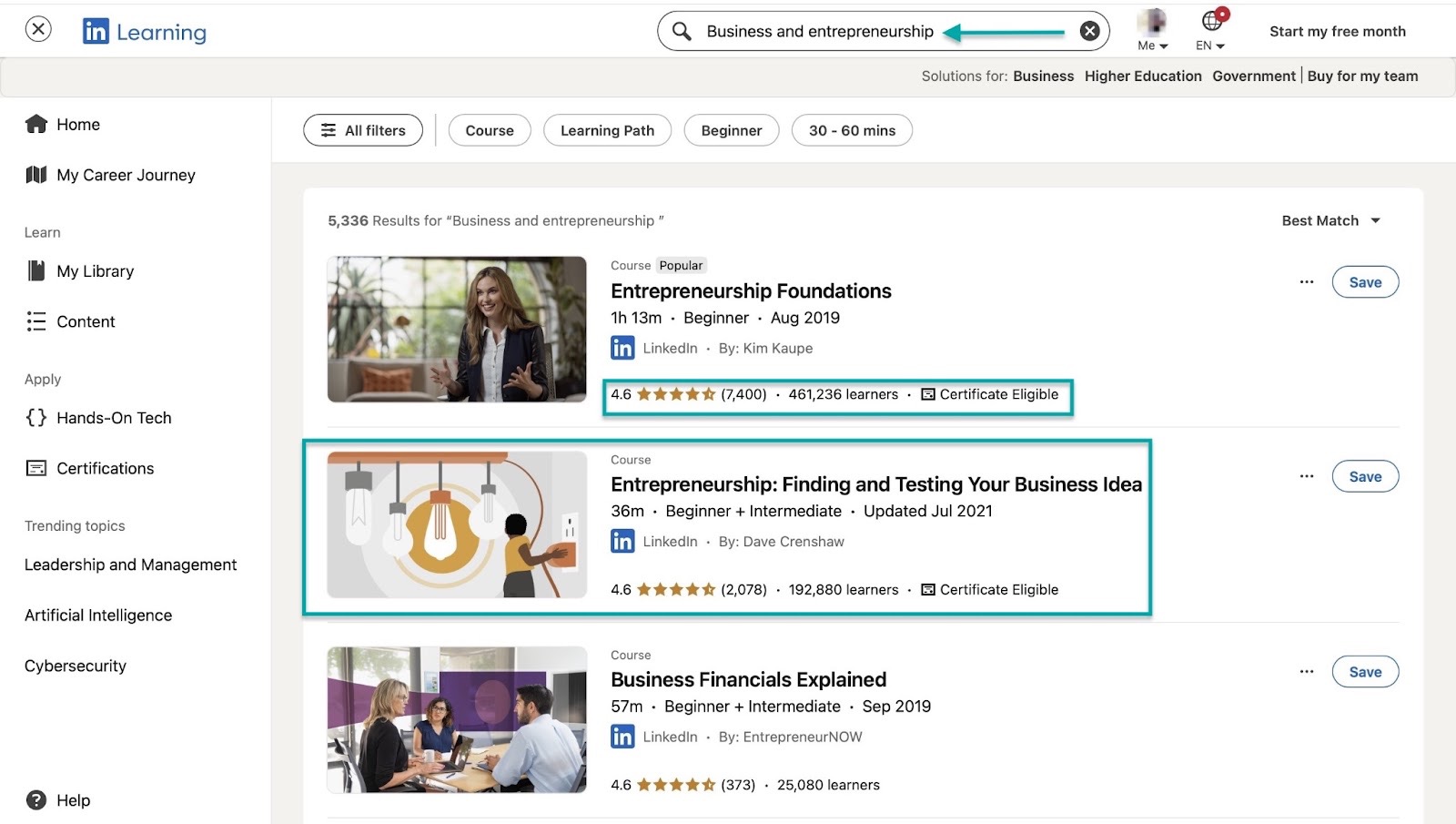
To get a solid idea of market demand, though, the trick is to search across all these marketplaces.
If the results show high demand, then it’s time to zoom in on a specific problem in that niche.
I’ll show you how.
3. Solve a specific problem
So, you’ve researched market demand and settled on an online course idea. Now, it’s time to decide on the specific problem it solves.
Because learners don’t want to know everything about a topic. They want specific help regarding that topic.
They wouldn’t want to know everything about digital marketing, for example.
They would rather pay for a course that promises to show them how to start and profit from affiliate marketing.
Take this “The Ultimate Affiliate Marketing Course For Beginners 2026” course on Udemy.
It has a high rating of 4.7. It also has 4,694 reviews and about 21,043 learners. Selling at $59.99, that’s easily 1.2M+ made from this course so far.
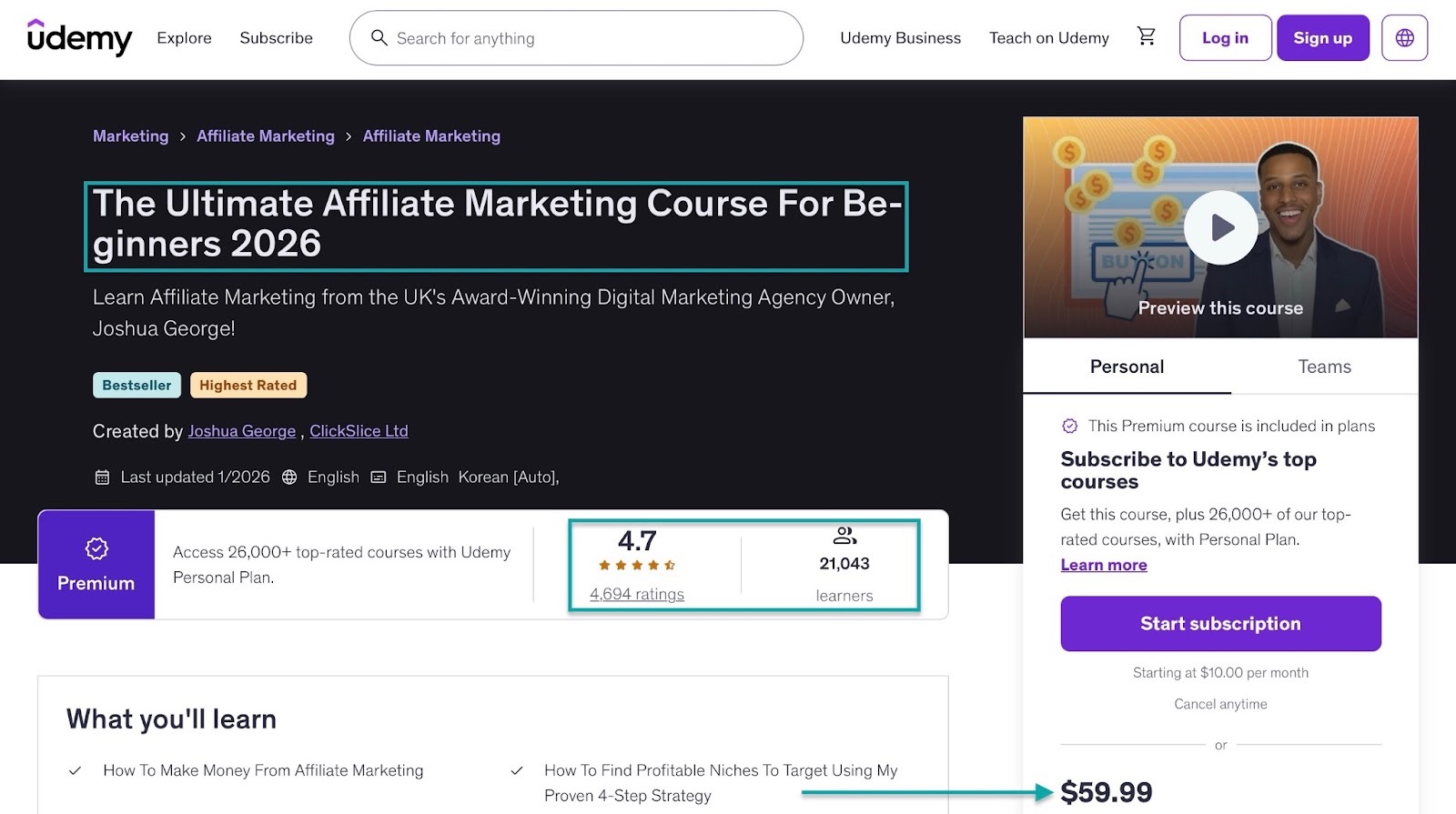
When your course solves a specific problem (and shows it in its title), the right audience finds it easily.
Also, showing through its title that it solves a particular challenge tells students it offers clear outcomes. And learners are more likely to choose that.
So if your title reads “How to build a website,” that’s too broad.
A title like “Build a free website with WordPress” is quite specific. No wonder it has a 4.5-star rating, 2,378 reviews, and 300,000+ students already enrolled.
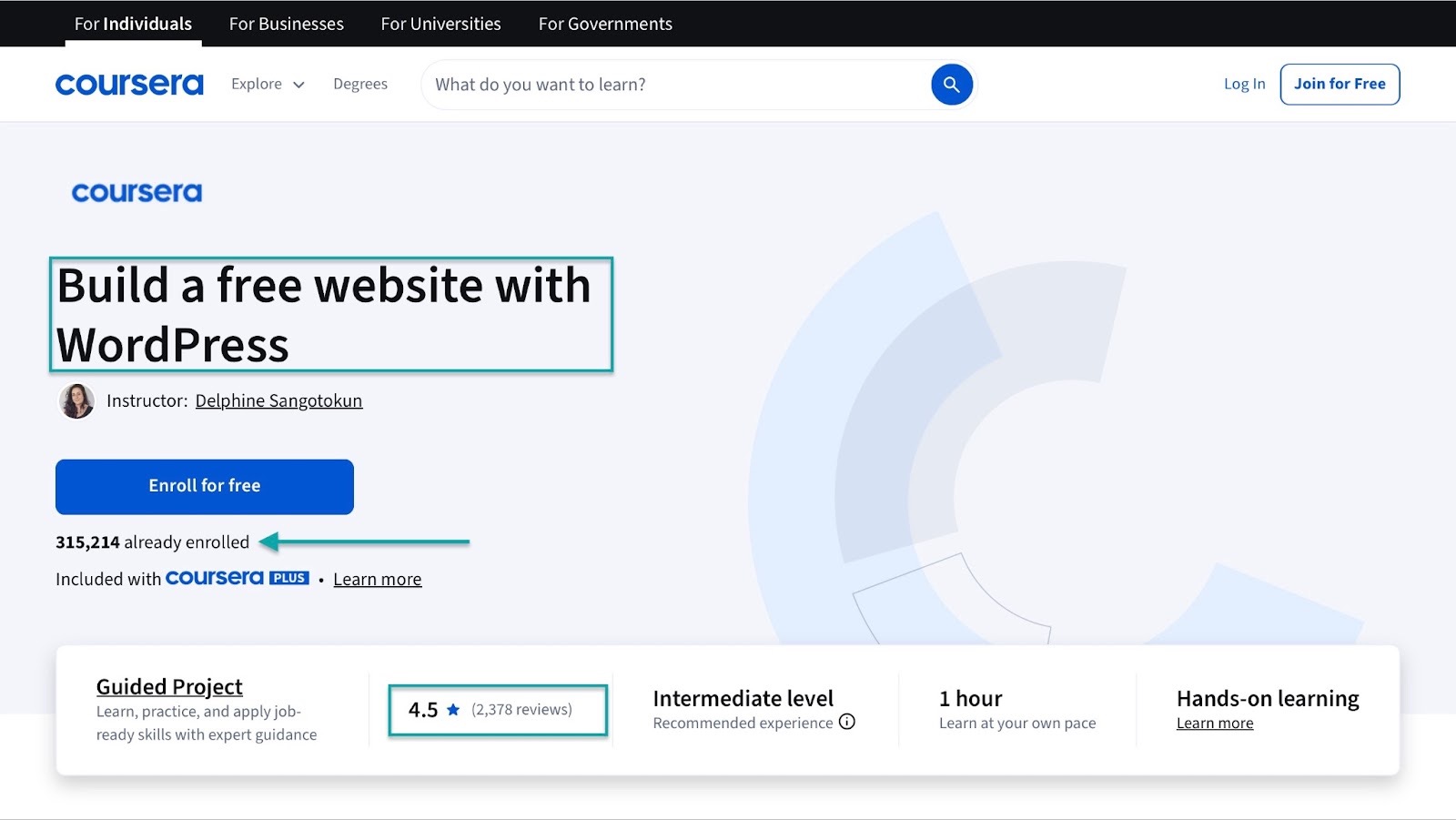
It also tells students what outcome they should expect.
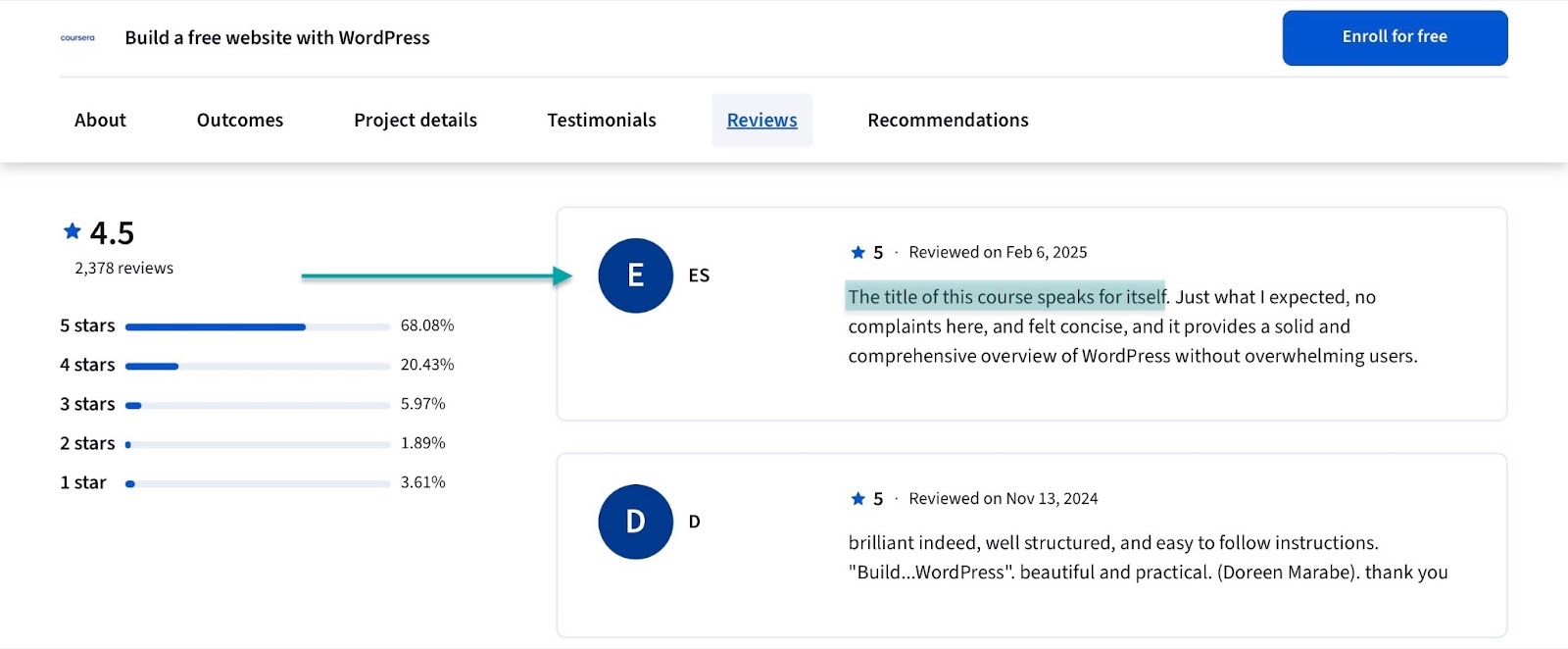
Here’s a table with 20 profitable online course ideas, a specific problem, and examples of solutions to provide:
The takeaway is that courses that solve clear, specific problems attract more students.
Now, how do you validate the online course idea after all this?
I’ll answer that in the next subheading. Keep reading.
4. Validate the online course idea
You’ve identified your expertise and researched demand. You’ve also specified the problem. Now, you have to validate the online course idea.
Why? To get confirmation that people will actually pay for it.
Here are two ways to pull this off:
1. Ask your audience (if you have one)
2. Pre-sell the course
Now, I’ll walk you through each point.
1. Ask your audience
If you already have an active audience on social media, a newsletter, or a community, you could ask them what they’d like to learn.
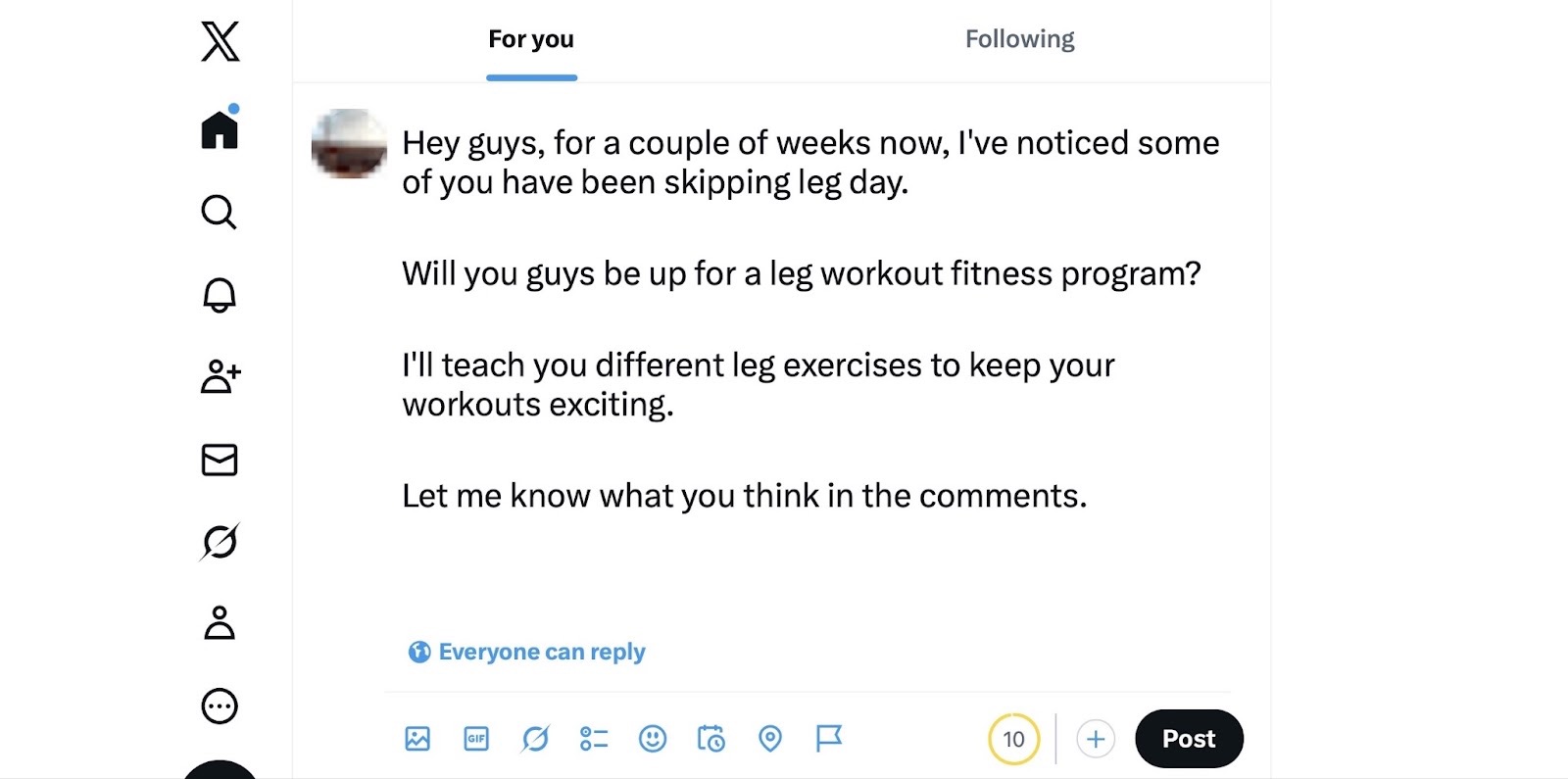
A fitness coach on X (formerly Twitter) could ask her followers if they’d be willing to learn about different leg exercises.
She could write:
“Hey guys, for a couple of weeks now, I’ve noticed some of you have been skipping leg day. Will you guys be up for a leg workout fitness program?
I’ll teach you different leg exercises to keep your workouts exciting.
Let me know what you think in the comments.”
You then use their feedback to polish and refine your online course idea.
2. Pre-sell the course
Another way you can validate the online course idea is to pre-sell the course.
Start off by building a landing page that describes your course. Students can then visit to learn about it and join a waitlist.
The number of people who sign up for the waitlist will confirm whether or not your course has potential.
Kamila Paradowska did a pre-sell for her UX writing course on Easytools.
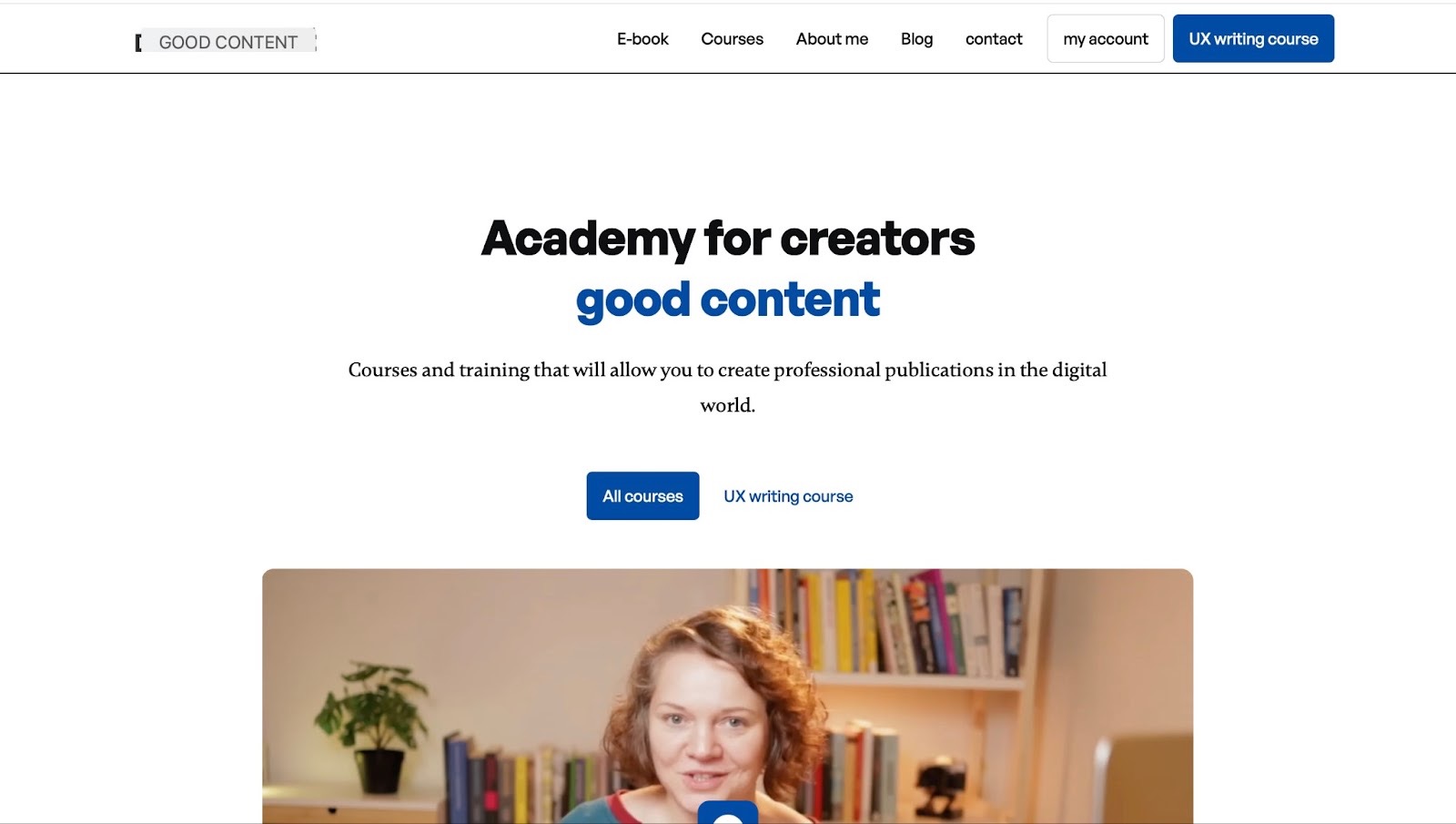
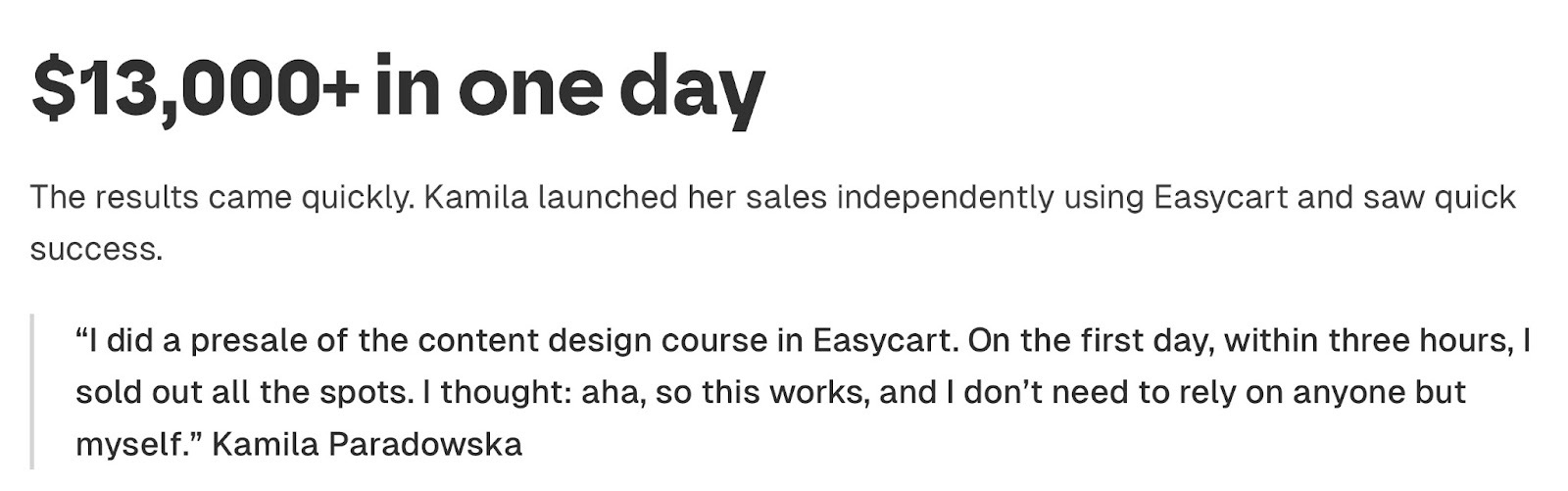
On the first day, she sold every spot within three hours.
That convinced her the actual course was good to go. She launched it on Easytools and made $13,000 in a single day.
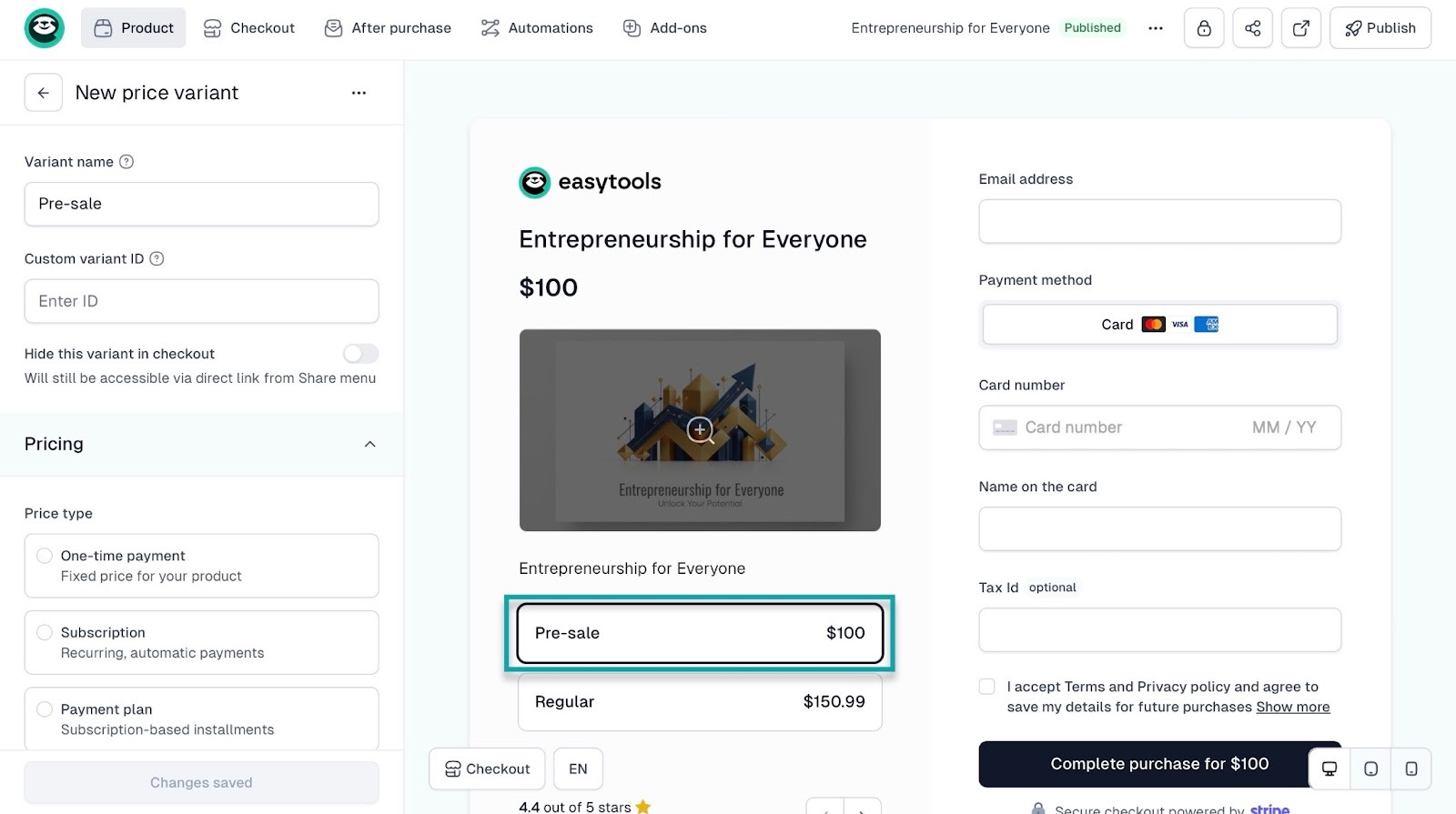
You can do the same thing on Easytools. Once you’ve created a new course, set the price of the course for early access.
For a presale, set up two price variants. The presale price will be the discounted version of the regular price after you've launched the course.
Watch this video to learn about how you can sell online courses on Easytools:
To sum it up, validating your online course idea will save you the headache of creating something that people may not want.
It’s essential to test the waters before you dive in.
Choose the right profitable online course idea
Alright! It’s been an exciting journey.
I hope you enjoyed learning about these best online course ideas and the factors that make them profitable.
You can choose the right ones using the factors I discussed.
Simply identify your expertise and research market demand. Continue by solving a specific problem and validating the online course idea.
It’s not a hit or miss. Especially when you’ve read this piece and chosen the right online course platform.
Now it’s time to create your course and go easy!


Related articles
Ready for more? Check out these related articles that will keep your momentum going. They’re packed with easy-to-follow tips and tricks to help you supercharge your digital goods business.
Take it easy with Easytools
Focus on creating, and let Easytools handle the behind the scenes work.