Selling online
How to effectively market digital products in 2026: 29 tried-and-tested methods
Looking for ways to market digital products? We gathered 29 tried-and-tested methods across search engines, social media, email marketing, partnerships, paid ads, and conversion optimization, plus tips on choosing the right ones for your business.

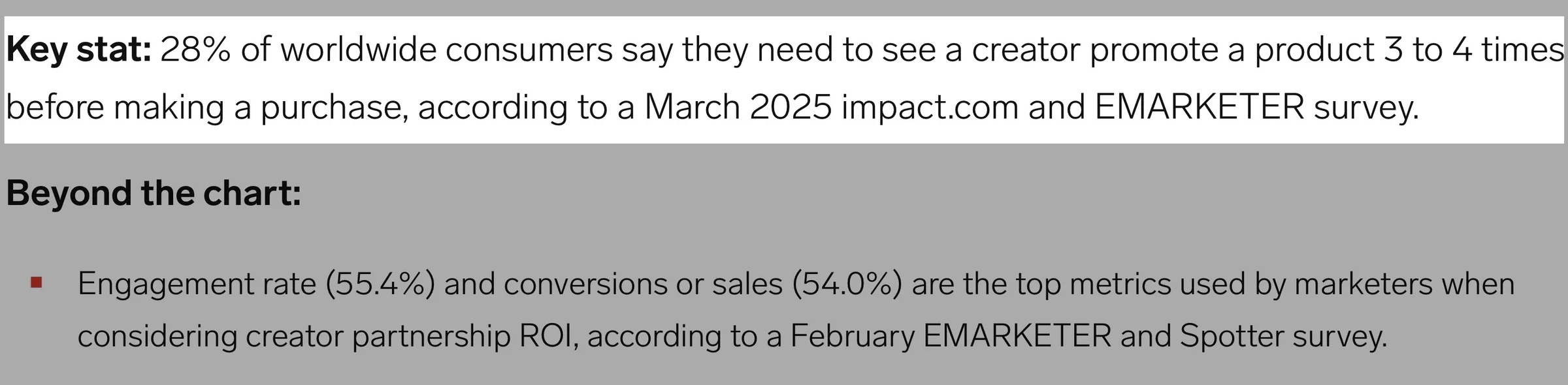
According to an EMARKETER and impact.com study, 28% of consumers need to see a creator promote a product 3 to 4 times before they buy from them.
But how do you market digital products 3 to 4 times?
And I’m sure you’ve been sharing your checkout URL on social media or adding it to your YouTube video descriptions. But there’s more you can do.
To help you, I’ve compiled 29 tried-and-tested digital product marketing methods.
Of course, not every method will work for your business. So, I’ve also included a section to help you choose the right methods to market digital products.
Let’s get into it.
TL;DR
-
You can market digital products:
- Through search engines and content marketing
- On social media
- Through email marketing
- Through partnerships and communities
- Using paid advertising
- By increasing its sales through conversion optimization
-
You can also choose the right digital product marketing method by:
- Defining your marketing goals
- Considering your target audience and where they spend time
- Matching your marketing methods to your digital product
- Considering your marketing budget and available resources
- Tracking performance and focusing on methods that generate sales
How we selected these digital product marketing methods
Here’s how we selected these 29 methods to market digital products:
-
We chose digital product marketing methods that were cheaper to execute and could still give you good returns.
-
We included methods that help you reach potential customers where they already spend time. So, search engines, social media platforms like Facebook, Pinterest, LinkedIn, Instagram, and email marketing.
-
We selected methods that work for different types of digital products, from e-books and templates to online courses, planners, checklists, PDFs, webinars, memberships, and more.
-
Building an online community or growing an audience on social media may take time to show results and can be difficult to link directly to sales. That’s why we included digital product marketing methods you can measure. That way you see which ones bring in visitors, generate sales, and give you the best return on your marketing efforts.
Market digital products through search engines and content marketing
- Methods: Product page SEO, buyer-intent blog posts, how-to guides, YouTube tutorials, Pinterest marketing
- Best for: Attracting people actively searching for solutions, comparing products, or learning about a topic
- What you create: Optimized product pages, blog posts, tutorials, videos, pins
- Cost to start: $0-$100+ (excluding your time; paid tools and production costs vary)
- Typical time to see results: A few weeks to 6+ months, depending on the channel and competition
1. Optimize your product pages for search engines
Optimizing your product pages for search engines helps potential customers find your digital products when they search on Google.
Start by finding the keywords your target audience uses. Add your primary keyword naturally to the product title, URL, meta description, and page copy.
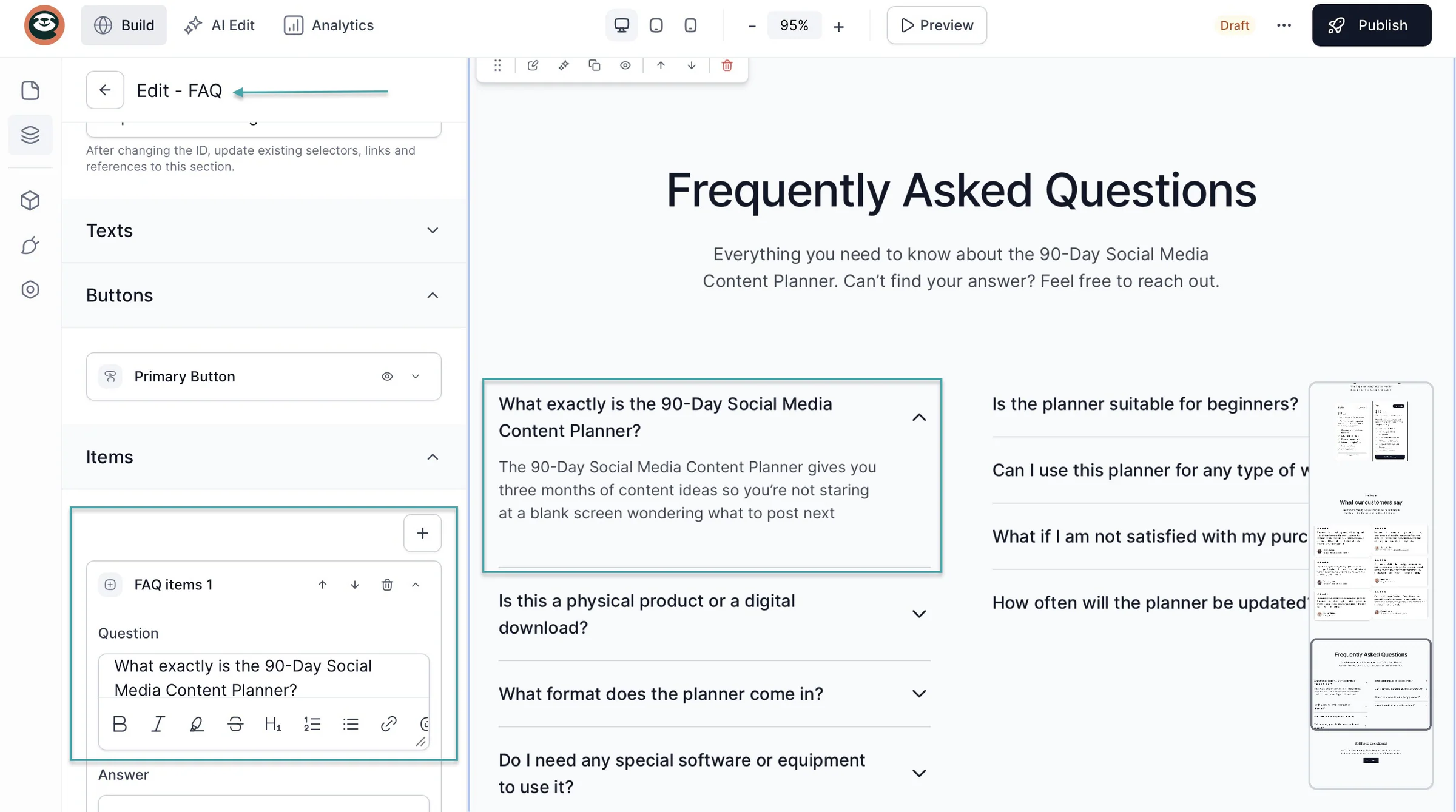
If you’re selling a social media content planner, you could target “90-day social media content planner,” not “The Ultimate Planner.”
Also, explain what the product does, who it’s for, and why someone should buy it. And add screenshots/pictures, customer reviews/testimonials, and FAQs where relevant.
2. Publish blog posts targeting buyer-intent keywords
Buyer-intent keywords are search terms people use when they’re comparing products or getting ready to buy.
Use Google Keyword Planner or Ahrefs’ Free Keyword Generator to find keywords containing words like “best,” “review,” “alternative,” or “template.”
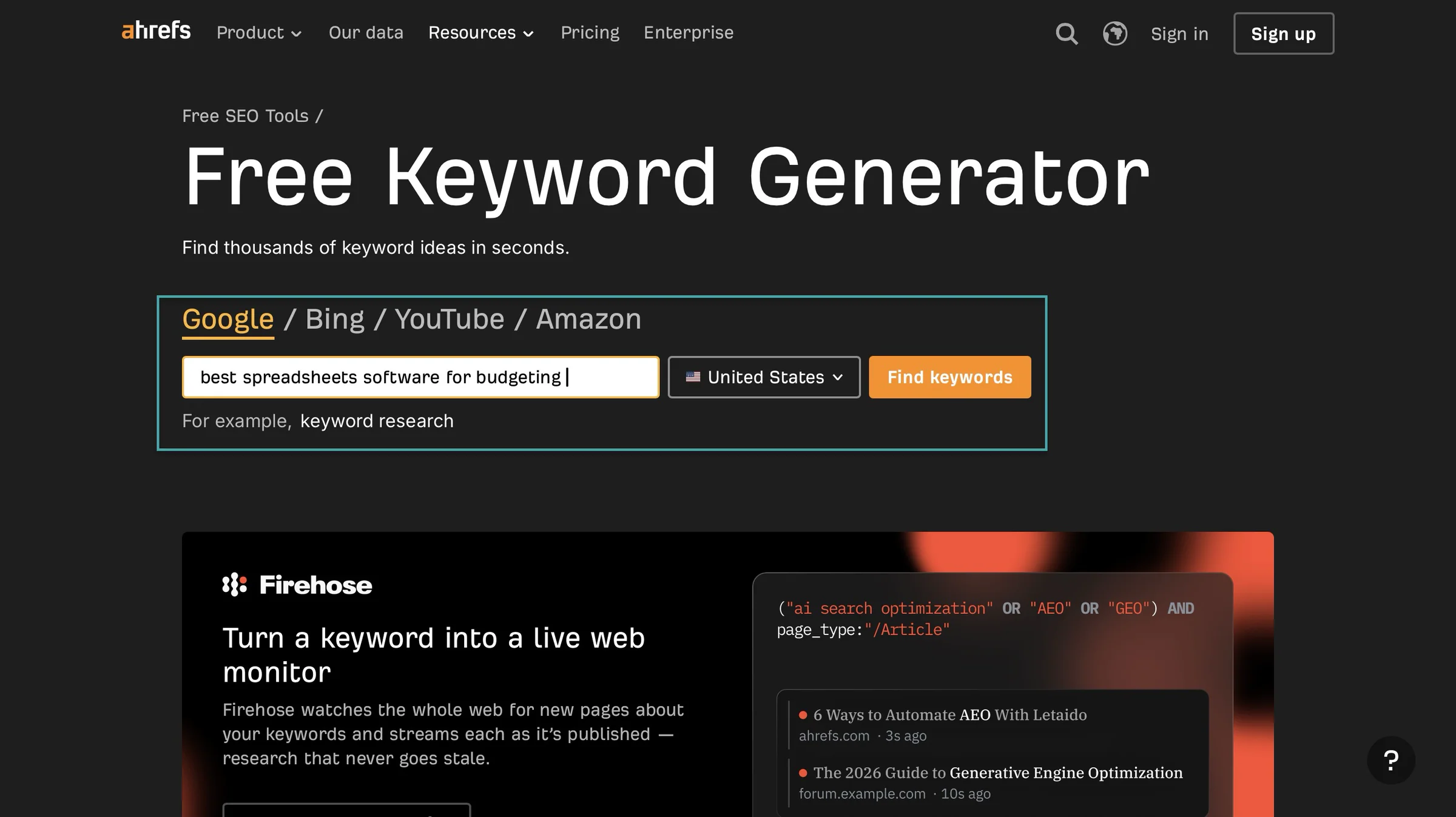
Then write comparison articles, reviews, or buying guides that help readers choose the right product.
Let’s say you sell budgeting spreadsheets. You could publish “Best Budget Spreadsheets for Freelancers” and include your product where it’s genuinely relevant.
Pro tip: Make sure the article answers the reader’s questions instead of turning every paragraph into an advertisement.
3. Publish a how-to guide on a topic in the niche
A how-to guide teaches your audience how to solve a problem related to the digital product you’re selling.
Say you sell a 90-day social media content planner. You could publish a guide titled “How to Plan 90 Days of Social Media Content.”
Your guide will show readers the steps and introduce your planner as a way to make the process easier.
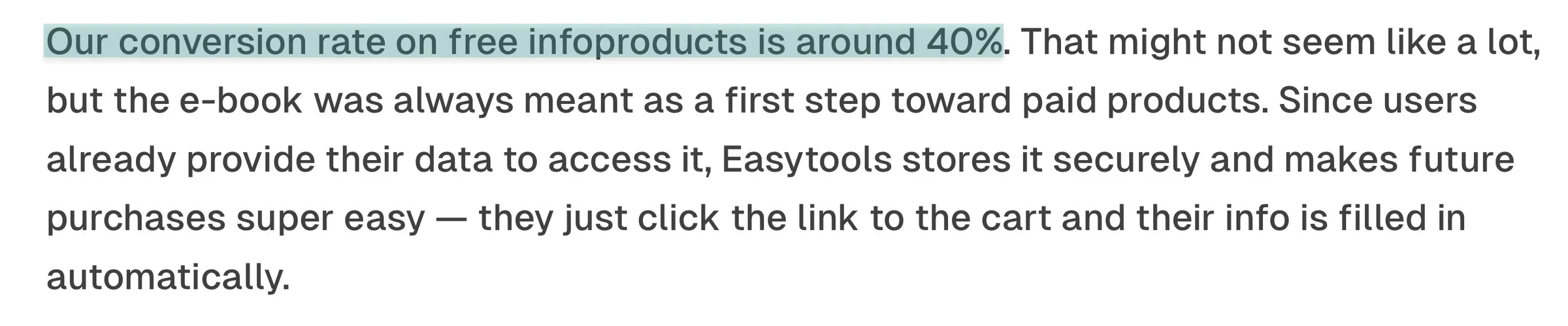
That’s similar to what Kuba Masztalski does. He offers free AI e-books to educate potential customers before introducing his paid SalesCyborgs course.
His free digital products achieve around a 40% conversion rate.
4. Create YouTube videos covering topics in the niche
You can also market digital products by creating YouTube tutorials, demonstrations, and educational videos related to what you’re selling.
If you sell a fitness e-book, create videos showing people how to perform exercises correctly. Then mention your e-book and add the checkout URL to the video description.
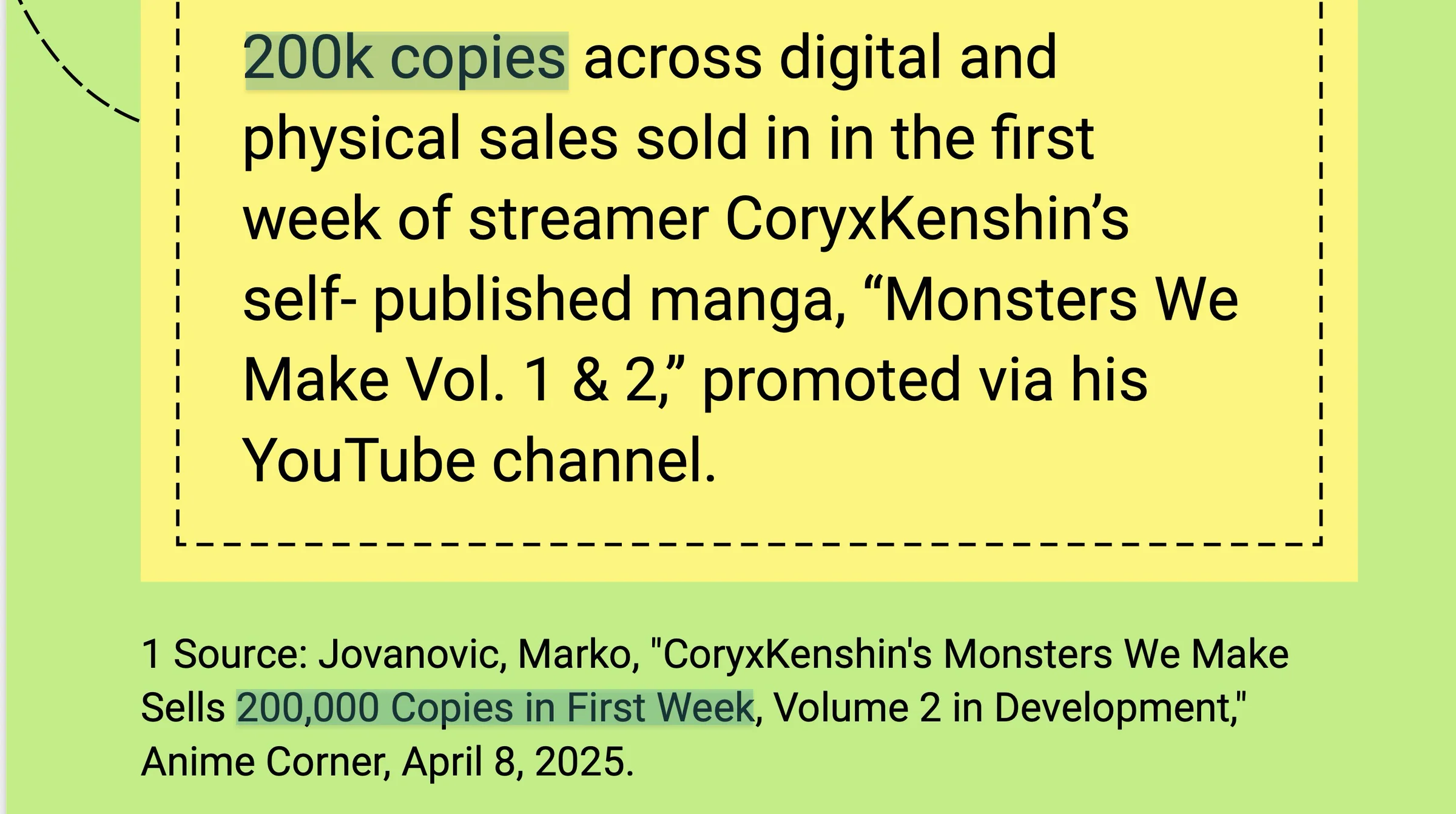
Gaming Creator CoryxKenshin promoted his self-published horror manga, Monsters We Make, through his YouTube channel. The first volume sold 200,000 copies across digital and physical formats in its first week.
5. Answer relevant questions on Reddit and Quora
People ask questions on Reddit and Quora because they’re looking for answers. And some of those questions may be related to your digital products.
Find relevant discussions, give helpful answers, and share your product only when it genuinely solves the person’s problem and the community permits promotion.
A creator selling freelance contract templates could answer questions about what to include in customer agreements. And then share a link to his product.
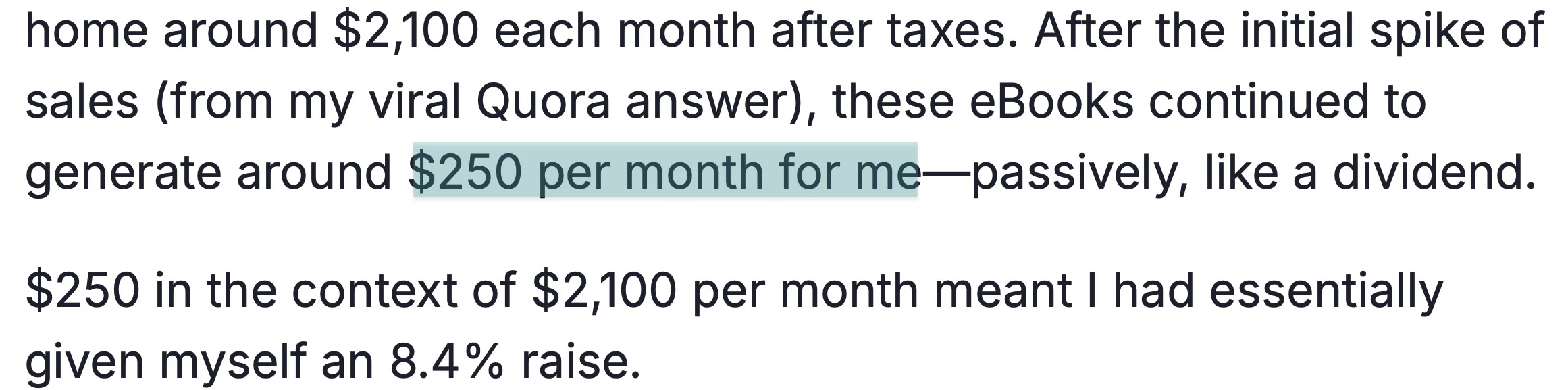
Fitness creator Cole answered questions about fitness on Quora and eventually added a link to his own e-books covering his workout routines and diet.
One of his answers went viral, and the link generated $5,000 in e-book sales during the first week.

He later said the e-books continued bringing in around $250 a month.
Market digital products on social media
- Methods: Short-form videos, LinkedIn content, Instagram Stories, Pinterest posts, live tutorials, testimonials
- Best for: Reaching niche audiences, demonstrating products, building trust, and generating interest
- What you create: Educational posts, short videos, product demos, visual pins, live sessions, customer stories
- Cost to start: $0-$100+ (excluding your time; equipment and editing tools may add costs)
- Typical time to see results: 10 days to 3+ months, depending on reach, audience fit, and consistency
6. Create short-form educational videos related to your digital product
Short videos on Instagram Reels, TikTok, and YouTube Shorts can help you reach potential customers while teaching them something useful.
Start with a problem your audience faces, show them how to solve it, and introduce your digital product where it makes sense.
For example, if you sell a budgeting spreadsheet, create a 30-second video showing freelancers how to track irregular income.
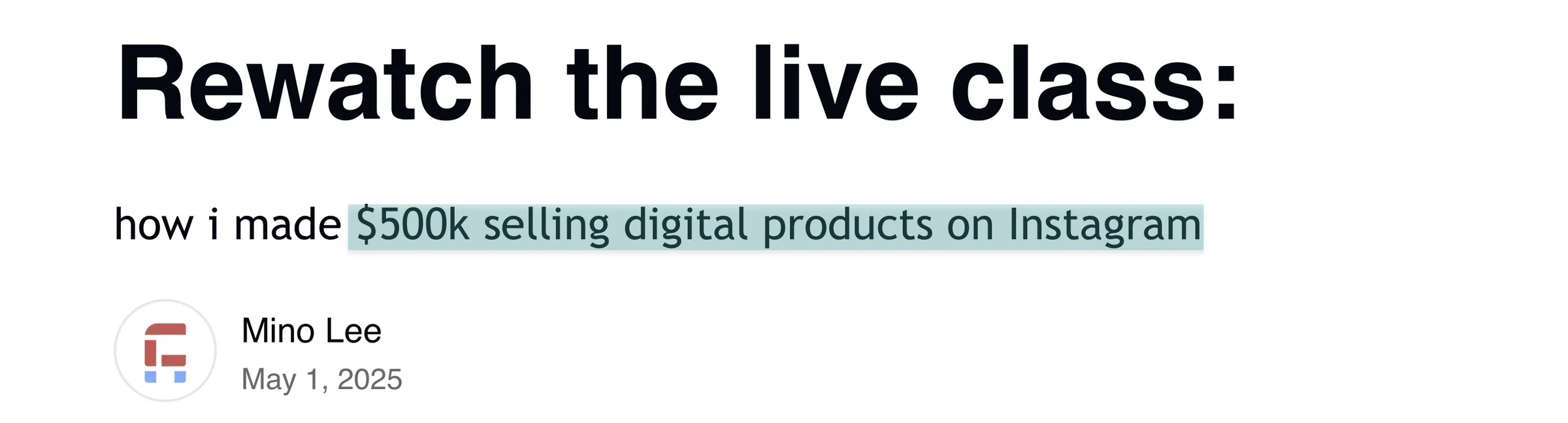
Creator Mino Lee uses Instagram Reels to market digital products. In this YouTube Live class, he discussed his approach to selling digital products on Instagram and reported making $500,000.
7. Publish educational content on LinkedIn
LinkedIn is a good place to market digital products to professionals who want to learn something useful.
Share practical tips, industry insights, tutorials, and lessons from your experience. You can also turn sections of your e-book into LinkedIn posts or document carousels.
If it’s an SEO checklist that you’re selling, publish a post about five common SEO mistakes and show readers how to fix them. Then introduce your checklist as a resource to help them put those tips into practice.
Creator Matt Barker regularly publishes educational LinkedIn content about writing and building a business.
In a LinkedIn post, he reported earning $210,000 from a business offering digital products, courses, newsletters, and other services.
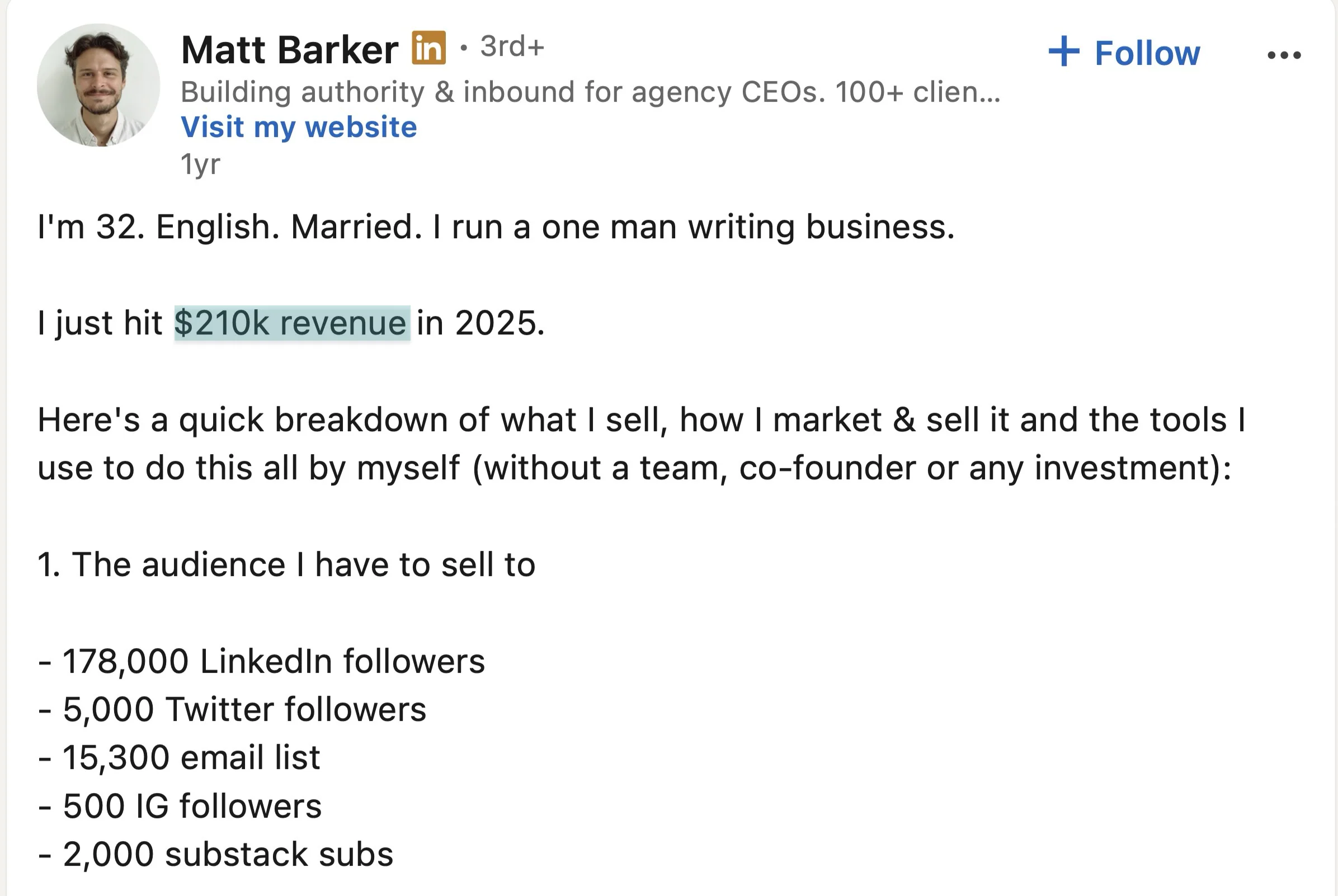
He also shared that he’d published 392 LinkedIn posts that year. The revenue wasn’t from digital products alone.

8. Use Instagram Stories to share tips, answer questions, and promote your digital products
Instagram Stories let you share quick tips, answer questions, and show potential customers how your digital products can help them.
Say you sell a fitness e-book. You can share a workout tip, use a question sticker to ask followers about their fitness struggles, and answer a few responses.
Then show them how your e-book can help and add a link sticker to your product page.
The idea is to give people a reason to care about your product before asking them to buy it. After all, posting a checkout link repeatedly isn’t much of a marketing strategy.
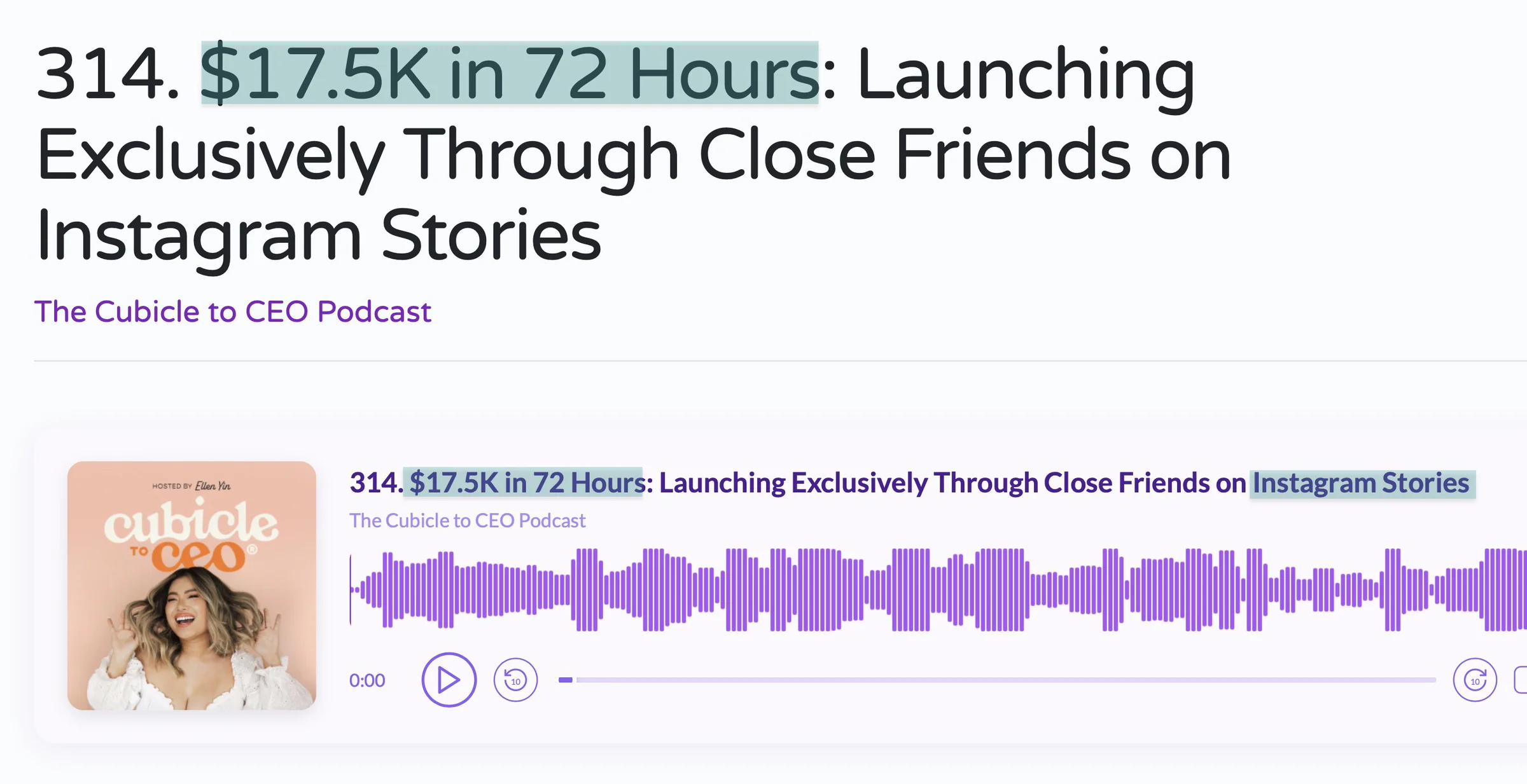
On an episode of the Cubicle to CEO podcast, Brittany Roberts shared that she used Instagram’s Close Friends feature to launch a paid group program.
More than 250 people signed up for a three-day training series delivered through her Instagram Stories.
At the end of the training, she introduced her paid offer exclusively to those followers. She made $17,500 in revenue within 72 hours without public posts or email campaigns.
9. Drive traffic to your products through Pinterest
Pinterest lets you promote digital products using images and videos that link to your website or product pages.
You can create a business account, research keywords your audience searches for, and design pins featuring your products. Then add descriptive titles and links so interested users can find them.
For the sale of Canva templates, for example, create pins showing what customers can design with them.
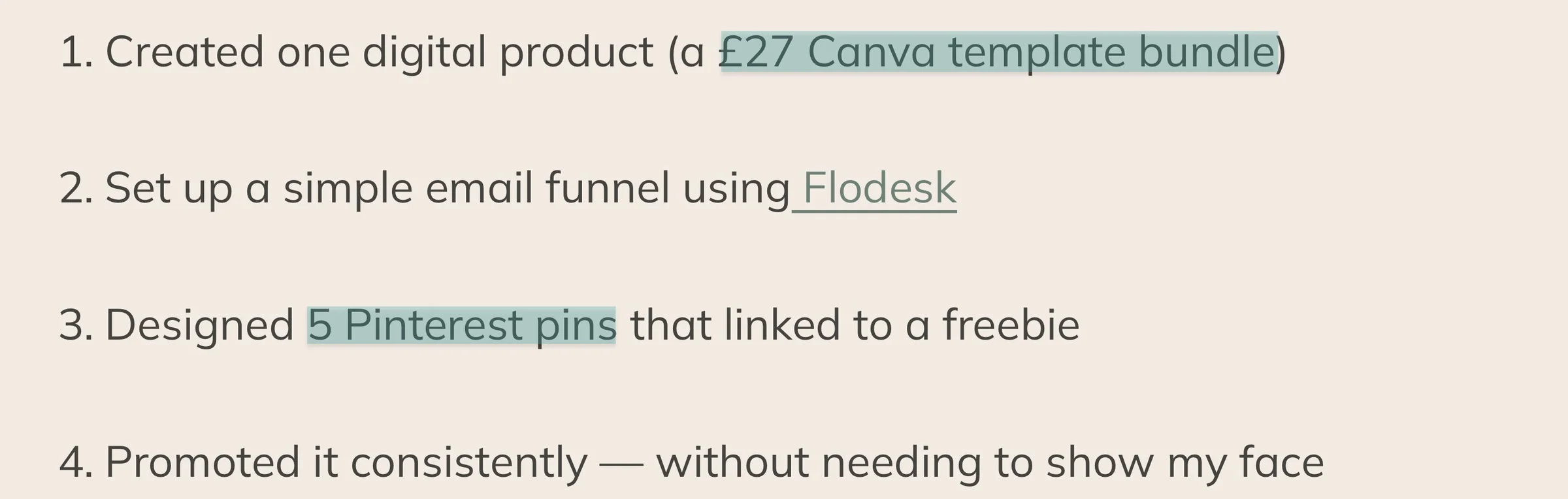
Creator Rochelle Be comes to mind. She reported earning £16,000+ (approximately $21,397+) selling digital products without Instagram.
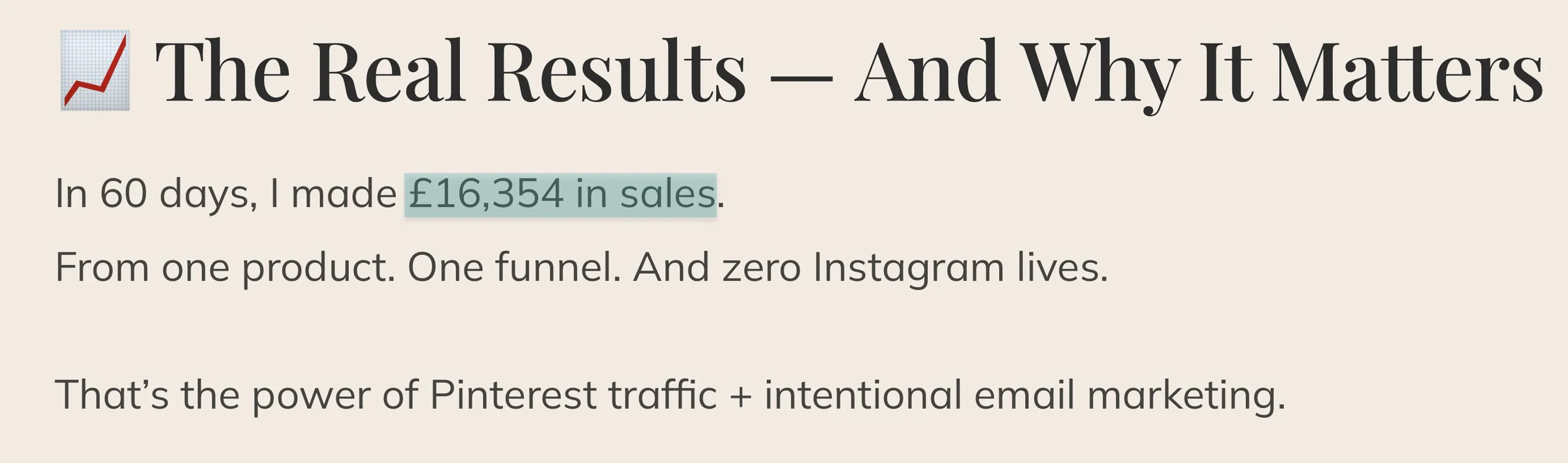
Her strategy included 5 Pinterest pins promoting a free resource, followed by an email sequence introducing her £27 Canva template bundle.
10. Host live tutorials and Q&A sessions related to your niche
Live tutorials and Q&A sessions let you teach potential customers something useful while introducing your digital products.
You just need to host a webinar, YouTube Live, or online workshop covering a problem your audience wants to solve. Then, answer questions, demonstrate your expertise, and introduce your product towards the end.
For example, newsletter expert Matt McGarry hosted 5 live webinars where he shared newsletter growth strategies before introducing his online course, The Newsletter Growth System.
His webinars attracted 2,015 registrations and generated 32 course sales. His overall course launch brought in $105,637 in 4 days.

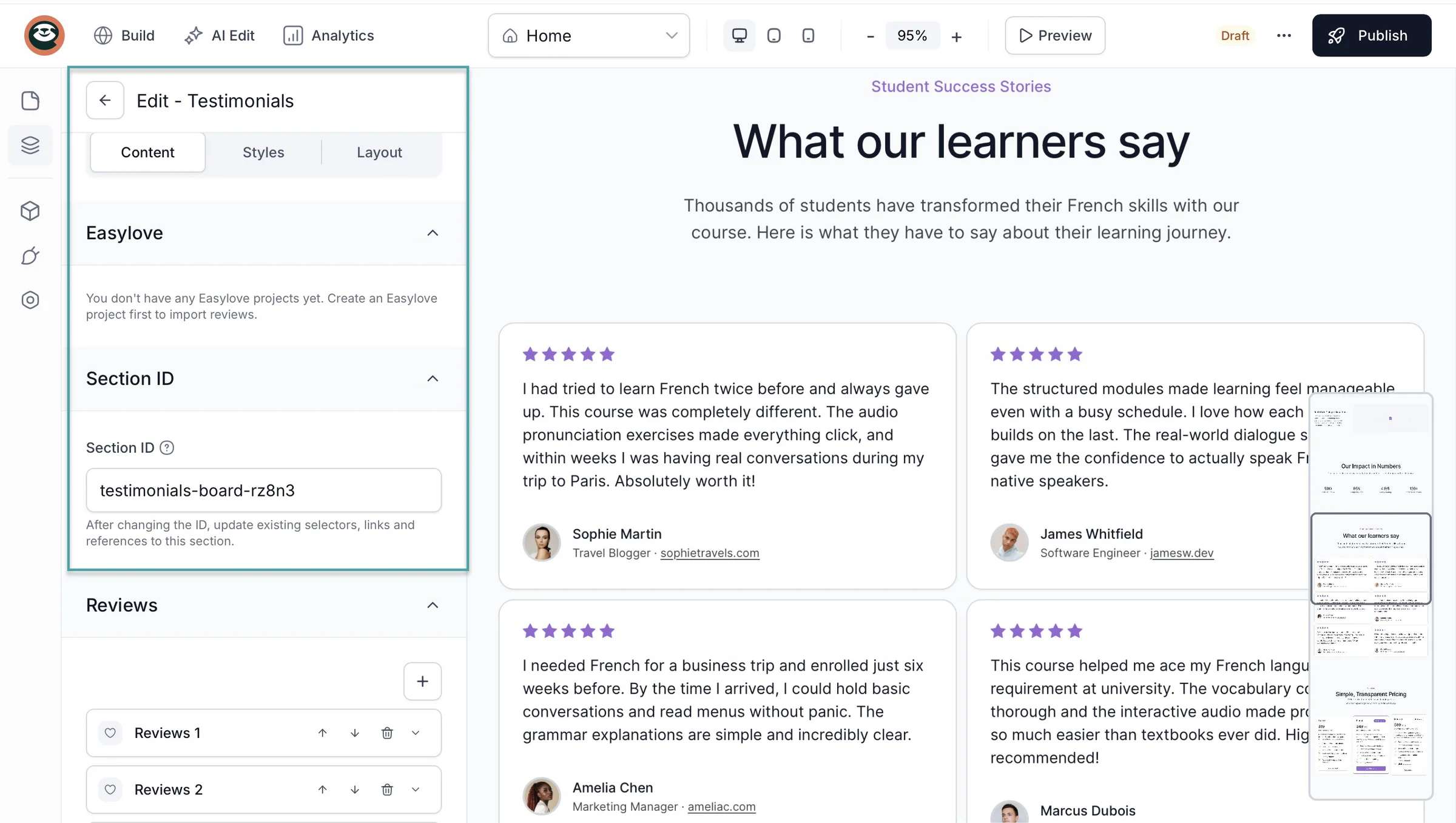
11. Share customer testimonials and success stories
Customer testimonials show potential buyers what other people have achieved with your digital products.
Ask satisfied customers for feedback, especially about the problems your product helped them solve. With their permission, share these testimonials on your product pages, social media, and marketing emails.
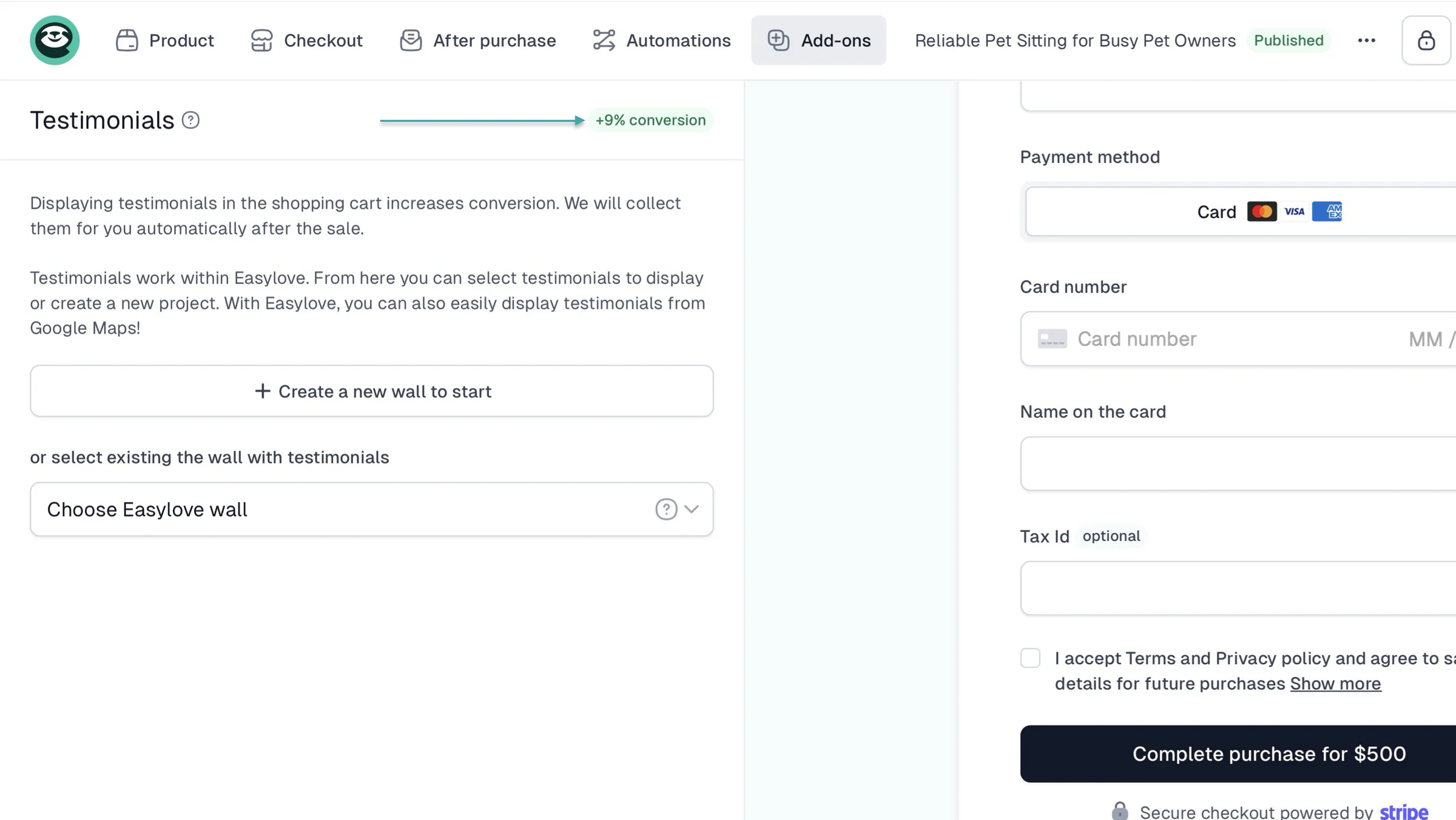
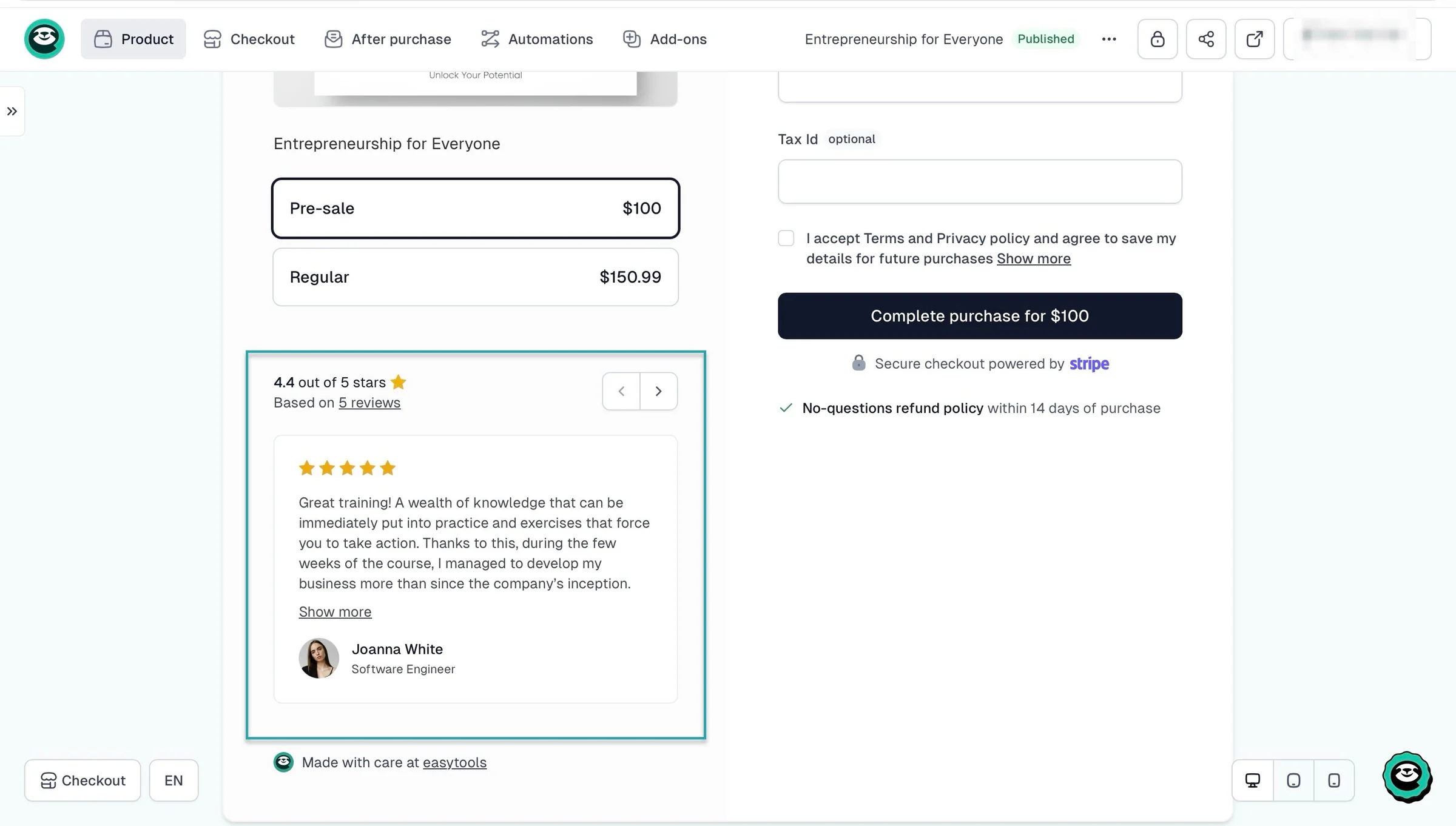
On Easytools, you can collect and add testimonials to your checkout to boost conversion rates by +9%.
You can also add customized ones to your product landing page.
Market digital products through email marketing
- Methods: Lead magnets, welcome sequences, newsletters, email segmentation, abandoned checkout emails
- Best for: Building an audience you can reach directly, nurturing potential buyers, and encouraging repeat purchases
- What you create: Free resources, automated email sequences, newsletters, segmented campaigns, checkout reminders
- Cost to start: $0-$50+ per month, depending on your email platform and list size
- Typical time to see results: 7 days to 8+ weeks if you already have subscribers; longer if you’re building a list from scratch
12. Build an email list using free downloads and lead magnets
A lead magnet is a free resource you offer in exchange for someone’s email address. It could be a checklist, e-book, template, or mini-course related to your paid product.
To promote a social media template pack, give away a free content calendar that helps people plan their posts. Add a signup form to your website and promote the download in your social media posts.
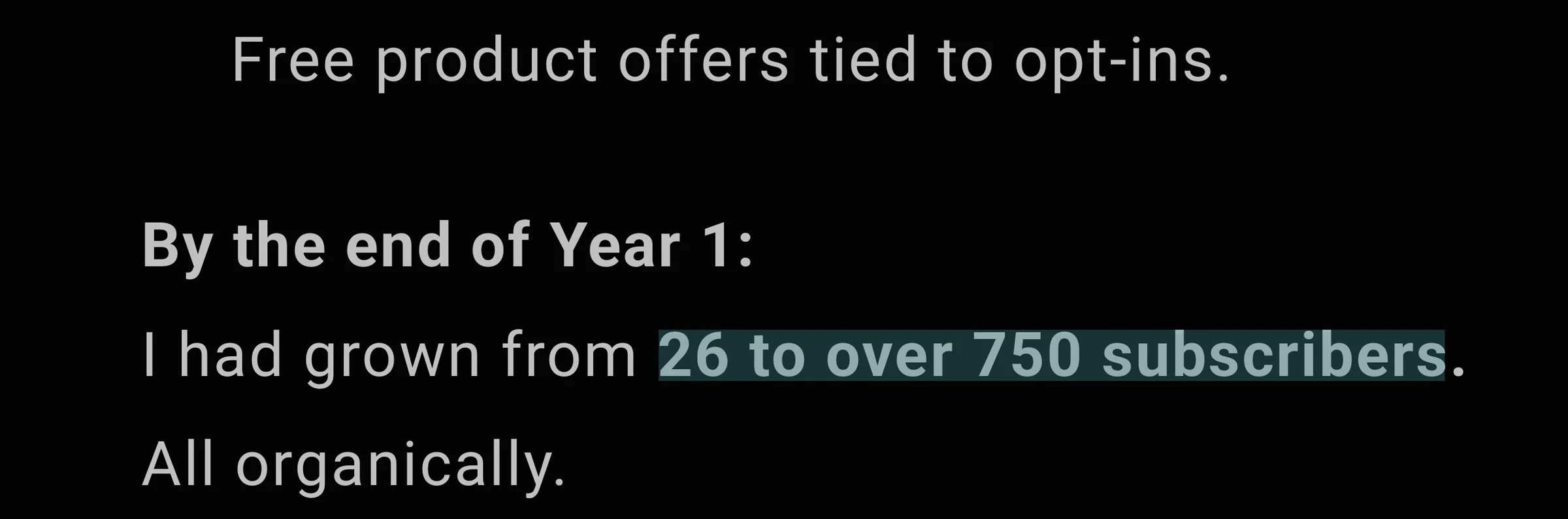
Creator Jack Righteous used free products and lead magnets to grow his email list from 26 to 750+ subscribers organically in his first year.
13. Create automated welcome email sequences
A welcome sequence is a series of emails sent automatically when someone joins your email list. Instead of sending a download link and disappearing, use the next few emails to build trust and introduce your paid product.
For instance, after someone downloads your free SEO checklist, send the checklist first. After that, share a useful SEO tip in the next email.
And explain a common mistake in another, and then introduce your full SEO guide.
A creator newsletter case study reported that a six-email welcome sequence helped convert 8.2% of subscribers into buyers of a paid product. The creator’s newsletter revenue grew from $200 to $8,200 per month over 6 months.
14. Send newsletters that educate subscribers and promote products
A newsletter helps you stay in touch with potential customers. You build a relationship by sharing useful information and introducing your digital products.
And of course, every email shouldn’t sound like a sales pitch.
For example, to market writing templates, you could send subscribers tips on writing better headlines. And examples of effective introductions and advice on editing their work.
Occasionally, you could recommend your templates as a way to put those lessons into practice.
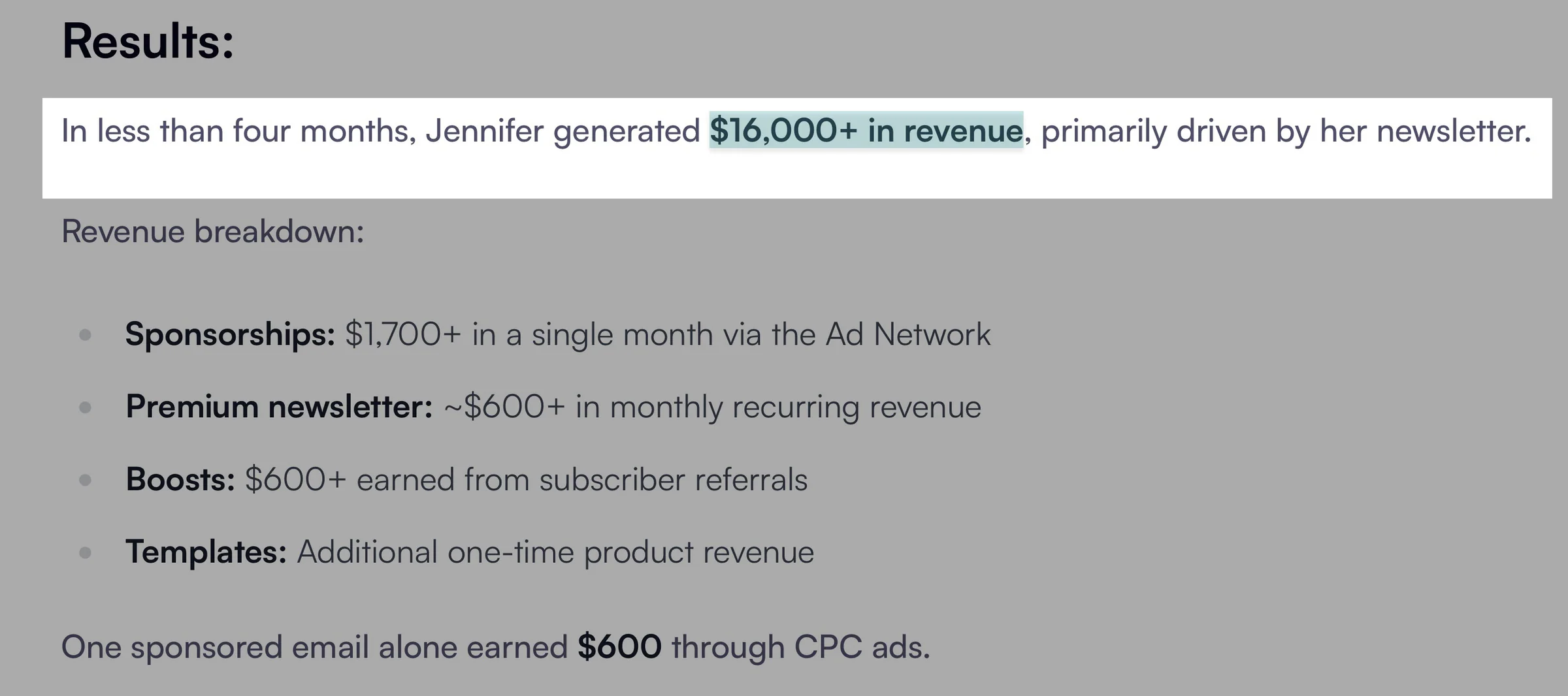
Take creator Jennifer Chou. She used her newsletter, Vegan Tech Nomad, to share productivity content and sell digital templates alongside other revenue streams.
She made $16,000+ in revenue in under 4 months, primarily through her newsletter.
15. Segment your subscribers and send personalized offers
Not everyone on your email list wants the same thing. That’s why you should segment your subscribers.
Group them by their interests, previous purchases, or actions so you can send more relevant emails.
When you sell beginner and advanced photography courses, send beginner tutorials and offers to new photographers. Then send advanced editing resources to experienced ones.
You can also create a separate segment for people who have already bought from you.
For example, Justin Welsh segmented his email subscribers based on their business experience, income sources, and challenges before launching his Creator MBA course.
He then sent personalized emails and showed subscribers sales pages tailored to their needs.
Subscribers who received personalized sales pages were 38% more likely to buy, helping generate an extra $650,000 in course revenue.

16. Recover abandoned checkouts with follow-up emails
Some customers will add your digital product to their cart, reach checkout, and leave without paying. A follow-up email gives you another opportunity to address their concerns and help them complete the purchase.
So set up an automated reminder for people who abandon checkout. Start with a simple message and link back to the checkout page.
You could even send another email answering common questions about the product, payment, or what happens after purchase.
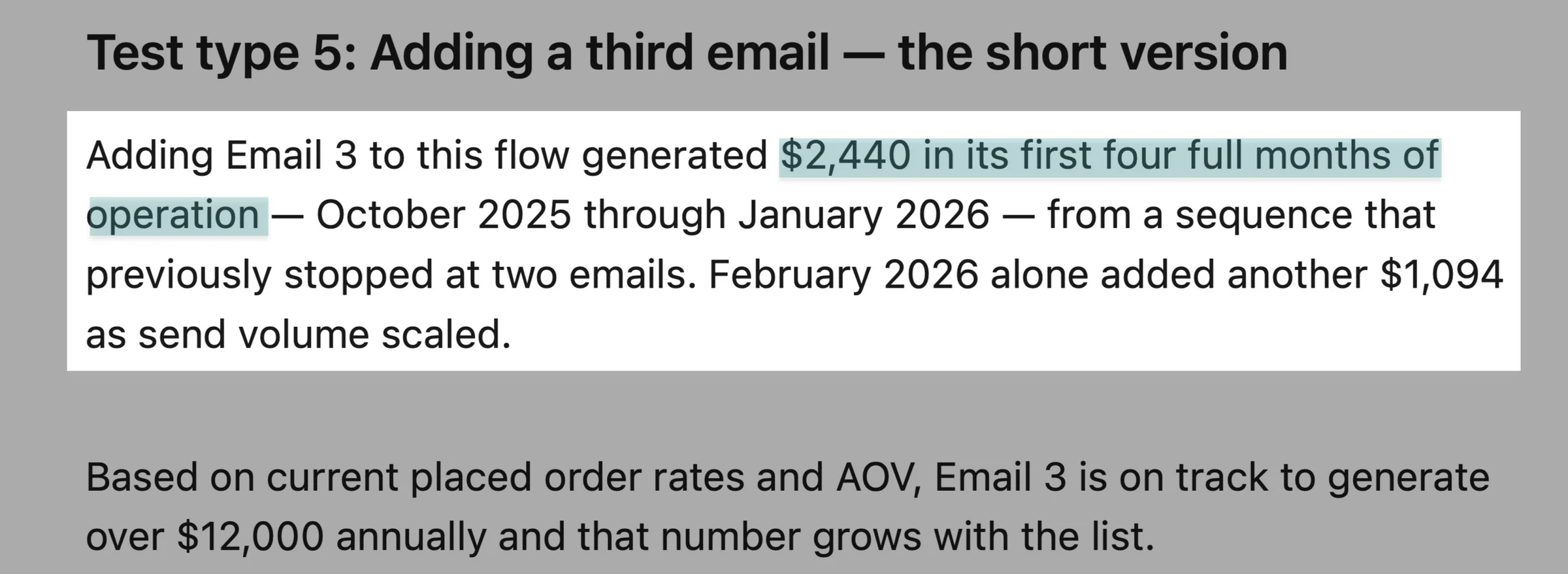
Conversion strategist Monica Badiu examined abandoned-checkout emails for an online training business. In her case study, adding a third email generated $2,440 in tracked revenue over four months.
Market digital products through partnerships and communities
- Methods: Affiliate programs, influencer partnerships, product bundles, online communities, referral programs
- Best for: Reaching established audiences, borrowing trust from relevant creators, and generating word-of-mouth sales
- What you create: Affiliate offers, creator collaborations, bundled products, useful community contributions, referral incentives
- Cost to start: $0-$200+ (excluding your time; commissions, sponsorships, and rewards may add costs)
- Typical time to see results: 2 weeks to 10+ months, depending on partner availability and audience fit
17. Start an affiliate marketing program
An affiliate program lets other people promote your digital products in exchange for a commission on each sale they generate.
Start by identifying creators, bloggers, and professionals whose audiences would benefit from your product. Give each affiliate a unique tracking link, agree on a commission, and provide promotional materials they can use.
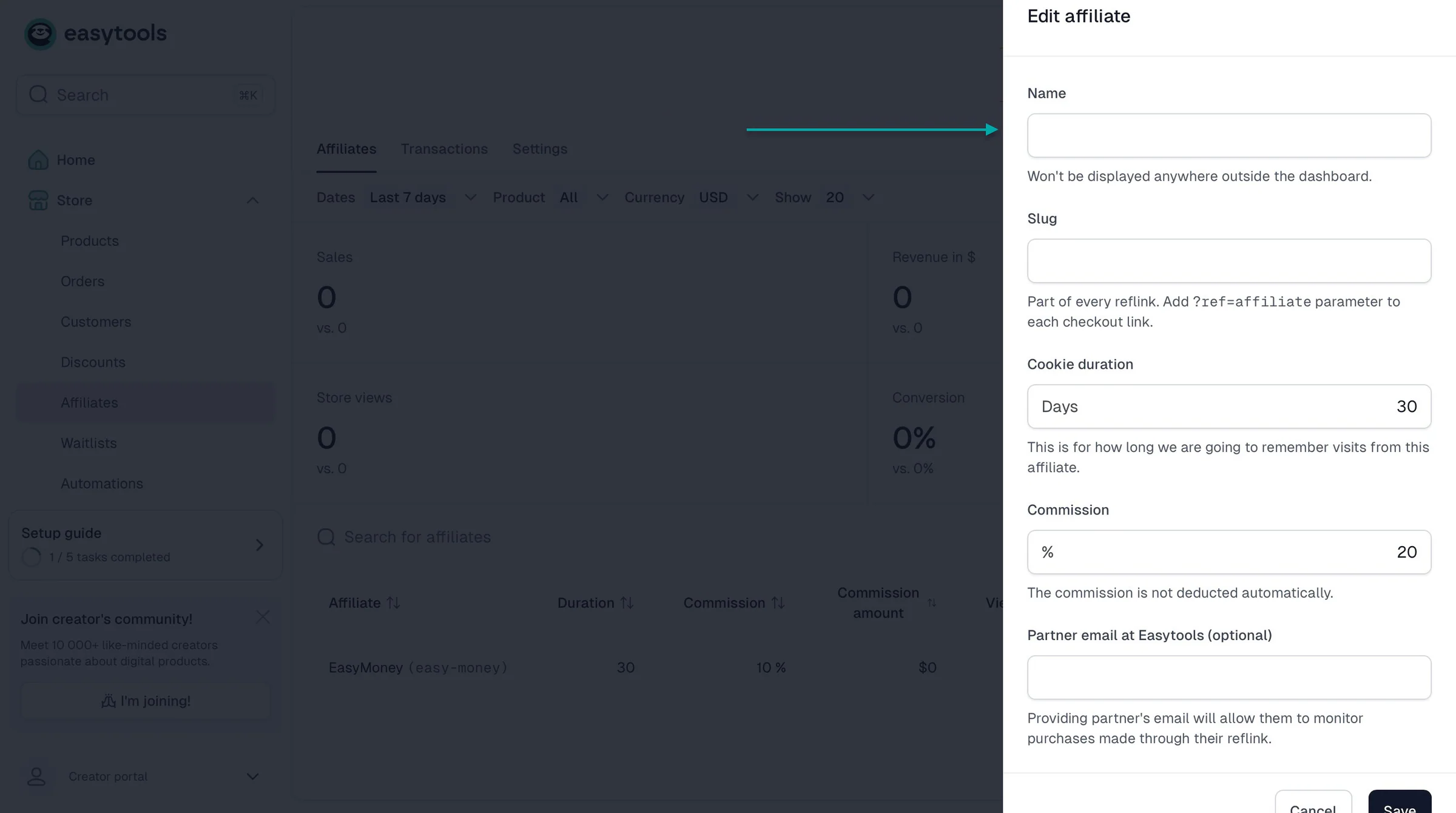
If you sell an online course on email marketing, recruit newsletter writers who teach small-business owners. They can recommend your course to their readers and earn a commission when someone buys.
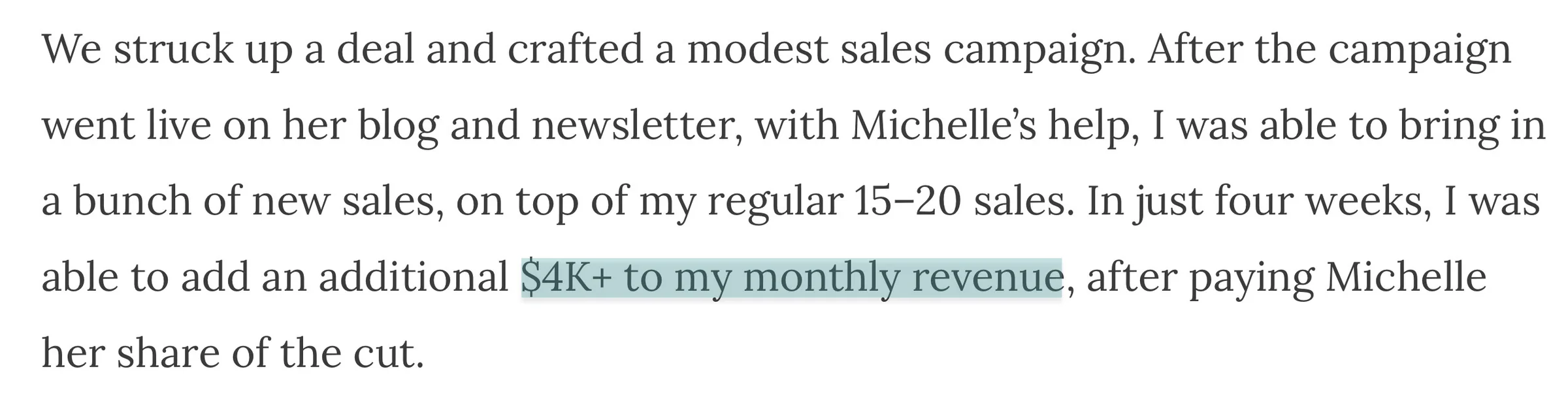
For example, Maliha, creator of The Side Blogger, partnered with Michelle Schroeder-Gardner of Making Sense of Cents to promote her Canva templates course through a blog post and newsletter.
She made $4,000+ in additional revenue in 4 weeks, even after paying Michelle her commission.
18. Partner with influencers and niche content creators
You don’t need millions of followers to market digital products through influencer partnerships. You need someone whose audience is likely to find your product useful.
Find creators who already discuss your niche and propose a collaboration. You could pay for a sponsored post, offer a commission on sales, or give them free access so they can review your product honestly.
If you sell a meal-planning e-book, partner with a nutrition creator who shares recipes and practical advice. Give them a unique link so you can track the sales they generate.
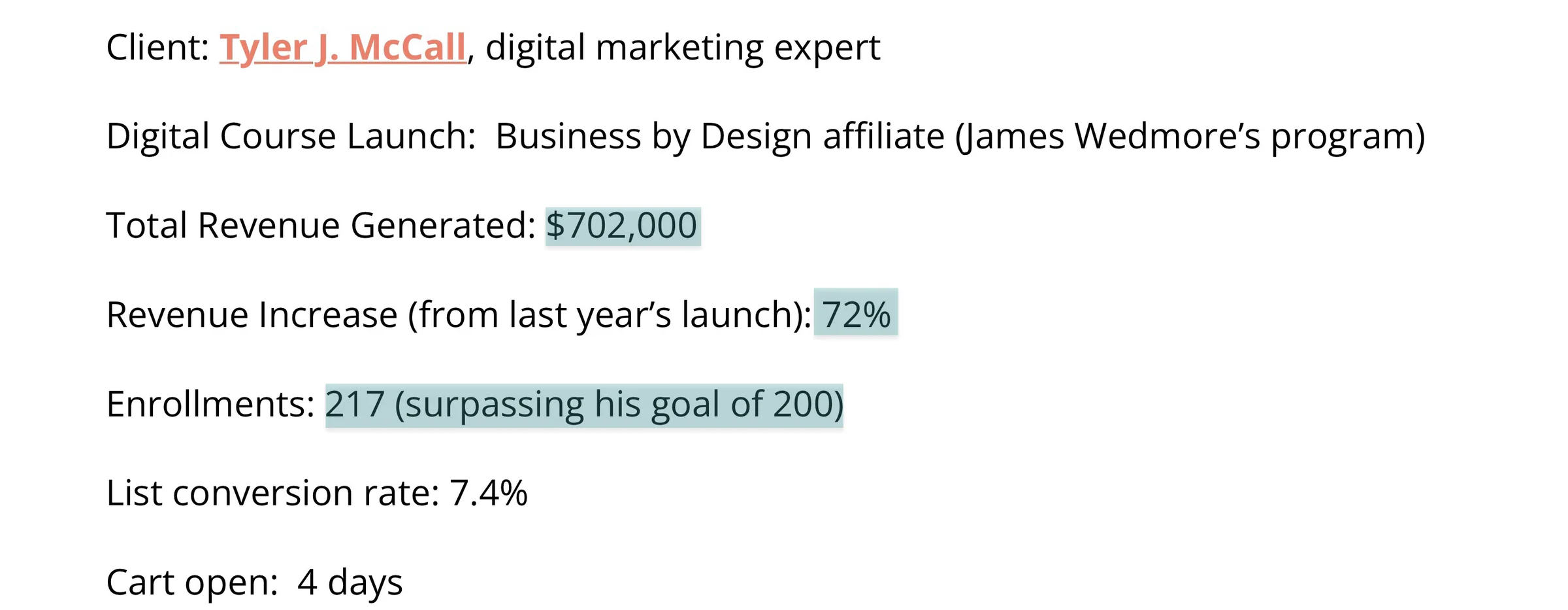
For example, Instagram marketing educator Tyler J. McCall partnered with copywriter Christine Blubaugh to promote James Wedmore’s Business by Design online course. Tyler was an affiliate for the course, using his expertise and audience to help drive sales.
The campaign brought in $702,000 in revenue from 217 enrollments, a 72% increase over the previous year’s launch.
19. Collaborate with creators on product bundles
A product bundle combines complementary digital products from two or more creators into one offer. Each creator contributes something useful and promotes the bundle to their own audience.
A freelance writer could team up with a graphic designer to sell a bundle containing a customer proposal template, a pricing calculator, and a portfolio design kit. Both creators reach potential customers who may not have discovered them otherwise.
Creator Reese Hopper documented this approach with Creator FX, a digital asset bundle containing more than 50 video-editing assets from multiple creators.
The assets were individually valued at over $1,400, but the bundle sold for $100 during a limited promotion.
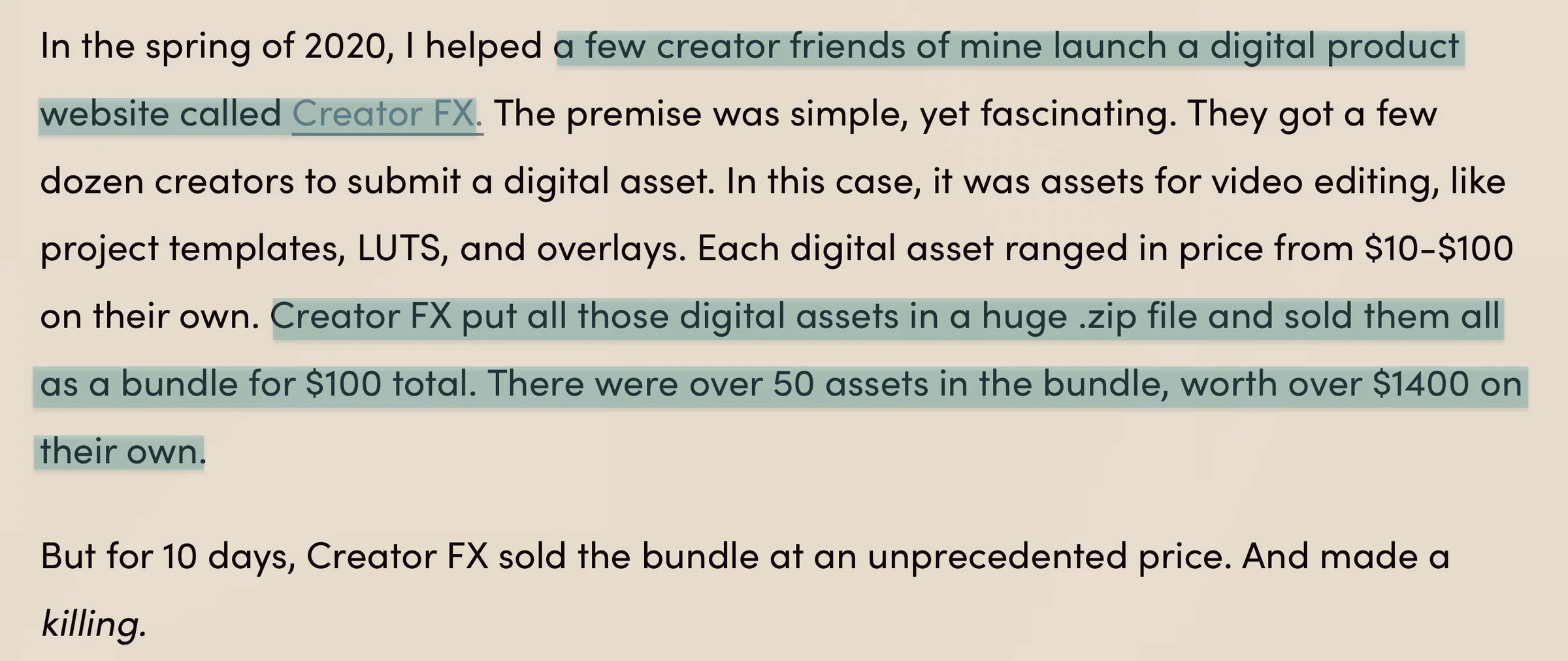
It went on to make $375,000 in 10 days.

20. Promote products through relevant online communities
Online communities bring together people who share an interest or face similar problems. That makes them useful places to connect with potential customers.
The trick is you also contribute instead of treating every discussion as an advertisement.
You could join relevant Reddit communities, Facebook groups, Discord servers, or professional forums. Answer questions, share practical advice, and recommend your product when it genuinely helps and the community allows promotion.
For example, a creator selling resources for video editors could answer questions about speeding up editing workflows, share a useful tip, and link to a relevant template pack when appropriate.
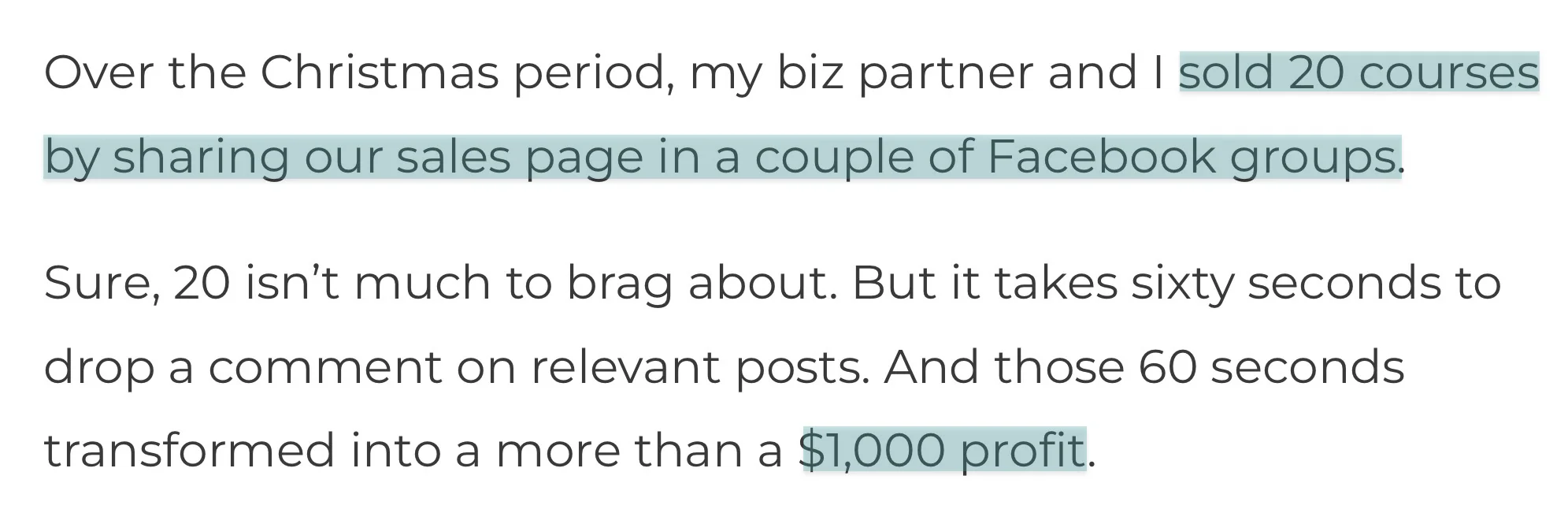
Conversion copywriter Abi Prendergast and her business partner shared their course sales page in relevant Facebook groups over the Christmas period. They sold 20 courses and made more than $1,000 in profit.
21. Launch a customer referral program
A referral program encourages existing customers to recommend your digital products to friends, colleagues, or their online audience. In return, you can reward them with a discount, account credit, a free product, or cash.
Start by creating a unique referral link for each customer. Then offer a reward when someone they refer makes a qualifying purchase. You could also give the new customer a discount to make the recommendation more appealing.
Let’s say you sell an online course; let graduates invite friends and earn credit towards another course when those friends enrol.
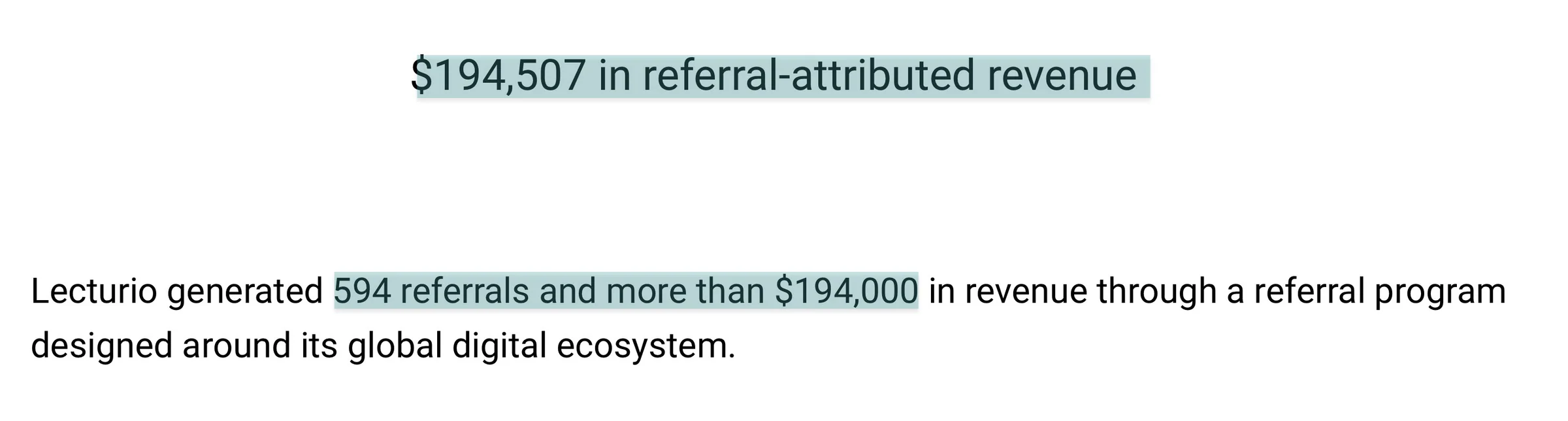
Lecturio, a digital medical education platform, used this approach to encourage customers to recommend its Premium membership. The program generated $194,507 in referral-attributed revenue from 594 referrals.
Market digital products using paid advertising
-
Methods: Google Search Ads, Facebook and Instagram ads, TikTok Ads, retargeting ads
-
Best for: Reaching targeted audiences quickly, testing offers, and bringing interested visitors to product pages
-
What you create: Ad copy, images, videos, audience targeting, landing pages, retargeting campaigns
-
Cost to start: $50-$500+ in initial ad spend, plus any creative or management costs
-
Typical time to see results: Traffic can arrive within hours; reliable sales and profitability may take days to several weeks or longer
22. Run Google Search Ads targeting purchase-intent keywords
Google Search Ads let you show your digital products to people who are already searching for solutions you offer. The key is to target keywords that suggest someone is ready to buy, rather than broad terms that attract people who are just looking for information.
Say you sell an e-book on freelance writing; target searches like “freelance writing course” or “freelance writing proposal template.” Send people to a landing page that matches their search, and track purchases to see which keywords bring in customers.
Start with a small budget, review your results regularly, and pause keywords that spend money without generating sales.
23. Advertise on Facebook and Instagram
Facebook and Instagram ads let you reach people who may be interested in your digital product, even if they aren’t actively searching for it.
You can target audiences based on factors like their interests, behaviors, and interactions with your content.
If you sell a meal-planning e-book, for example, you could create an ad showing how it helps busy people plan a week’s meals. Then test different visuals and messages, and send people to a product page that explains what they’ll get.
Start with a modest budget and track purchases, not just likes or clicks. An ad that gets plenty of attention but no sales isn’t doing its job.
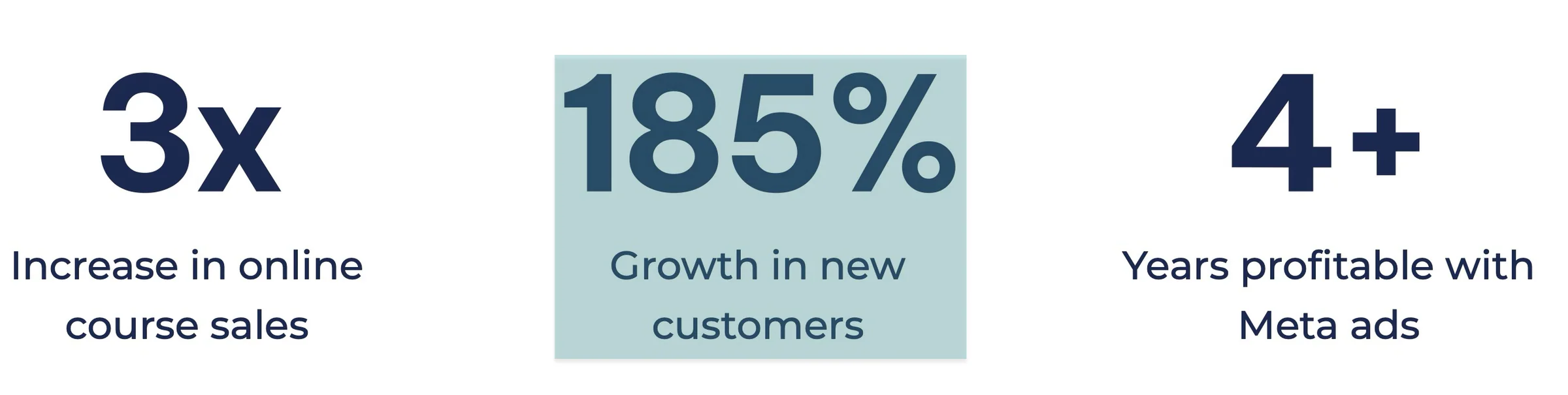
And it works. Photographer Luke Stackpoole used Meta ads to promote his Lightroom presets and photography courses.
The campaigns helped triple his online course sales and increase new customers by 185% in under 12 months.
24. Run TikTok Ads promoting educational content and digital products
TikTok Ads can help you reach potential customers through short videos that teach something useful, demonstrate a result, or introduce a problem your product solves.
The ads should feel like content people would actually want to watch, not just a sales pitch.
To sell a photography preset pack, for example, show a before-and-after edit, explain one quick editing tip, and then invite viewers to get the presets. Test different video hooks and calls to action to see which ones attract buyers.
You can also promote educational videos to build awareness and collect leads before asking people to buy.
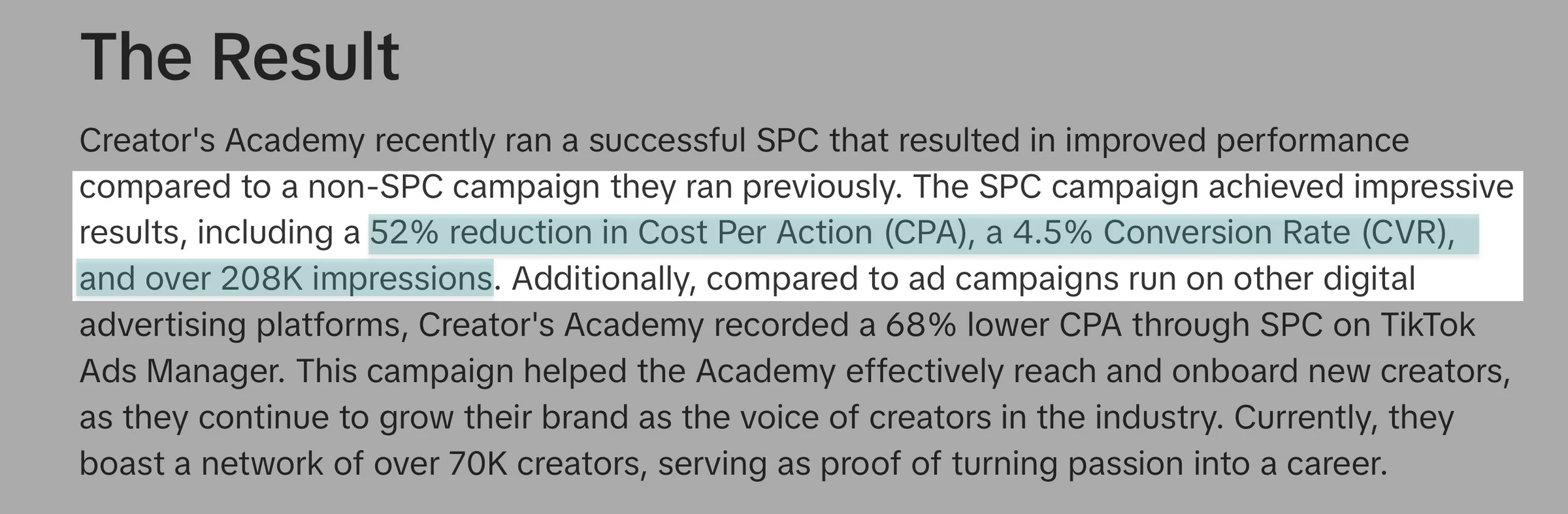
Japan-based Creator’s Academy used TikTok Ads to promote its online and in-person courses on animation and storytelling.
The ads got a 4.5% conversion rate. The cost of getting each person to convert dropped by 52% compared with the previous campaign.
25. Retarget visitors who didn’t complete a purchase
Not everyone who visits your product page will buy on their first visit. Some people need more time.
Some may have questions or get distracted before checking out. Retargeting lets you show ads to these visitors and give them another reason to return.
You can install the appropriate tracking pixel, create an audience of people who visited your sales page but didn’t purchase. And then show them ads that address common objections.
You could highlight customer testimonials, demonstrate what they’ll get, or answer frequently asked questions. Or exclude people who have already bought the product so you don’t waste your budget advertising to existing customers.
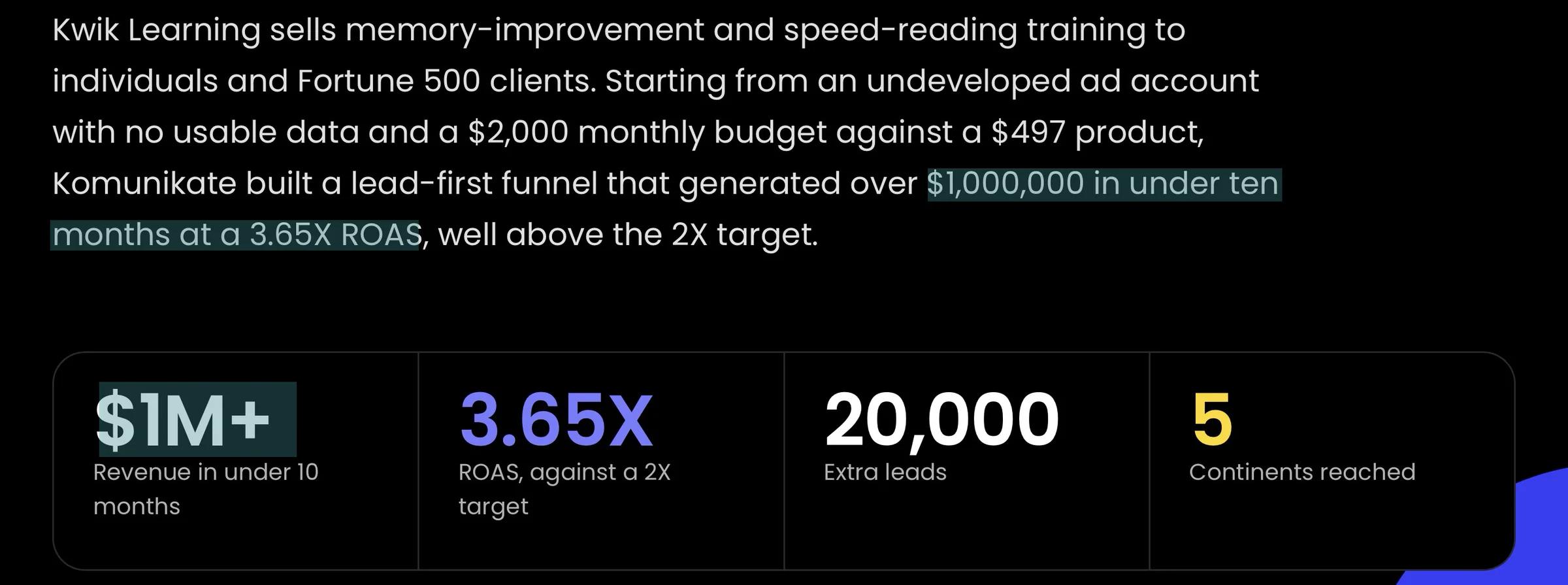
Kwik Learning used retargeting ads to promote its memory-improvement and speed-reading courses. The campaign reminded people who had shown interest in its training about the paid offer, including those who added it to their cart but didn’t complete the purchase.
The overall advertising strategy generated $1M+ in revenue in under 10 months, with a 3.65x return on ad spend. In other words, for every $1 spent on ads, the business made $3.65 in revenue.
Increase digital product sales through conversion optimization
- Methods: Dedicated landing pages, free samples or previews, limited-time offers and bundles, checkout improvements, A/B testing
- Best for: Turning more existing visitors into buyers and reducing friction during purchase
- What you create: Improved product pages, sample offers, promotional bundles, simpler checkout flows, test variations
- Cost to start: $0-$100+ (excluding your time; paid testing and analytics tools may add costs)
- Typical time to see results: 5 days to 3+ months, depending on traffic volume and how quickly you can gather meaningful data
26. Create dedicated landing pages for individual products
A landing page is a page designed to get visitors to take one specific action, like buying your e-book or enrolling in your course.
Instead of sending everyone to your homepage and hoping they find the right product, create a separate page for each offer. Explain what the product does, who it’s for, what buyers will receive, and how to purchase it.
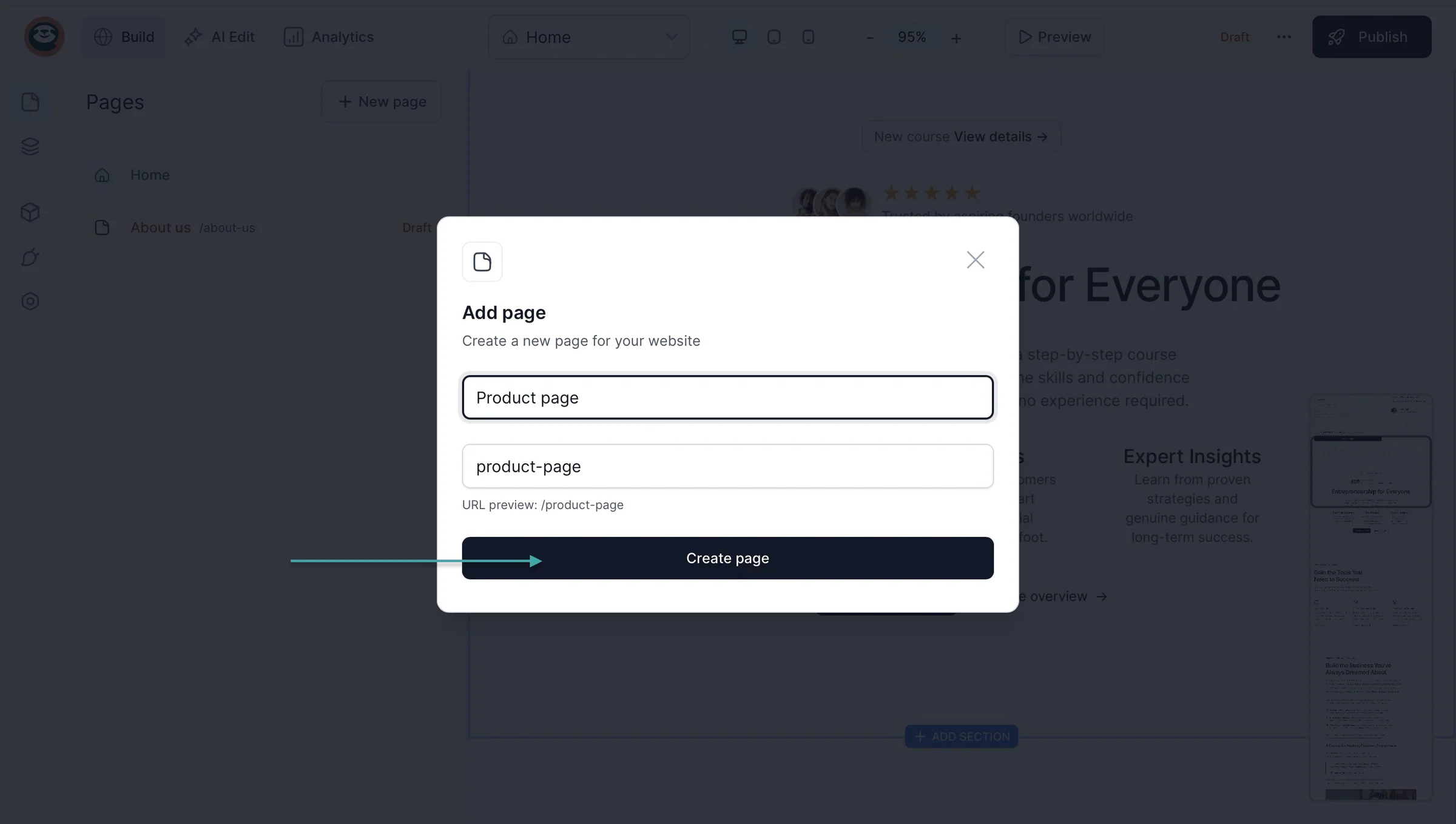
Easytools, for example, lets you build a multi-page website.
If you sell an SEO checklist and a content-planning template, give each product its own page with relevant benefits, previews, testimonials, and a clear checkout button.
27. Offer free trials, samples, or product previews
People may hesitate to buy a digital product because they aren’t sure what they’re getting. A free sample or preview lets them experience some of its value before paying.
Let’s assume you’re selling an e-book. You could share a sample chapter. If it’s a template pack, let visitors download one template.
For an online course, offer a free lesson so potential buyers can see how you teach.
For example, American Fitness Professionals & Associates offered a free sample of its Health & Wellness Coach certification course. The sample was downloaded about 1,000 times in its first month.
Also, the 21 people who downloaded it became paying customers within that period.

A free preview gives potential customers a chance to judge the quality of your product before spending their money.
28. Use limited-time promotions and product bundles
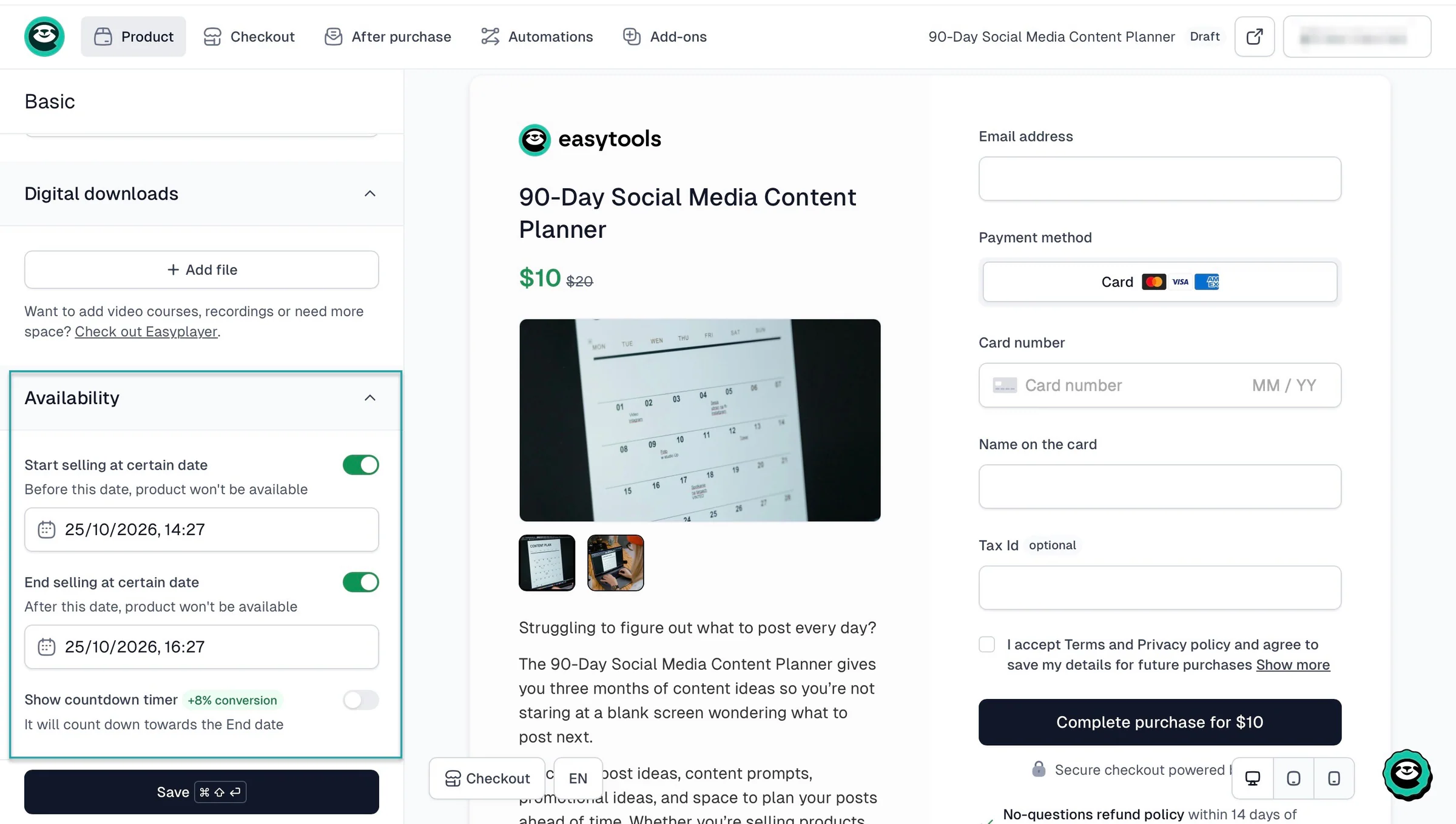
A limited-time promotion gives customers a reason to buy now, while a product bundle lets them purchase several related products together, often at a lower price than buying each separately.
For example, if you sell writing templates, bundle your proposal, invoice, and customer onboarding templates into one package. You could offer the bundle at a launch price for a few days, then return it to its regular price.
You could add a countdown timer on your product checkout.
And also on your product landing page.
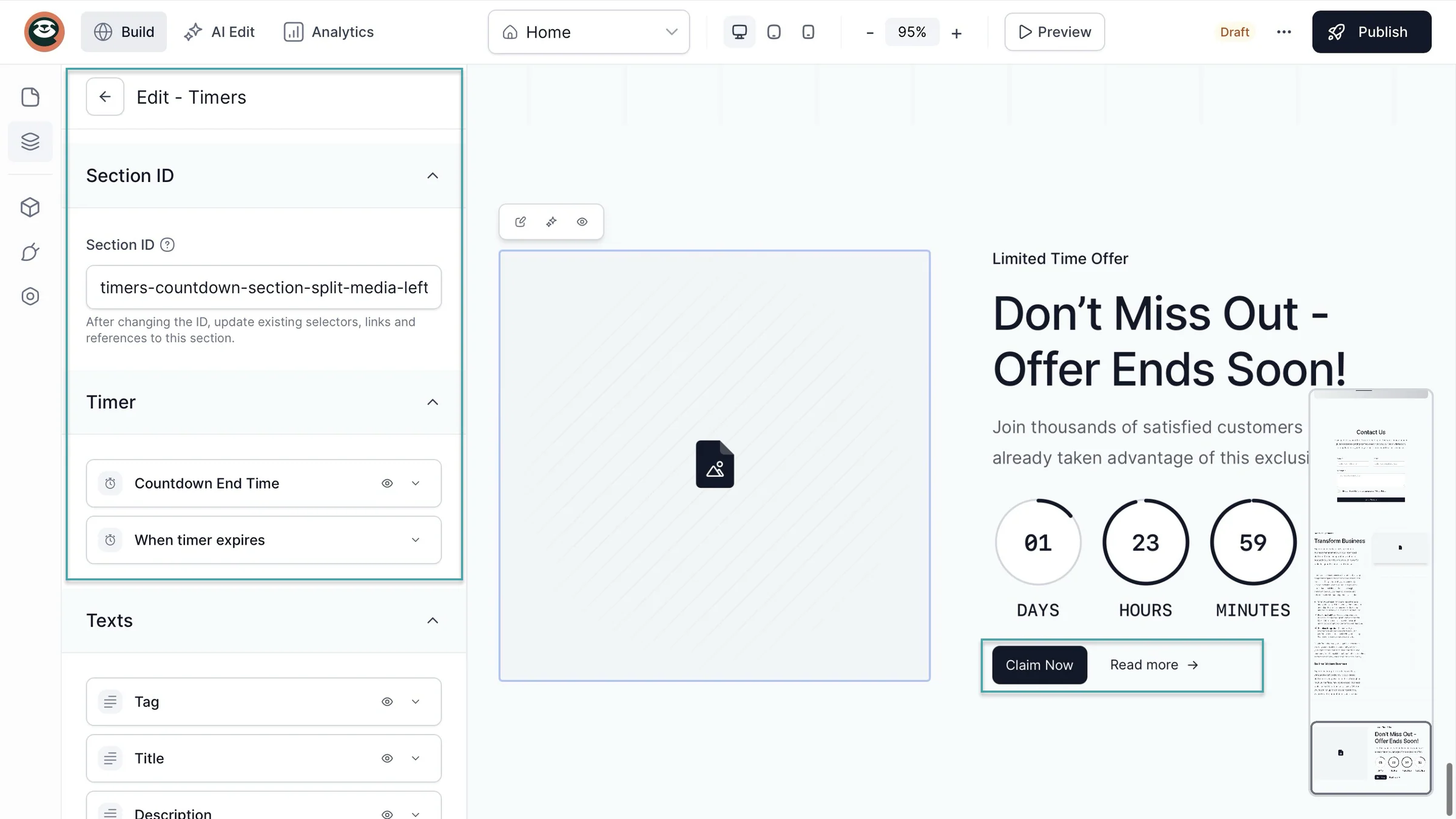
But don’t invent a deadline just to pressure people. Make sure the offer genuinely expires, and show customers what they’re saving.
Creator Stephanie Kase ran 5 days of limited-time deals during Black Friday. She promoted a different course or product bundle each day.
Her offers included an online course starter kit and course-launch workflow templates. She made a little over $20,000 across the 5 daily deals.

She also made an extra $3,300 when she brought the offers back for Cyber Monday.

29. Test your checkout pages, product copy, and calls to action
Don’t assume your checkout page or product description is working just because people are buying occasionally. Test different headlines, button text, product descriptions, and checkout layouts to see which versions encourage more people to take action.
Start with one change at a time. For example, test “Buy Now” against “Get Instant Access” and compare how many visitors complete their purchases.
Track completed sales, not just button clicks.
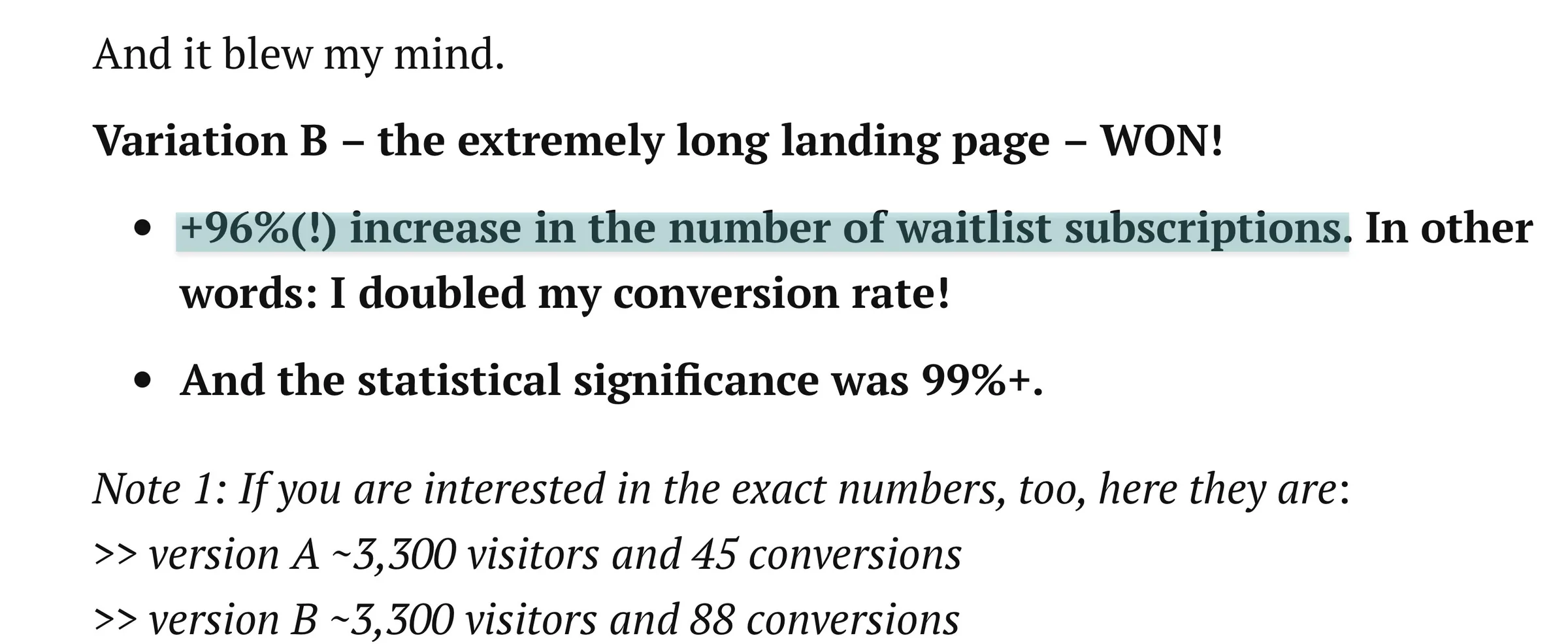
Data scientist and creator Tomasz Tunguz, for instance, tested two landing pages for his online course waitlist. The longer version increased sign-ups by 96%, and he later found that course purchases doubled, too.
How to choose the right digital product marketing methods
To choose the right digital product marketing method, you should:
- Define your marketing goals
- Consider your target audience and where they spend time
- Match your marketing methods to your digital product
- Consider your marketing budget and available resources
- Track performance and focus on methods that generate sales
Now, let’s look at each point in detail.
1. Define your marketing goals
Before choosing how to market digital products, decide what you want your promotional efforts to achieve.
Your goal could be to get your first 10 customers or generate $1,000 in monthly sales. It could grow your email list or convince previous buyers to purchase another product.
Each goal requires a different approach.
If you’ve just launched an e-book and nobody knows it exists, your first goal might be to attract 500 potential buyers to your website.
You could focus on SEO, educational social media content, or guest posts.
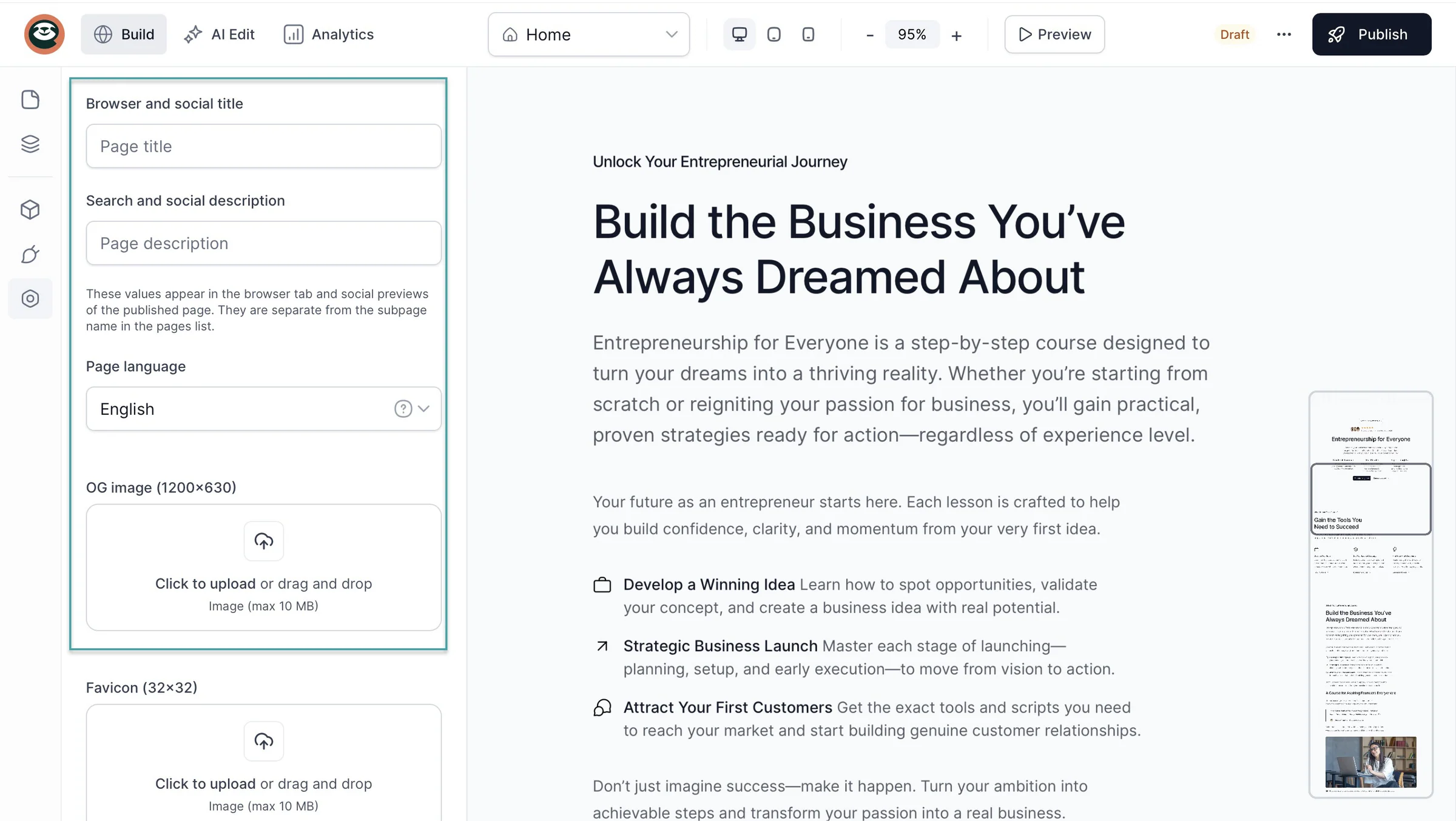
But if 1,000 people already visit your product page every month and only 5 buy, attracting more visitors shouldn’t be your goal. You should improve your product page, add customer testimonials, or simplify checkout.
And you should set a specific target and a deadline. For example, aim to sell 50 copies of your e-book in the next 30 days.
That gives you something to measure and helps you choose marketing methods that support your goal. You just have to sell on the right digital product selling platform that’ll give you robust analytics.
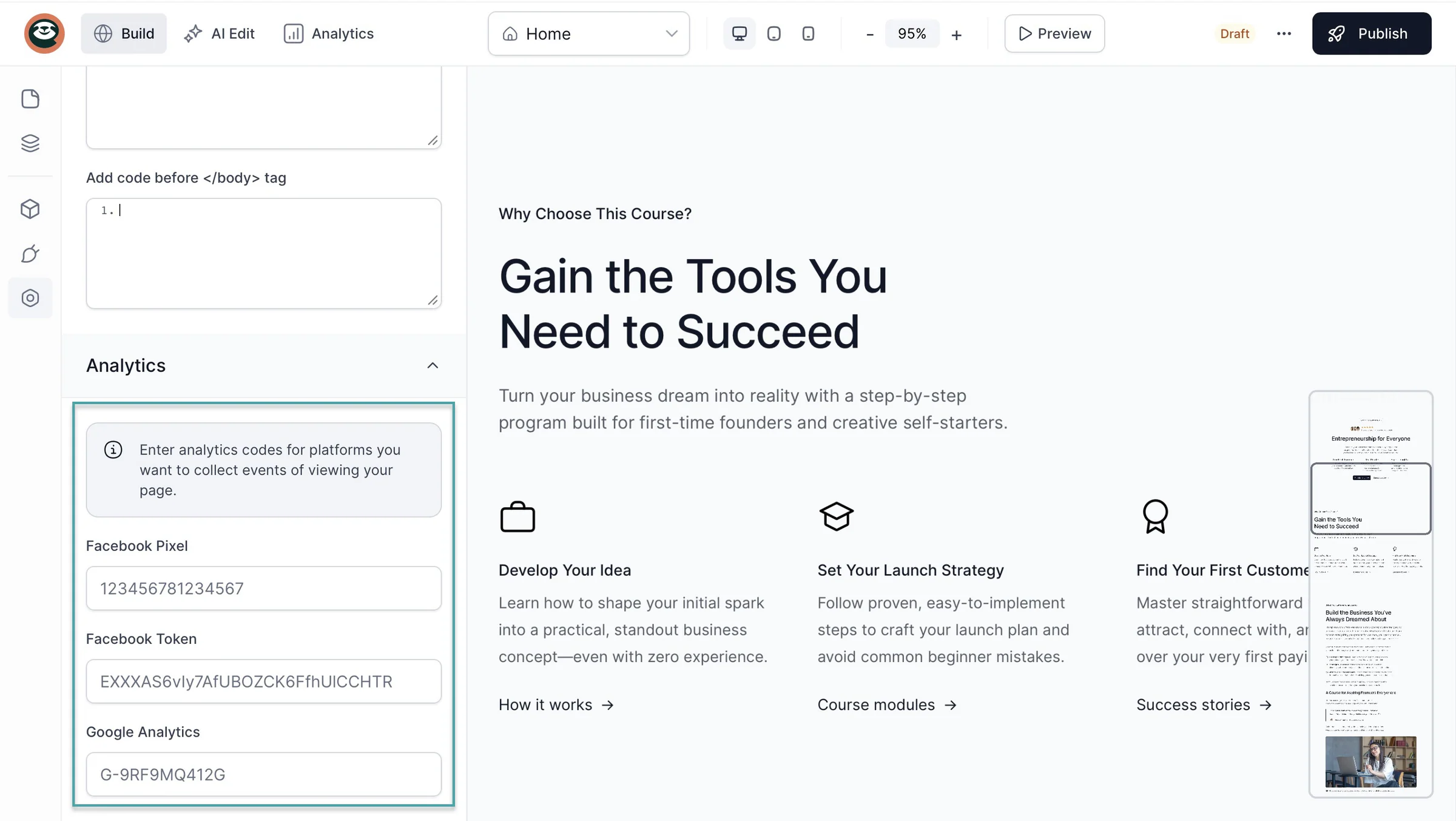
Apart from built-in analytics, you can also track website traffic patterns, drop-offs and conversions with Google Analytics (GA4) and Meta tracking ID.
You can set up store analytics too. You can connect and track Google Ads, TikTok Analytics, LinkedIn Analytics, Pinterest Analytics, DataFast, and more.
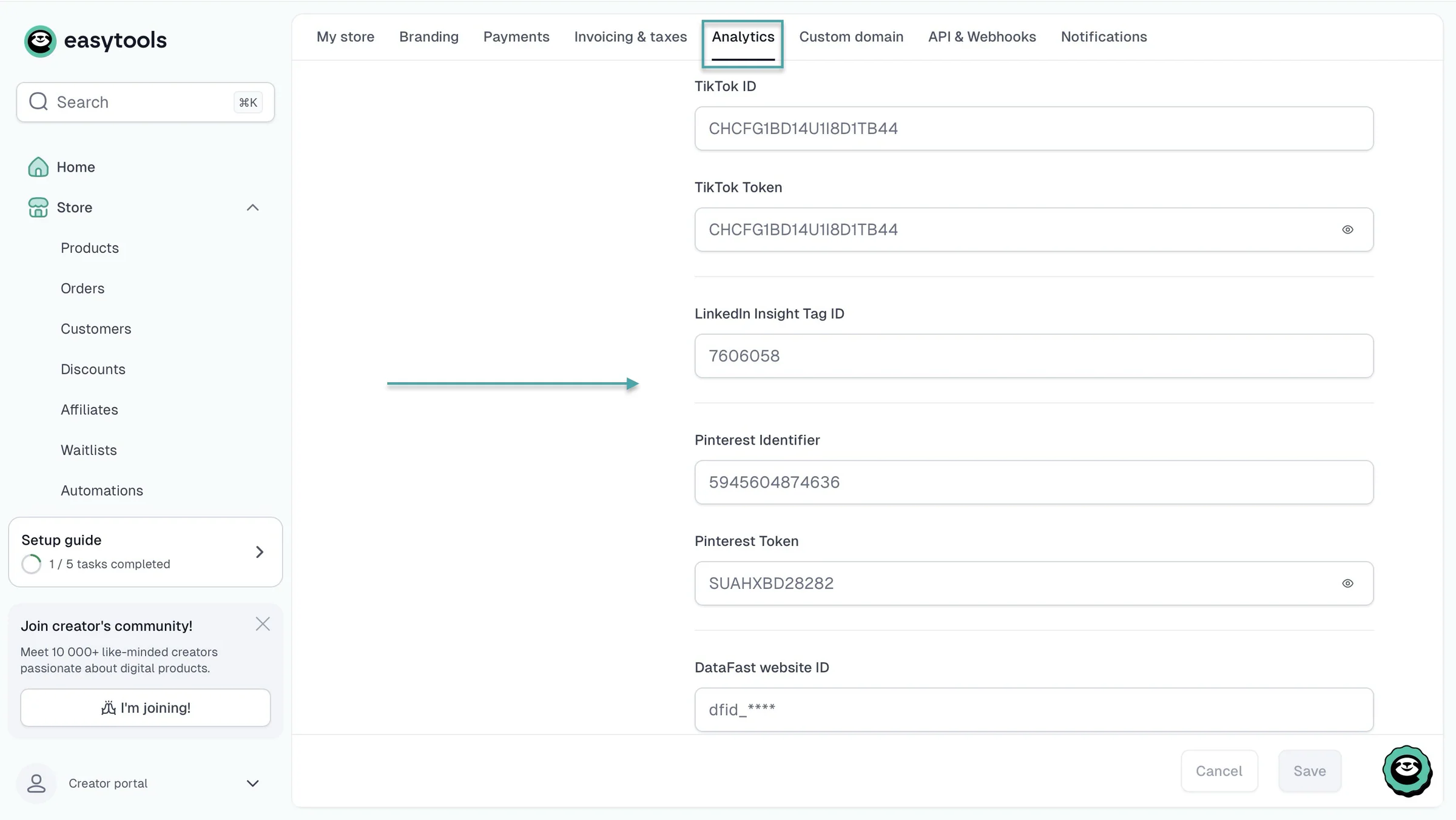
That’ll keep you in the know about how your goal’s coming along.
When Liz Wilcox launched her Fix It Yourself course, she initially wanted to sell 300 copies and recruit 5 affiliates.
She later reduced her target to 100 sales and one affiliate because the original goal wasn’t realistic given her available time.
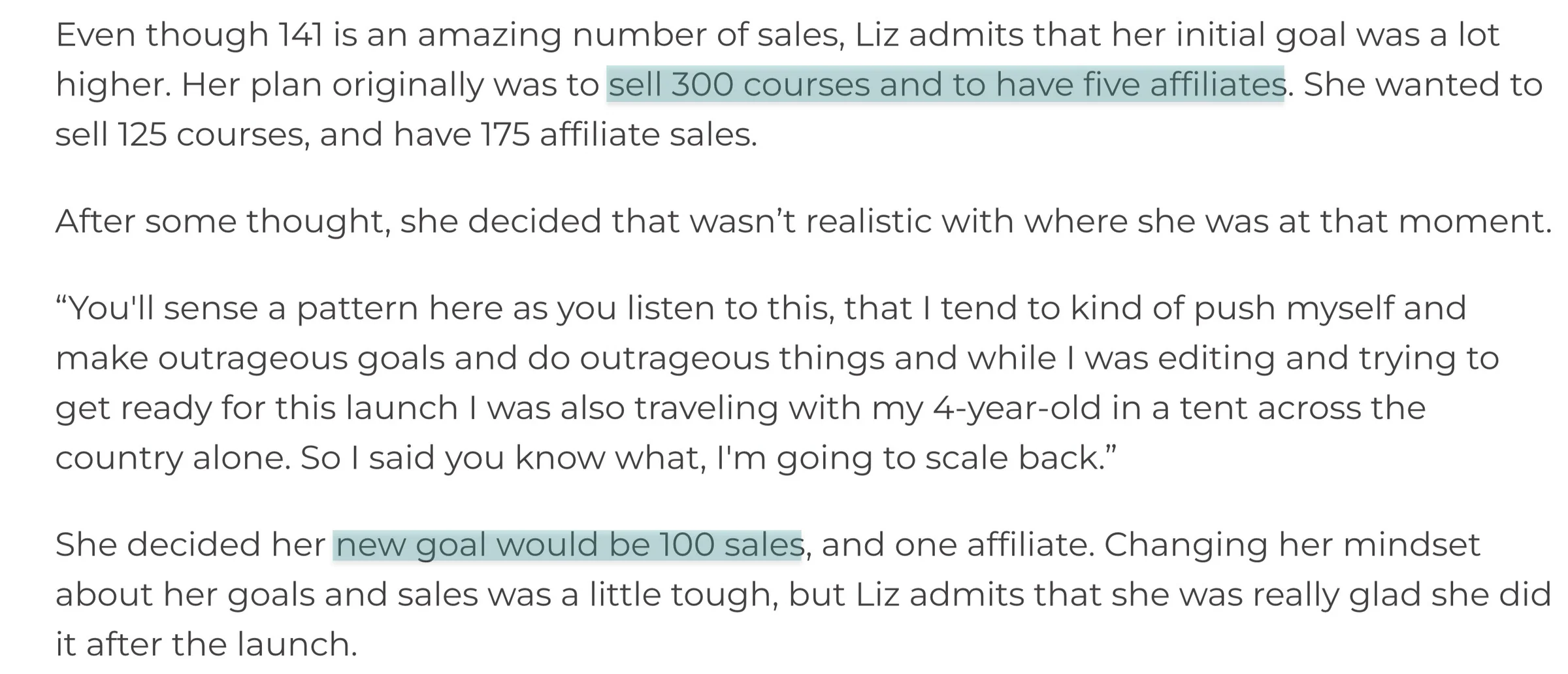
She eventually sold 141 copies, generating over $13,000 in revenue. Most of those sales came from emails to her audience.

So when you define your digital product marketing goals, remember to be realistic and flexible.
To help you get started, here’s a table. It shows how to match common digital product marketing goals to methods that can help you achieve them.
| Your marketing goal | Methods to consider | Example target |
|---|---|---|
| Attract more potential buyers | SEO, blog posts, guest posts, social media content | Get 500 product page visitors in 30 days |
| Generate your first sales | Product demos, free samples, limited-time offers | Sell your first 10 products in 30 days |
| Increase product page conversions | Customer testimonials, better product descriptions, checkout improvements | Increase conversion rate from 0.5% to 2% |
| Grow your email list | Lead magnets, free resources, newsletter promotions | Gain 200 new subscribers in 30 days |
| Generate more revenue | Product bundles, upselling, affiliate marketing | Generate $1,000 in monthly sales |
| Encourage repeat purchases | Email marketing, personalized offers, product bundles | Get 20 existing customers to buy again |
2. Consider your target audience and where they spend time
Not every marketing channel will help you reach the people most likely to buy your digital products.
Start by identifying your ideal customers. A couple of relevant questions to ask yourself are:
- Who are they?
- What problems are they trying to solve?
- Where do they go to find information, ask questions, or learn new skills?
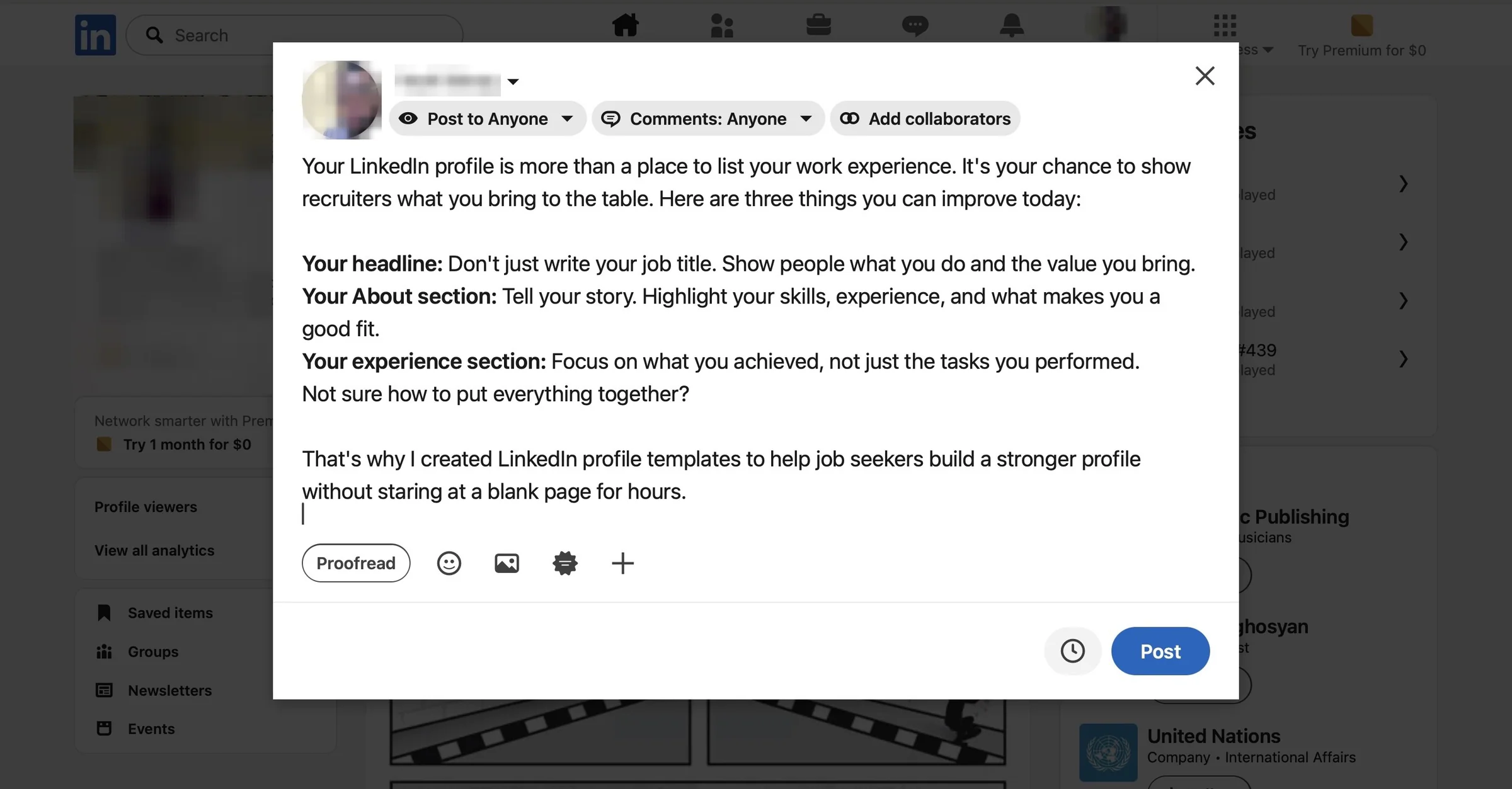
Say you sell LinkedIn profile templates to job seekers. LinkedIn is an obvious place to promote them.
You could share tips on improving LinkedIn profiles and show how your templates help.
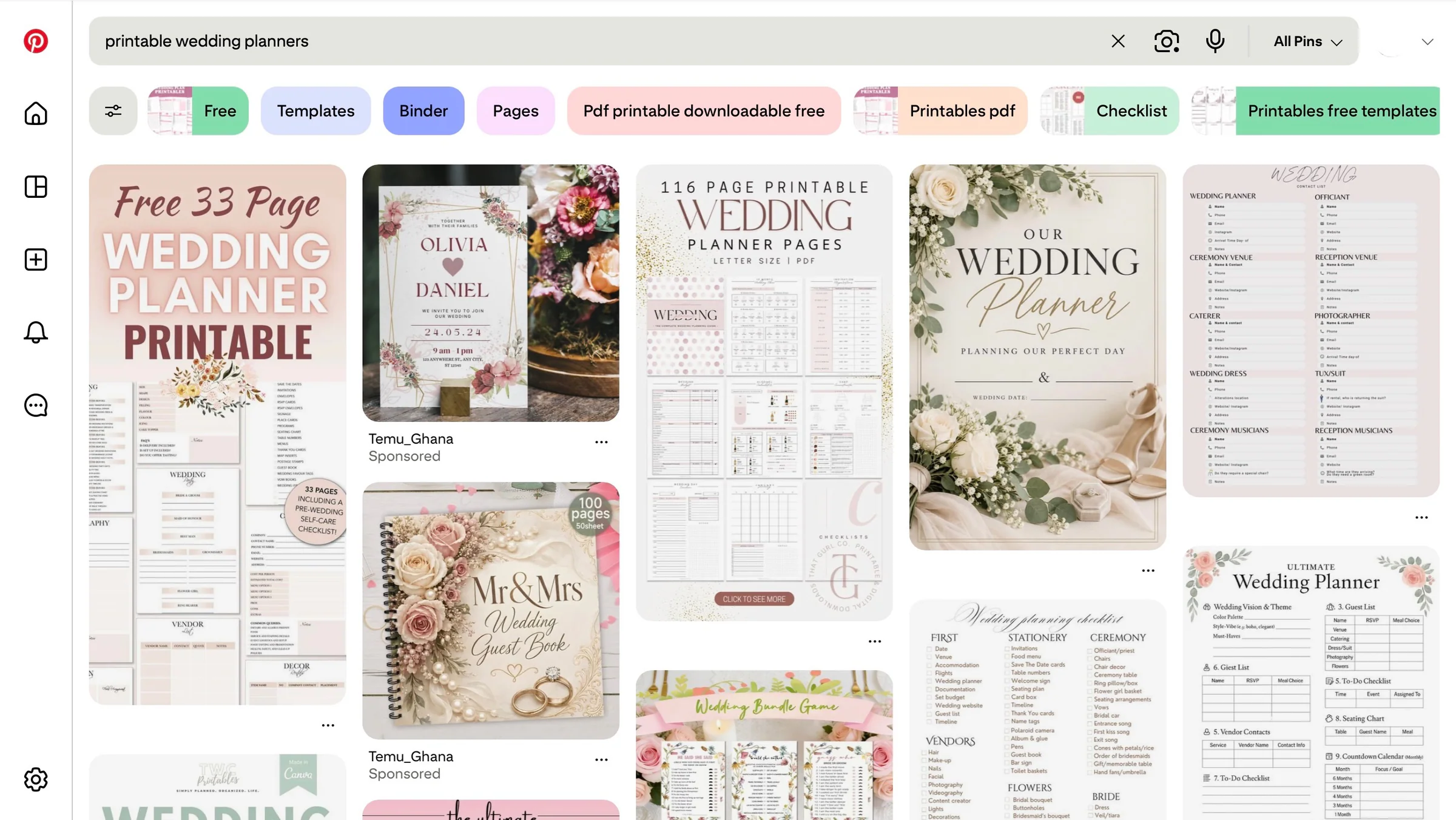
But if you’re selling printable wedding planners, Pinterest and Instagram might make more sense because people use these platforms to find wedding ideas and inspiration.
Also, consider how your audience prefers to consume content. Some people would rather watch YouTube tutorials than read blog posts. Others prefer newsletters or short videos.
For example, photographer and educator Peter McKinnon uses his YouTube channel to share photography and video editing tutorials.
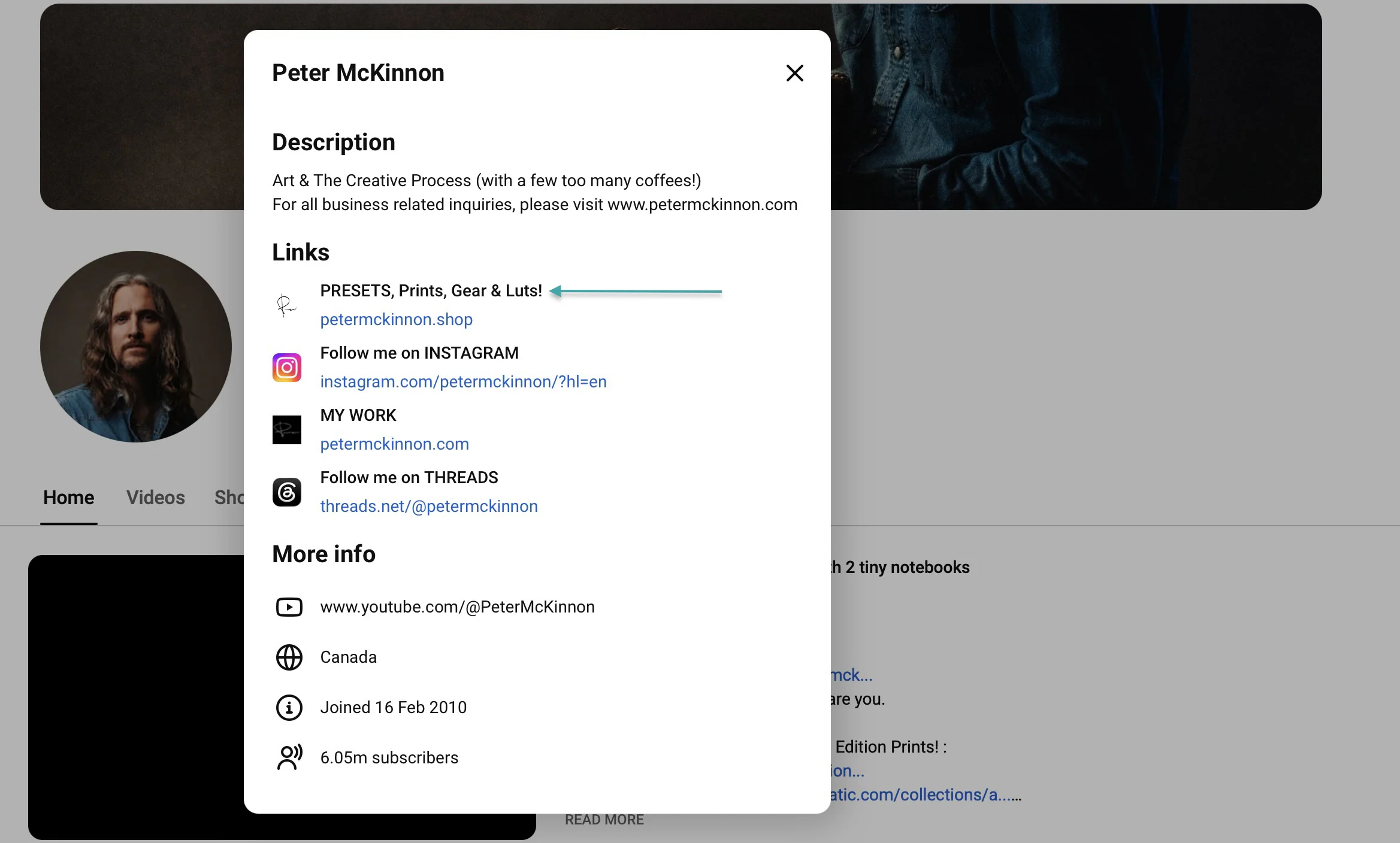
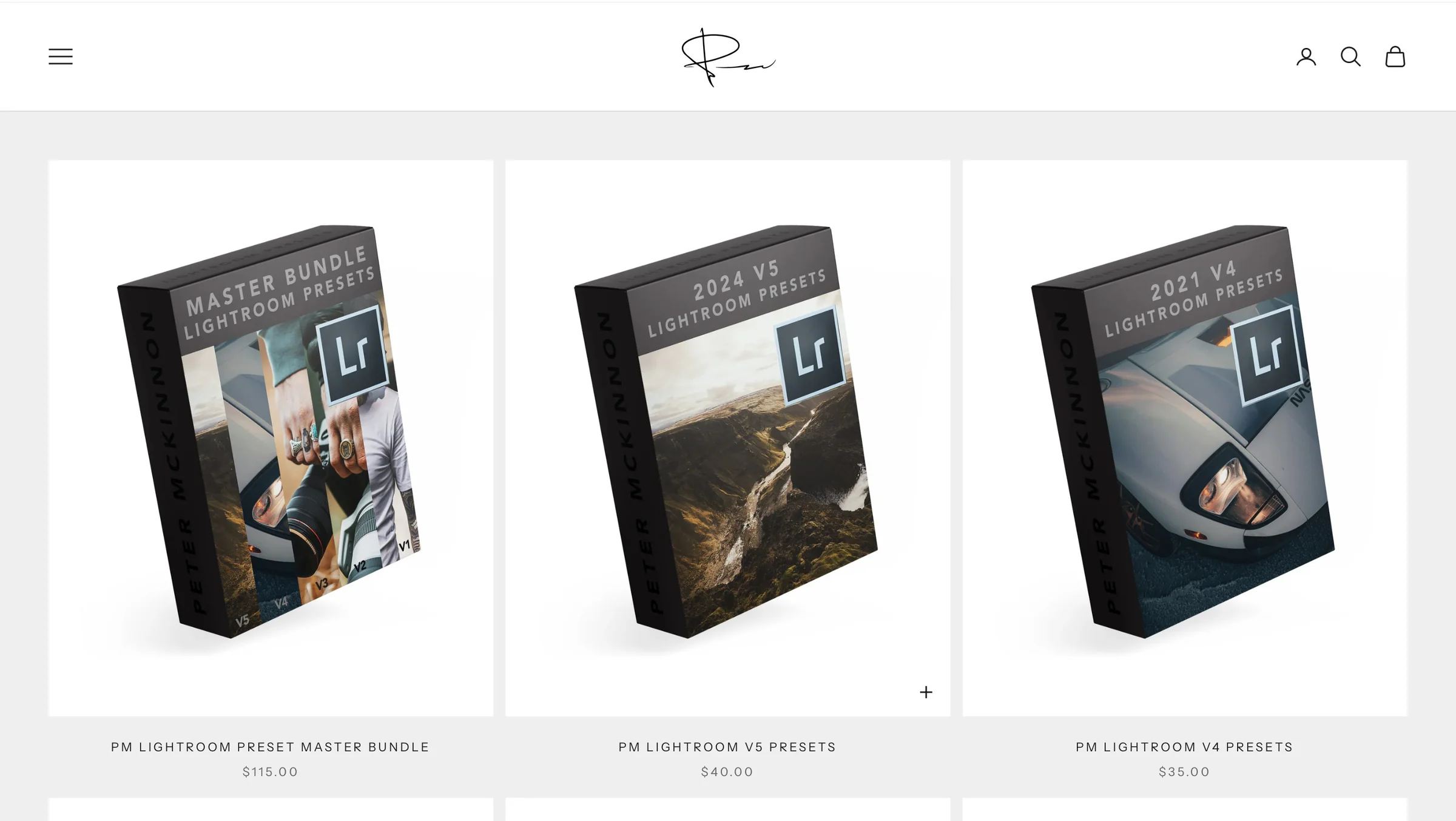
He also sells digital products, including Lightroom presets, to an audience already interested in improving their photography.
The point is to market digital products where your potential customers already spend time, rather than trying to build an audience on every platform.
And of course, you can make an educated guess about where your potential customers spend time.
The table below shows some digital products, their likely buyers, and marketing channels worth exploring.
| Digital product | Likely target audience | Marketing channels to consider | Why these channels work |
|---|---|---|---|
| LinkedIn profile templates | Job seekers and professionals | LinkedIn, Google Search, YouTube | People look for advice on improving their profiles and finding jobs. |
| Printable wedding planners | Engaged couples and wedding planners | Pinterest, Instagram, Google Search | People search for wedding inspiration, checklists, and planning ideas. |
| Lightroom presets | Photographers and content creators | Instagram, YouTube, TikTok | Visual content helps potential buyers see the editing style and results. |
| SEO e-books | Bloggers, marketers, and business owners | Google Search, LinkedIn, YouTube | Buyers search for practical SEO advice and tutorials. |
| Excel budget templates | Individuals managing personal finances | Google Search, YouTube, Pinterest | People look for budgeting spreadsheets, examples, and tutorials. |
| Online fitness courses | Fitness beginners and enthusiasts | YouTube, Instagram, TikTok | Workout demonstrations help potential buyers understand what they’ll learn. |
| Resume templates | Students, graduates, and job seekers | Google Search, LinkedIn, Pinterest | Buyers search for resume examples, templates, and job application tips. |
| Business plan templates | Entrepreneurs and small business owners | Google Search, LinkedIn, YouTube | Buyers look for guidance on writing business plans and starting businesses. |
| Educational worksheets | Teachers and homeschooling parents | Pinterest, Google Search, Facebook groups | People look for teaching resources, classroom activities, and printable worksheets. |
| Website design templates | Freelancers, designers, and small business owners | YouTube, Pinterest, Instagram, Google Search | Buyers want design inspiration, examples, and tutorials before purchasing. |
These are starting points, though. You still need to test the channels and track your results to find out where your actual buyers come from.
3. Match your marketing methods to your digital product
The best way to market digital products depends on what you’re selling.
A digital product marketing method that works for an e-book might not work as well for a pack of design templates or an online course.
If you sell an e-book about SEO, write blog posts that answer questions your potential buyers are already searching for. For example, author Bryan Cohen built a website around the keyword “creative writing prompts” and published useful content to attract people interested in writing.
He later turned that content into an e-book, 1,000 Creative Writing Prompts, which sold more than 25,000 copies worldwide across its lifetime.

For an online course, free tutorials and short educational videos can help people see what you teach before paying. Singer and vocal coach Harry Jay used TikTok and Instagram content to build an audience for his online singing course.
The course brought in $130,000+ in revenue.

Selling templates or spreadsheets? Show people how they work and the problems they solve.
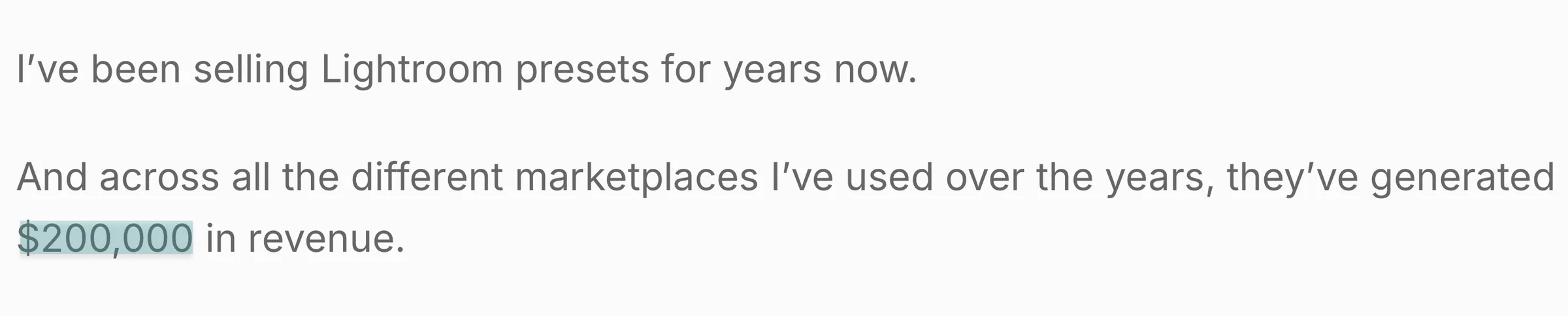
Designer and creator Oliur built interest in his Lightroom presets by sharing his photography on Instagram. When followers repeatedly asked which presets he used, he packaged his editing style into products that people could buy.
His presets have made $200,000+ in revenue.
So choose marketing methods that let people understand your product’s value. Consider what you’re selling and how best to demonstrate its benefits.
Here are some other digital products and marketing methods you can use to show potential buyers what they’re getting.
| Digital product | Marketing methods to consider | How to use them |
|---|---|---|
| E-books | SEO, blogging, lead magnets, email marketing | Publish articles related to your e-book’s topic. Offer a free chapter to encourage purchases. |
| Online courses | YouTube tutorials, webinars, short-form videos | Teach a small part of your course for free so potential buyers can see what they’ll learn. |
| Design templates | Instagram, Pinterest, product demos | Show completed designs and how buyers can customize the templates. |
| Spreadsheets | YouTube tutorials, blog posts, free samples | Demonstrate how the spreadsheet works and how it saves users time. |
| Lightroom presets | Instagram, TikTok, YouTube | Share before-and-after photo edits to demonstrate what the presets can do. |
| Printable planners | Pinterest, Instagram, free samples | Show completed planner pages and offer a few printable pages for free. |
| Stock photos | SEO, Pinterest, Instagram | Display sample collections and show how customers can use the images. |
| Notion templates | YouTube tutorials, product walkthroughs, free versions | Record your screen to demonstrate how the template helps organize tasks or information. |
| Memberships | Email newsletters, free communities, live Q&A sessions | Share useful content regularly and preview the benefits of becoming a member. |
| Digital art and illustrations | Instagram, Pinterest, short-form videos | Share finished artwork, examples of how it can be used, and previews of collections. |
4. Consider your marketing budget and available resources
Some digital products marketing methods cost money. Others require more of your time than your money.
So consider what you can realistically afford and how much time you have before choosing how to market digital products.
Say you’re working with a tight budget. Start with methods like SEO, blogging, organic social media posts, and email marketing.
These methods still require effort, but you don’t have to pay for every click or impression. You can create useful content, build an audience, and promote your products over time.
SEO expert Brian Dean built an audience by publishing useful articles on his blog, Backlinko. He then used his email list to promote his online course.
His first course launch made $100,000 in sales from a list of around 2,000 subscribers.

Now, if you have money to invest, you could test Google Ads or Facebook and Instagram ads. But don’t spend hundreds of dollars on ads without knowing whether your product page converts visitors into customers.
Start small, measure the results, and increase your spending when the numbers make sense.
Also, consider your skills. If you enjoy writing, blog posts and newsletters might suit you better than video marketing. If you have limited time, focus on one or two methods you can maintain consistently instead of trying to be everywhere.
Web designer Paige Brunton made $20,000 in one week selling a $35 digital product. She did it by sending 6 marketing emails over 7 days, without running ads or posting on social media during the promotion.

You don’t need the biggest budget. You need a digital product marketing plan you can afford and execute consistently.
5. Track performance and focus on methods that generate sales
Don’t keep using a digital product marketing method just because other creators swear by it. Track your results to find out which methods bring visitors, subscribers, and paying customers.
Start by deciding what you want to measure.
For blog posts, look at website traffic and sales. For social media, track link clicks and the sales those clicks generate.
If you run ads, compare the money you spend with the revenue they generate. Use Google Analytics to see where your website visitors come from.
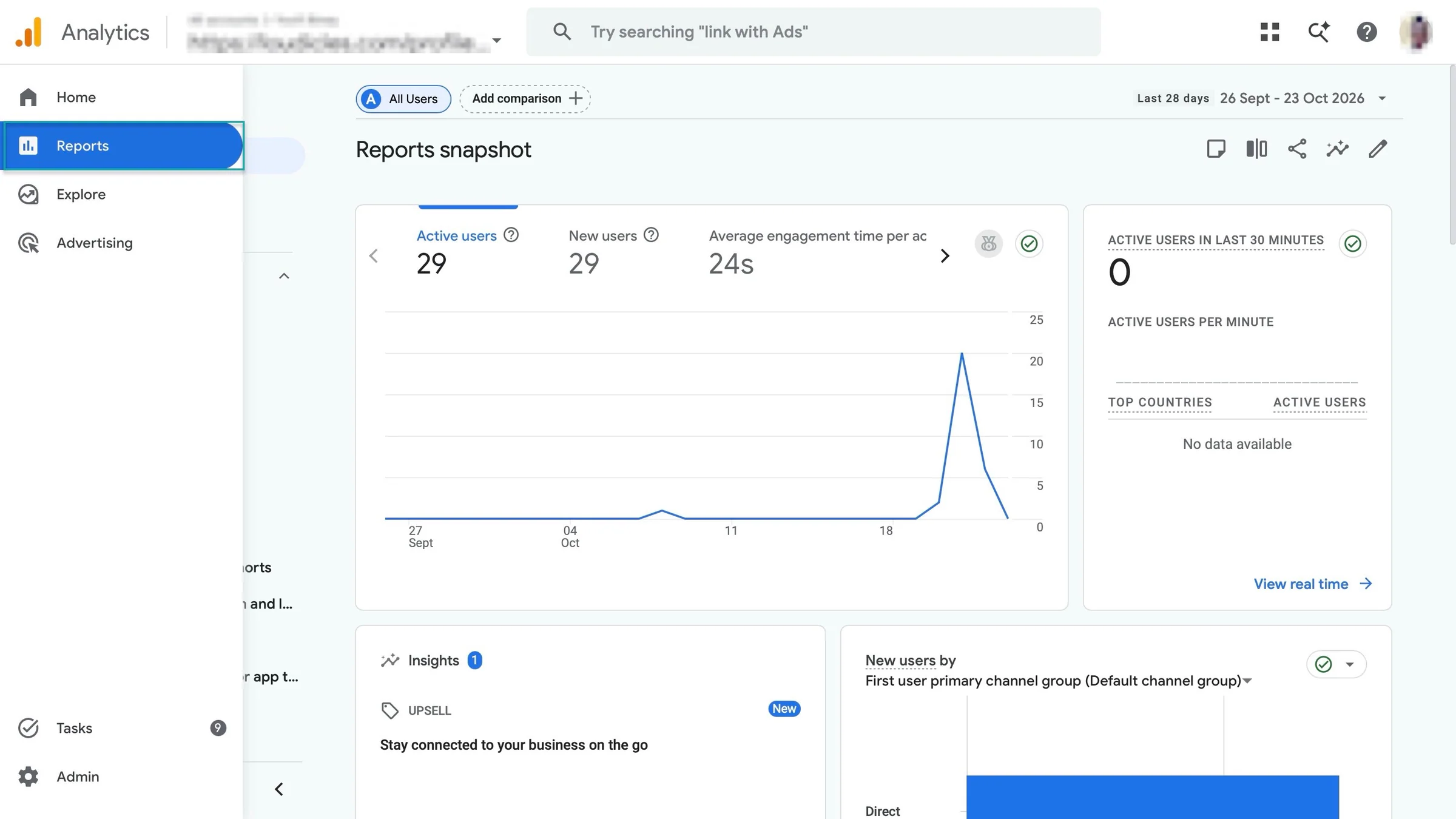
After signing in to Google Analytics, click “Reports” in the sidebar.
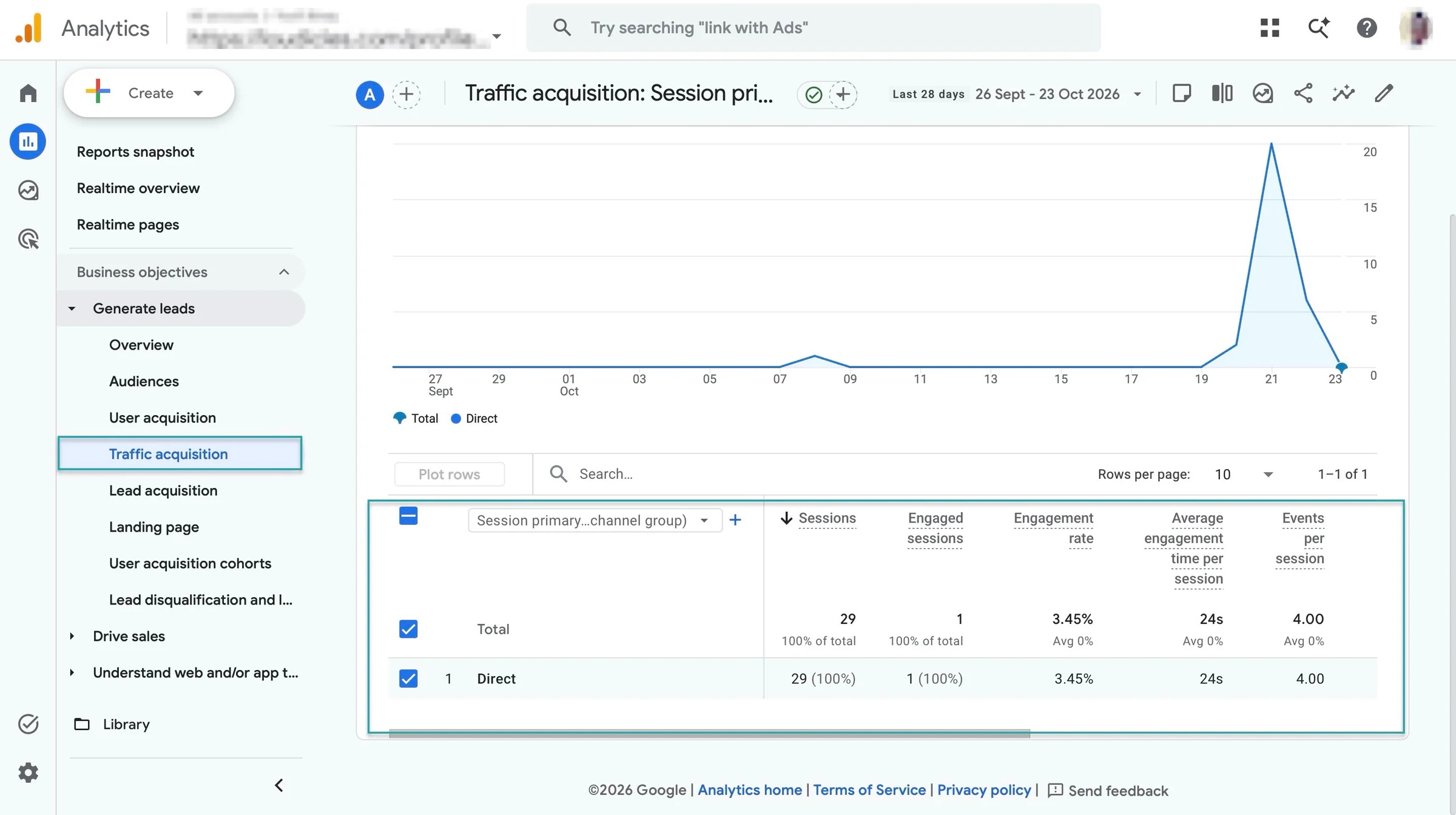
Then click “Generate leads.” After that, select “Traffic acquisition” to compare traffic sources.
To track sales in Google Analytics, connect it to your selling platform and make sure purchase tracking is enabled.
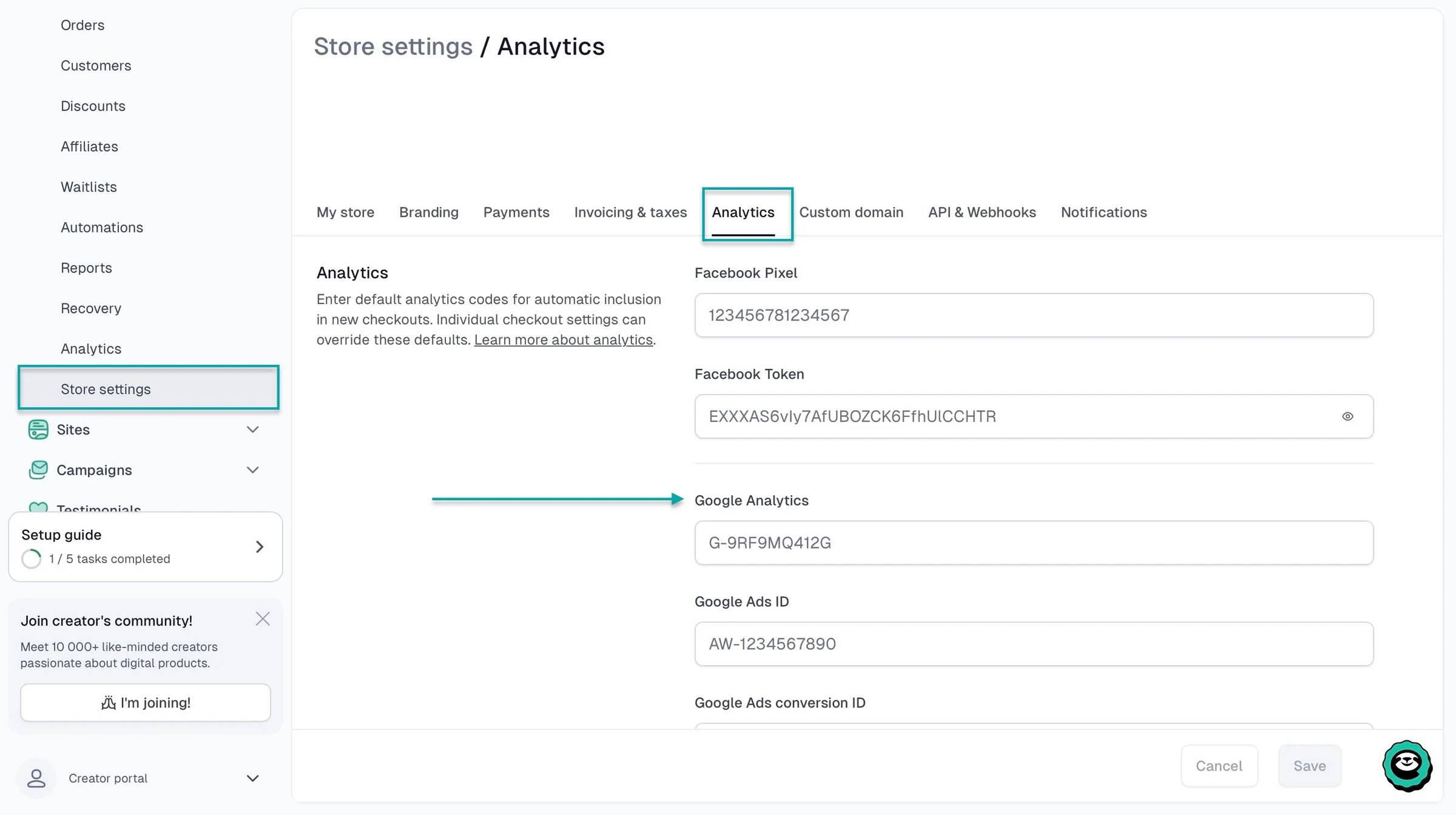
On Easytools, connect Google Analytics by going to “Store” in the sidebar. Then go to “Store settings.”
Select “Analytics” in the navigation bar and click inside the text box under “Google Analytics” to add your tracking ID.
Once purchase tracking is working, you can see how many sales your website generates and compare the traffic sources bringing in paying customers.
On the “Traffic acquisition report,” check how many visitors come from Google, social media, and paid ads to see which sources bring the most people to your website.
But don’t just look at visitor numbers. Check how many of those visitors actually buy your digital product.
For example, imagine your blog attracts 500 visitors and generates 5 sales. Conversion rate is equal to the number of sales divided by the number of visitors multiplied by 100.
So 5 ÷ 500 × 100 = 1%. That means one out of every 100 visitors buys your product.
Now, imagine 200 people clicking a link in your newsletter, and 10 of them buy. That’s 5 buyers out of every 100 clicks.
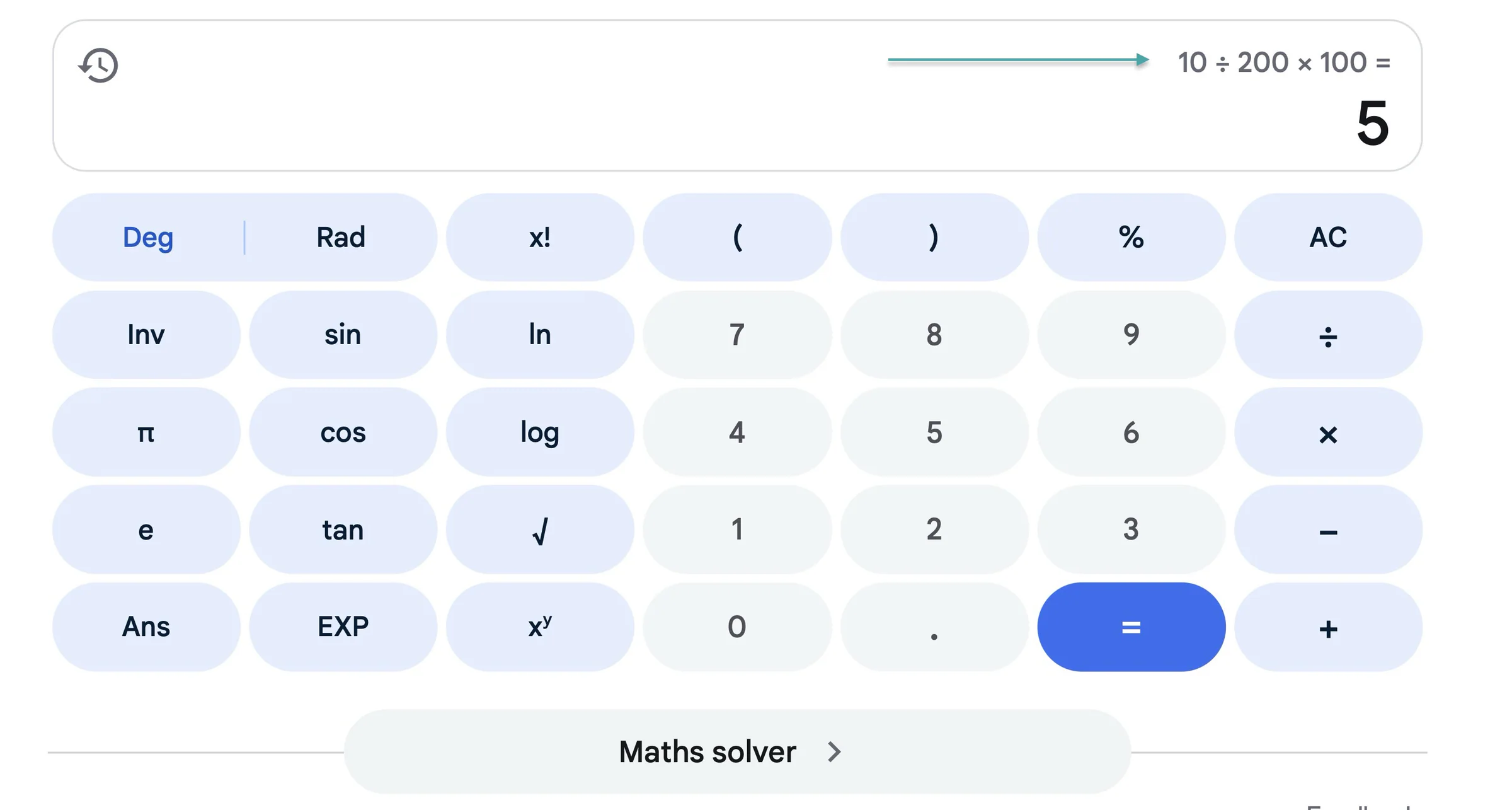
Your newsletter is doing a better job of turning potential customers into paying customers, even though your blog attracts more visitors. So, you might want to spend more time growing your email list and sending useful newsletters.
For email marketing, measure clicks, purchases, and revenue. On Easytools, click “Campaigns” in the sidebar, then select “Email.”
Click “+ New campaign.”
Now write an email promoting your digital product and include its Easytools checkout link.
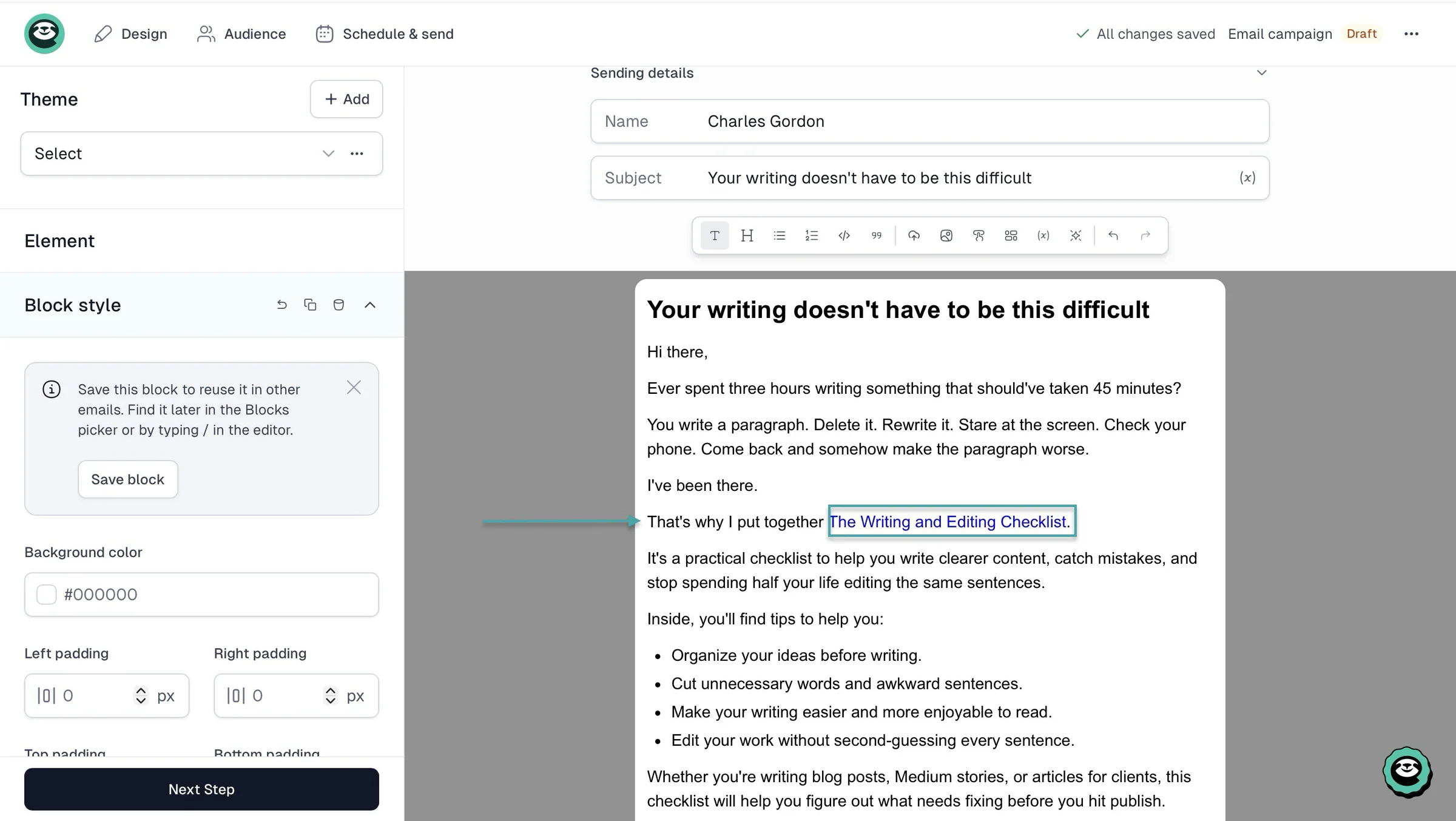
Once you send your email, Easytools can connect purchases made through that checkout link to the campaign.
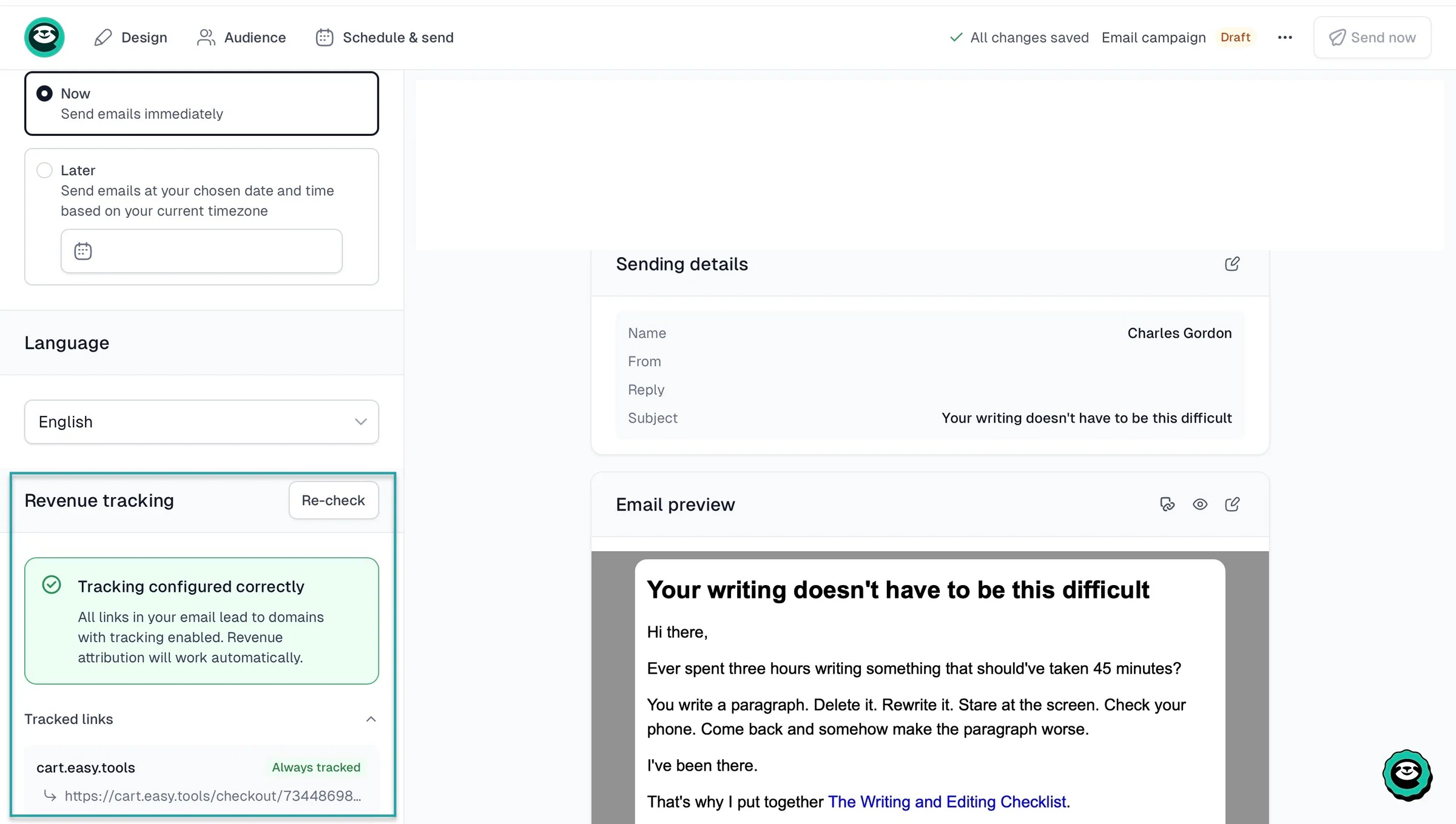
You can open your campaign results to see how much revenue it has made. After that, compare this with your other campaigns to find out which emails perform best.
For example, imagine you send two emails promoting your e-book. The first generates $50 in sales, while the second brings in $200.
You now have a reason to investigate what worked better in the second email, whether it was the subject line, offer, or message.
Review your results regularly. Give each method enough time to produce results, then focus more effort on the ones that consistently generate sales.
Start marketing your digital products
And there you go: 29 methods to market digital products.
We’ve also covered five things to consider when choosing the right method. Define your marketing goals, understand your target audience, and where they spend time.
You should also choose methods that suit your product, consider your budget and resources, then track your results to see what works best.
You don’t have to try all 29 methods at once. Start with the ones that make the most sense for your product.
Then give them time to work, and adjust your approach based on the results.
Frequently asked questions about marketing digital products
What are the best ways to market digital products?
The best ways to market digital products are search engines and content marketing, social media, email marketing, partnerships, and online communities. You can also use paid advertising to reach potential buyers and conversion optimization to turn more visitors into customers.
How can I market digital products for free?
You can market digital products for free through SEO, blogging, social media posts, YouTube tutorials, email marketing, referrals, and online communities. You can also start an affiliate program where you only pay commissions when affiliates generate sales. Most of these methods don't require an upfront advertising budget, but you'll need to invest time and effort to get results.
How much does it cost to market digital products?
It can cost anywhere from $0 to $500+ to start marketing digital products, depending on the methods you choose. SEO, blogging, organic social media posts, and email marketing can cost little or nothing if you do the work yourself. Paid advertising, on the other hand, requires an initial budget of $50 to $500 or more to test campaigns.
How do I market digital products without an audience?
You can market digital products without an audience by targeting people who are already searching for solutions related to your product. Start by optimizing your product pages for search engines, writing helpful blog posts, answering relevant questions in online communities, and publishing educational content on social media. You can also collaborate with creators who already have an audience or use paid advertising to reach potential buyers.
Can I market digital products without a website?
Yes, you can market digital products without a website. You can promote them on social media, through email newsletters, YouTube videos, and online communities. You only need a way for customers to purchase your products. For example, you can create a checkout page on Easytools and share its link on Instagram, TikTok, LinkedIn, or anywhere your potential customers spend time.
Which social media platform is best for marketing digital products?
The social media platforms best for marketing digital products are Instagram, TikTok, YouTube, LinkedIn, Facebook, and Pinterest. The right one depends on your product and target audience. For example, LinkedIn may work better for business templates and professional courses. Pinterest and Instagram are worth trying for printable planners and design templates. YouTube and TikTok are useful for demonstrating how your digital products work.
How can I use AI to market digital products?
You can use AI to market digital products by generating marketing ideas, writing product descriptions, creating social media posts, planning email campaigns, and researching keywords. Also, Easytools MCP lets AI assistants like Claude publish products, generate checkout links, check sales and landing page analytics, manage customers, create discount codes, and create or send email campaigns. All of this using everyday language prompts.
How long does it take to make your first digital product sale?
It can take 1 to 90 days to make your first digital product sale. The timeline depends on your product, pricing, marketing methods, and whether you already have an audience. If you're starting from scratch, focus on reaching people who need your product, showing them how it solves their problems, and making it easy for them to buy.
How do I know which marketing methods are working?
You can know which marketing methods are working by tracking website traffic, link clicks, email sign-ups, and sales. Use tools like Google Analytics to see where your visitors come from, and check your sales analytics to identify which channels generate the most revenue. The trick is to focus on methods that bring in buyers, not just views or clicks.
How do I market digital products internationally?
You can market digital products internationally by optimizing your product pages for search engines, creating content for a global audience, and promoting your products on YouTube, Instagram, TikTok, and LinkedIn. You can also use email marketing, affiliate partnerships, and paid advertising to reach customers in different countries. Just make sure your checkout supports international payments and that your pricing, product descriptions, and customer support are accessible to your target markets.