
Selling online
24 min readHow to promote an online course in 30 simple, practical steps (An easy guide)
Discover 30 practical ways to promote an online course using SEO, social media, email marketing, webinars, communities, and Easytools.
- Written by
- Marta Jagosz
- Reviewed by
- Katarzyna Chmielniak
- Updated on
- May 30, 2026
- Published on
- May 30, 2026


Ever wondered why sales of your online course have flatlined just weeks after launch? Or worse, why you never made a single sale in the first place?
Trust me, your course isn’t the problem. It’s your promotion strategy.
Research shows direct visits can up course conversion by 3.3%. Which is considered strong by industry standards.
While you can increase conversions by 2.6% if you promote an online course through email marketing.
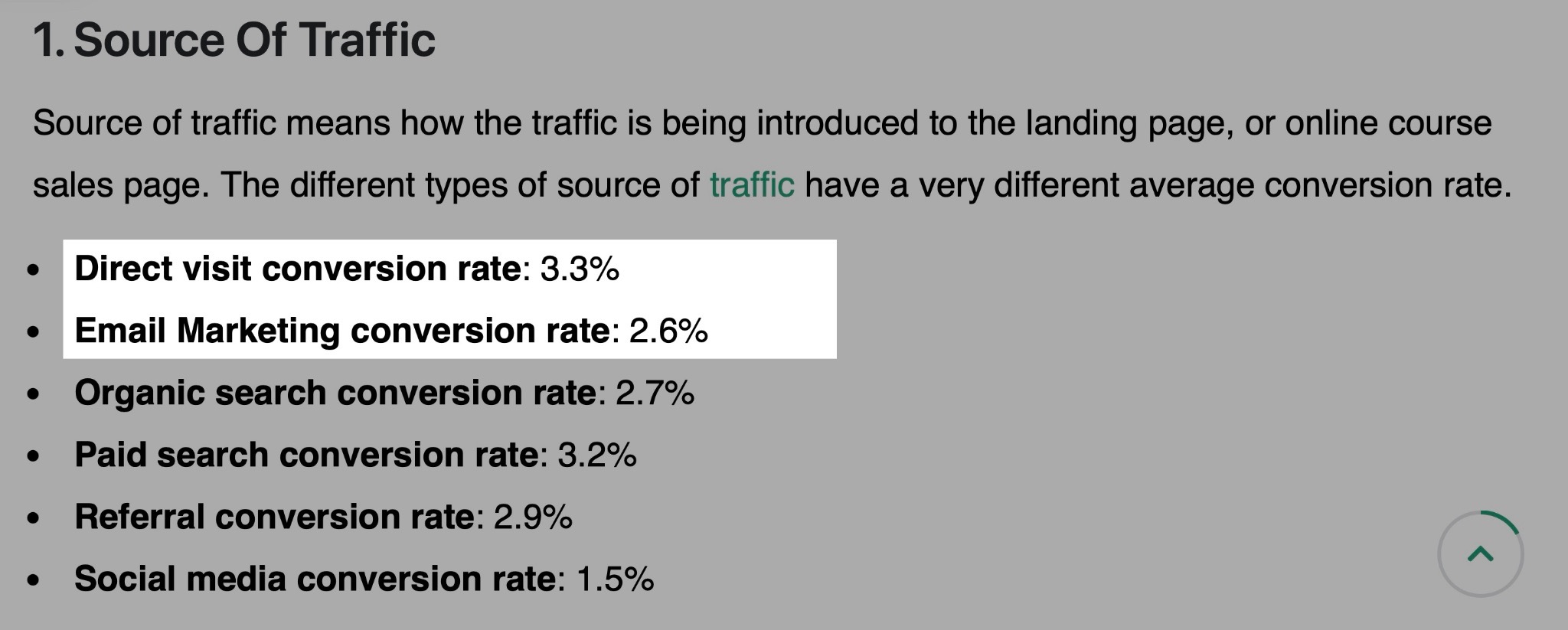
So yes, you should be using course promotion strategies that drive conversions.
To help you do that and increase enrollments, I’ve researched 30 effective ways you can promote an online course.
Keep reading.
TL;DR
-
To promote an online course, you can
-
1. Create SEO blog content targeting high-intent keywords
-
2. Publish YouTube tutorials and educational videos
-
3. Share Instagram Reels with quick wins
-
4. Post LinkedIn thought leadership content
-
5. Write educational X/Twitter threads
-
6. Offer free lead magnets tied to the course topic
-
7. Build webinar funnels
-
8. Send email newsletters and nurture sequences
-
9. Create TikTok educational content
-
10. Run paid Meta ads
-
11. Launch Google Search ads
-
12. Promote courses through YouTube ads
-
13. Use retargeting ads to re-engage visitors
-
14. Build communities on Discord or Slack
-
15. Partner with SaaS tools in the niche
-
16. Co-host live sessions with creators
-
17. Launch challenge-based campaigns
-
18. Share templates, checklists, and swipe files
-
19. List courses on marketplaces like Udemy
-
20. Publish courses on Skillshare
-
21. Build launch waitlists
-
22. Create scarcity campaigns with limited enrollment
-
23. Encourage student-generated content and testimonials
-
24. Optimize content for ChatGPT and Google AI Overviews
-
25. Build interactive tools or calculators
-
26. Create private mastermind or accountability groups
-
27. Host local workshops or virtual events
-
You can also:
- 28. Appear as a guest on podcasts
- 29. Answer questions on Quora
- 30. Build Facebook groups and communities
How to promote an online course
1. SEO blog content targeting high-intent keywords
You should promote an online course by writing an SEO-optimized blog post. It should target search terms used by learners who are ready to enroll in a course.
The search terms, also called high-intent keywords that you target, depend on the problem your course solves.
For example, if you sell a copywriting course, you should target:
- how to get copywriting customers
- copywriting portfolio examples
- how to make money copywriting
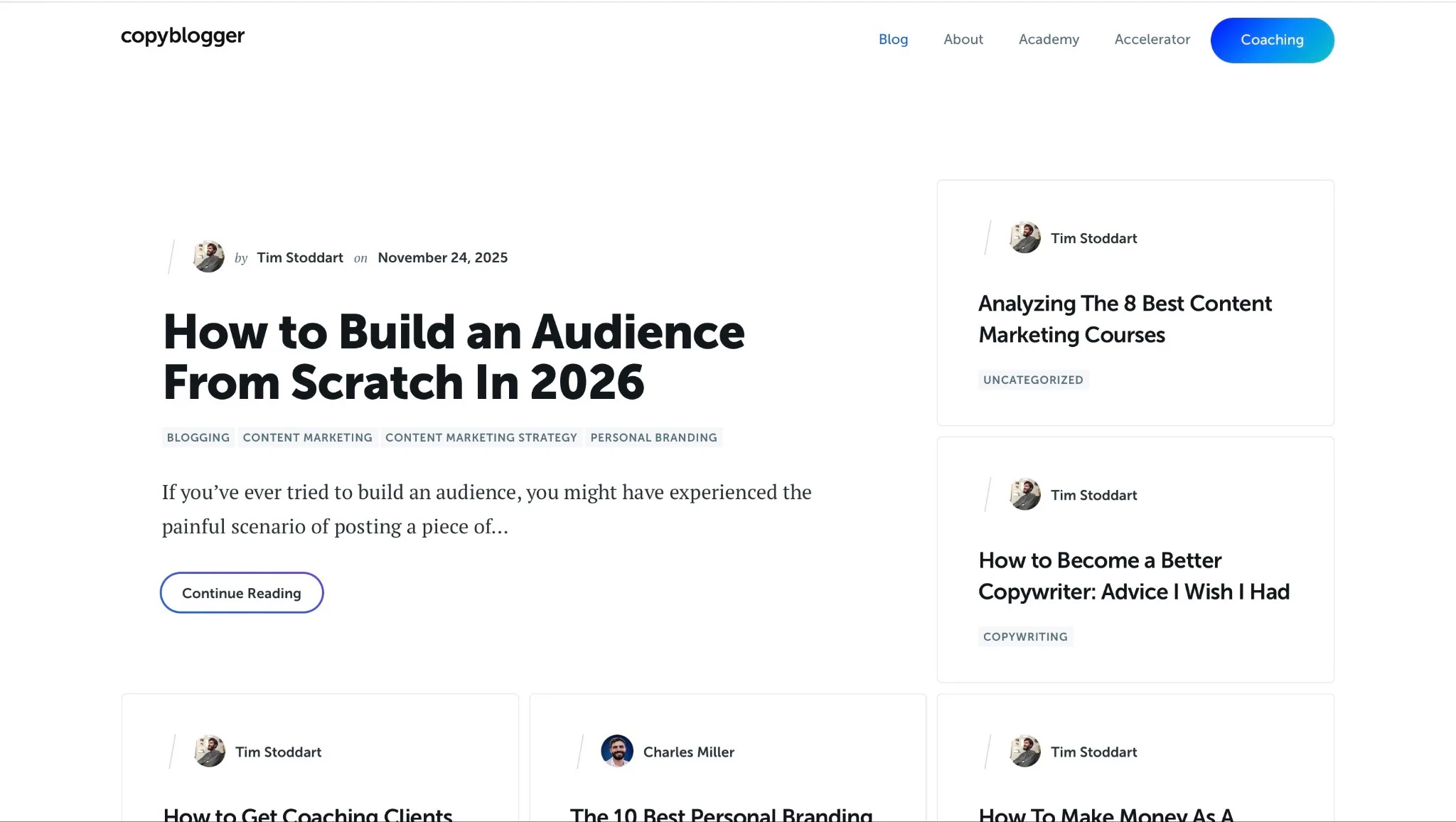
Copyblogger uses SEO blog content with high-intent keywords like this to get learners to sign up for its online academy. The Copyblogger Academy is an online business school with full-length online courses.
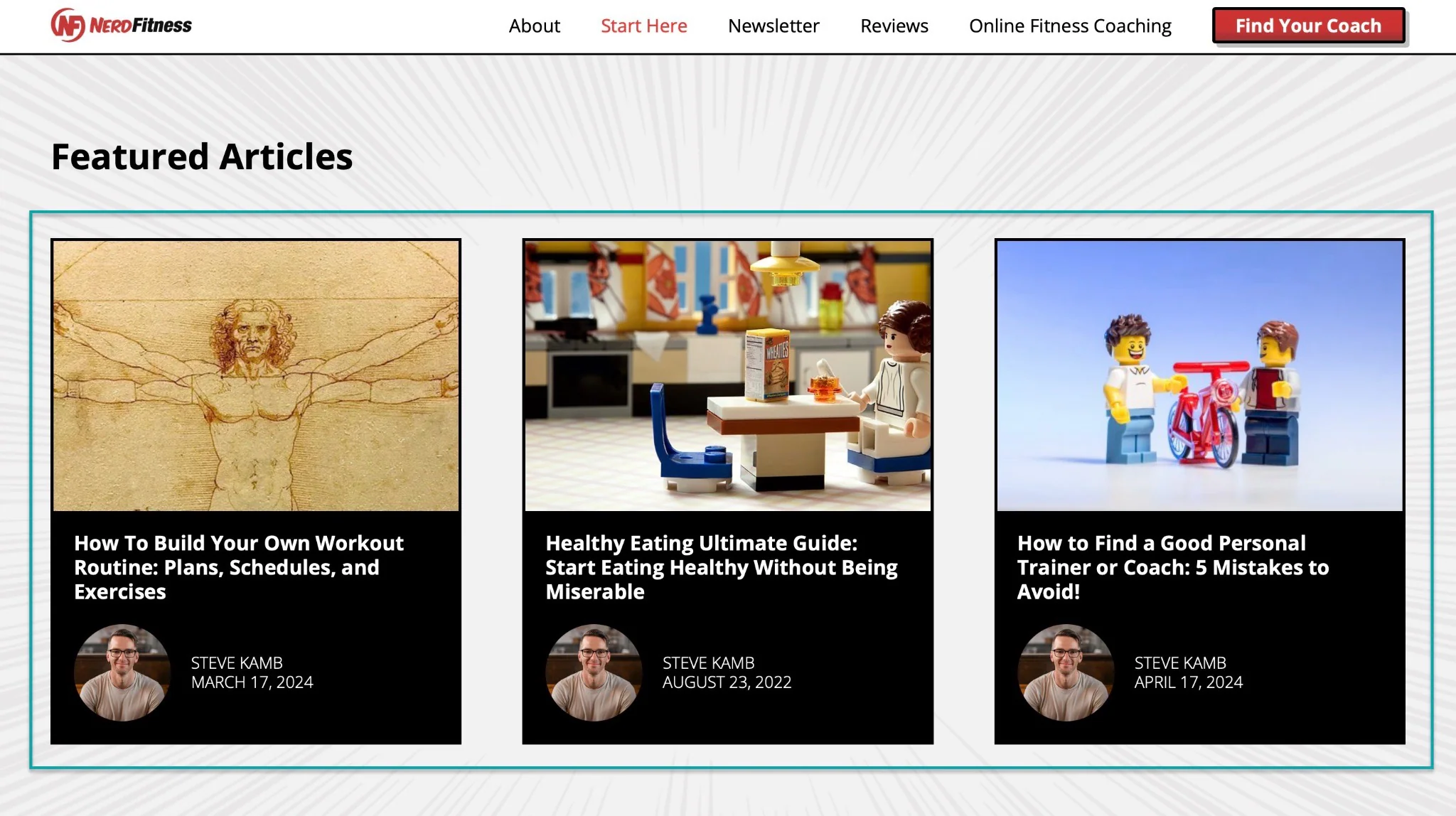
Now, if you sell a fitness course, then you could go with “how to lose weight without dieting.” Or “how to build your own workout routine.”
That’s how Nerd Fitness does it.
Remember that a high-intent keyword contains a problem, a goal, a beginner angle, a buying angle, and urgency or simplicity. Like how creator Elna Cain does it with the title “How to Start a Blog for Your Business in 3 Easy Steps.”
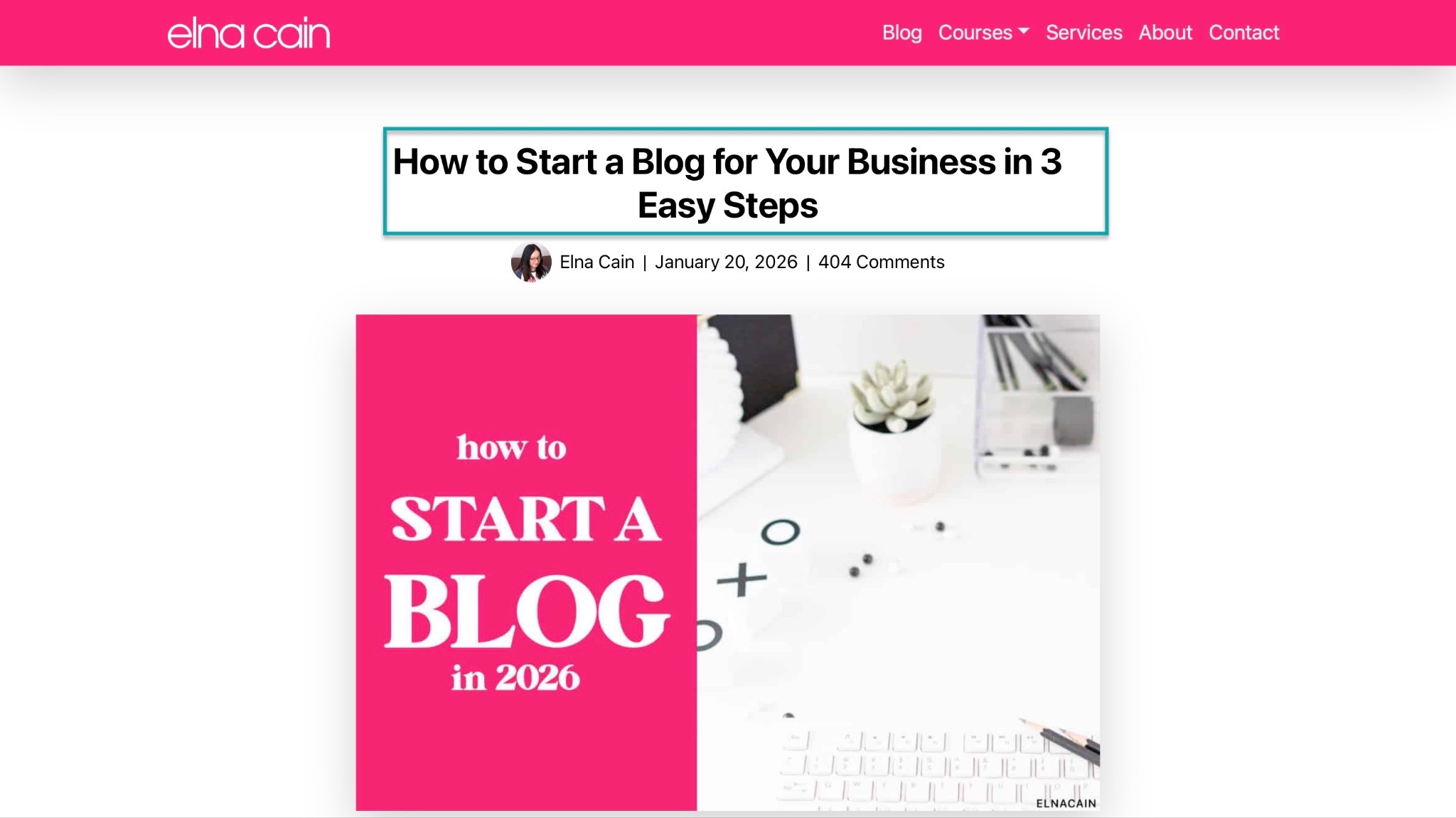
Elna addresses the problem with “How to Start a Blog.” She provides the solution.
The goal is “for Your Business,” and the beginner angle is “How to Start.”
With urgency or simplicity, Elna uses the words “in 3 Easy Steps.” And for buying intent, she knows this blog post will attract buyers (entrepreneurs and business owners) willing to purchase courses.
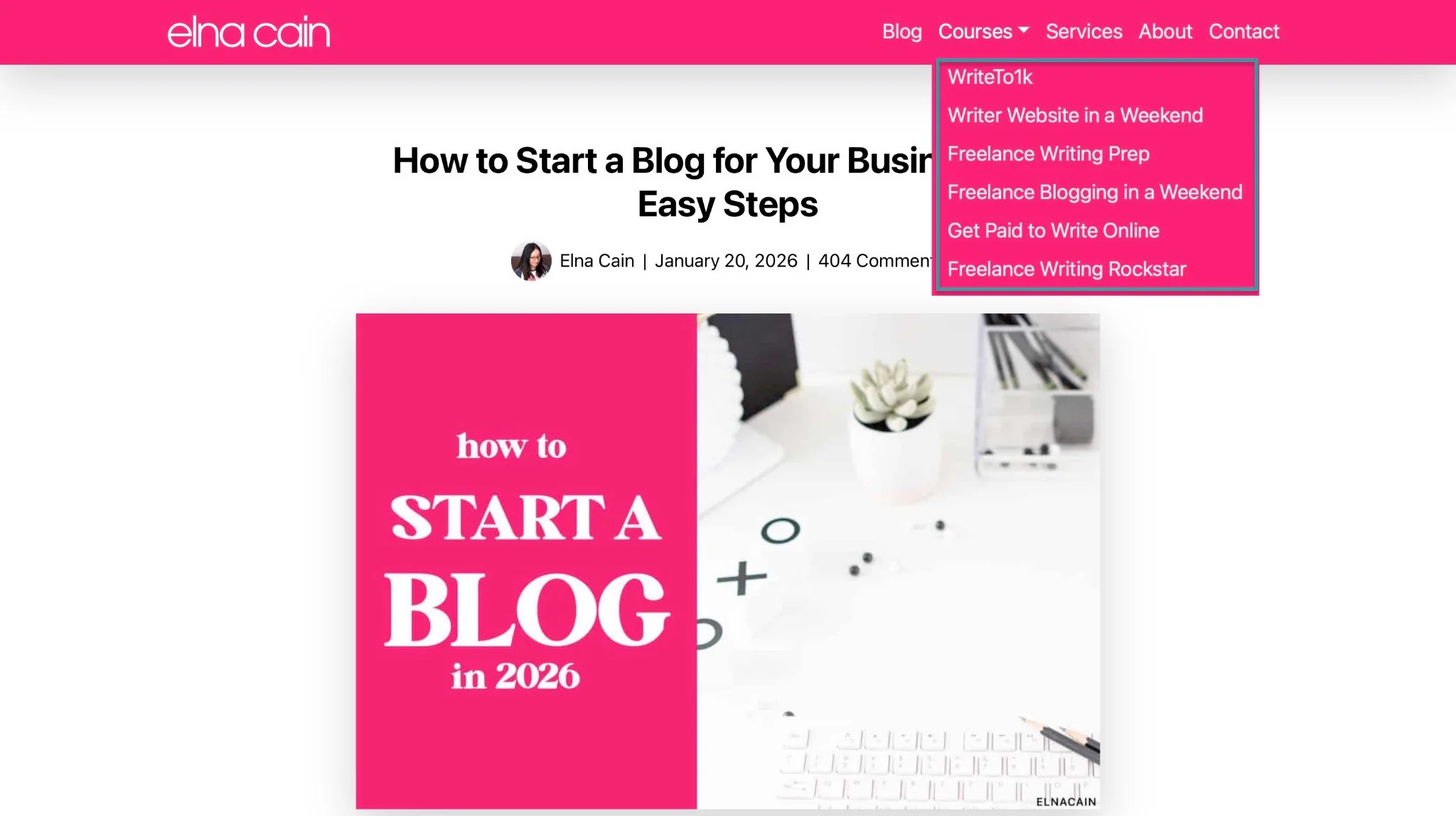
An SEO blog with high-intent keywords works because it targets the learners/readers looking for the solutions your course promises.
-
How much it costs to start: $50–$150, which includes a domain from a registrar like Namecheap and basic hosting from Hostinger or SiteGround.
-
Time to first results: 3–6 months because Google’s algorithm needs time to trust your site’s authority.
-
What traffic to expect: 50–500 organic visitors per month and 1,000+ by the end of the first year as the domain authority grows.
-
How likely it is to make sales: High - with conversion rates of 2% to 4%. If 1,000 people read your post, you can expect 20–40 enrollments or sales.
-
Best for: Creators willing to write or with a budget to hire specialized SEO writers.
2. YouTube tutorials and educational videos
You can use YouTube tutorials and educational videos to give learners a glimpse of what your course offers.
They can help you promote an online course because they help you:
- show your expertise
- build trust with your audience
- attract learners actively teaching for the solutions you offer
ThinkMedia, for example, uses tutorials and educational content to attract aspiring creators and entrepreneurs.
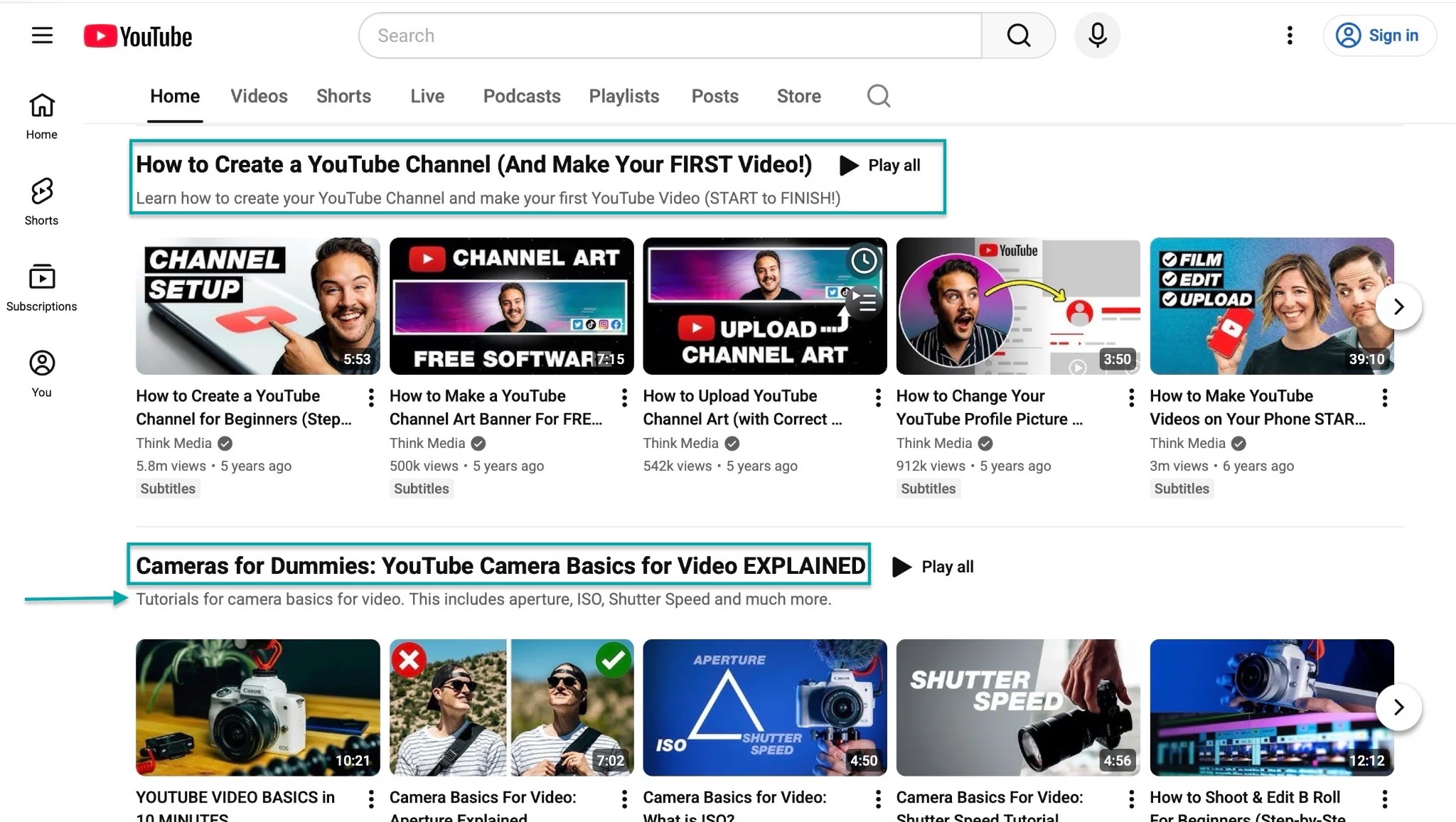
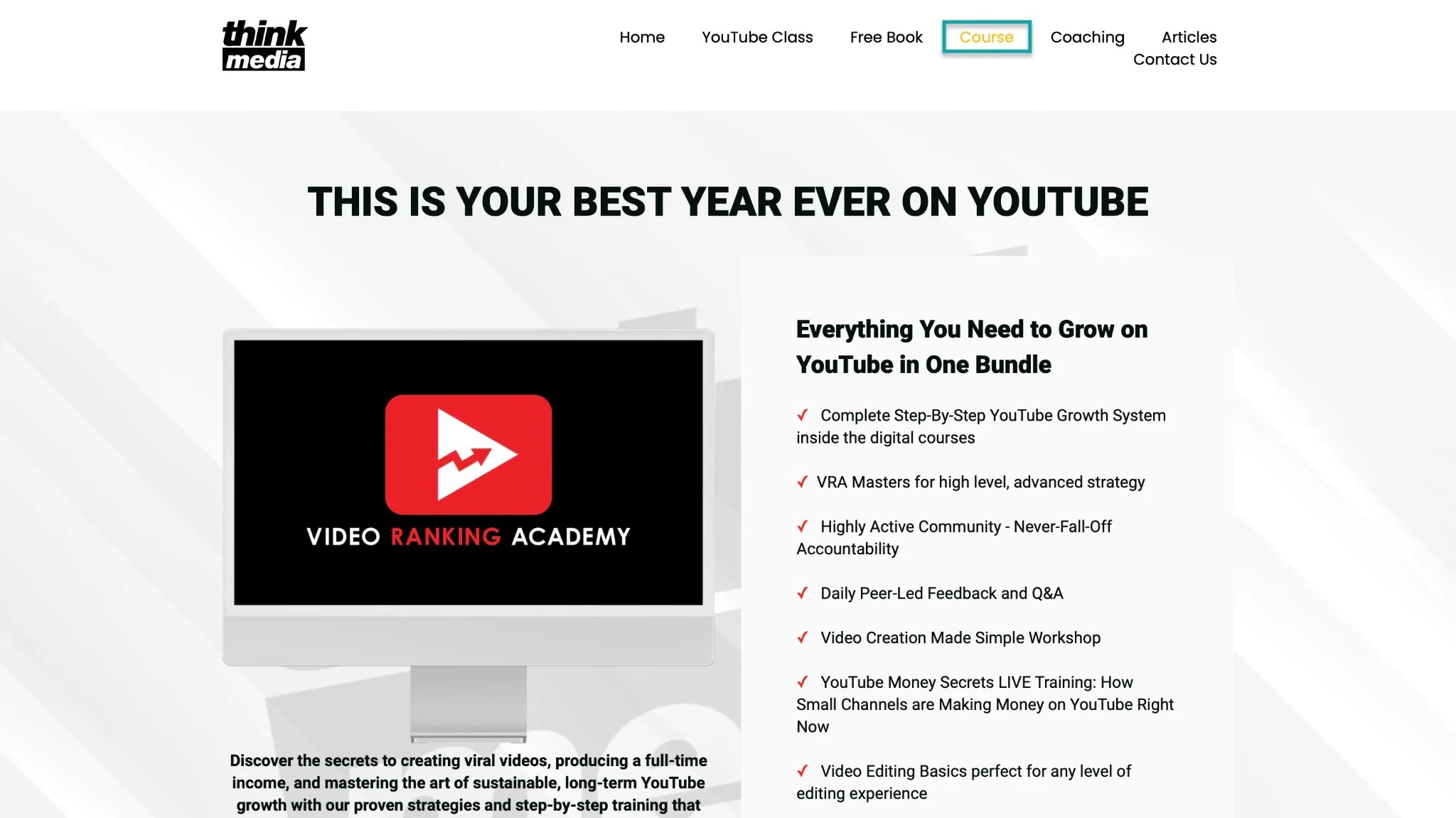
With this approach, they’ve successfully promoted and sold their course, Video Ranking Academy.
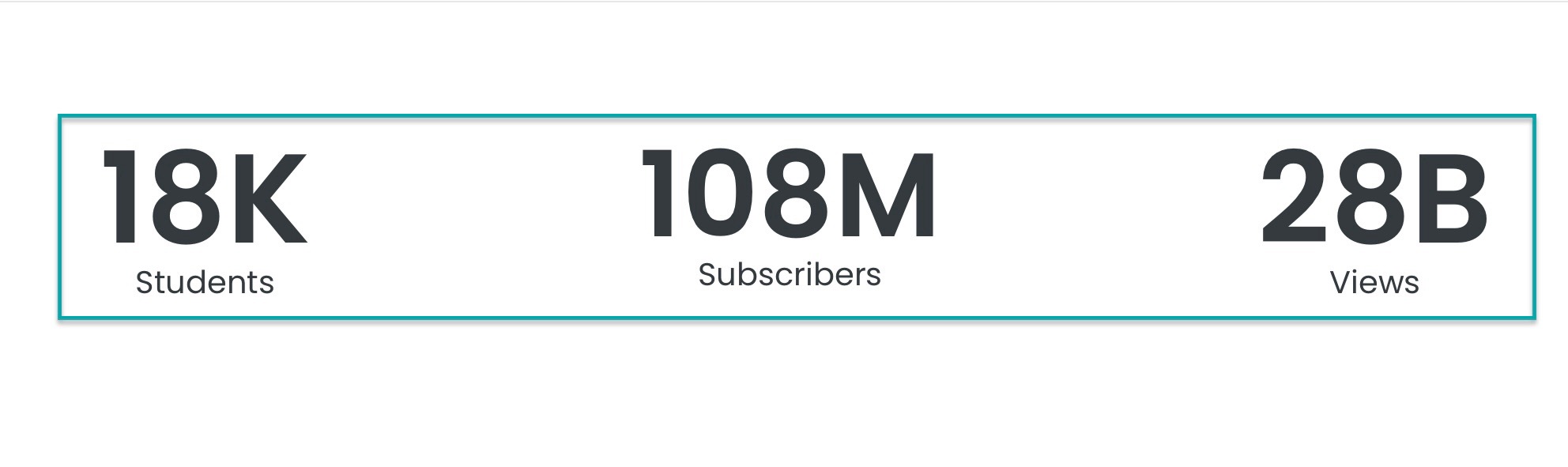
ThinkMedia has a massive audience of 18,000 students, 108M subscribers, and 28B views through educational content.
The good thing about YouTube tutorials is that you can earn additional income if your channel is monetized. You can also grow your online course audience while you earn.
-
How much it costs to start: $0–$150, depending on your microphone, lighting, and editing tools.
-
Time to first results: 2–6 months, depending on your niche, video quality, and consistency.
-
What traffic to expect: 10–100 monthly visitors to your course landing page. Then, 1,000+ organic visits with searchable tutorials and consistent uploads on YouTube.
-
How likely it is to make sales: High - if your videos solve specific problems related to your course topic.
-
Best for: Creators, coaches, educators, and entrepreneurs comfortable teaching on camera.
3. Instagram Reels with quick wins
Instagram is now a search engine. Users conduct searches directly on the platform using hashtags, keywords, and profile names for answers, products, and ideas.
There’s even Instagram SEO you can use for captions and content. You can also optimize images, carousels, and Reels with alt text.
You can also ask users to “Comment course” to trigger an automated follow-up in their DMs with tools like ManyChat. And that’s a gold mine for creators like you who want to promote an online course.
You can simply create short, valuable videos that give viewers a quick win related to your course topic.
Bossbabe, for example, uses Instagram to attract students online. And with 3.3M followers on Instagram, that strategy sure works.
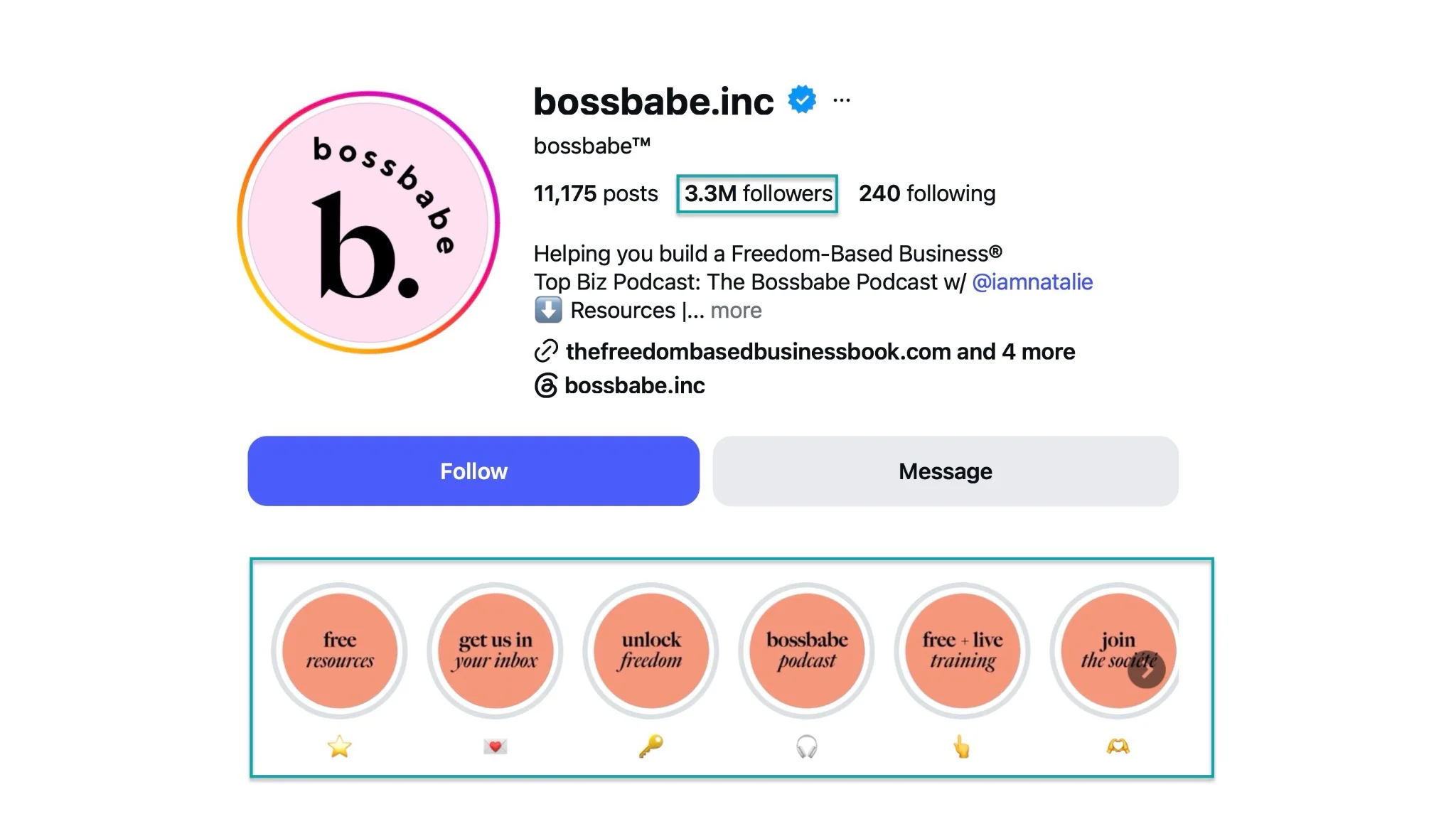
They do this by promoting marketing courses, creator entrepreneurship, and online business education.
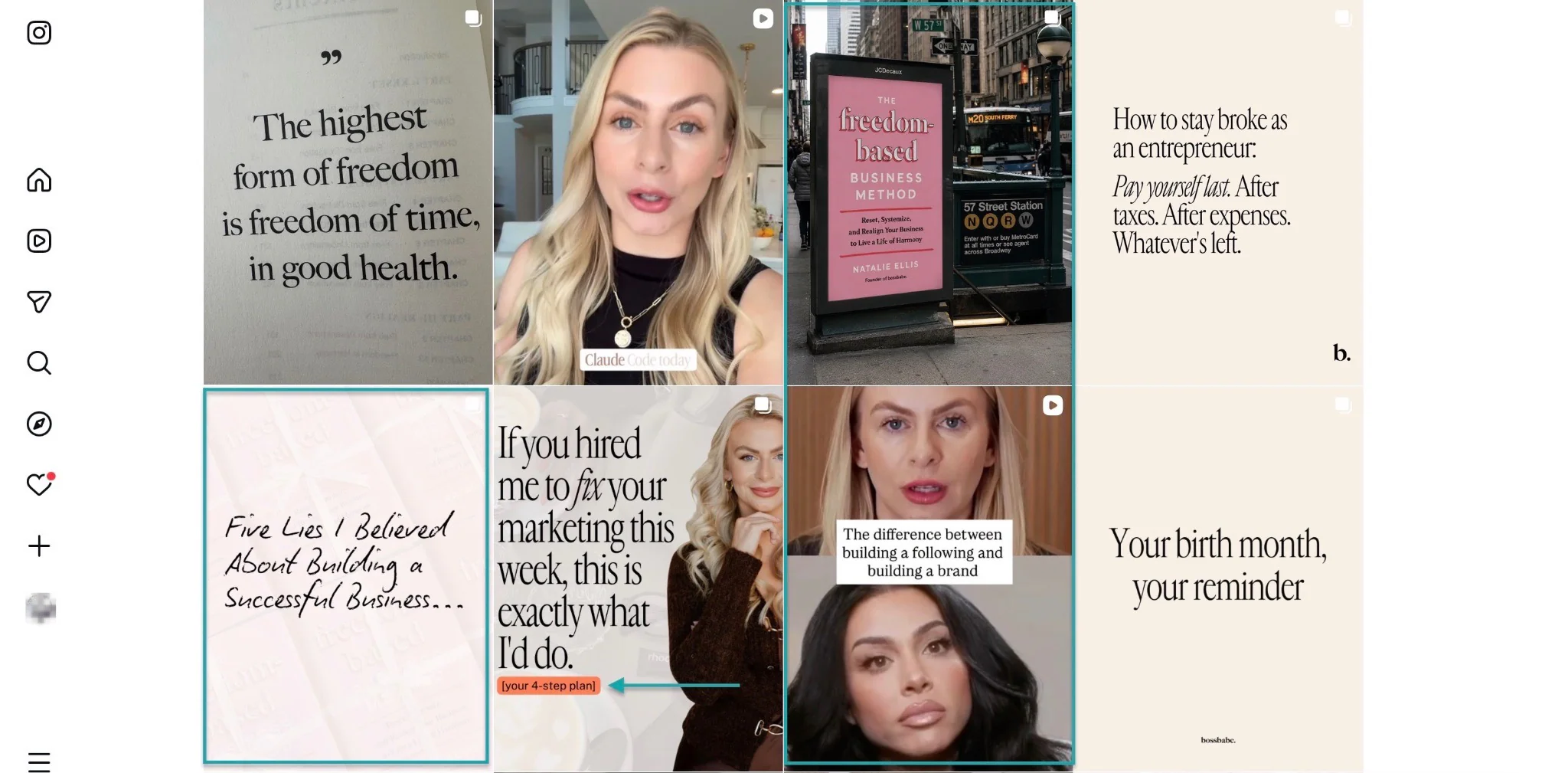
The thing about Instagram Reels is that it:
- grabs attention quickly
- builds credibility
- increases profile visits
- drives traffic to your online course landing page
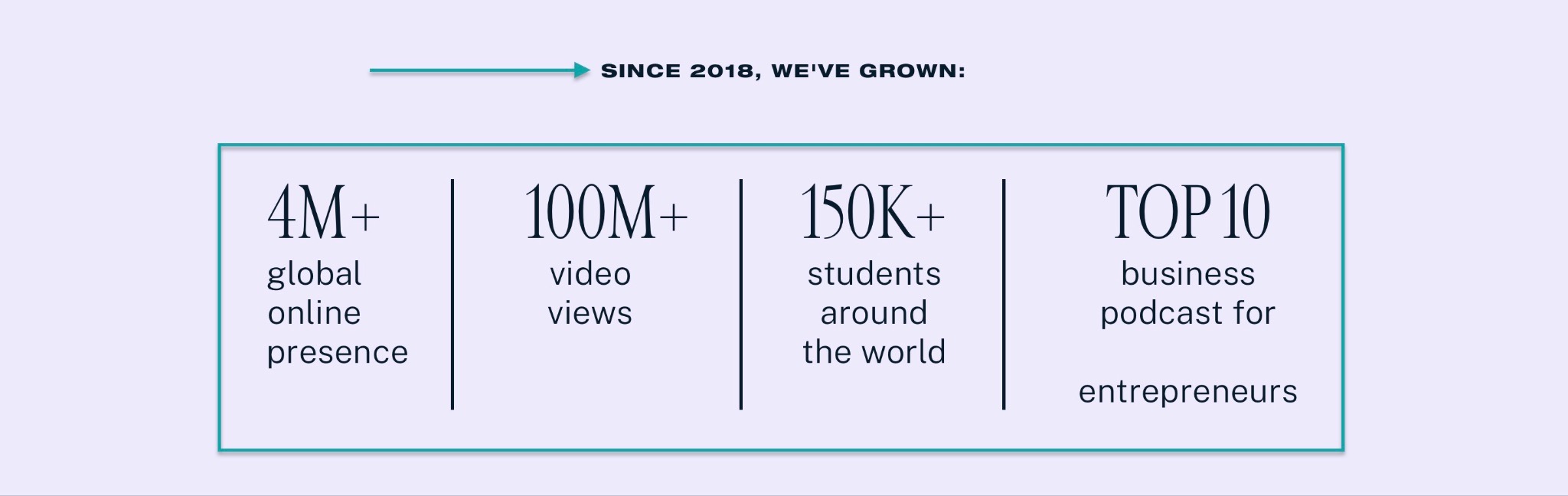
For Bossbabe, it has brought them 150,000+ students and 100M+ video views since 2018.
-
How much it costs to start: $0–$50 because you only need a smartphone, a basic light ring or natural light, and free video editing tools like Capcut or Instagram’s built-in editor.
-
Time to first results: 1–2 weeks if your Reels offer value and you post consistently.
-
What traffic to expect: 20–200 monthly course page visits when starting. Viral posts can attract more targeted visitors each month.
-
How likely it is to make sales: Medium–High - if your content solves a specific problem and includes a clear call-to-action (CTA).
-
Best for: Creators, coaches, consultants, and educators comfortable creating short-form video content.
4. LinkedIn thought leadership posts
LinkedIn is still relevant despite the growing opinion that it has become casual, spammy, and “social-media-like.”
It’s a professional platform where people connect, network, learn, and grow in their careers. It’s especially useful for course creators who teach:
- workplace skills
- business strategy
- freelancing and career development
- marketing, tech, and professional certifications
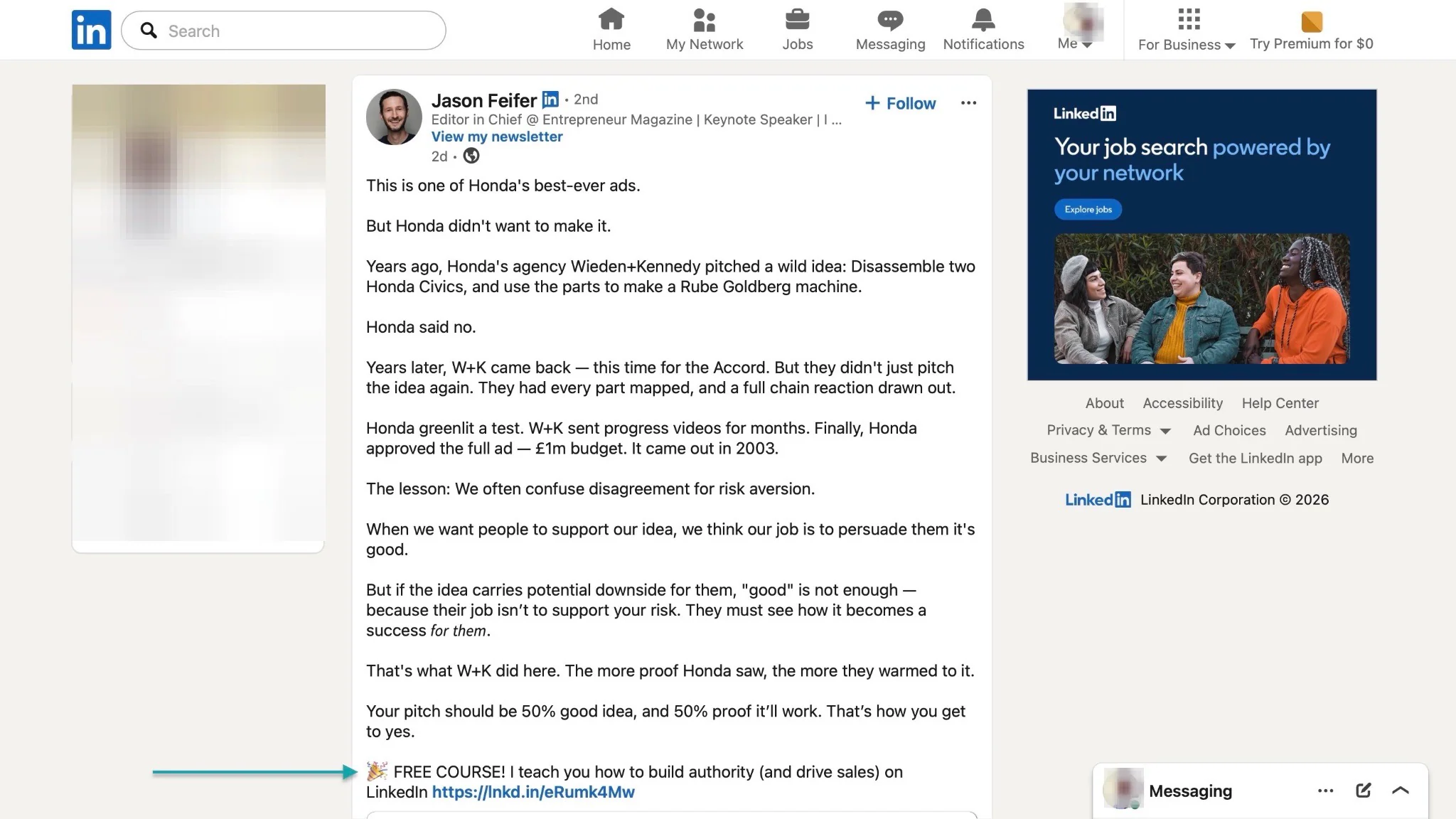
On LinkedIn, it’s common for online course creators to promote and sell online courses by sharing thought leadership posts. Jason Fiefer, editor-in-chief at Entrepreneur Magazine, does this all the time.
For example, he breaks down industry insights.
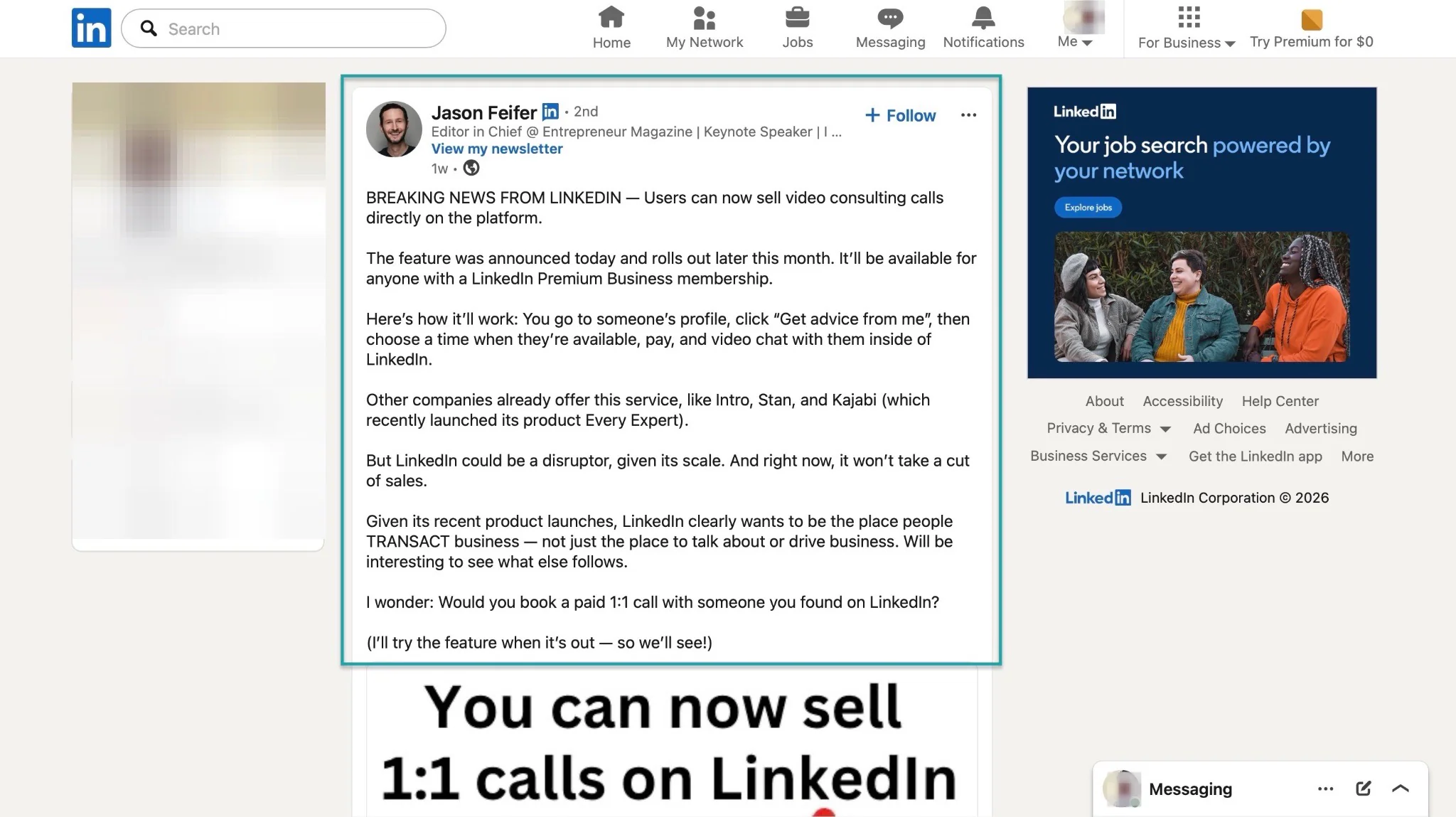
He shares personal experiences and lessons.
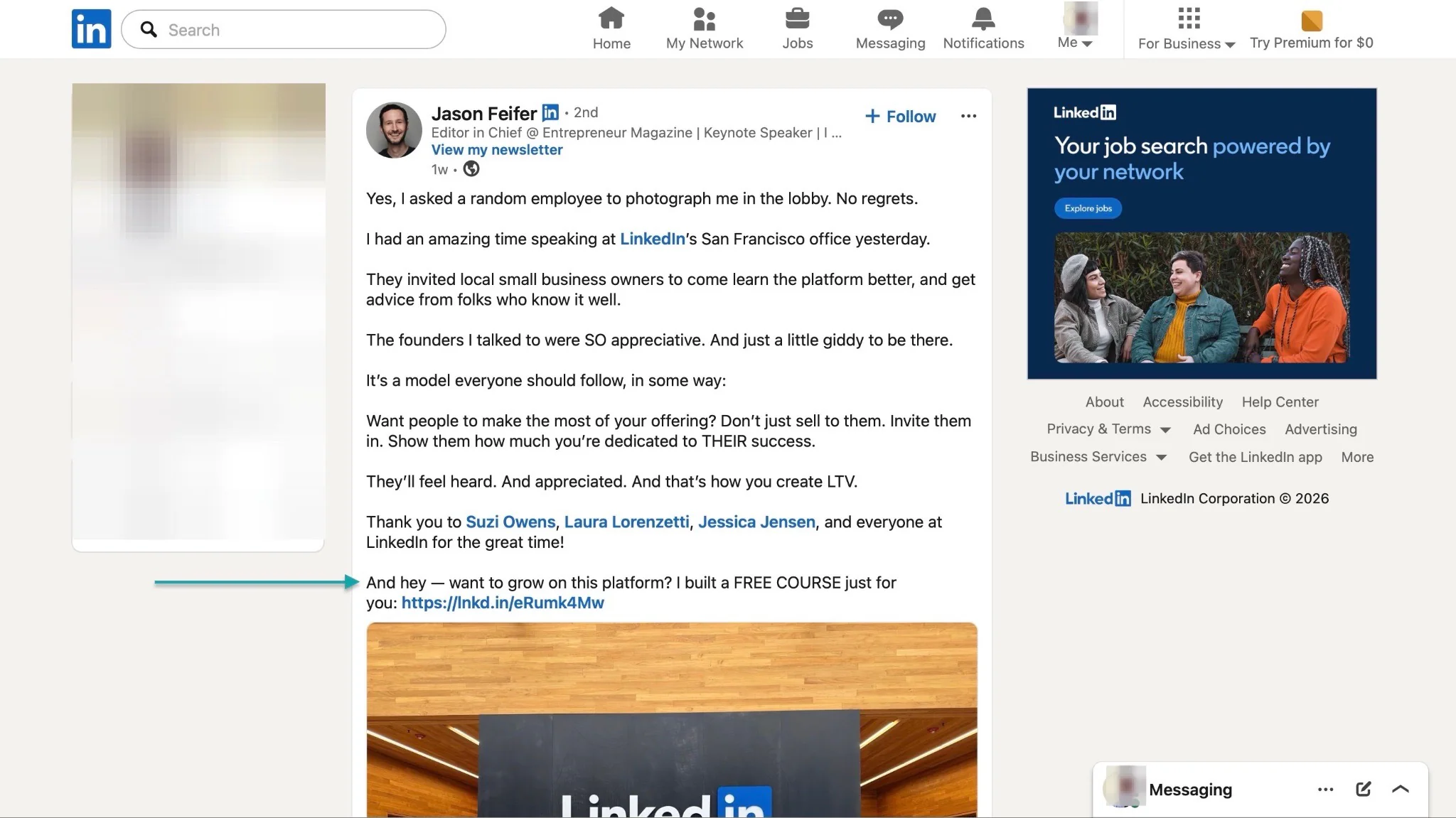
He also teaches short, actionable frameworks.
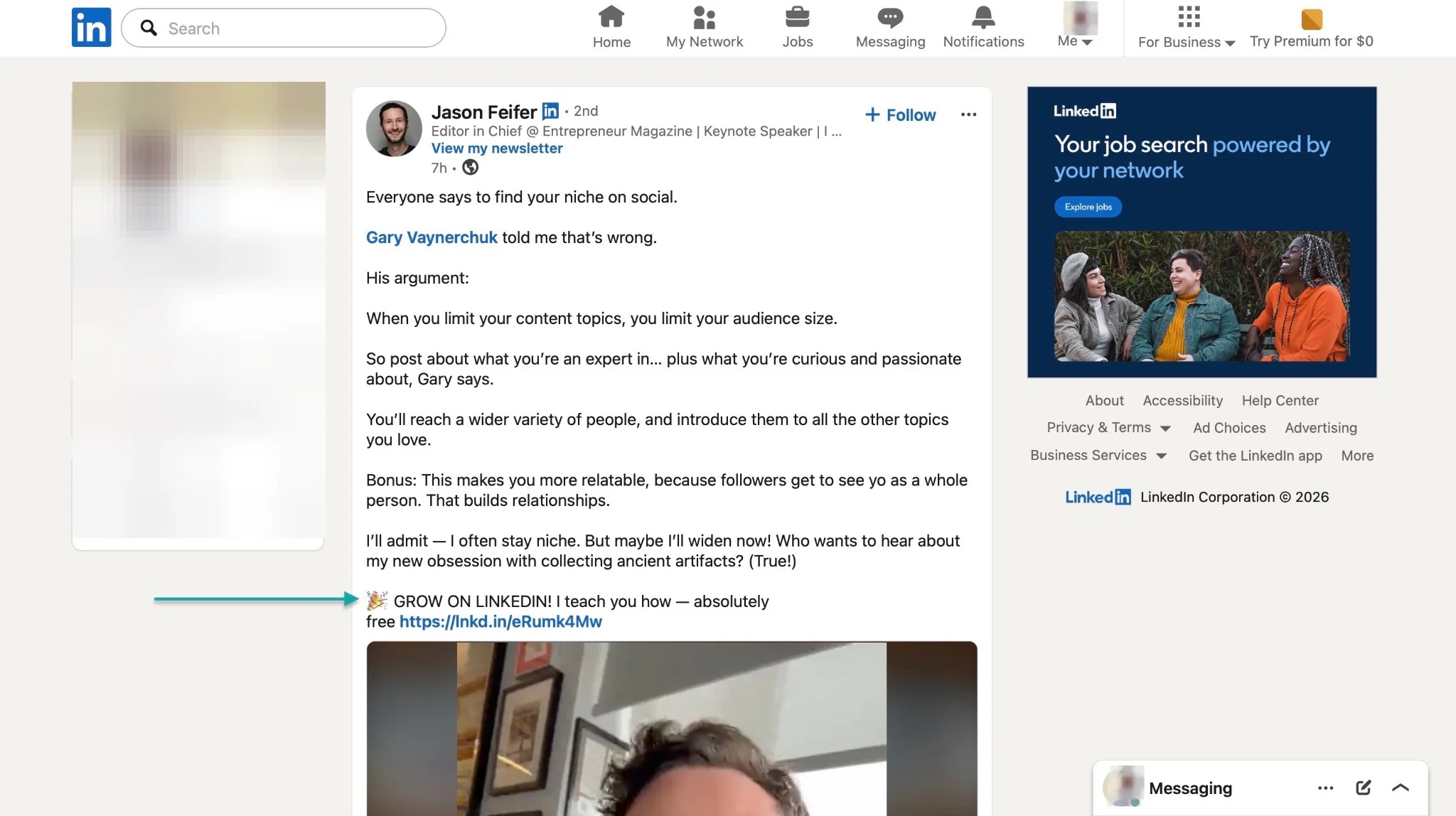
And shows his expertise.
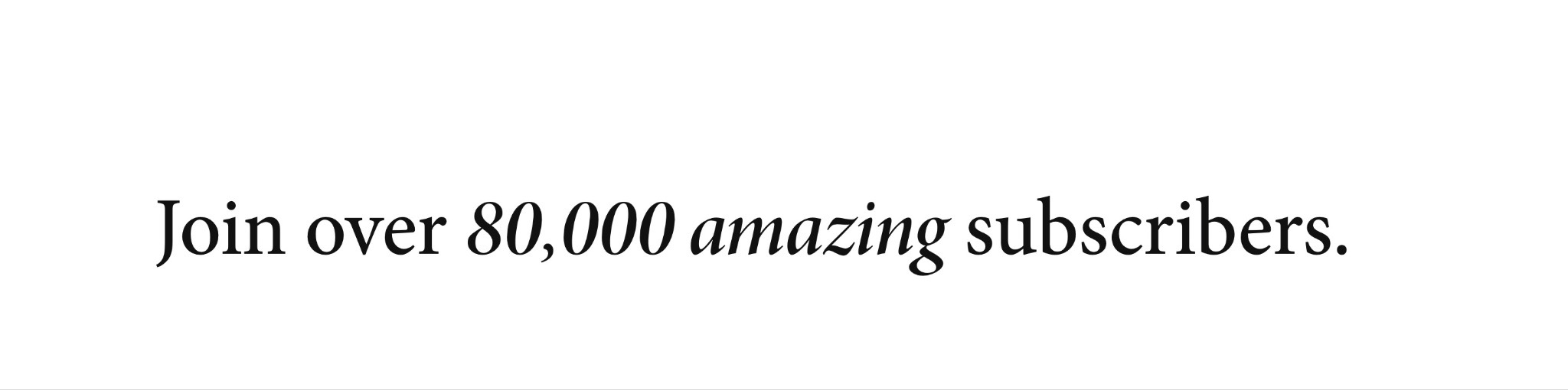
All this helps him build trust and position himself as someone worth learning from. No wonder Jason has 80,000+ newsletter subscribers.
And 250,000+ followers on LinkedIn.
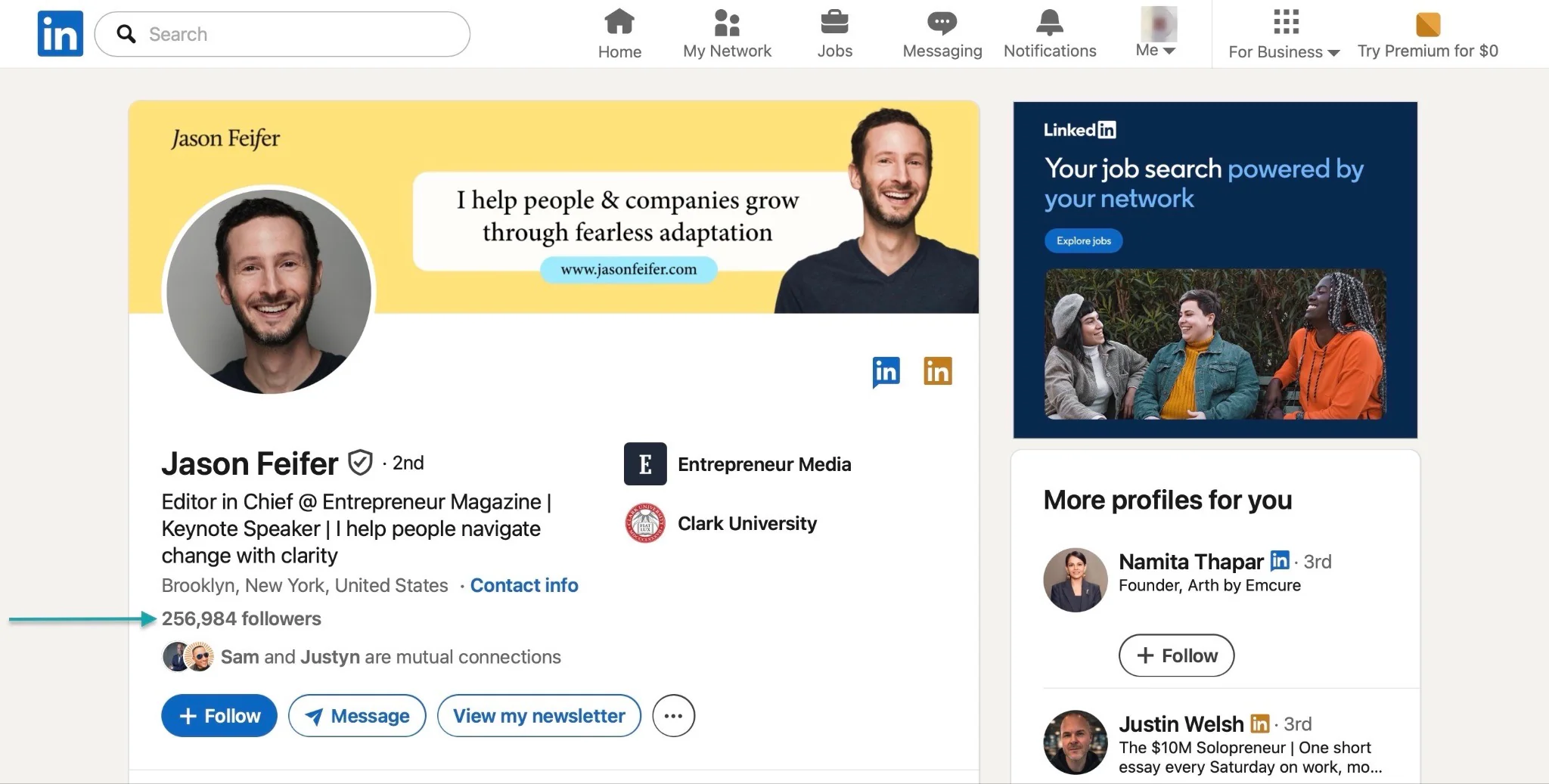
You can do the same thing to turn your connections and readers into enrolled learners.
-
How much it costs to start: $0 because you only need to make time to post consistently.
-
Time to first results: 2–6 weeks for initial engagement
-
What traffic to expect: 50–300 course page visits per month.
-
How likely it is to make sales: High - most professionals on LinkedIn are looking for career developments.
-
Best for: Coaches, consultants, educators, and creators teaching career-related or business-focused skills
5. X/Twitter educational threads
X, formerly Twitter, may initially seem too informal to use for promoting an online course. But the truth is, as long as it’s used by people, it can bring in leads.
It may be unbelievable at first, but creators use X to distribute educational content, which then drives traffic to email lists.
Eventually, that helps them sell their online courses.
Take Justin Welsh, for example. He doesn’t outright ask users to “buy his course,” but he posts educational threads and insights.
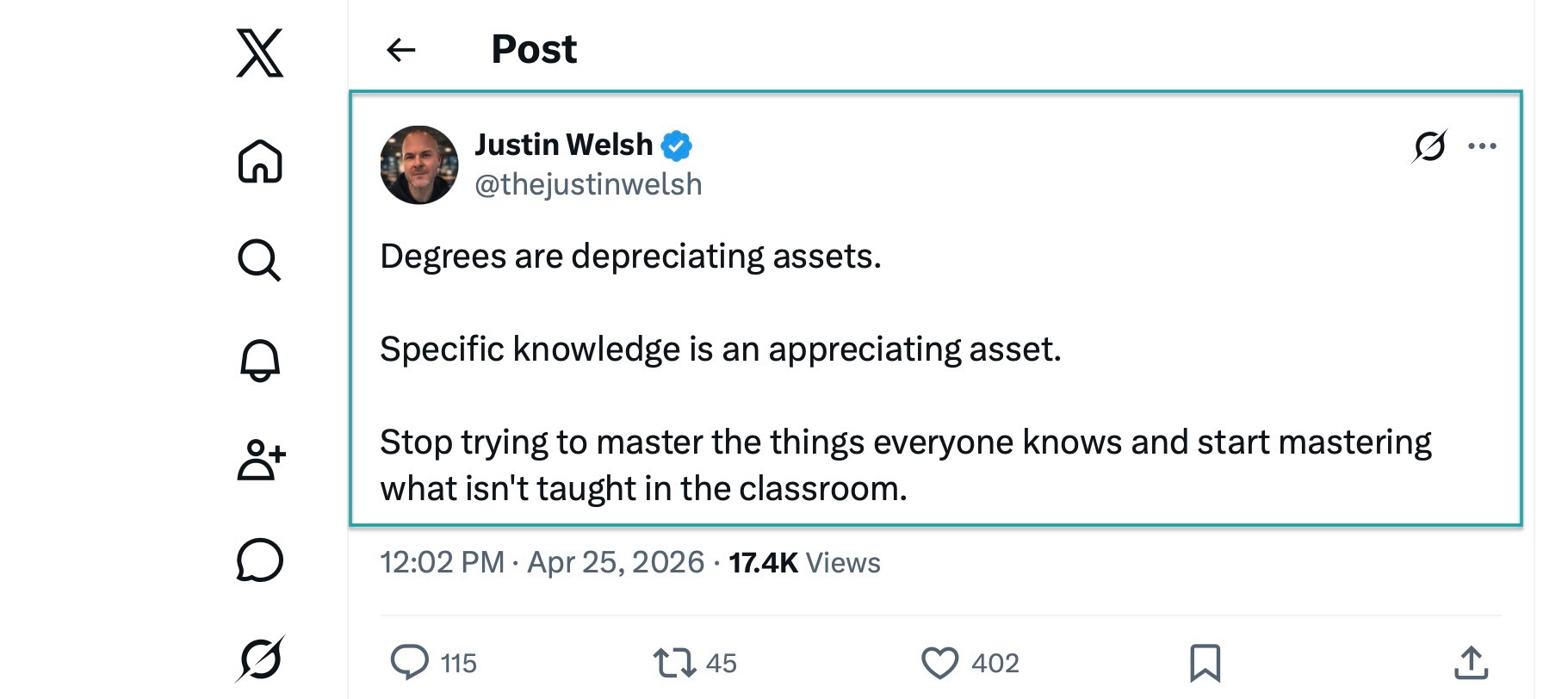
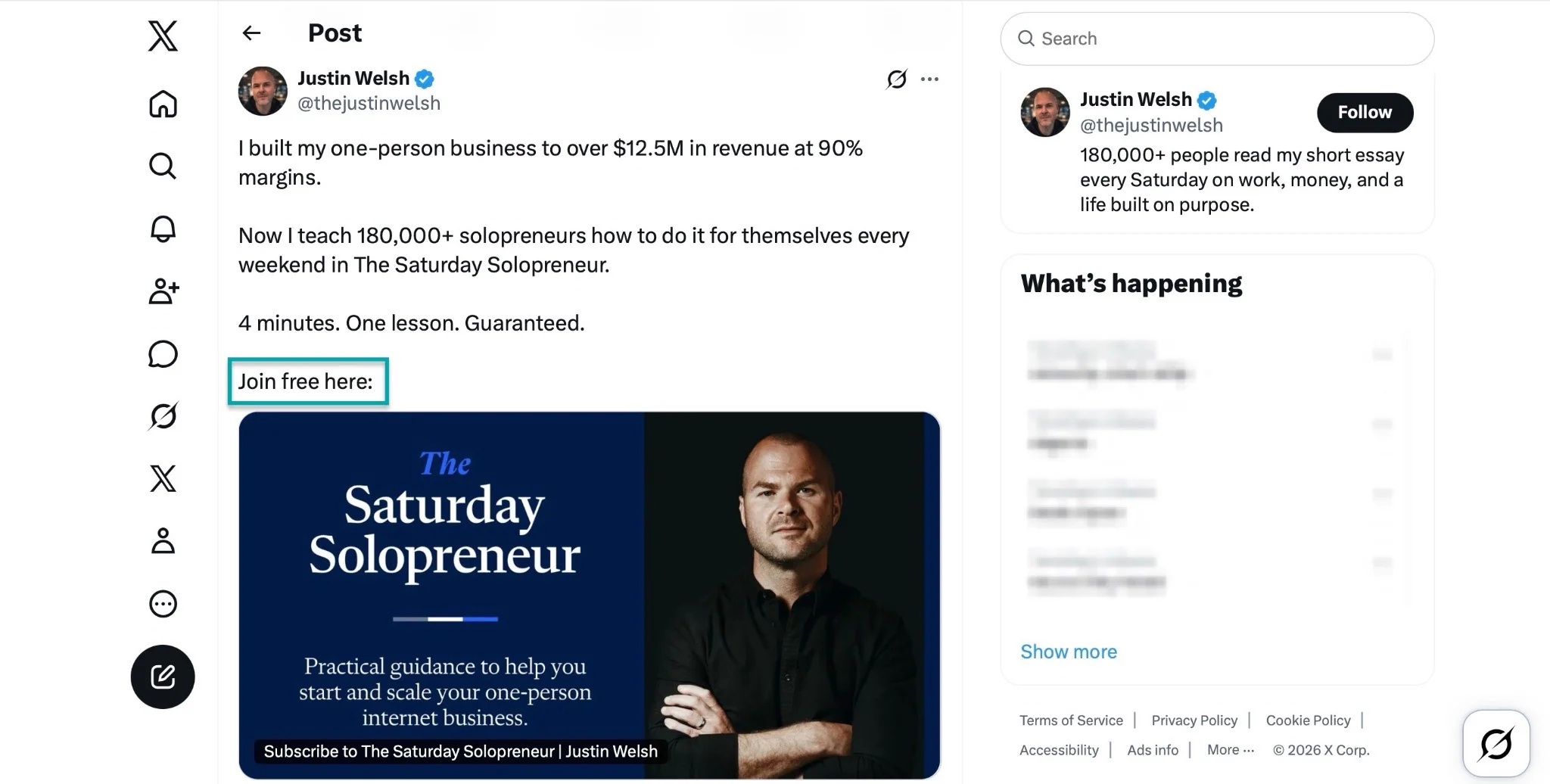
He also shares advice and a framework for building a solo business like he did. And invites users/readers to join his newsletter/email list.
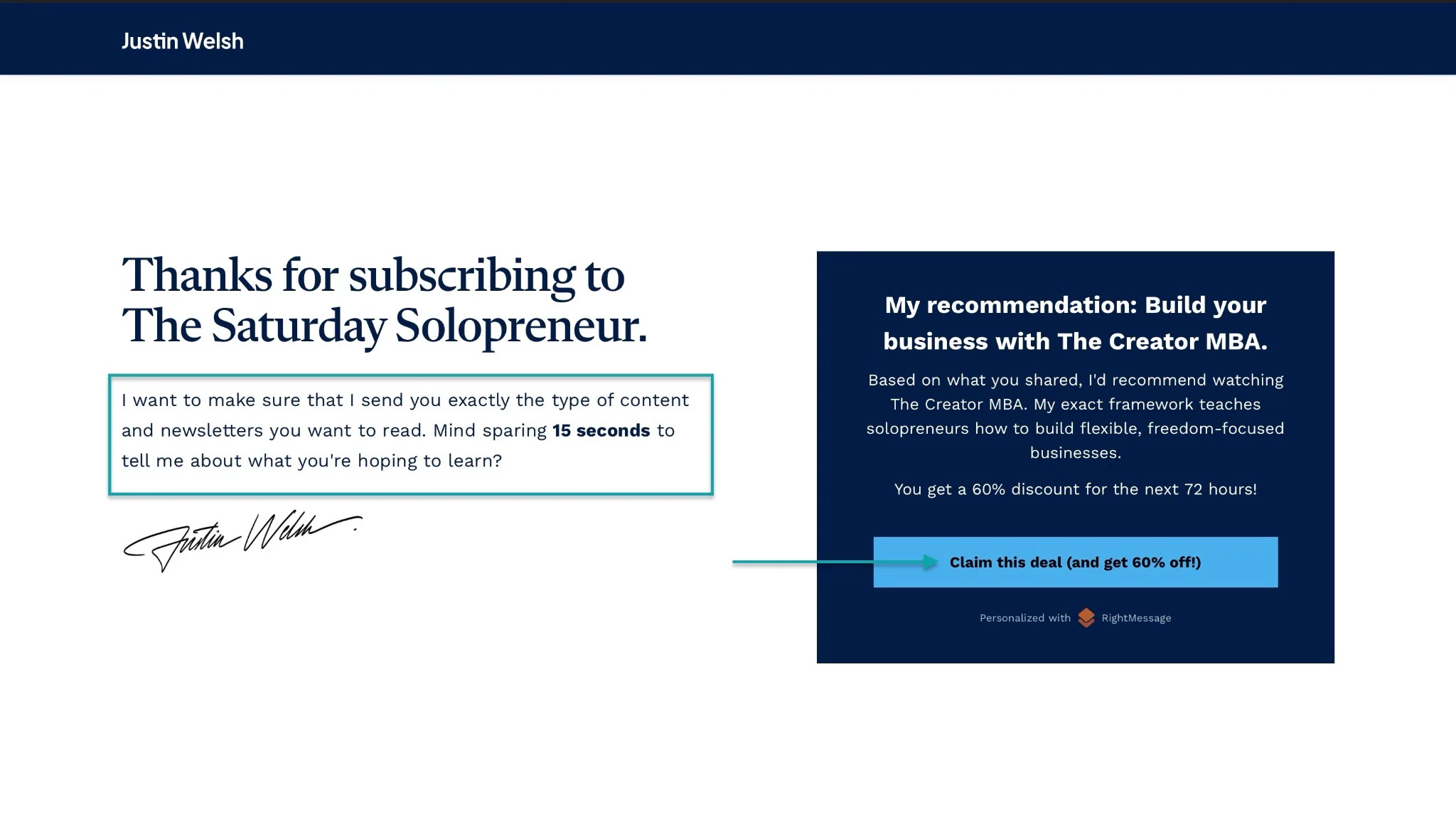
Then, when they actually sign up, he walks them through a couple of questions. And depending on the answers they provide, he recommends an online training program or course.
You could do a similar thing. First, share an insight.
Then add a strong CTA. It could be a free resource or an invitation to join your email list.
Finally, sell your online course to your newsletter subscribers if it solves a problem they’re facing.
-
How much it costs to start: $0 - only requires time, consistency, and writing skills.
-
Time to first results: 1–4 weeks
-
What traffic to expect: 20–200 course page visits per month at the start. Viral threads and consistent posting can up that to 1,000+ monthly visits.
-
How likely it is to make sales: Medium–High - X is a powerful platform for distributing ideas and attracting learners.
-
Best for: Course creators with strong writing skills who can simplify complex ideas to short, structured insights.
6. Free lead magnets tied to the course topic
Another way to promote an online course is to offer free lead magnets related to the course topic.
Lead magnets are free incentives or resources that course creators give in exchange for a learner’s/potential buyer’s email or contact information.
Lead magnets can be in the form of:
- Free PDFs and e-books
- Templates and workbooks
- Checklists
- Mini courses
- Webinars
- Notion templates
- Free audits or strategy calls
- Worksheets and guides
- Quizzes and assessments
Marie Forleo, for example, gives away a 7-day mini-course on copywriting for learners’ names and email addresses.
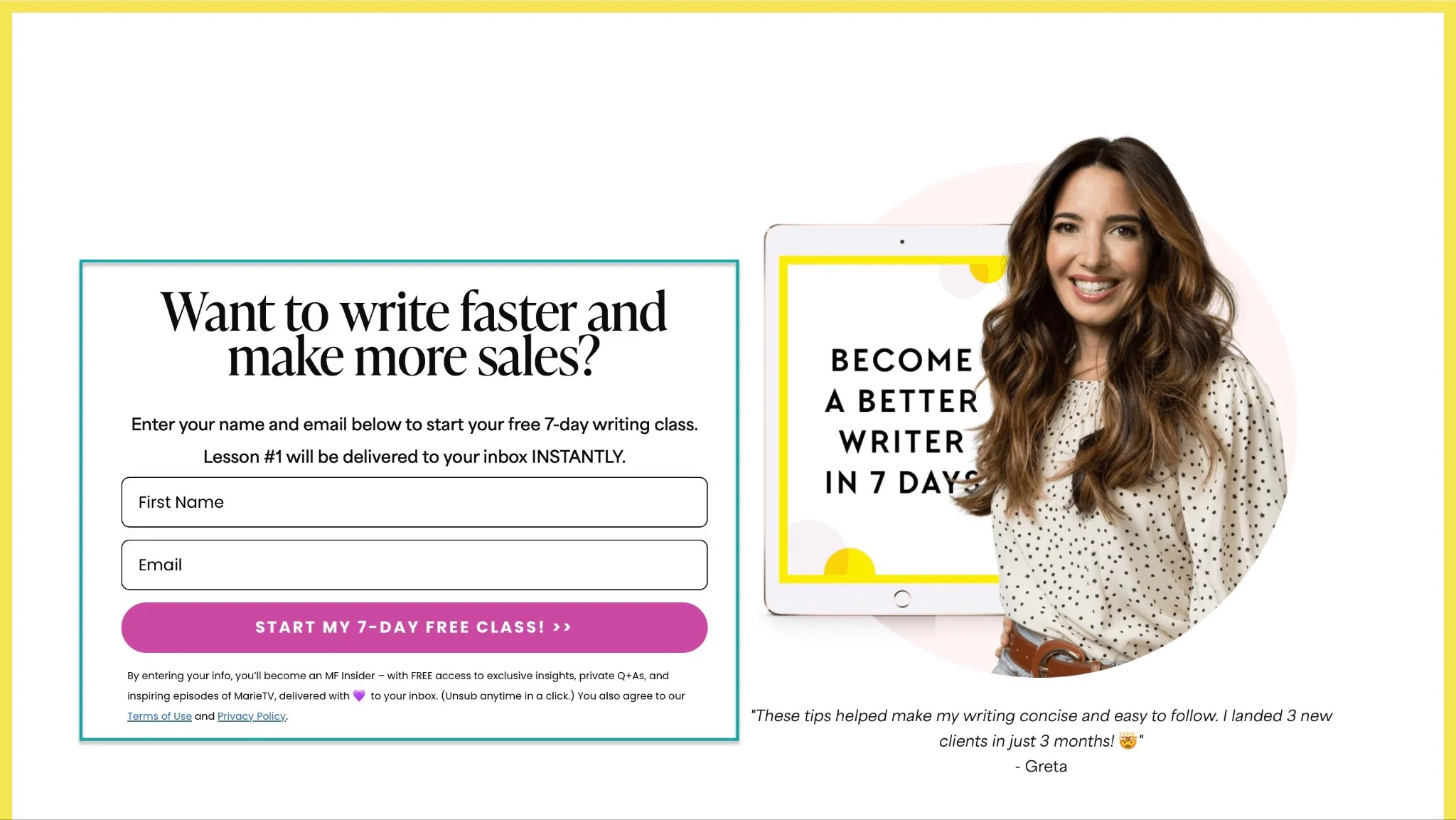
It’s a precursor to her paid course: The Copy Cure.
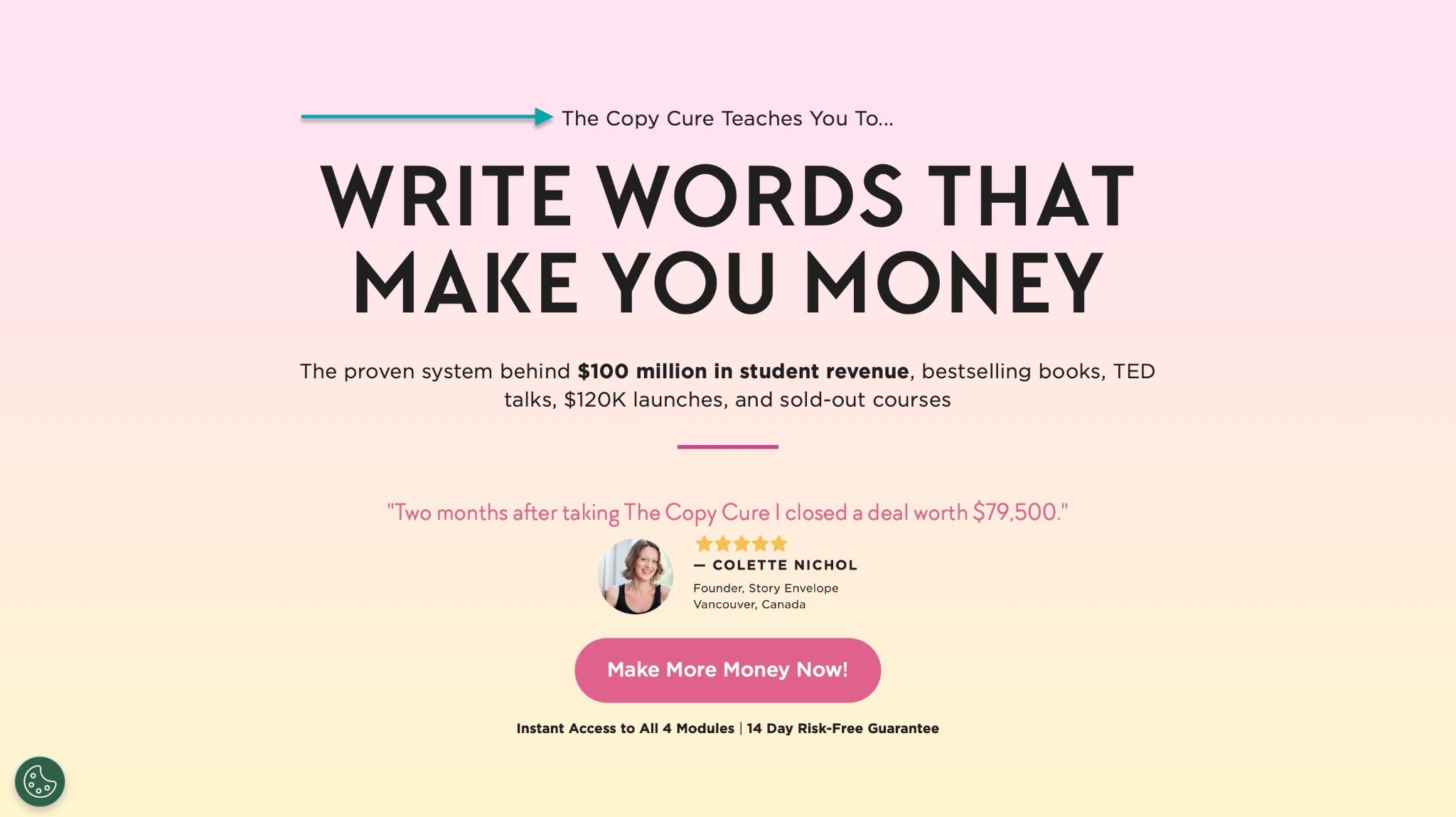
You realize she ties the lead magnet to the course topic. So it’s a course promotional strategy that works well because it offers learners a taste of the actual thing.
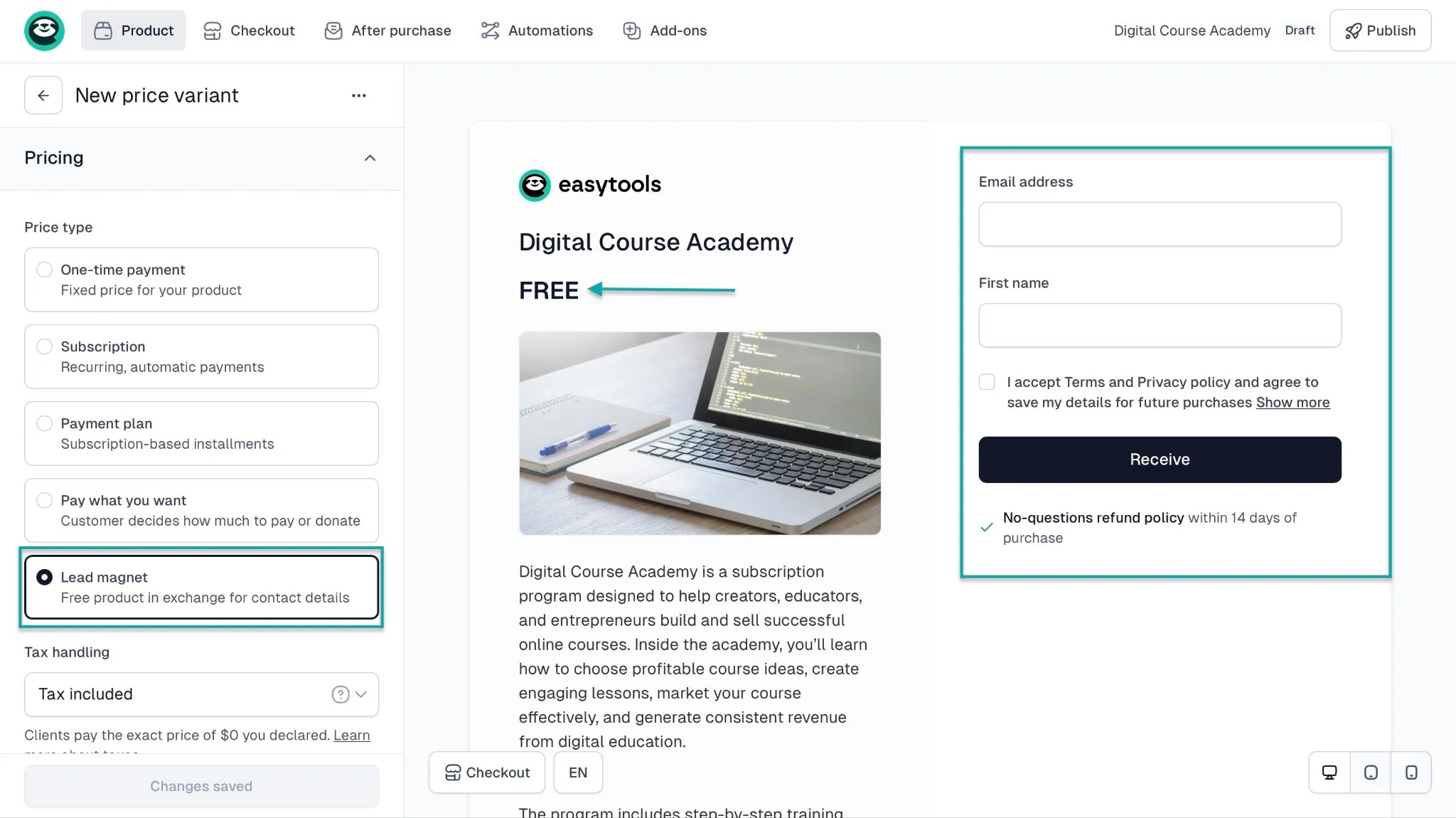
On Easytools, you can create a checkout for your course and add a free lead magnet as a price variant. The platform lets you add links to downloadable products or upload different files from the paid product.
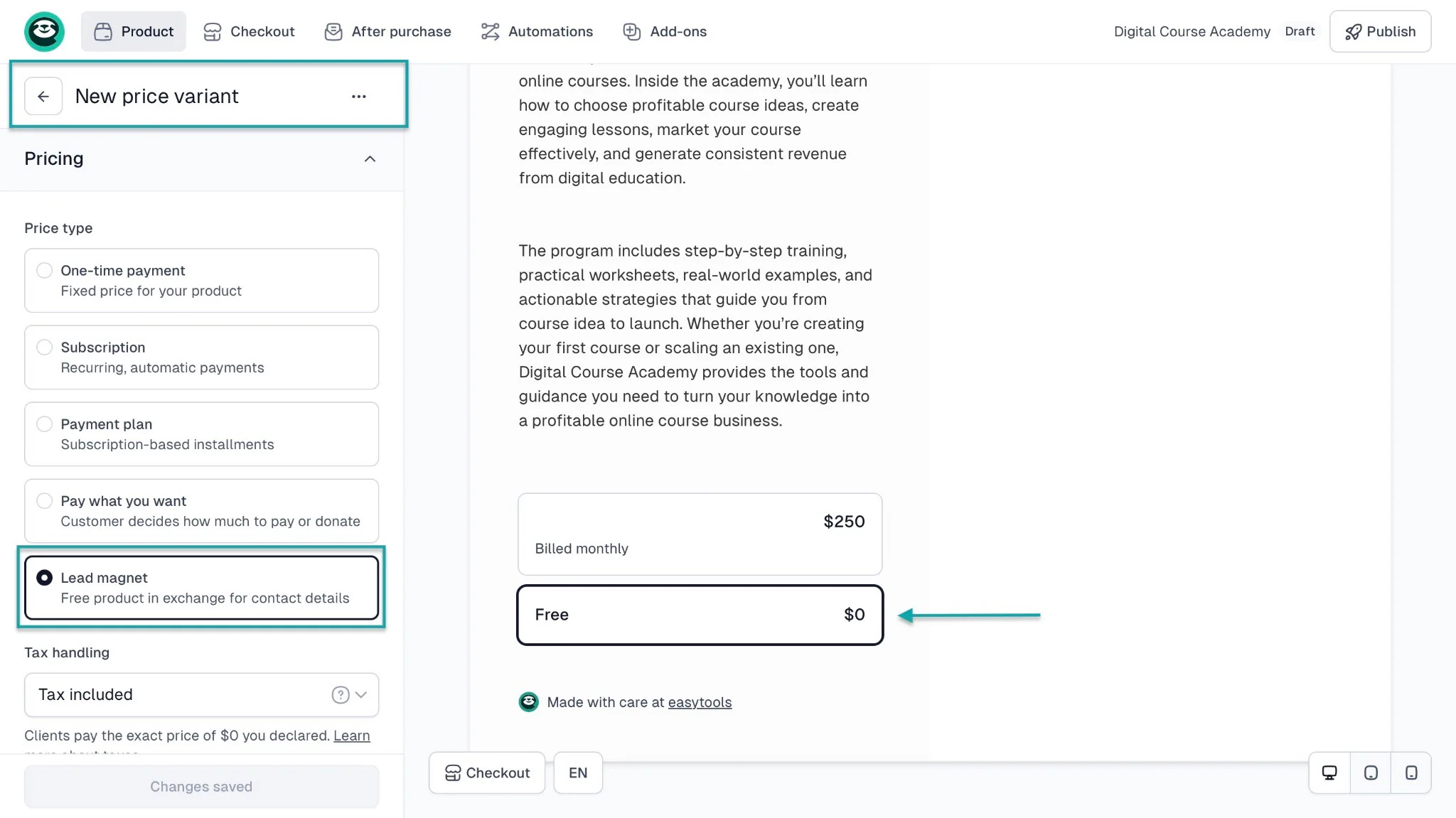
Easytools will request customers’ names and email addresses before they can download the free lead magnet.
-
How much it costs to start: $0–$100, depending on your design tools, landing page, and email marketing platform.
-
Time to first results: 1–3 months
-
What traffic to expect: Out of every 100 people who see your lead magnet, expect 2 to 5 people to give you their email address.
-
How likely it is to make sales: High - free lead magnets can help you build trust and follow up with potential students through email marketing.
-
Best for: Course creators, coaches, educators, and entrepreneurs building an audience and long-term email list
7. Webinar funnels
A webinar funnel is a step-by-step approach to turning leads into enrolled learners through an online presentation or workshop. Unlike traditional webinars, it can be live or pre-recorded (automated)
For example, you invite learners to join a free online class. You promise them they’ll learn something useful.
During the webinar, you teach, share tips, build trust, and then promote an online course. This entire process is what’s called the webinar funnel.
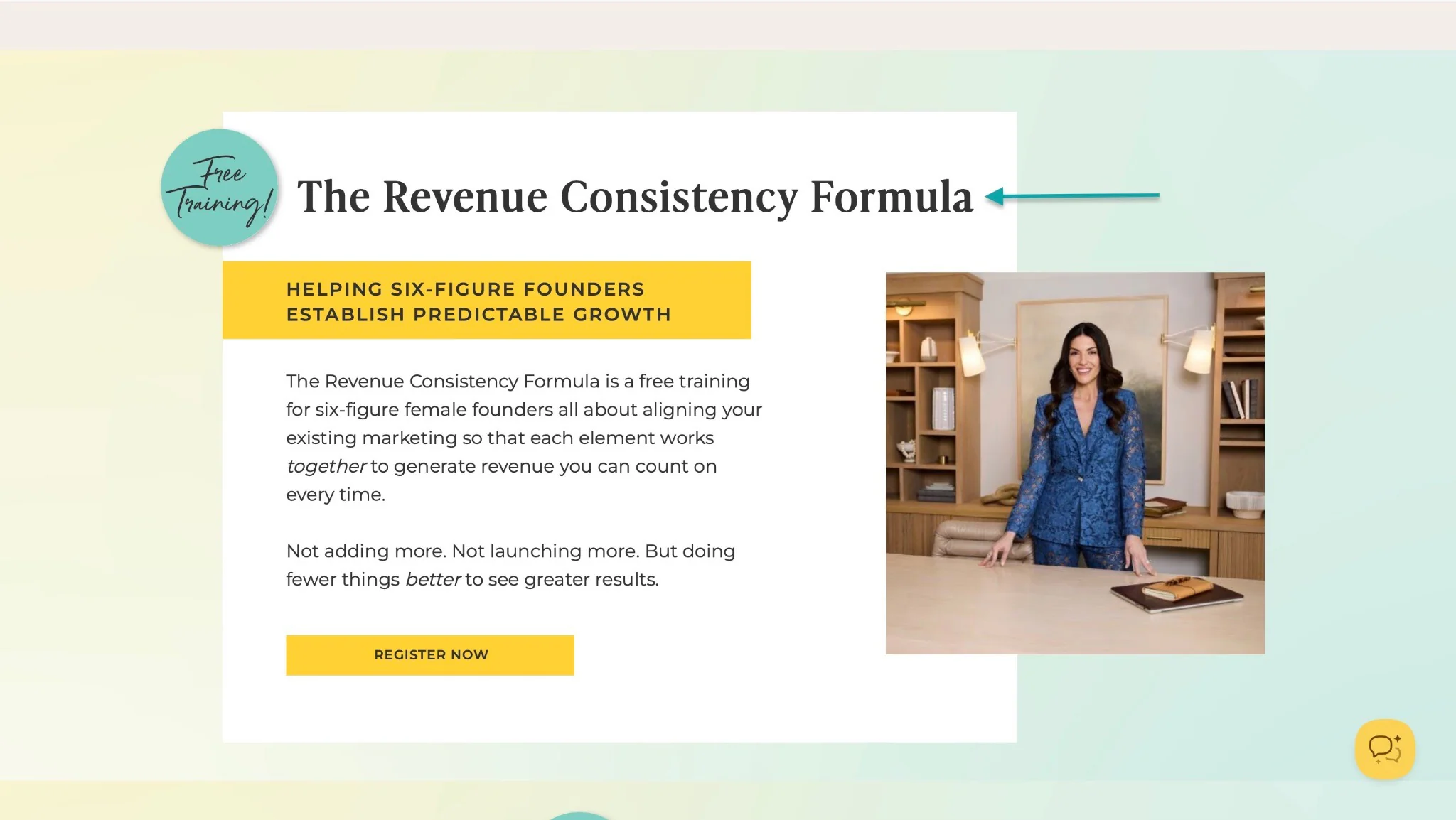
Amy Porterfield, for example, has used webinar funnels to build an online education business that has made $130M+.
Her newest webinar funnel/training, “The Revenue Consistency Formula,” will help her promote her course and programs.
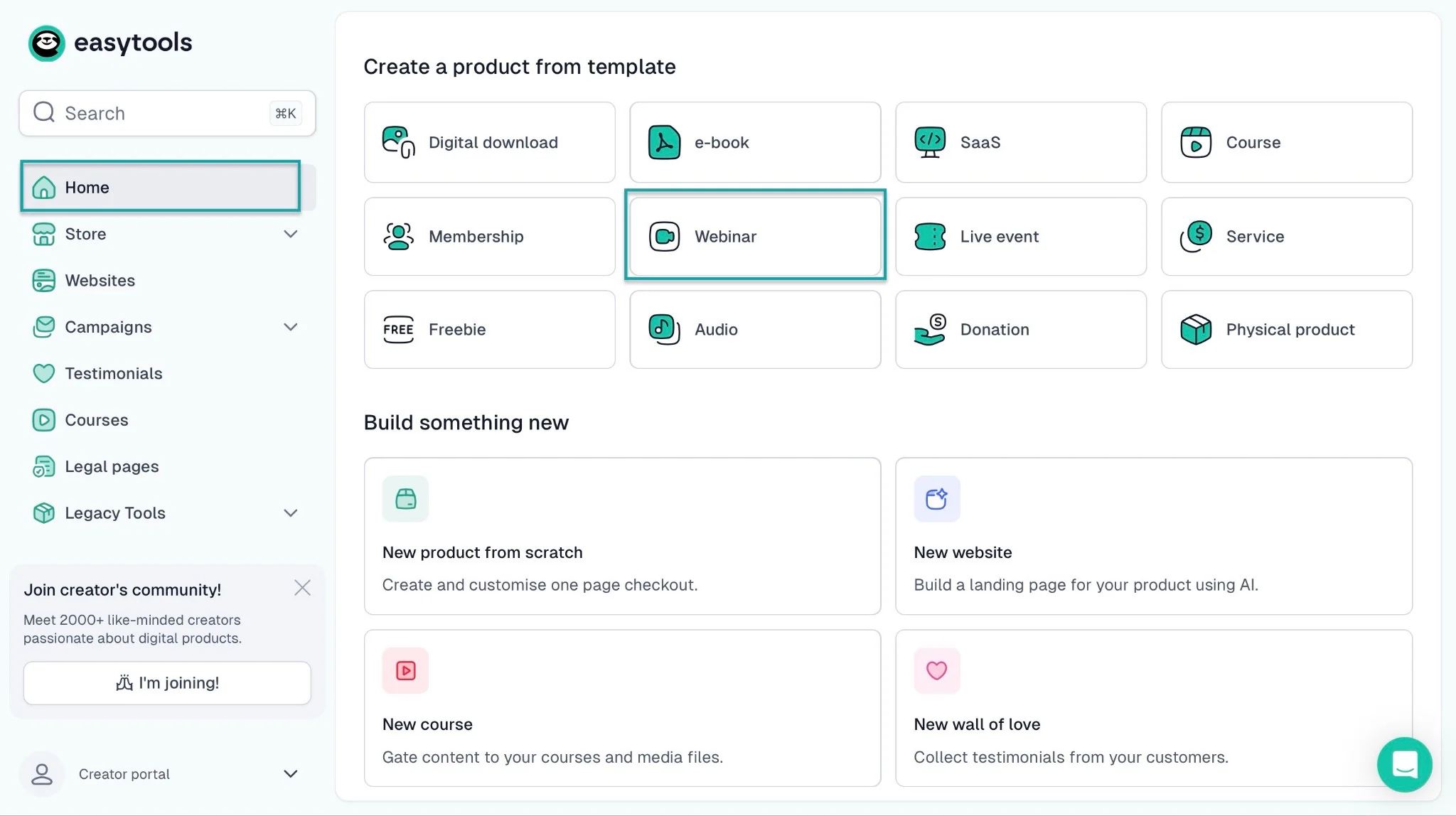
You can create a webinar funnel checkout on Easytools. Right on the homepage, scroll down to the “Create a product from template” section and click “Webinar.”
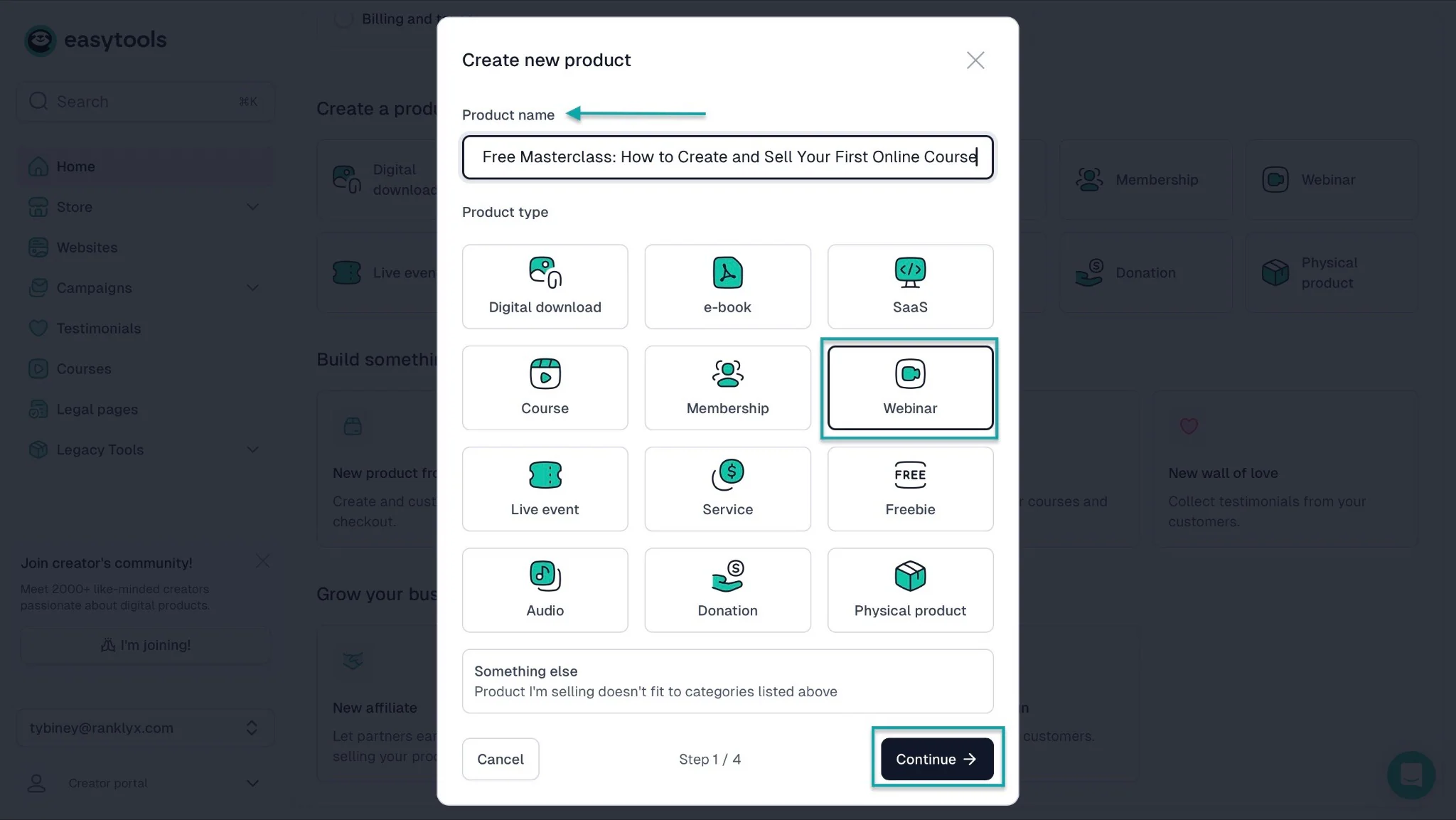
In the pop-up window, add the webinar name and click “Continue” at the bottom right corner.
In the next pop-up window, set the price at $0 since it’s free. Continue to the next step, add the webinar’s description, and upload or generate an image with AI.
Finally, hit “Create product.”
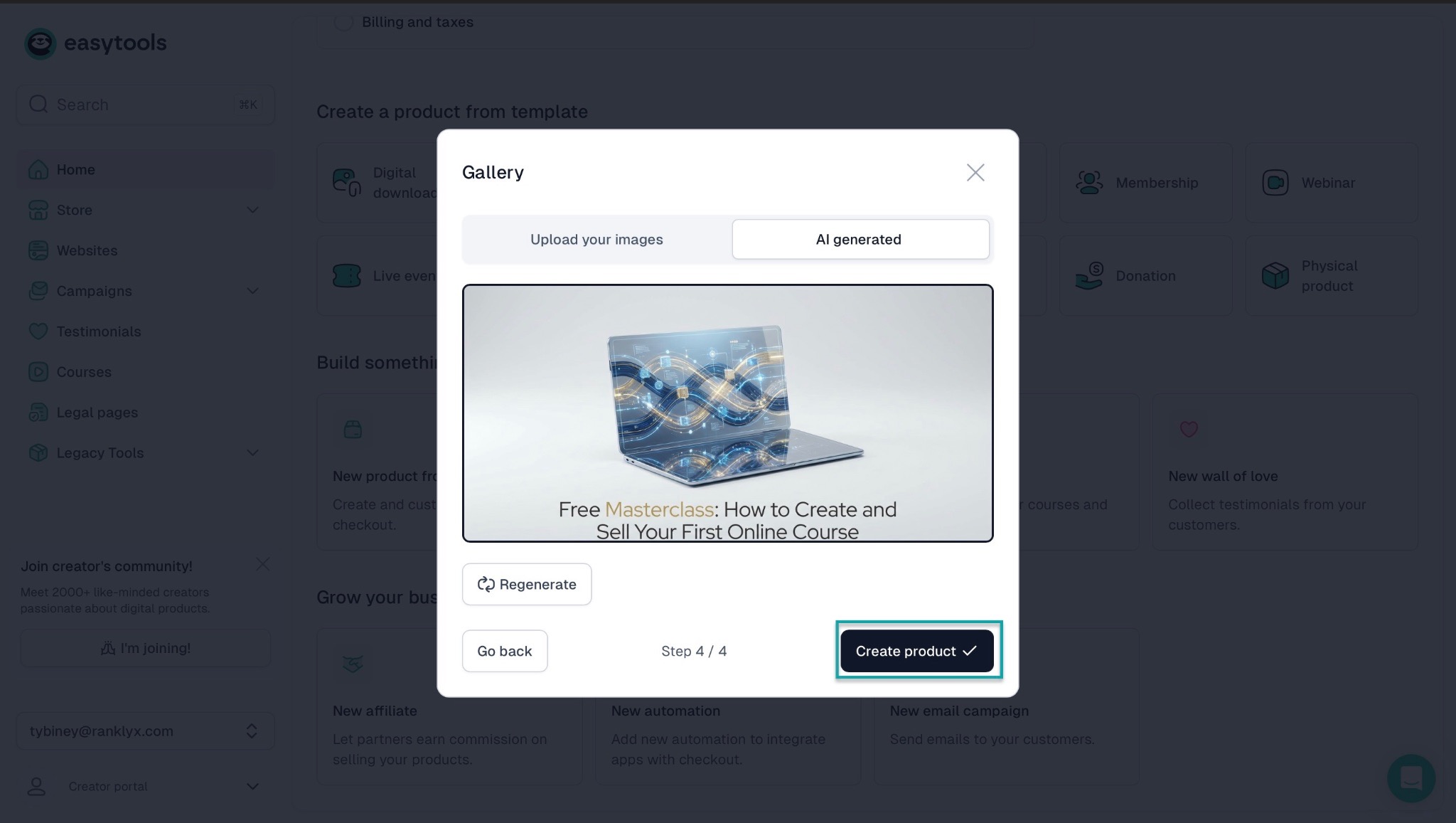
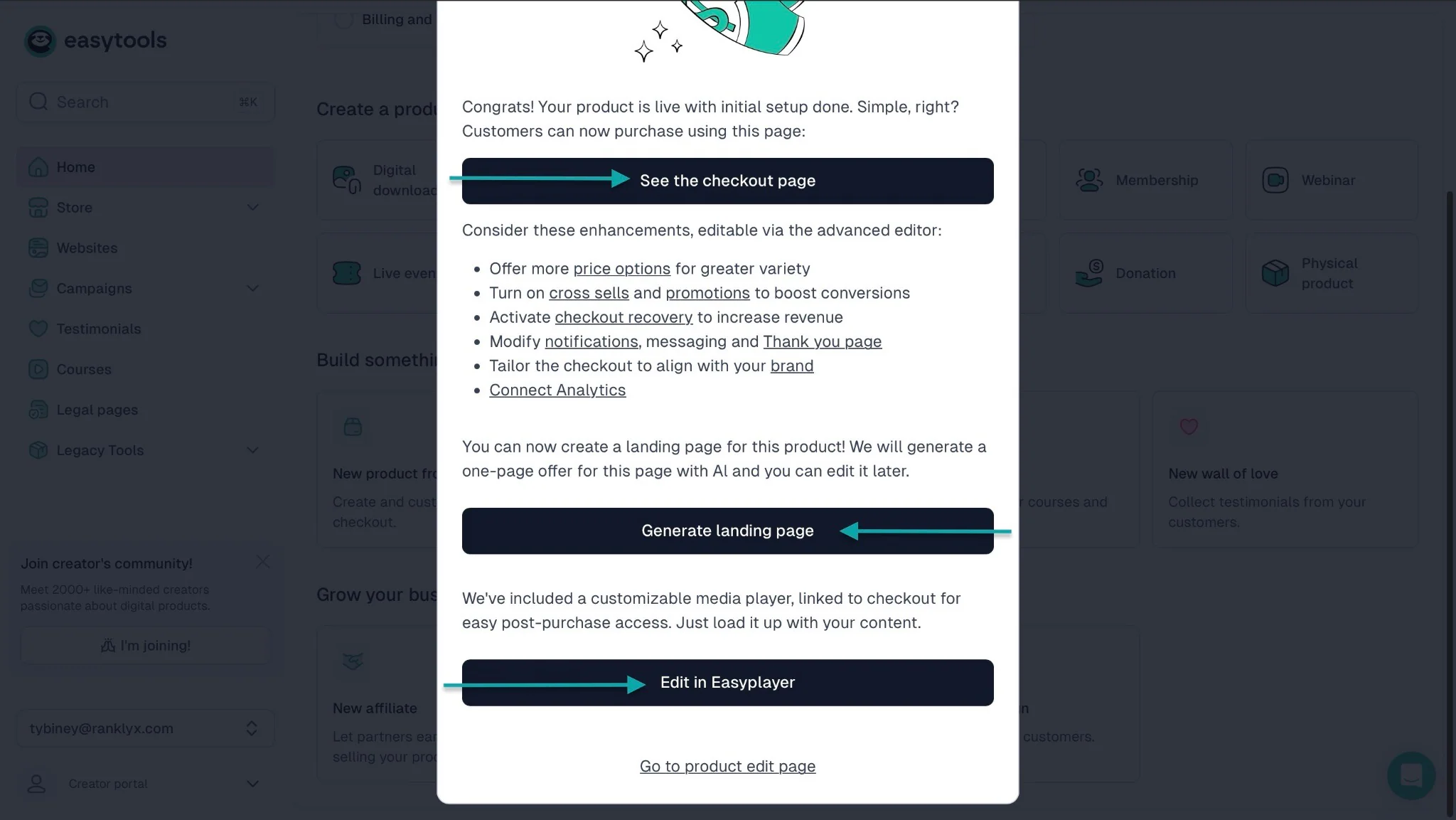
After that, Easytools will publish your webinar funnel checkout. You always click “See the checkout page” to go to the checkout editor and add more edits.
You can also click “Generate landing page.” If you’re on the Creator plan at $59 monthly or the Professional plan at $99 per month, you can publish the landing page to convert more leads.
If your webinar funnel is pre-recorded, you can also hit “Edit in Easyplayer” to add content.
Pro tip: Use webinar funnels to promote an online course that costs $500 or more.
Watch this to learn more about how you can set up a course /webinar funnel on Easytools.
-
How much it costs to start: $30–$100
-
Time to first results: 3–4 weeks
-
What traffic to expect: 25 people will sign up out of 100 who visit your landing page.
-
How likely it is to make sales: About 10 to 20 people will buy out of 100 people who watch
-
Best for: Coaches and course creators who want to prove they are experts before selling high-priced online courses.
8. Email newsletters and nurture sequences
Leads may not be ready to enroll in your course on their first visit to your course landing page. That’s why you should use email newsletters and nurture sequences.
They help you build trust and relationships with potential students over time by providing value. By consistently doing this, you can promote an online course and gradually convince leads to finally subscribe or buy it.
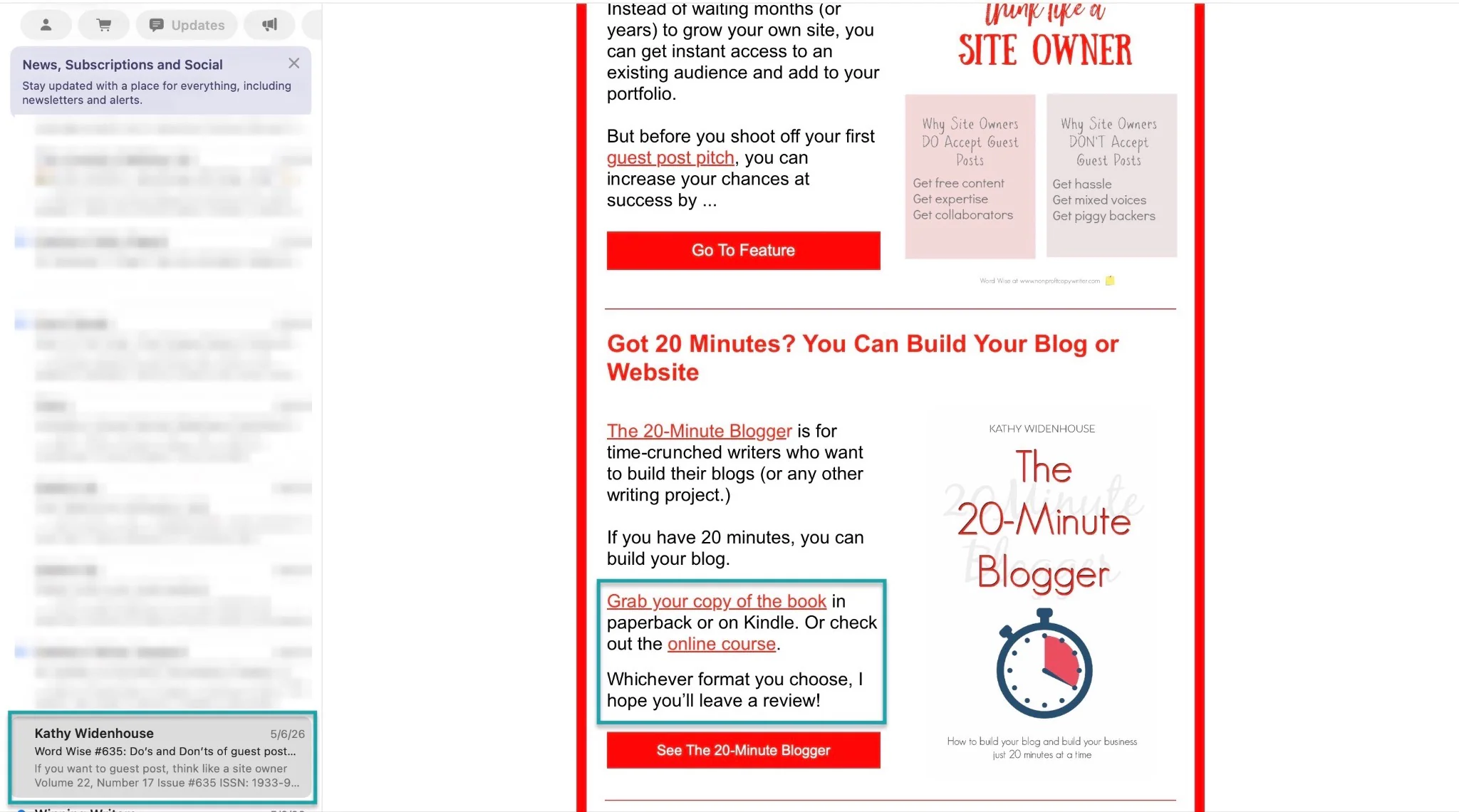
Writer and course creator Kathryn Diener Widenhouse (AKA Kathy Widenhouse) uses email newsletters to build relationships with subscribers.
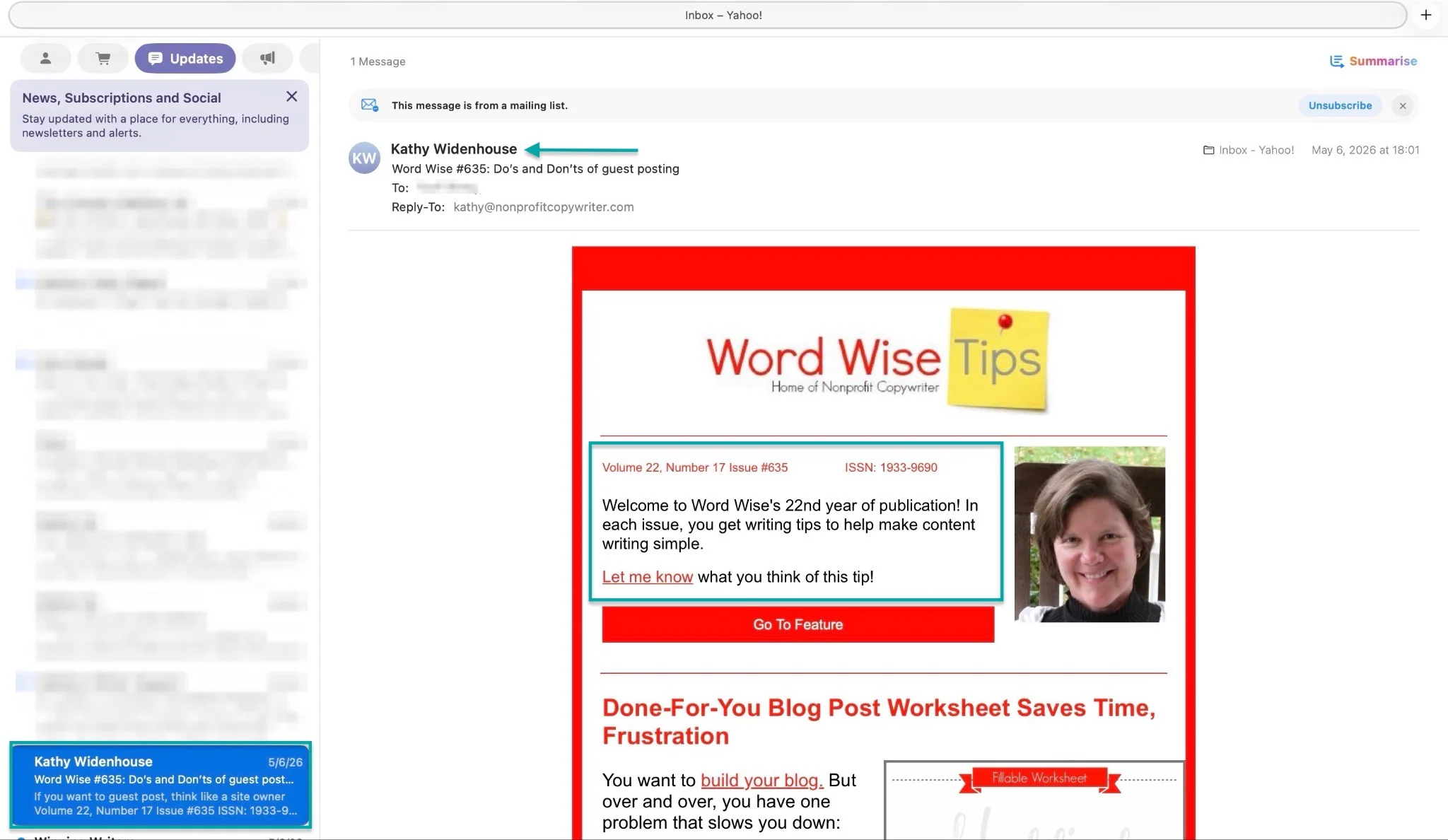
That way, she can promote her online courses and drive sales.
You can use tools like MailerLite, Mailchimp, ActiveCampaign, beehiiv, or the Easytools’ built-in email marketing tool, Easymail.
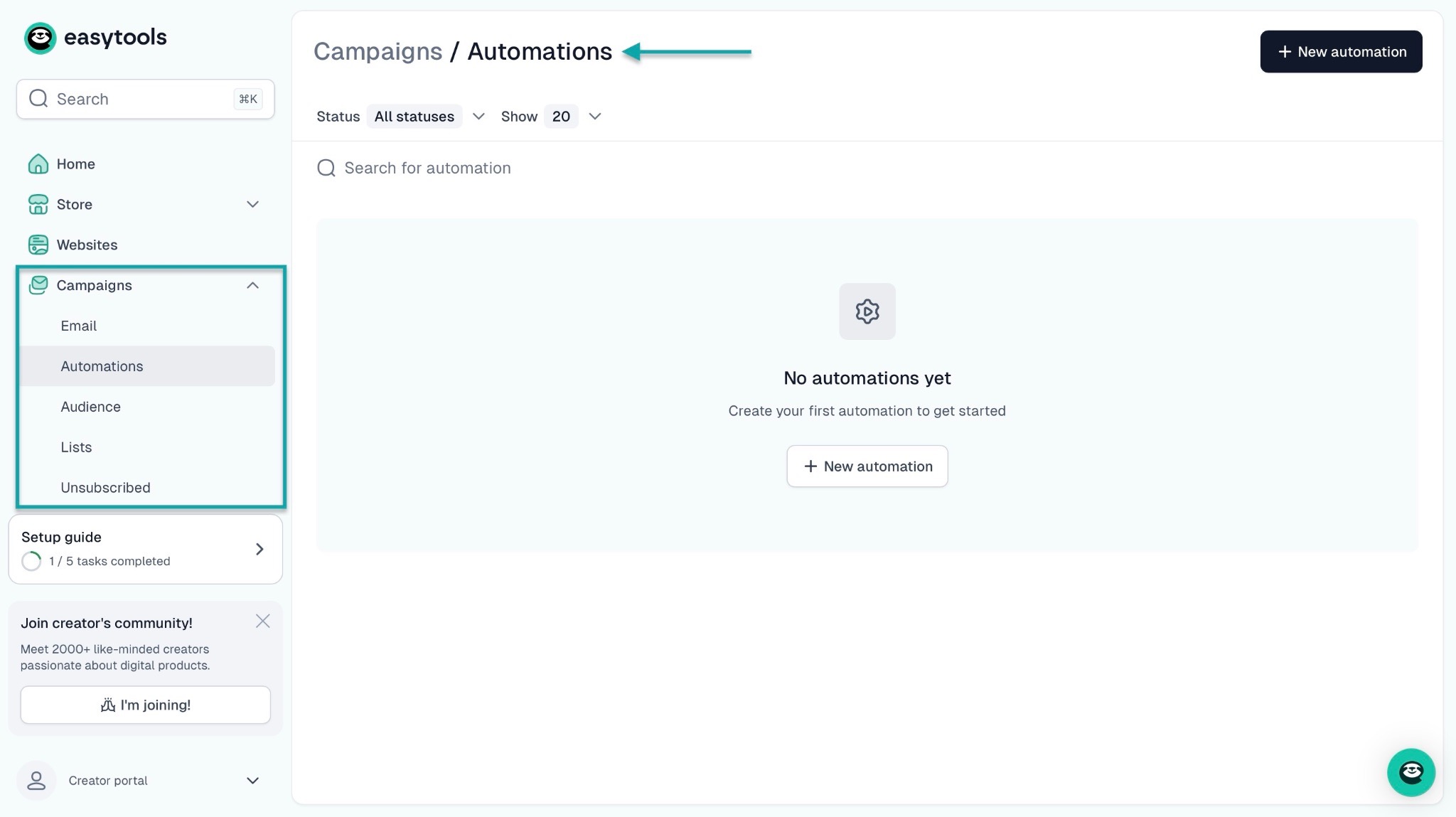
Easytools integrates with MailerLite, Mailchimp, ActiveCampaign, and SendGrid to prevent you from juggling between many tools.
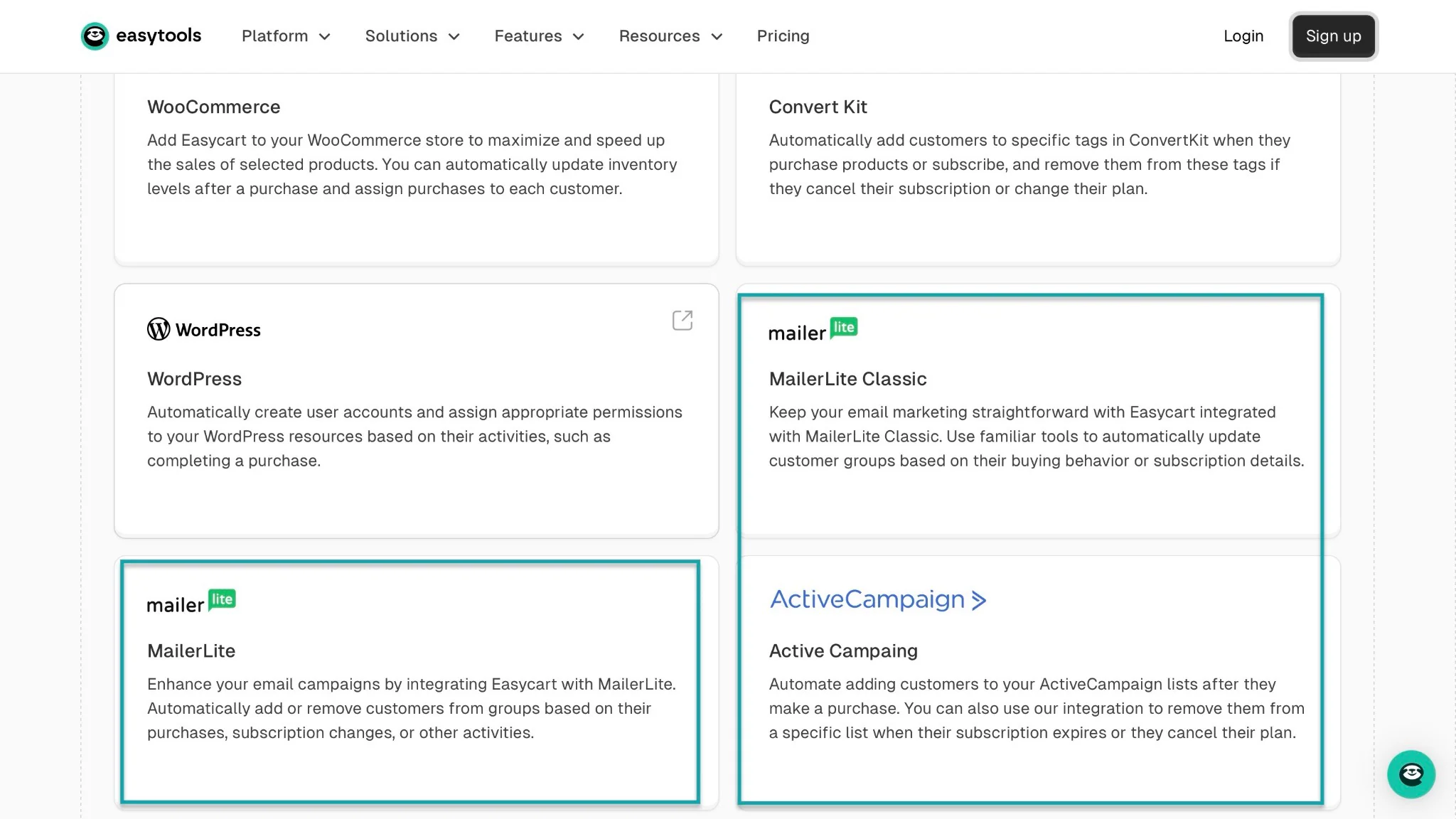
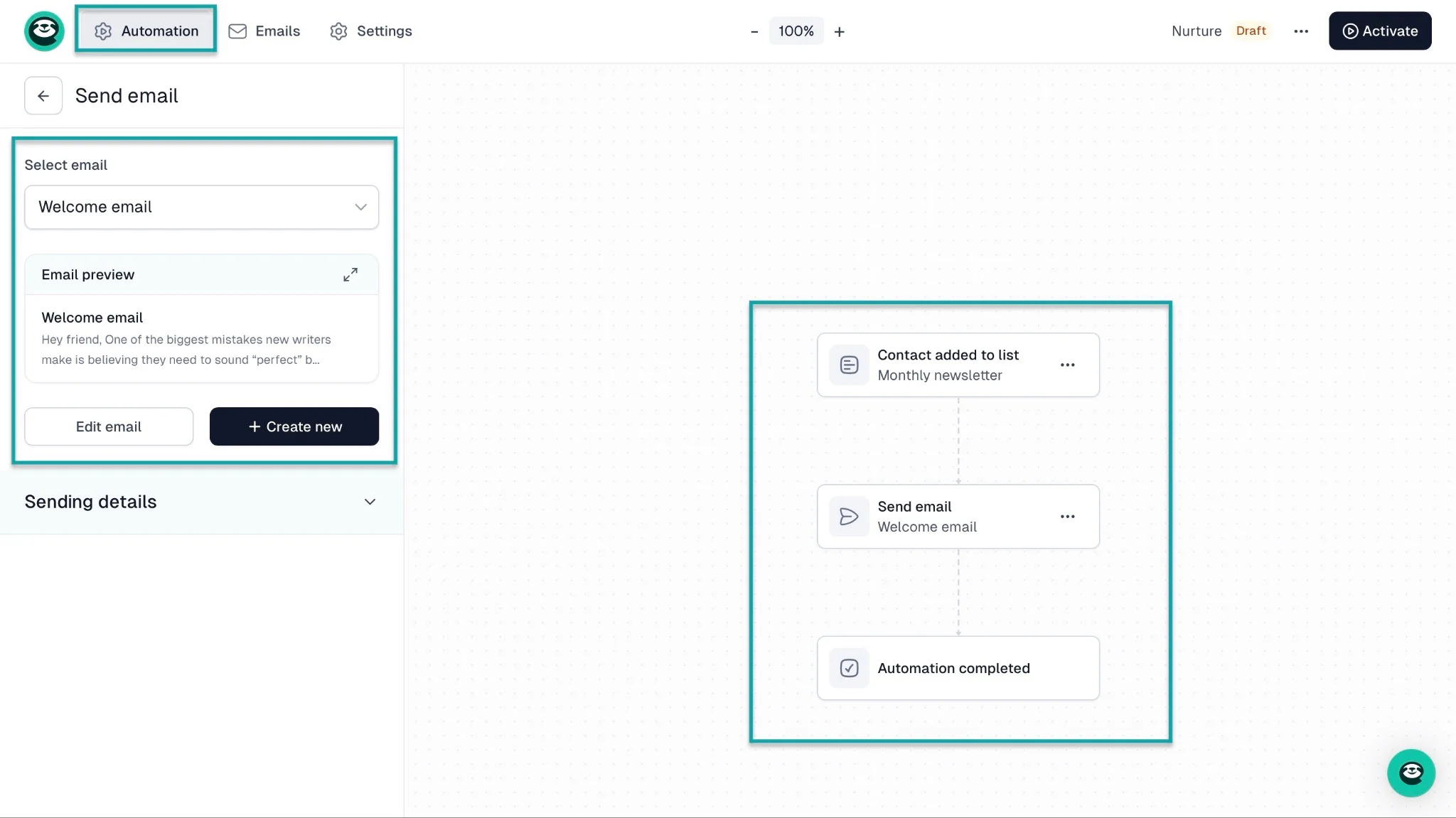
But if you want a more built-in approach to email newsletters and nurture sequences, you can use its campaigns feature instead.
You can use it to:
- build an email list
- automate email newsletters
- create nurture sequences
- automatically stay connected with leads
-
How much it costs to start: $0–$60, depending on the email marketing tool or platform and the size of your email list.
-
Time to first results: 1–3 months
-
What traffic to expect: 2 to 5 out of 100 people will click links.
-
How likely it is to make sales: High-12% to 24% of engaged subscribers already interested in your newsletters will buy.
-
Best for: Course creators and teachers who sell online courses and coaching programs.
9. TikTok educational content
Creators no longer take TikTok as a dance and entertainment app. It has become one of the largest platforms for educational discovery.
You see, people now use TikTok to learn:
- marketing
- fitness
- finance
- design
- productivity
- AI tools
- business skills
And that creates an opportunity for creators selling online courses.
The idea here is that you create short educational videos that solve one tiny problem at a time. It can be, for example:
- “3 hooks that make people stop scrolling.”
- “The easiest way to edit videos on CapCut”
- “One mistake beginner copywriters make.”
Then you add links to these courses so people can go buy them.
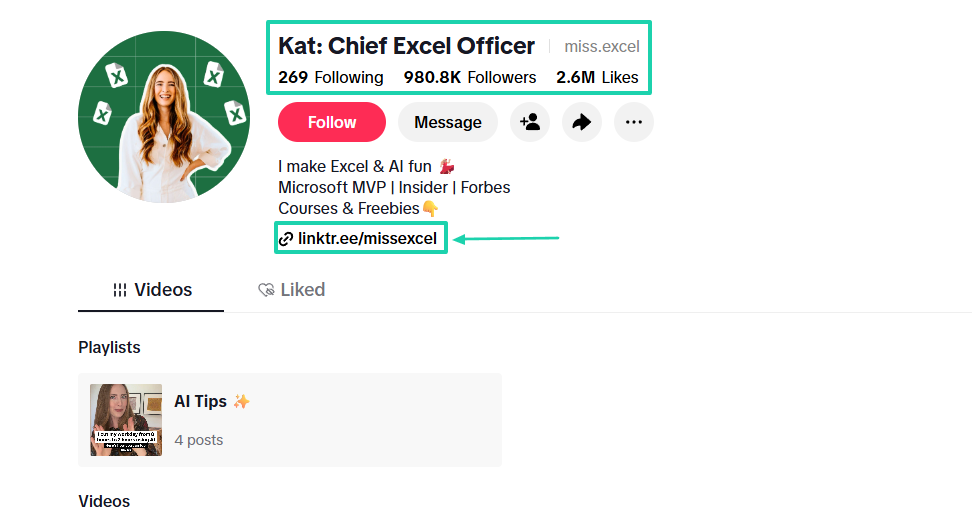
That’s the strategy that Kat Norton uses on TikTok. She makes lots of educational videos about Excel, Microsoft Office, and AI.
She’s known as Kat the Chief Excel Officer, or Miss Excel, and has accumulated over 980,000 followers and about 2.6M likes.
On her profile, you will see the link to her courses.
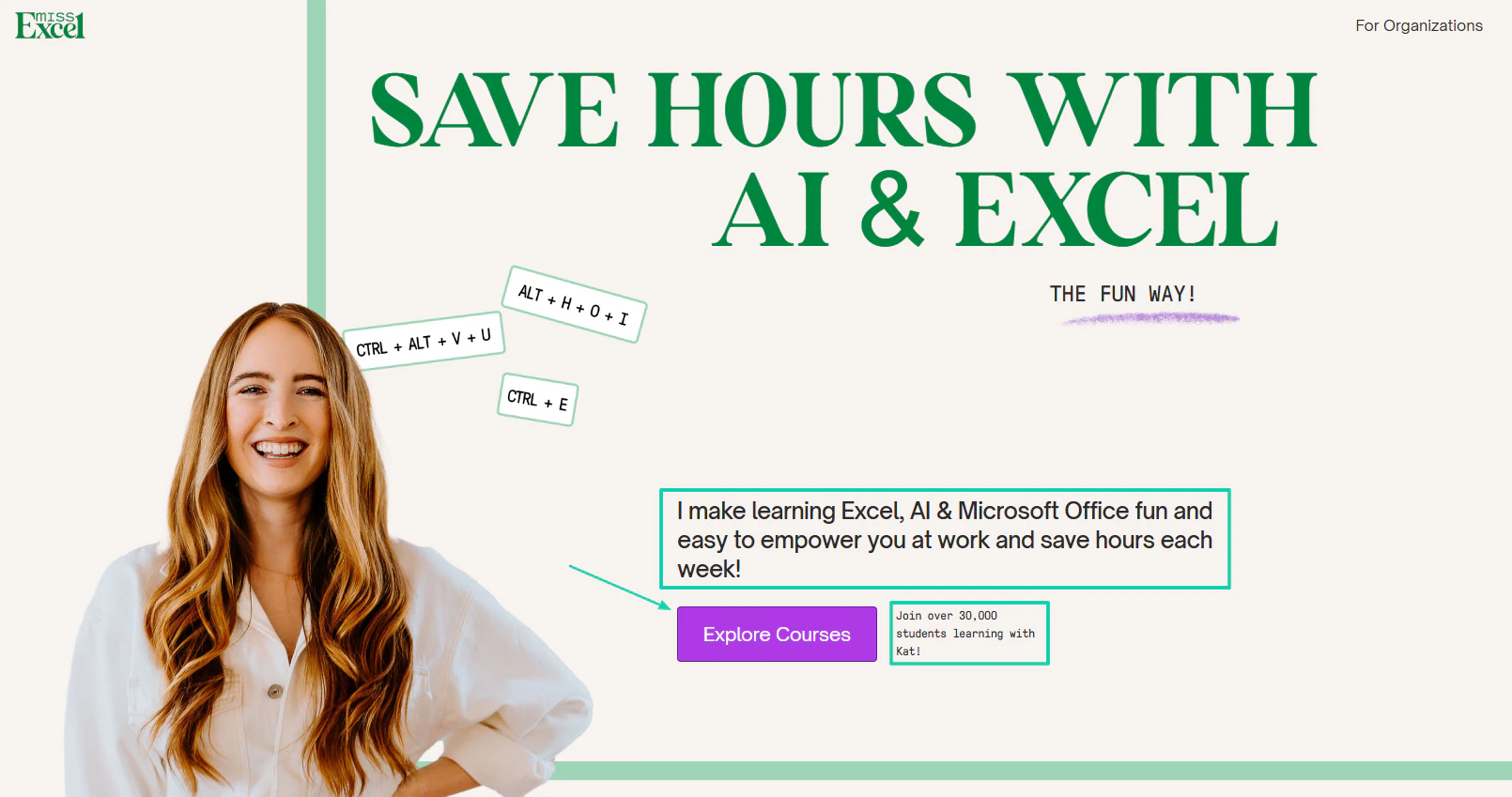
Clicking the link will take you to her course landing page. On that page, you’ll see that Kat has over 30,000 students. You can even explore all her courses.
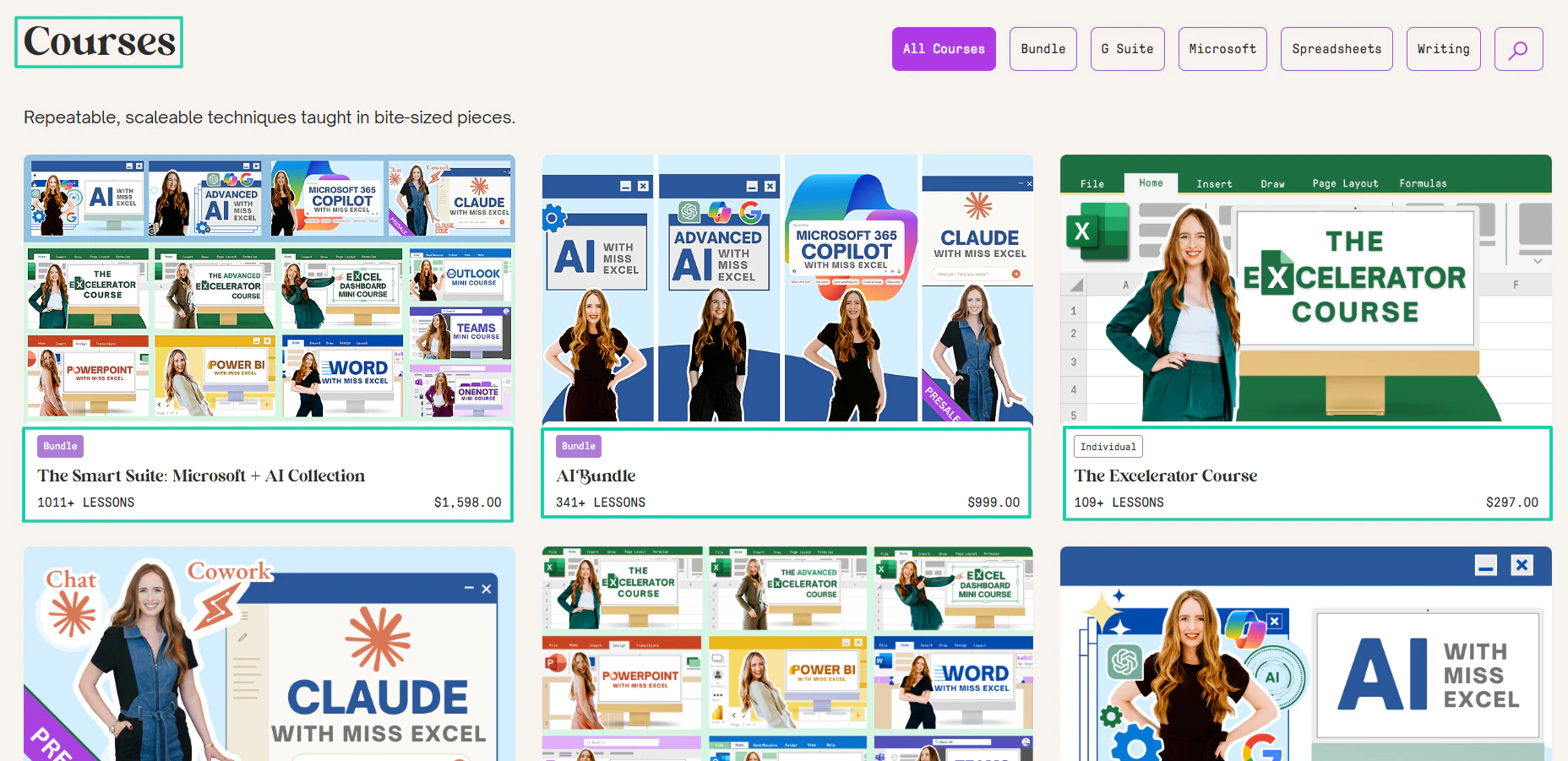
She has courses ranging from $297 to $1,500+.
That’s how Miss Excel promotes her online courses and makes money.
-
How much it costs to start: $0–$100 for a smartphone tripod, basic lighting, and editing apps like CapCut.
-
Time to first results: 1–4 weeks with consistent posting.
-
What traffic to expect: 50–500 monthly course page visits initially. Viral videos can drive thousands of targeted visitors.
-
How likely it is to make sales: Medium–High - especially for visually demonstrable skills and beginner-focused courses.
-
Best for: Creators comfortable teaching through short-form video and simplifying concepts quickly.
10. Paid Meta ads
The thing about Meta ads is that they can help you promote an online course faster because they place your offer directly in front of people already interested in your topic.
Such people can be on Facebook, Instagram, Messenger, or Audience Network.
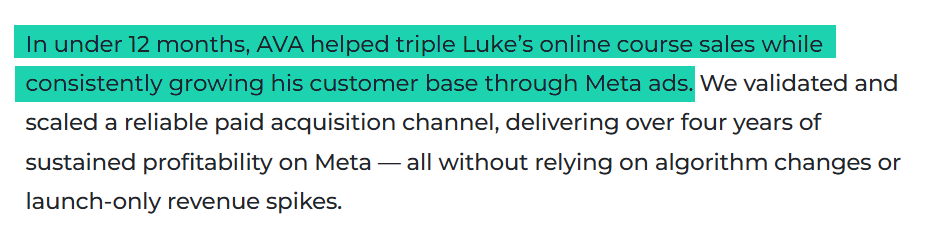
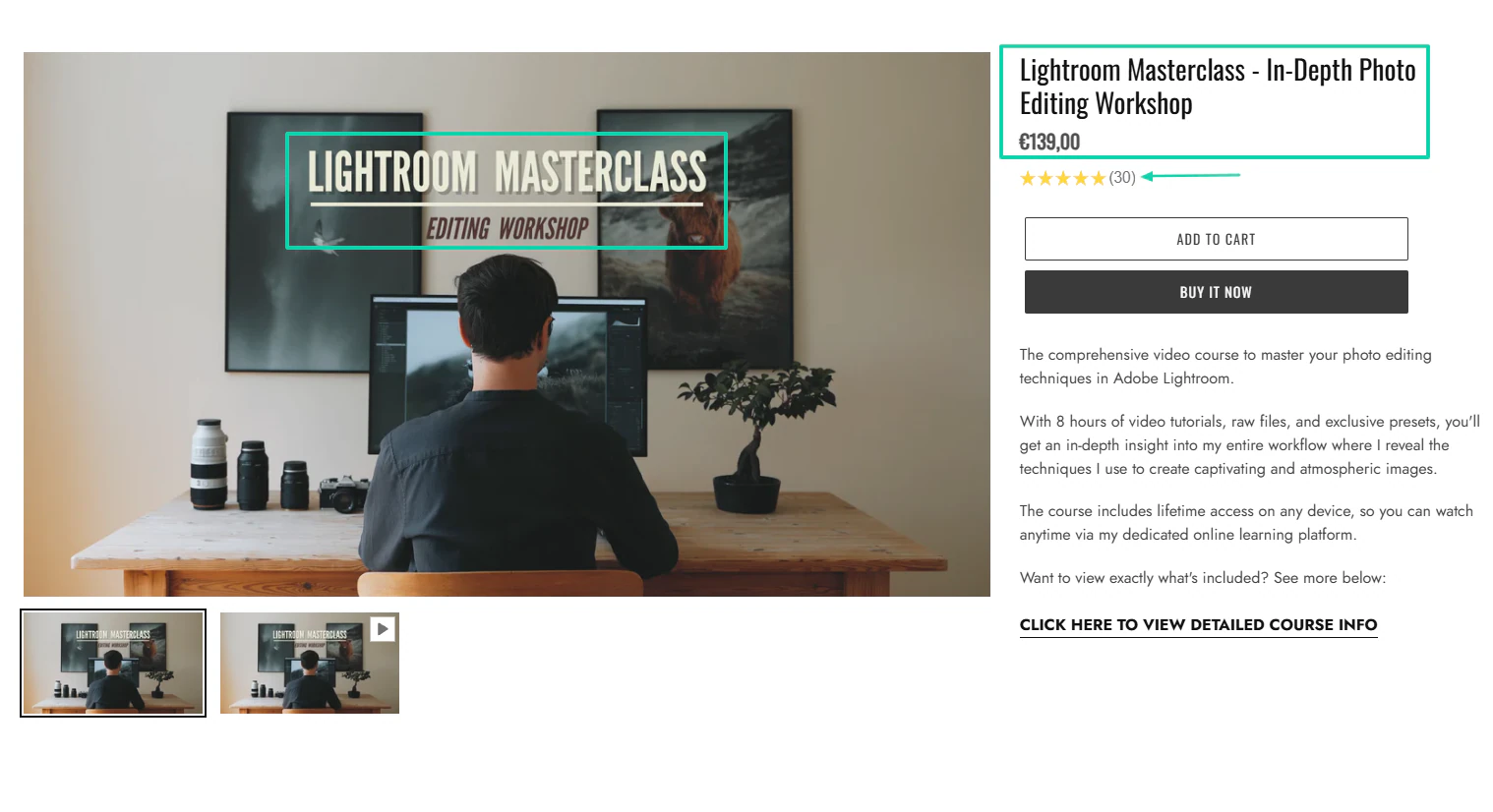
If Meta ads weren’t effective, the photographer and creator Luke Stackpoole wouldn’t have been able to triple his online course sales.
One of the courses he promoted was his Lightroom Masterclass. It costs €139 (approximately $161.73) and has 30+ reviews.
Most of the reviews are 5 stars. Many found the course informative and excellent.
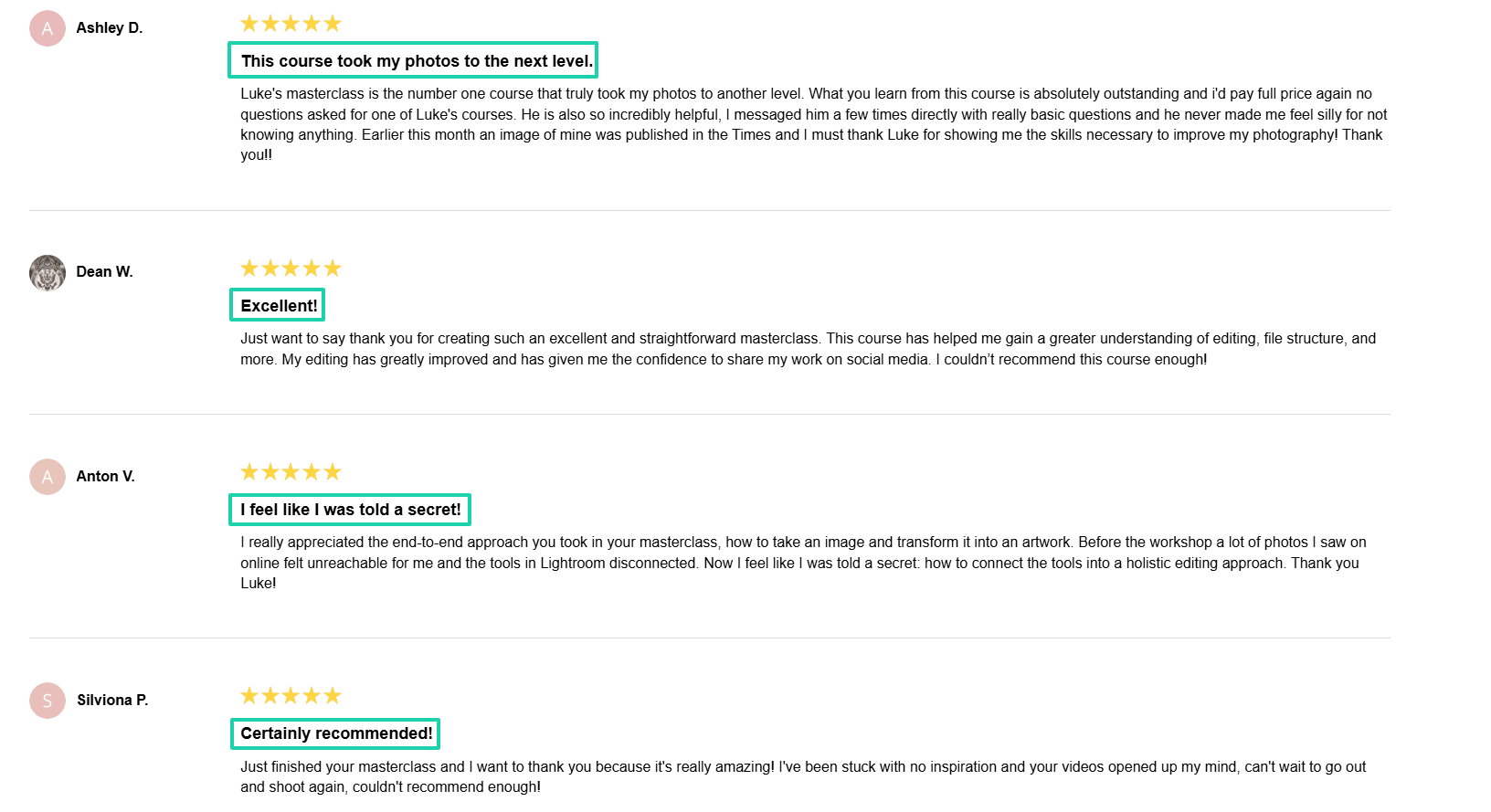
That’s how meta ads play a major role in promoting Luke’s course.
The advantage Meta ads have is immediate reach, unlike organic content. For instance, you can target users based on:
- interests
- behaviors
- job titles
- demographics
- website activity
- email lists
- video engagement
So, to be practical, if you sell a fitness course, you could target:
- people interested in home workouts
- gym memberships
- fitness creators
- weight loss content
But I can’t recommend this if you’re just starting out. Except if paired with a strong landing page and testimonials.
The reason is that this combination bridges the gap between capturing attention and securing trust and conversion.
-
How much it costs to start: $100–$500 minimum testing budget for creatives, targeting, and optimization.
-
Time to first results: 2–14 days, depending on ad quality and targeting.
-
What traffic to expect: 500–5,000 landing page visits per month, depending on budget and CPMs.
-
How likely it is to make sales: High - especially if your course already has proof, testimonials, or an existing funnel.
-
Best for: Course creators with validated offers, landing pages, and a budget for customer acquisition.
[fs-toc-omit]11. Google Search ads
What makes Google search ads powerful is the fact that they promote online courses to people already searching for solutions.
Users on Google have intent. They are actively looking for answers, training, and skills. They may search on Google:
- Best Excel course online
- Learn copywriting online
- Digital marketing certification
- Online coding bootcamp
If you offer some of these courses, you can use Google search ads to appear so people can easily find you. That’s what many online learning platforms and professionals do.
Let me show you a clear example.
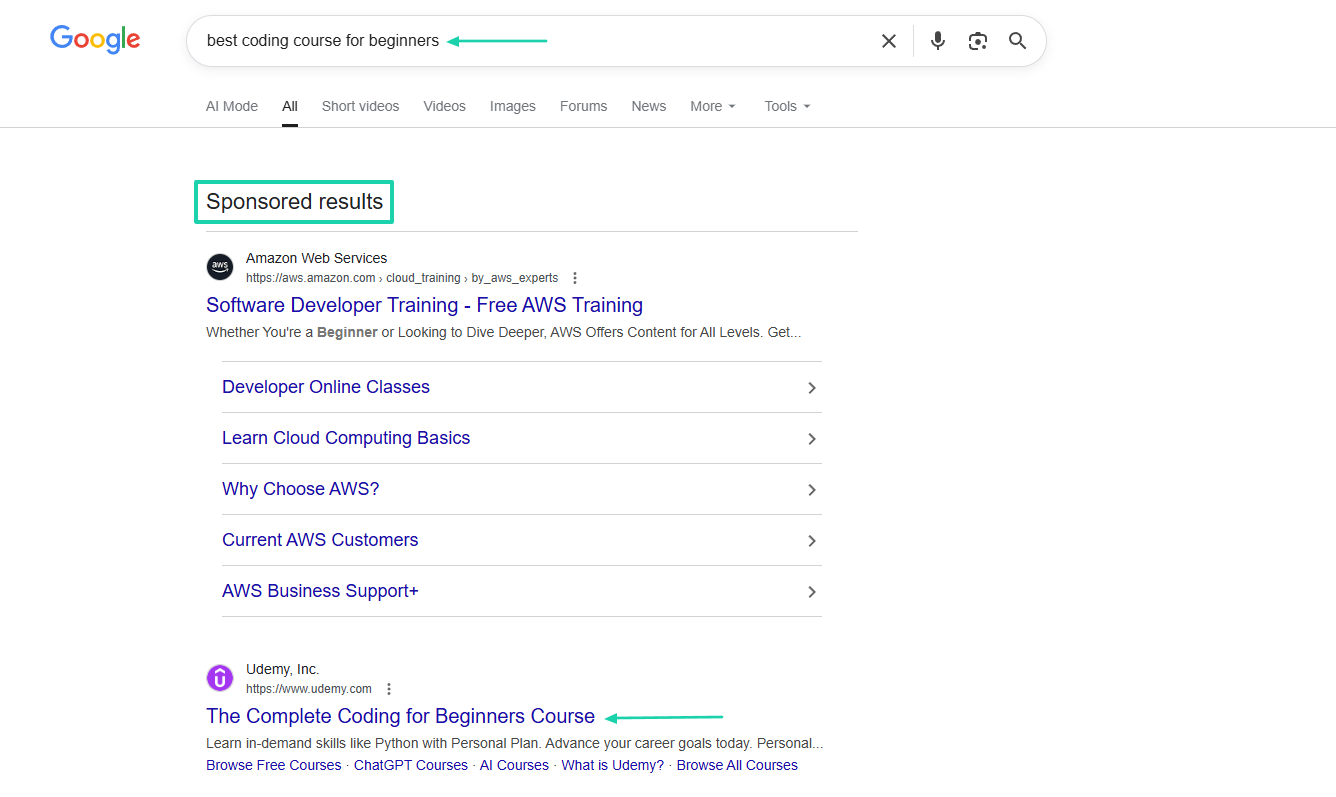
If you enter “best coding course for beginners” in the search bar on Google, you will see a list of sponsored results. This indicates that those listed used Google search ads to promote their course.
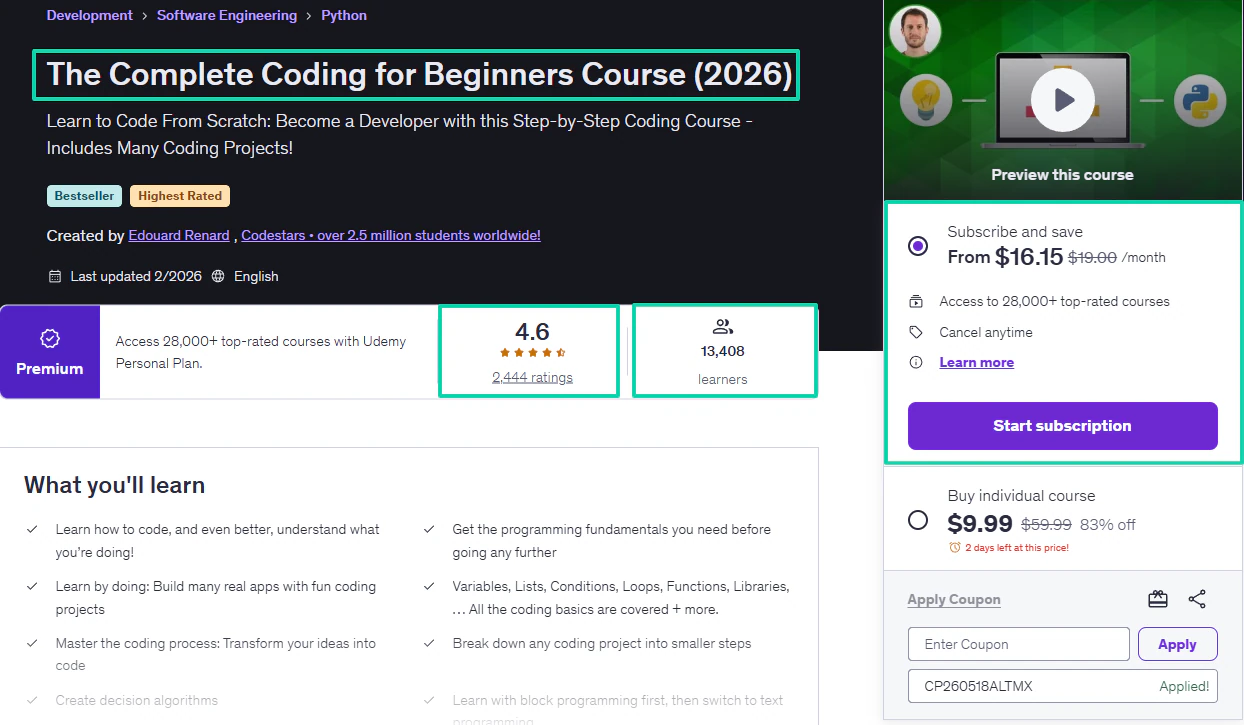
In the list, there is a course on Udemy, “ The Complete Coding for Beginners Course.”
That course has over 2,400+ ratings and 13,400+ students. Given that the course costs $9.99 and the subscription is $16.15/month, it’s easily bringing in over $130,000 per month.
With Google ads, the buyer intent is stronger, traffic converts faster, and keywords reveal what learners actually want.
-
How much it costs to start: $200–$1,000, depending on keyword competition.
-
Time to first results: 1–7 days.
-
What traffic to expect: 300–3,000 monthly landing page visits, depending on ad spend.
-
How likely it is to make sales: High - because users already want solutions.
-
Best for: Creators targeting learners actively searching for a skill or transformation.
[fs-toc-omit] 12. YouTube ads
Let me first say this: statistics place YouTube as the most popular social media platform in the United States.
![[fs-toc-omit] 12. YouTube ads](https://assets.easy.tools/media/images/6610200a3811b820656fdd9d/6a1ac5130e5ac090ff130075_5358e117.png)
This means that using YouTube ads to promote your online course can be a great investment.
It allows course creators to reach viewers while they watch educational or entertainment content. And what do they say about video? Well, it builds trust faster than text alone.
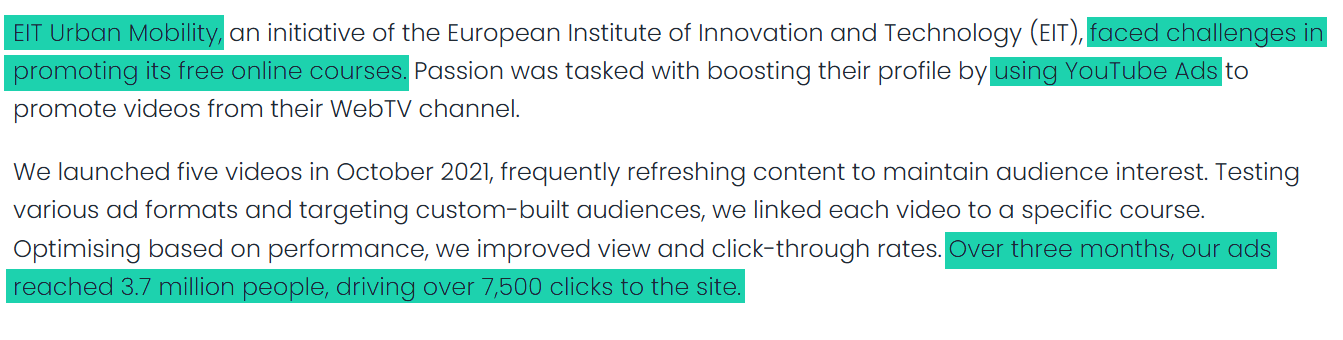
Now, just because your online course is free doesn’t mean you can easily promote it. Even EIT Urban Mobility faced the same challenge when promoting its free online courses.
They had to use YouTube ads to get the job done.
The results?
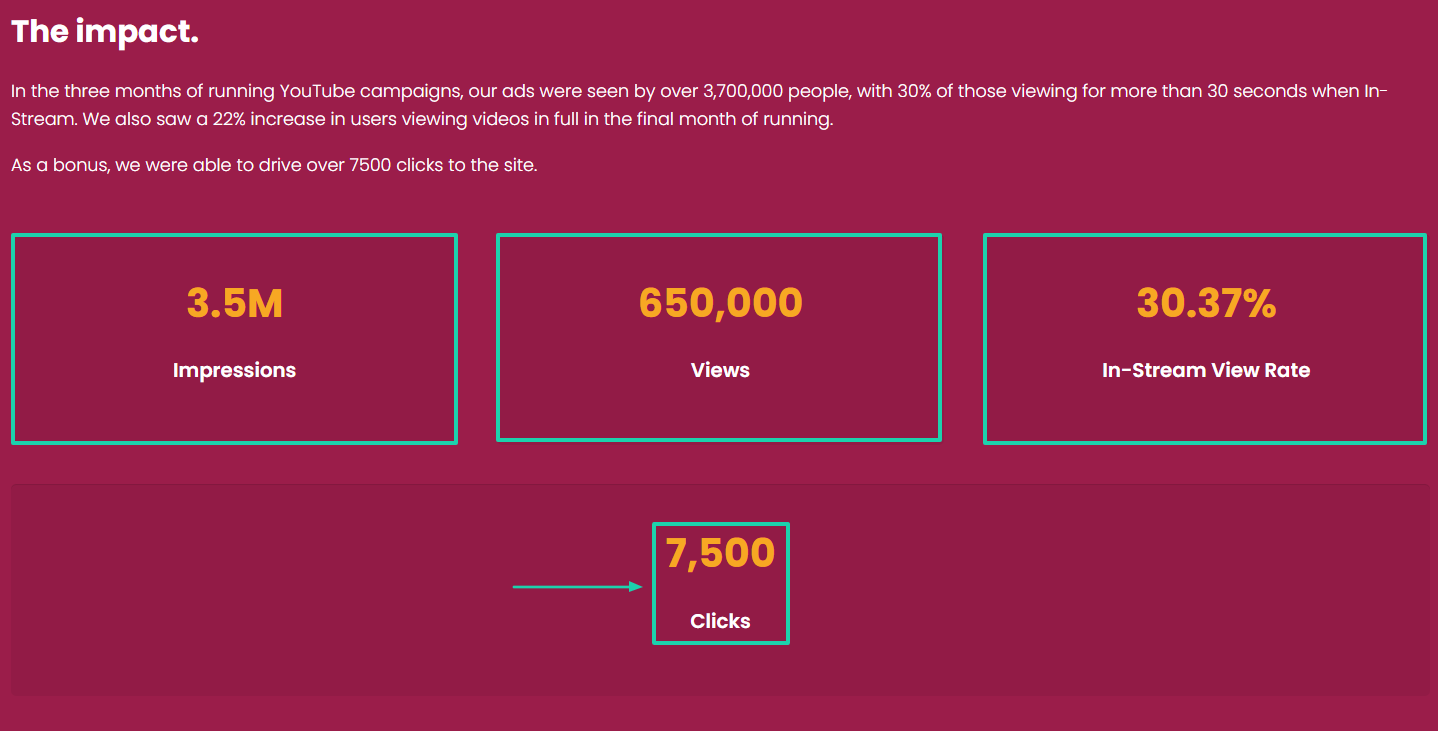
In 3 months, the ads reached 3.7 million people, 650,000 views, driving 7,500 clicks to the site.
With YouTube ads, learners can actually hear you teach, watch your process, see results, and understand your personality.
As a creator, you can take advantage of that to explain transformations clearly.
-
How much it costs to start: $200–$1,500, depending on targeting and creative testing
-
Time to first results: 1–3 weeks.
-
What traffic to expect: 500–10,000 video views monthly and hundreds of targeted clicks.
-
How likely it is to make sales: Medium–High - especially with webinars or strong email funnels.
-
Best for: Course creators comfortable teaching on video and explaining concepts visually.
[fs-toc-omit]13. Retargeting ads
The truth is that most people won’t buy your online course immediately after discovering you. That’s why some course creators use retargeting ads.
This helps show your course offer again to users who already interacted with your content or website.
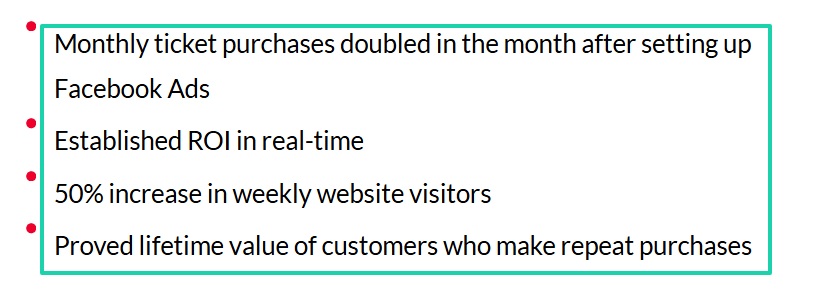
Dabble, for instance, had to use retargeting ads to show past customers new classes they would like in the future.
![[fs-toc-omit]13. Retargeting ads](https://assets.easy.tools/media/images/6610200a3811b820656fdd9d/6a1ac5130e5ac090ff130066_bdbcaeff.png)
Because of that, their monthly ticket purchases doubled, and weekly website visitors increased by 50%, which is good for their course sales.
The reality is, some users may:
- Watch your videos
- Visit your landing page
- Attend your webinar
- Download your lead magnet
And still leave without enrolling. That’s just how the average visitor or potential customer behaves. There needs to be something that reminds them to make the decision.
That’s where retargeting ads come in. This works because the audience already knows who you are.
This video from Ben Heath explains how to retarget with Facebook Ads. You can watch it to have an idea of how it works.
-
How much it costs to start: $50–$300 monthly if you already have traffic.
-
Time to first results: 3–14 days
-
What traffic to expect: Smaller but highly qualified traffic from previous visitors and engaged users.
-
How likely it is to make sales: Very High - retargeted users already know your brand and course.
-
Best for: Course creators comfortable teaching on video and explaining concepts visually.
[fs-toc-omit]14. Community building on Discord or Slack
Another way to promote your online course is by building a community on platforms like Discord, Circle, or Slack.
Communities create engagement, accountability, trust, and even deeper relationships with learners.
In that kind of environment, members easily interact with you, other members, your frameworks, and resources. Promoting an omline course there will increase the likelihood that they buy it.
Tom Ross does that with his community on Circle called Learn.Community. He created a 9-hour-long course, “Build a Thriving Online Community”, and made it available to his members.
![[fs-toc-omit]14. Community building on Discord or Slack](https://assets.easy.tools/media/images/6610200a3811b820656fdd9d/6a1ac5130e5ac090ff13007b_23e925ac.png)
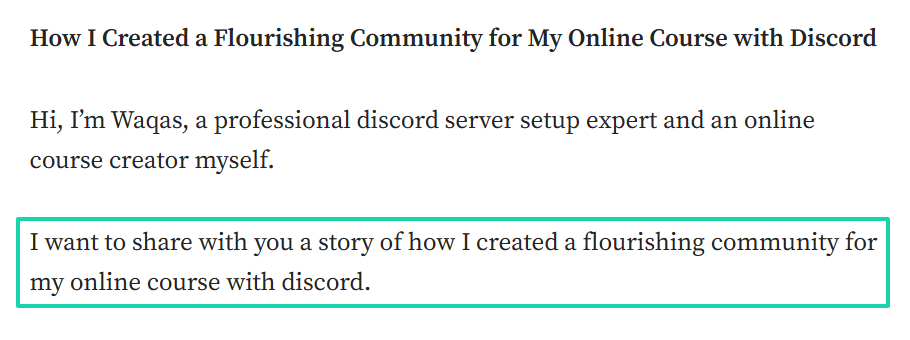
It’s very common. Waqas, an online course creator, once discussed how he built a flourishing community for his course on Discord.
Communities are really helpful. You can use them to:
- answer questions
- host live office hours
- share updates
- upsell advanced programs
- collect testimonials
Doing that will definitely turn your course from a one-time purchase into an ecosystem.
-
How much it costs to start: $0–$50 monthly using Discord or Slack with optional community tools.
-
Time to first results: 1–3 months, depending on audience engagement.
-
What traffic to expect: Lower traffic volume but highly engaged visitors and repeat learners.
-
How likely it is to make sales: High - communities build stronger trust and long-term relationships.
-
Best for: Creators running cohort-based courses, memberships, or programs requiring accountability and networking.
[fs-toc-omit]15. Partnerships with SaaS tools in the niche
You know, partnering with SaaS tools in the niche can also be a great way to promote an online course. Especially software companies already serving your target audience.
Justin Welsh, for instance, decided to partner with Kajabi to launch Expert OS, his online course for entrepreneurs.
![[fs-toc-omit]15. Partnerships with SaaS tools in the niche](https://assets.easy.tools/media/images/6610200a3811b820656fdd9d/6a1ac5130e5ac090ff130063_1ddf1335.png)
You may not be aware of this, but many SaaS tools already have your ideal users, email lists, communities, and educational systems.
That means, if you are a very good designer and you use Canva very well, you can partner with the platform to become a Canva Verified Expert.
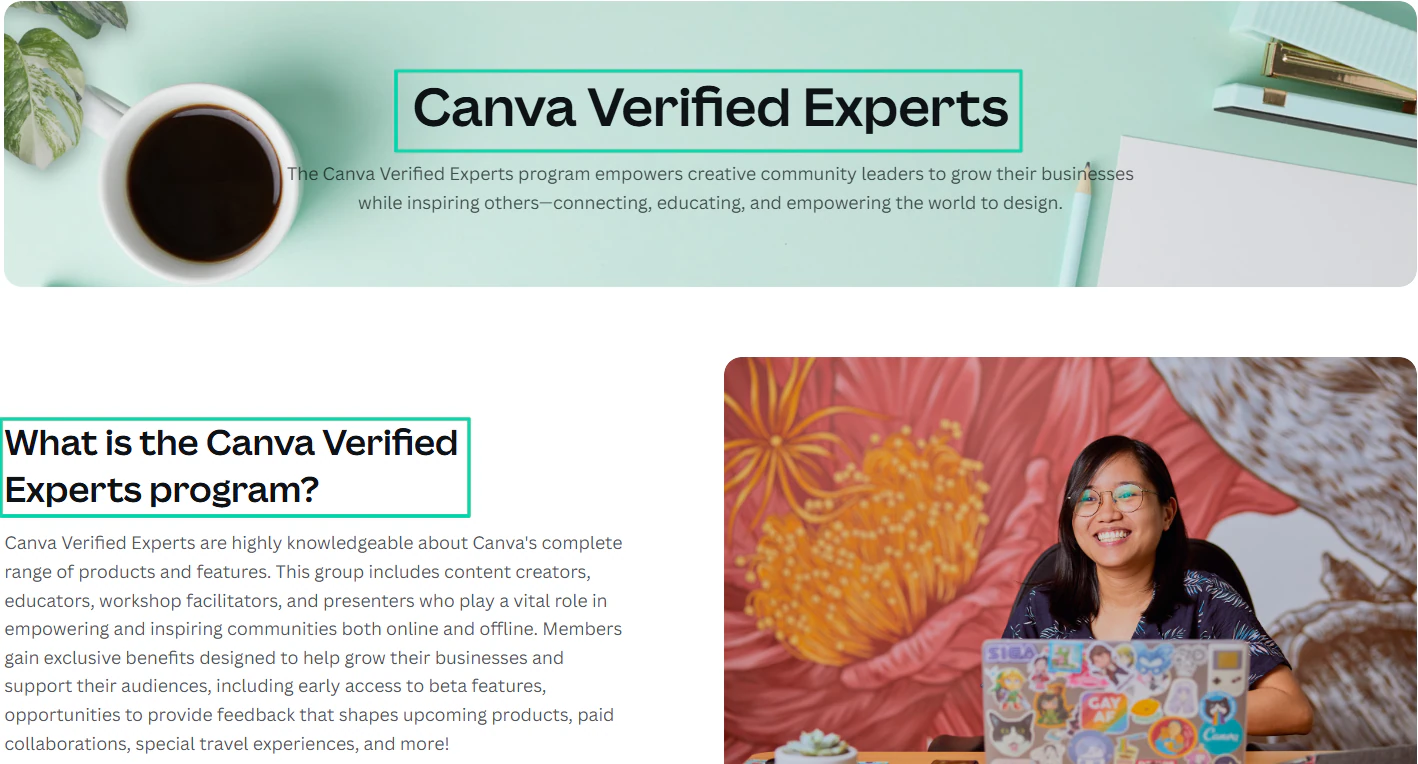
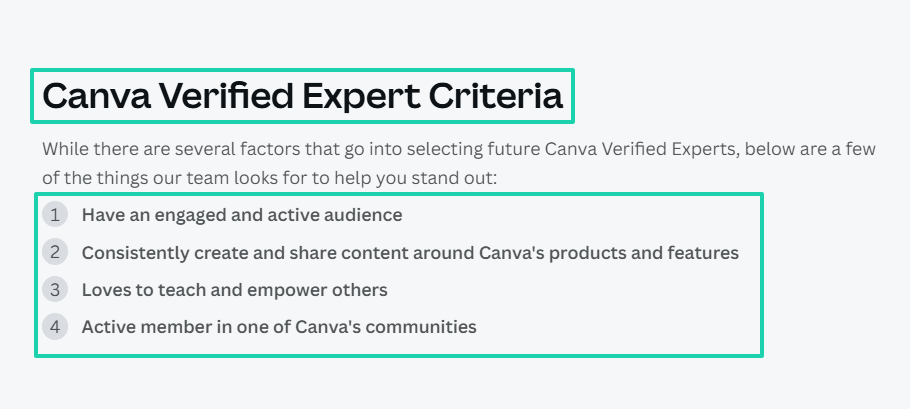
But of course, there are some requirements. For instance, you need:
- Have an engaged and active audience
- Consistently create and share content around Canva’s products and features
- Love to teach and empower others
- Active member in one of Canva’s communities
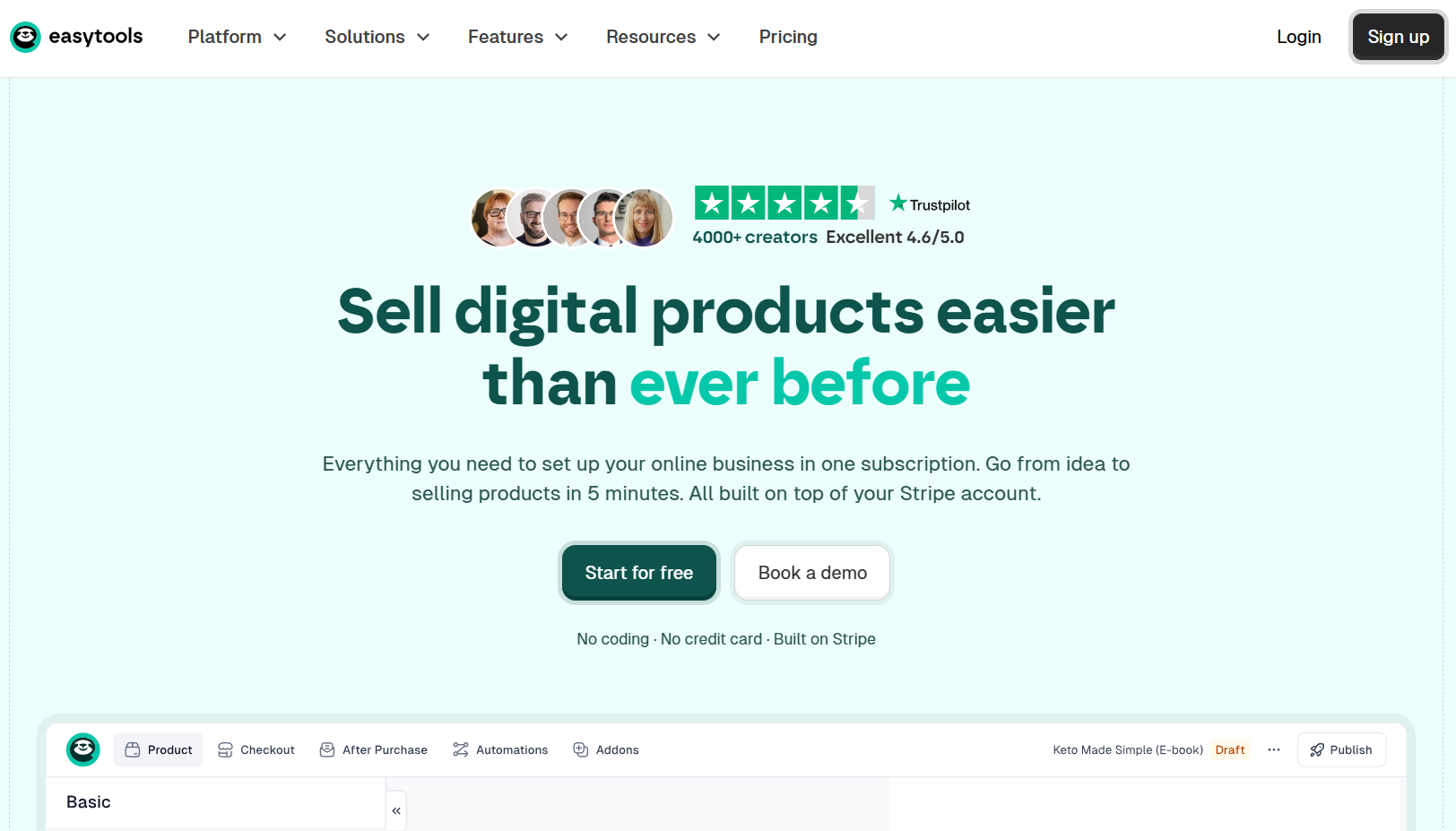
Now, let’s say you are not good at teaching design. But you can teach people how to sell digital products. This is where you can partner with Easytools.
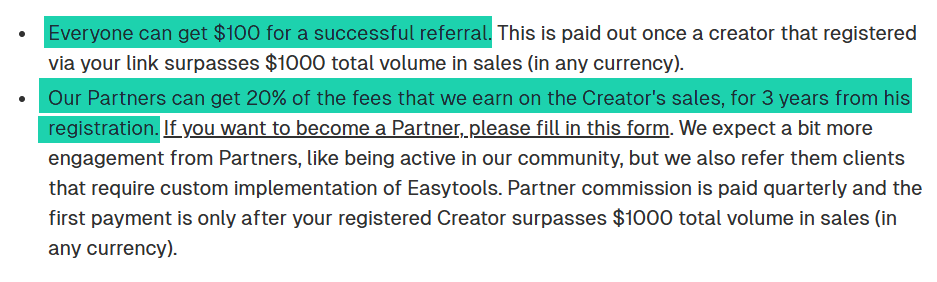
First, when you do so, you can get $100 for a successful referral. Furthermore, as a partner, you can earn 20% of the fees that Easytools earns from the creator’s sales for 3 years from their registration.
So you see, there are many ways you can collaborate with SaaS tools. You can do that through:
- Webinars
- Tutorials
- Affiliate campaigns
- Newsletters
- Educational workshops
- Templates
What I like about this partnership is that it’s a win-win for both parties (the SaaS tool and the course creator).
-
How much it costs to start: $0–$200, depending on outreach and collaboration setup.
-
Time to first results: 1–2 months.
-
What traffic to expect: 100–5,000 targeted visitors, depending on partner audience size.
-
How likely it is to make sales: High - partner audiences are often highly relevant and pre-qualified.
-
Best for: Creators teaching skills connected to specific tools, software, or workflows.
[fs-toc-omit]16. Co-hosted live sessions with creators
As a creator yourself, you can promote an online course by collaborating with other creators through live sessions.
This is a great strategy because you gain exposure to another creator’s audience while building credibility through association.
One example that comes to mind is the free training organized by Megan Minns and Louise Henry about how business owners should use Asana.
![[fs-toc-omit]16. Co-hosted live sessions with creators](https://assets.easy.tools/media/images/6610200a3811b820656fdd9d/6a1ac5130e5ac090ff13008a_0cb895bc.webp)
So, at the end of the webinar, Louise promoted her online course called Uplevel with Asana.
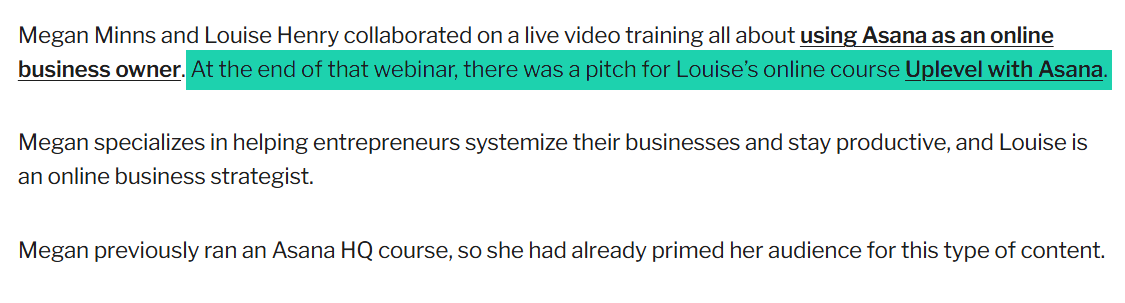
She seized the opportunity of the live session to market her online course. This is genius!
This is what I am talking about here. The live sessions can happen anywhere:
- Instagram Live
- YouTube Live
- LinkedIn Live
- Zoom webinars
- X Spaces
It doesn’t really matter. What does matter is the co-host audience. Tapping into his is an opportunity you should not waste.
The best strategy with your co-host is to teach a valuable topic together, answer audience questions, offer a free resource, and invite attendees into your course funnel.
-
How much it costs to start: $0–$100, depending on webinar tools and promotion.
-
Time to first results: Immediate to 2 weeks after the session.
-
What traffic to expect: 50–2,000 visitors, depending on audience size and promotion.
-
How likely it is to make sales: High - collaborative trust often improves conversions.
-
Best for: Creators with networking skills and audiences that overlap with complementary niches.
[fs-toc-omit]17. Challenge-based campaigns
Challenge-based campaigns are great for promoting an online course because they help build momentum and participation.
You are not simply telling people to buy your course. Your approach here is to invite them into a short transformation experience first. For example:
- a 5-day writing challenge
- a 7-day fitness challenge
- a 30-day content challenge
- a live productivity sprint
You see how this sounds? Certainly not like “Buy my course.” But funny enough, the goal is still to sell your online course.
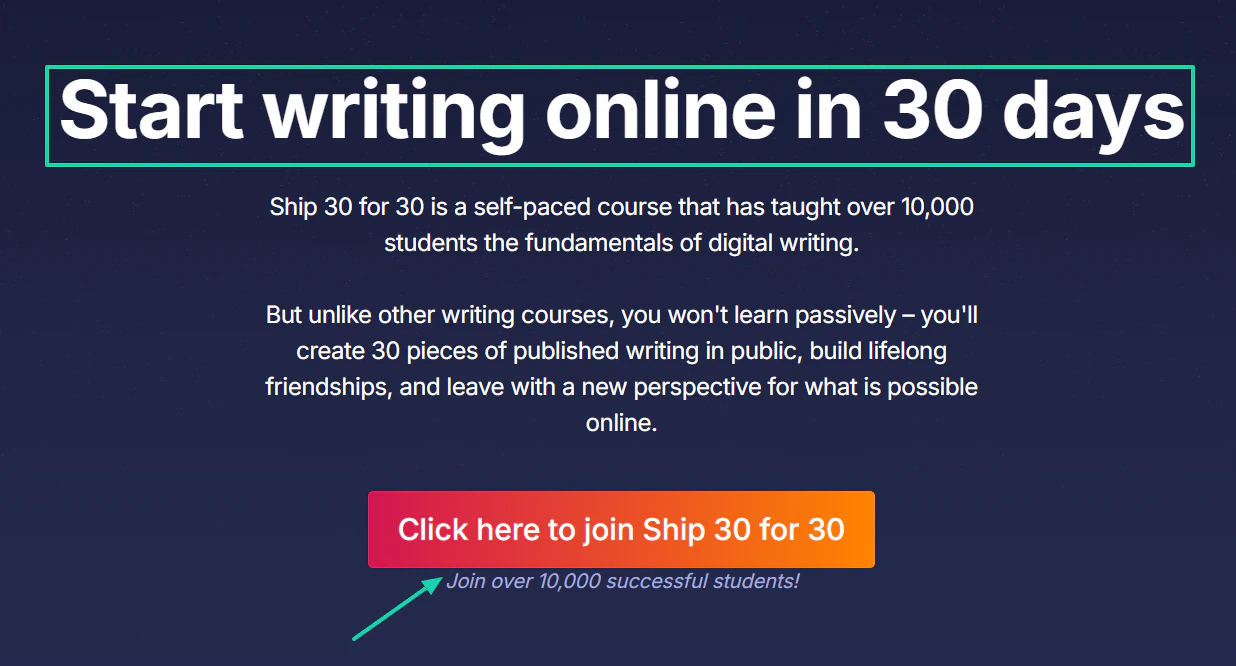
This is the strategy that Ship 30 for 30 uses. They promote their writing course saying, “Start writing online in 30 days.”
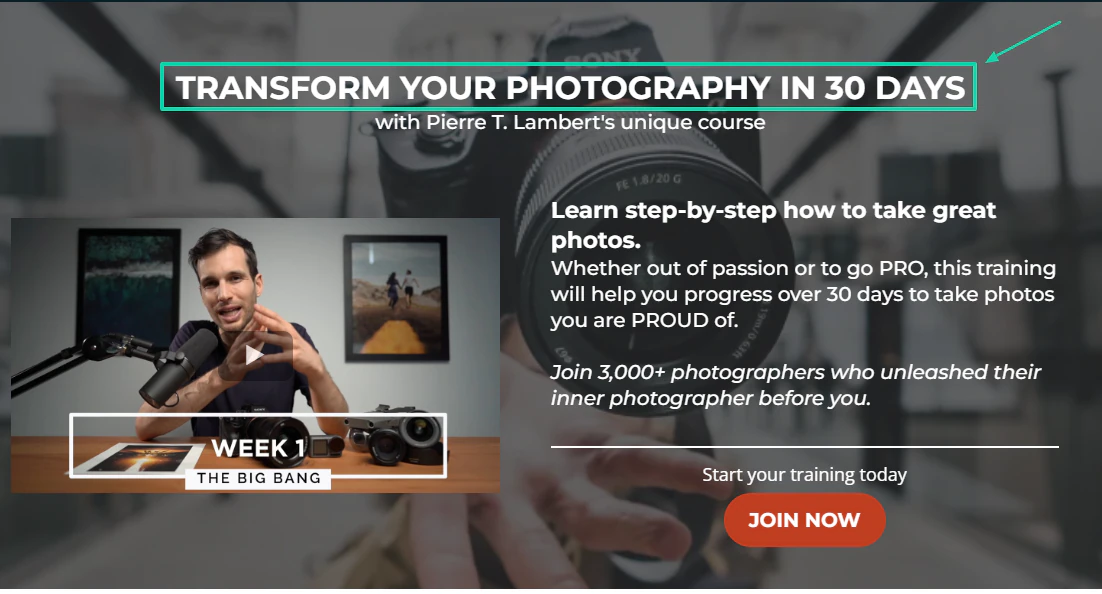
Pierre Lambert also does the same with his course, the 30 Days to Great Photos. His idea is to help you transform your photography in 30 days.
We are all familiar with challenges. They create engagement quickly, generate user-generated content, and give learners quick wins.
Now, guess what happens when users experience progress during the challenge? Well, they become more likely to enroll in the full course.
-
How much it costs to start: $0–$200, depending on community tools and promotion.
-
Time to first results: Immediate to 30 days, depending on challenge length.
-
What traffic to expect: 100–5,000 participants or visitors, depending on audience size.
-
How likely it is to make sales: High - challenges create momentum and emotional investment.
-
Best for: Creators teaching skills tied to measurable progress or daily action.
[fs-toc-omit]18. Templates, checklists, and swipe files
It is no news that people love practical shortcuts. That’s exactly why resources like templates, checklists, and swipe files can help you promote your online course.
To give you a clear idea, let me put different resources in a table and explain what they are, with practical examples.
| Resource type | What it is | Example | How it helps promote a course | Difficulty to create |
|---|---|---|---|---|
| Checklist | A simple step-by-step action list | “Blog Post Publishing Checklist” | Gives learners a quick win and introduces your teaching process | Very easy |
| Template | A reusable file that users can customize | Notion content planner template | Lets users experience your systems before buying your course | Easy–Medium |
| Swipe file | A collection of proven examples that users can copy or adapt | Email subject line swipe file | Demonstrates expertise and saves users time | Easy |
| Cheat sheet | A condensed reference guide | “Instagram Reel Hooks Cheat Sheet” | Simplifies complex information into quick-reference material | Very easy |
| Mini e-book | A short educational guide focused on one topic | “Beginner’s Guide to Freelancing” | Builds authority while growing your email list | Medium |
| Canva Template Pack | Editable visual assets users can reuse | Instagram carousel templates | Helps users create faster results with less effort | Medium |
| Spreadsheet system | A pre-built spreadsheet that users can immediately use | Budget tracker or content calendar | Shows learners the practical implementation of your methods | Medium |
| Email course | A short educational sequence delivered through email | 5-day copywriting email course | Builds trust gradually before pitching the paid course | Medium |
Many creators offer those resources, even for free, as the first step of their funnel before promoting courses, webinars, memberships, or workshops.
Thomas Frank is known for always sharing Notion templates. One of his free templates is the Ultimate Tasks and Projects template for Notion.
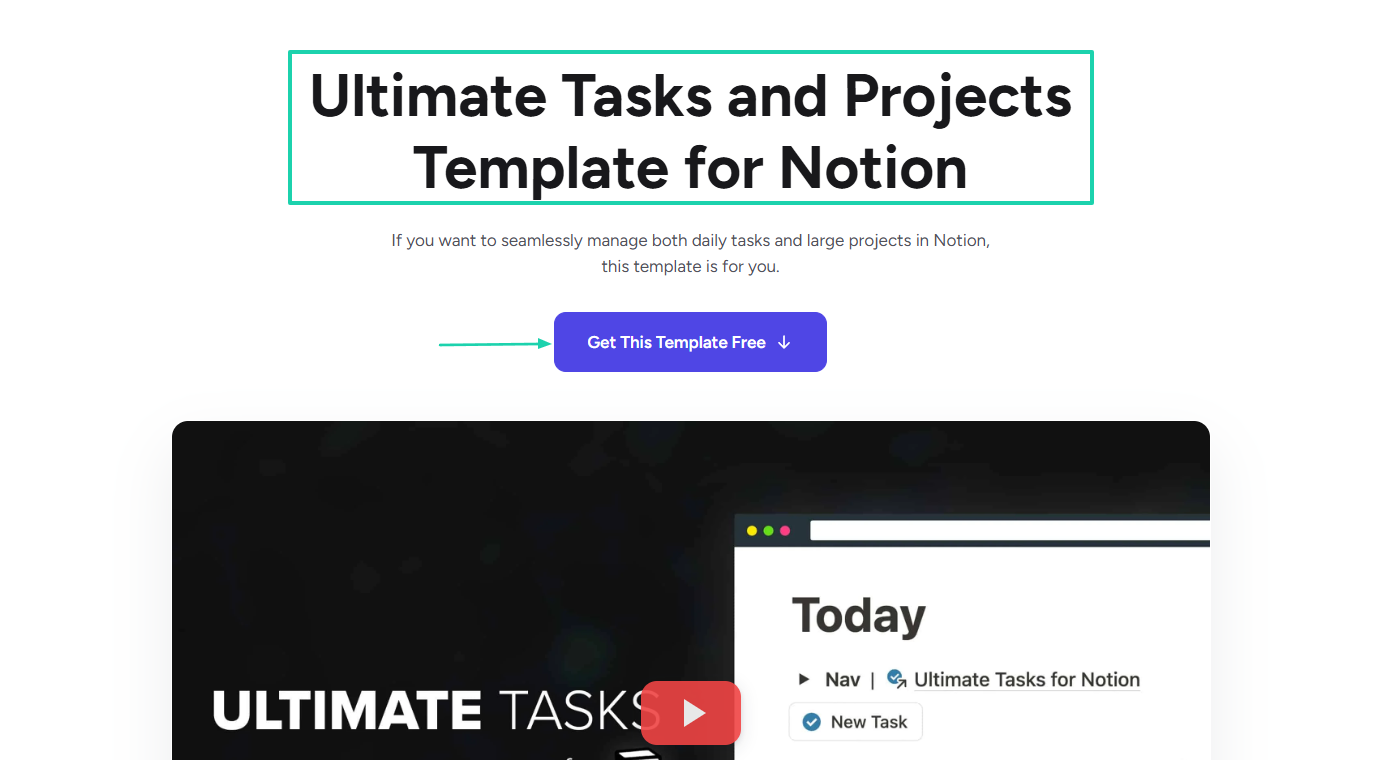
Right after that, he offers his courses. One of them is Notion Fundamentals.
![[fs-toc-omit]18. Templates, checklists, and swipe files](https://assets.easy.tools/media/images/6610200a3811b820656fdd9d/6a1acdc17c77b9e96d7952d1_a9804e16.webp)
This is the strategy!
You offer a free template related to your full course. As people start consuming your templates and get value from them, it’ll become easier for you to push your paid course.
But you’d agree with me that you can’t offer what you don’t have. So, first create your PDF or Notion template.
If you do that on Easytools, you’ll go to Digital download right after signing in.
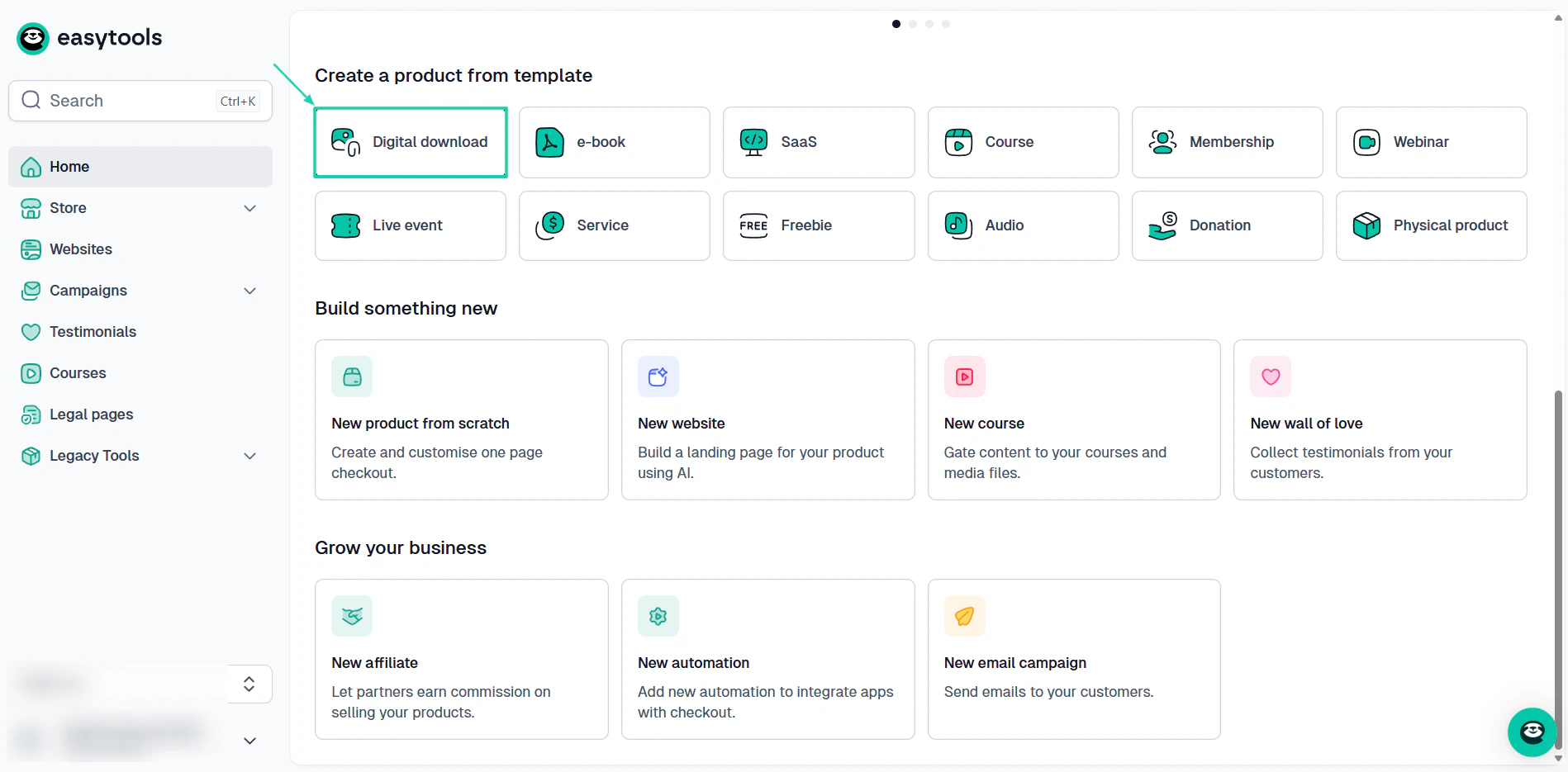
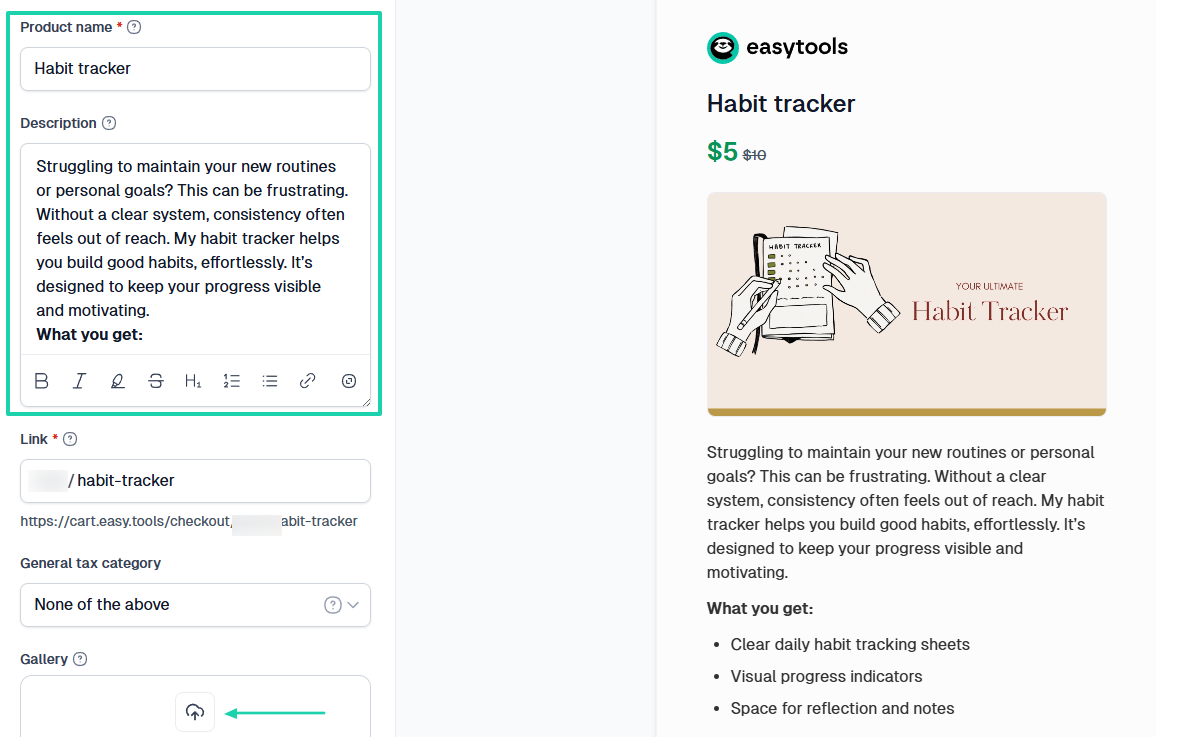
Now, let’s say the course you want to promote is about Personal branding. Your template can be a habit tracker.
Let’s name it, add a description, and an image.
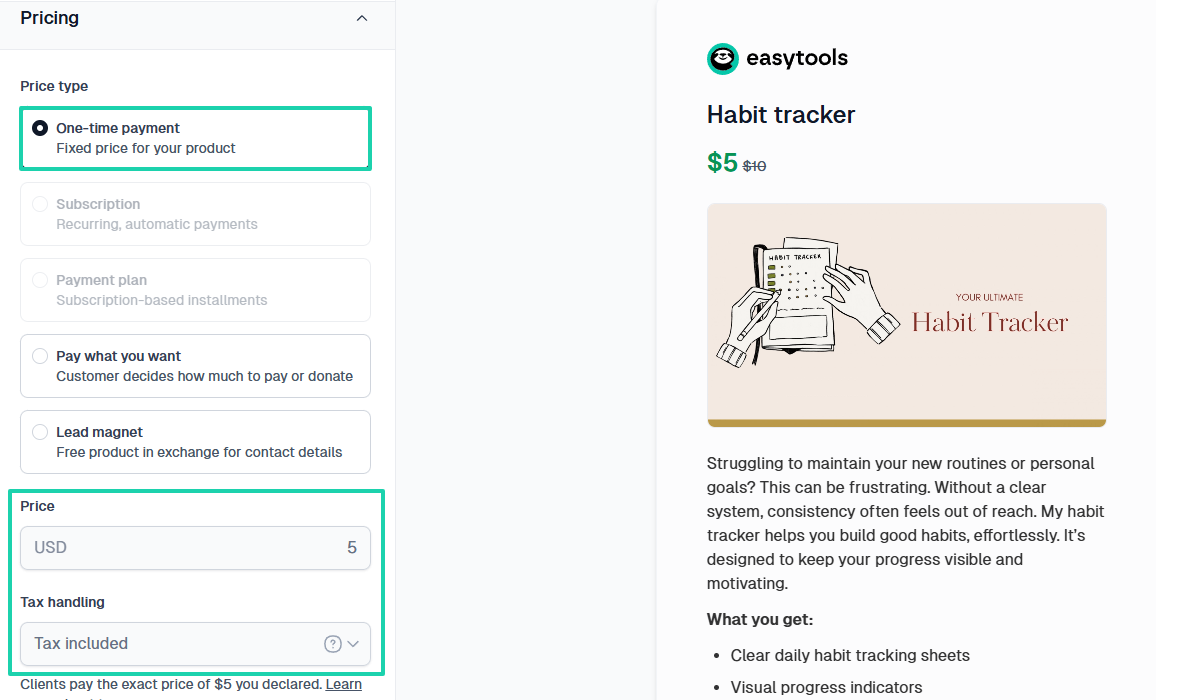
You can make it a paid one, add a price, and choose how the platform should handle the tax. Alternatively, you can also make it free and use it as a lead magnet.
Then, simply upload a file or add its link.
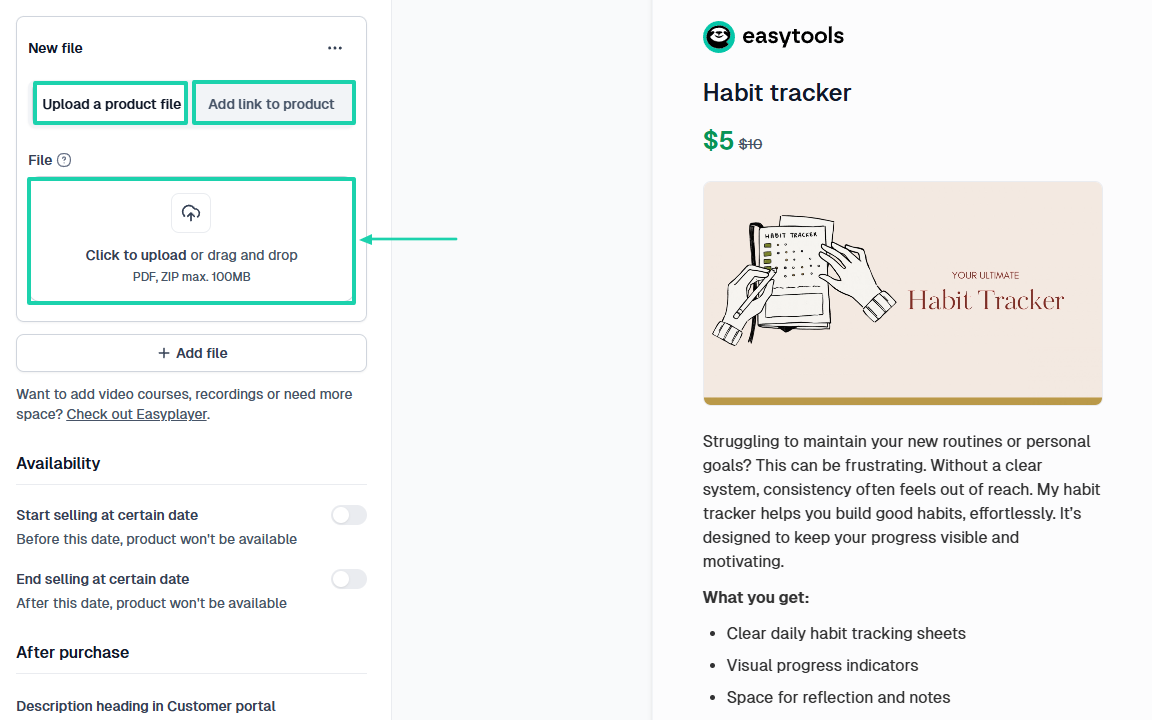
Easytools lets you protect your file. But once you’re ready, you can hit the publish button and also share the product link wherever you want.
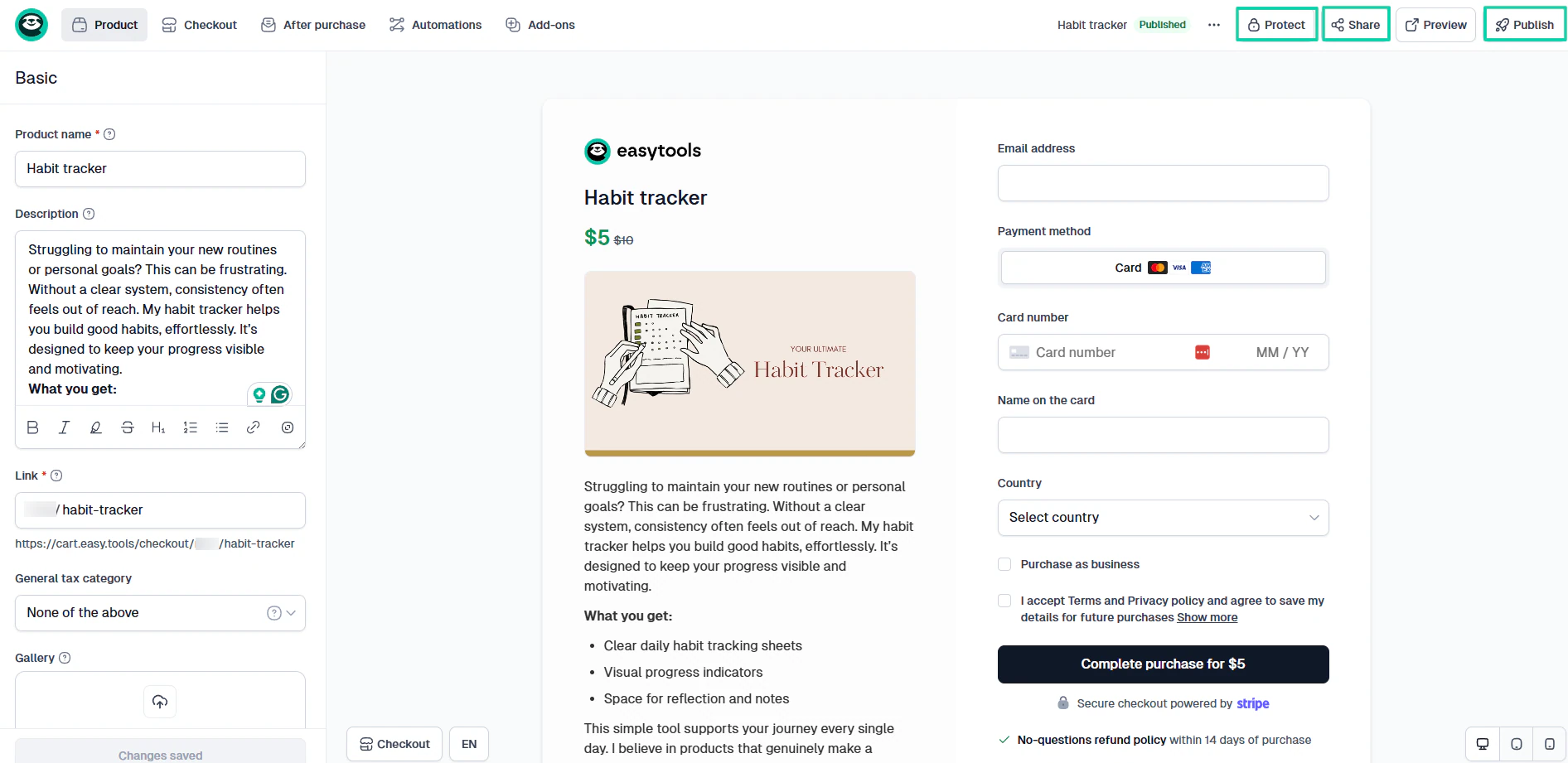
The goal is to share or sell your templates to create in your customers the desire to know more about the course you truly want to sell.
It is only when you’ve done that that you can offer that online course.
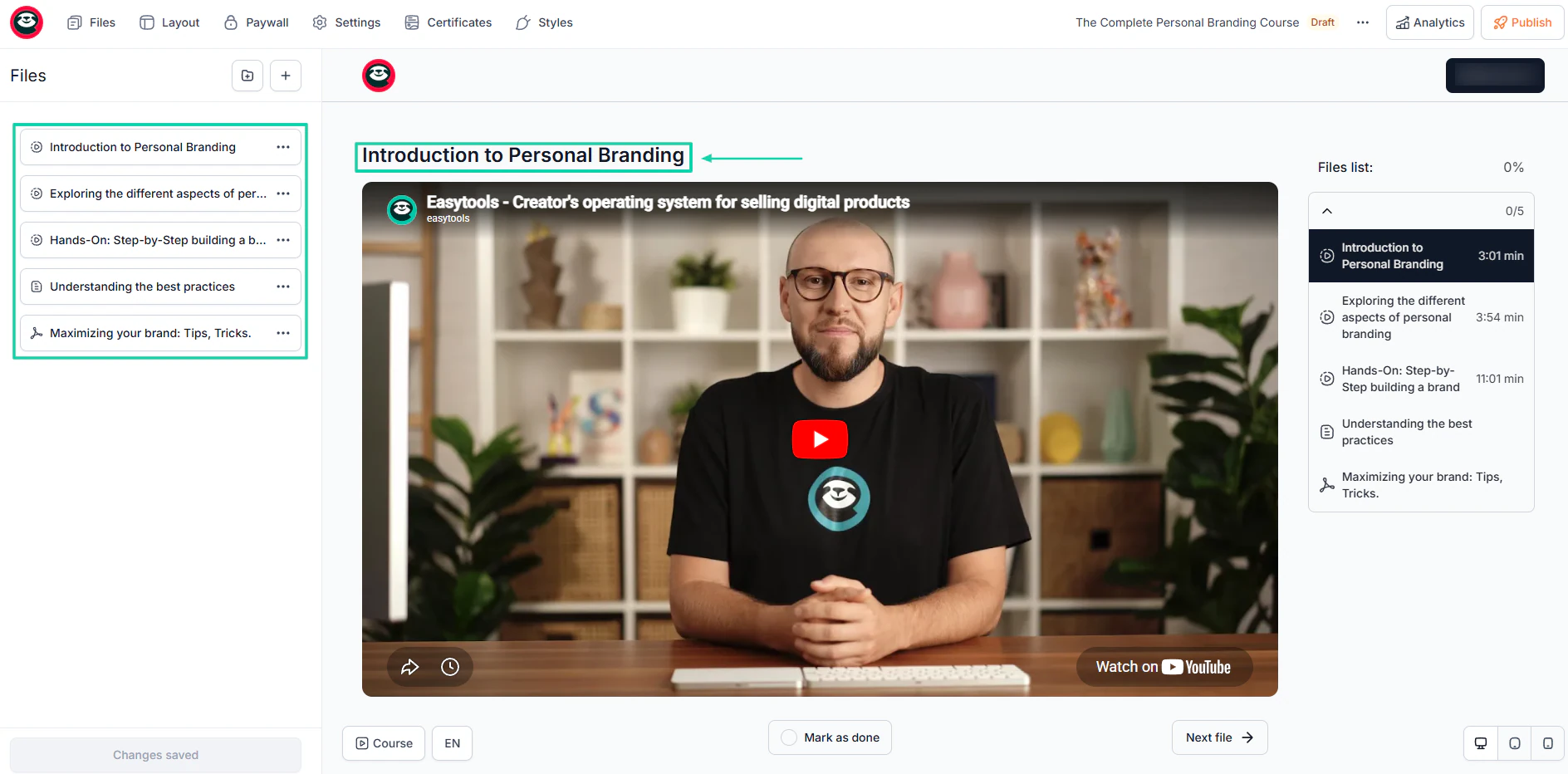
This approach positions you as an expert and helps you grow email lists quickly. It can easily boost your conversion rate because users have already experienced your systems firsthand.
-
How much it costs to start: $0–$100, depending on design tools and landing pages.
-
Time to first results: 1–2 weeks.
-
What traffic to expect: 100–10,000 downloads, depending on distribution and audience size.
-
How likely it is to make sales: Medium–High - especially when the template solves a painful problem.
-
Best for: Creators teaching systems, workflows, productivity, business, or design skills.
[fs-toc-omit]19. Course marketplaces like Udemy
Using a platform like Udemy to promote your online course can be a great idea. It’s a popular online marketplace for learning and teaching.
![[fs-toc-omit]19. Course marketplaces like Udemy](https://assets.easy.tools/media/images/6610200a3811b820656fdd9d/6a1acdc17c77b9e96d7952cb_d9888002.webp)
The platform already has 80 million students and 17,200+ enterprise customers. Also, it has accumulated over 1 billion enrollments.
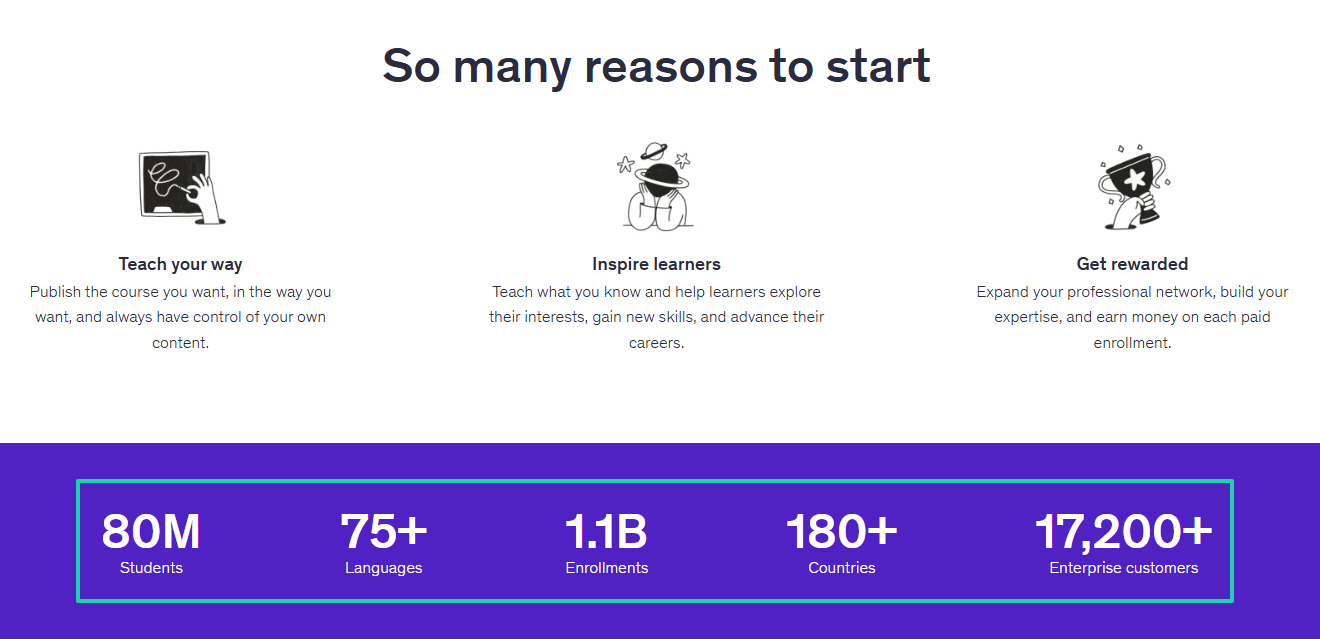
With those numbers, you understand why I said promoting an online course on Udemy is a good move.
You can create a course for business, entrepreneurship, communication, ecommerce, real estate, and more.
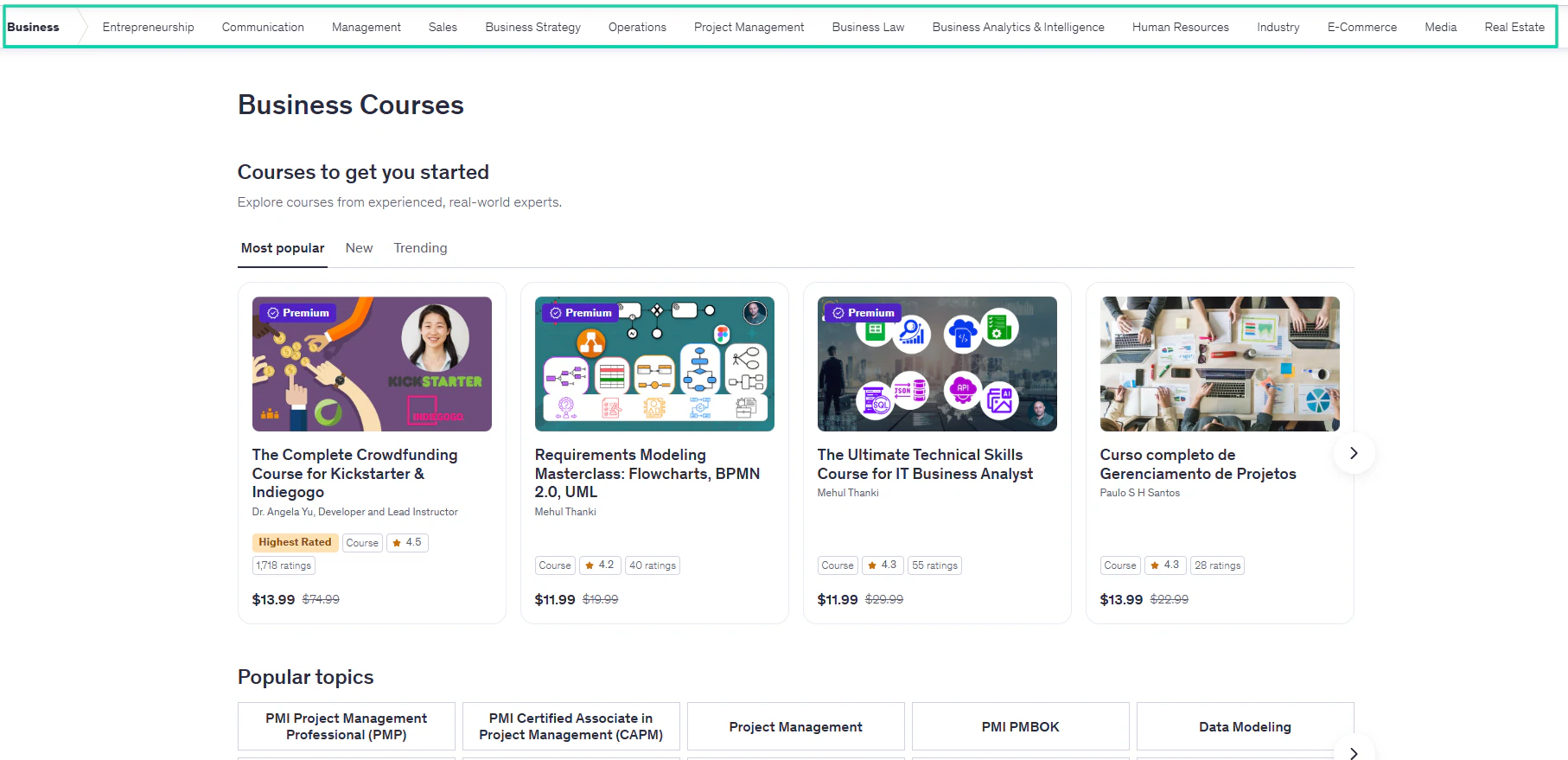
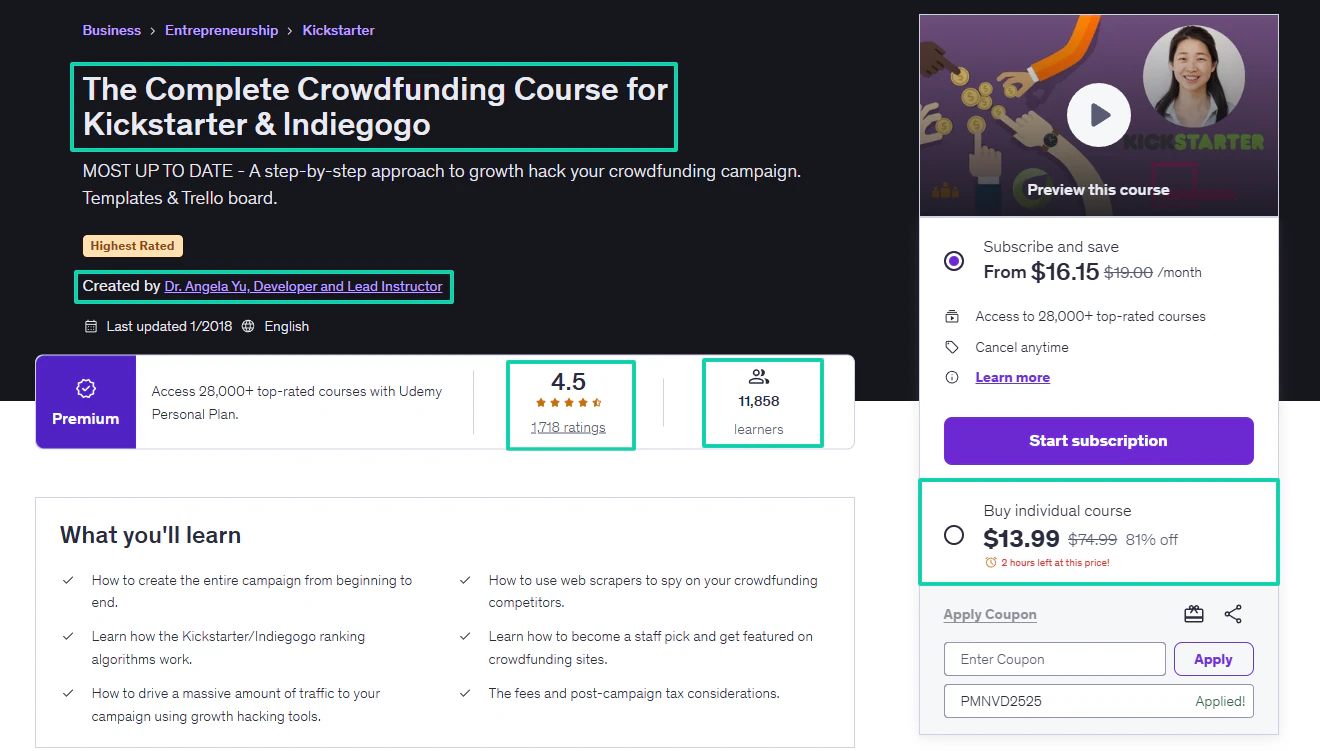
Dr. Angela Yu has her course there under the business category. It’s called “The Complete Crowdfunding Course for Kickstarter and Indiegogo.”
It has 11,858 students, 1,718 ratings, and costs $13.99.
The good thing with Udemy is that you don’t necessarily have to find traffic yourself. You can leverage the platform’s existing demand.
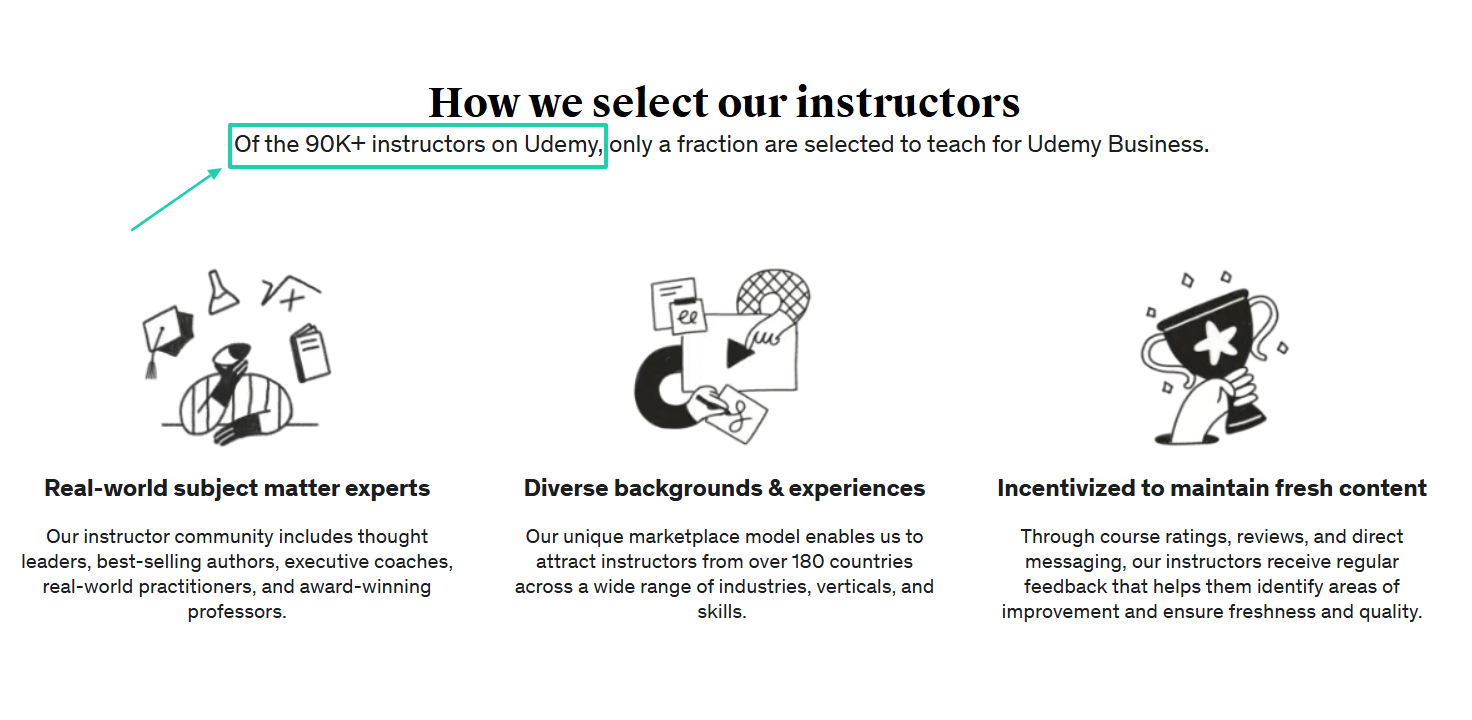
But you should also know that the competition is high. Udemy has 90k+ instructors, which means there is a good chance someone is already teaching what you plan to teach.
That’s why it is very important to niche down.
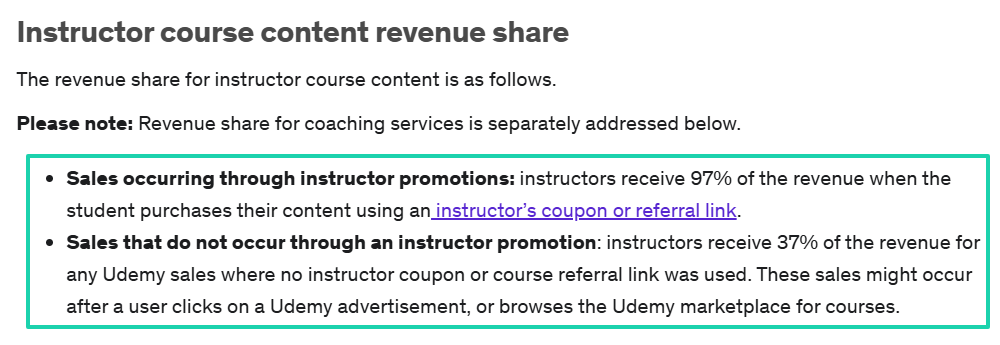
Aside from that, the pricing control is limited, and the platform operates on a revenue-share model:
As an instructor, you earn 97% revenue share when a student purchases using your coupon or referral link. But you earn 37% when sales come directly through Udemy’s marketplace.
-
How much it costs to start: $0, besides recording and production costs.
-
Time to first results: 1–8 weeks, depending on reviews and platform visibility.
-
What traffic to expect: Potentially thousands of marketplace impressions monthly.
-
How likely it is to make sales: Medium–High - marketplace trust lowers buying resistance.
-
Best for: Beginner course creators wanting built-in traffic and validation.
[fs-toc-omit]20. Listing on Skillshare
Skillshare is an online platform that allows creators to teach creative skills by uploading video classes. The emphasis is on “creative skills.”
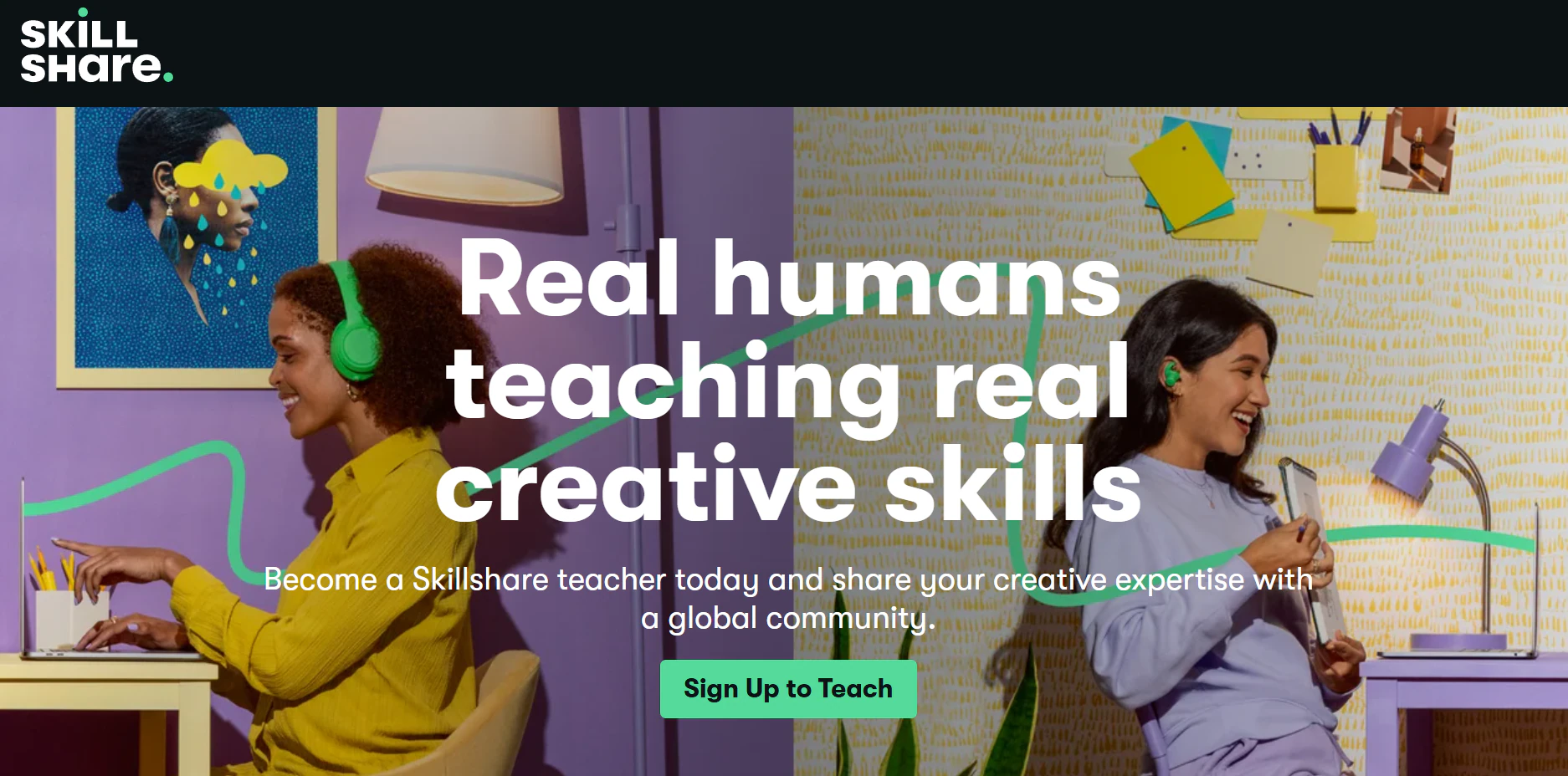
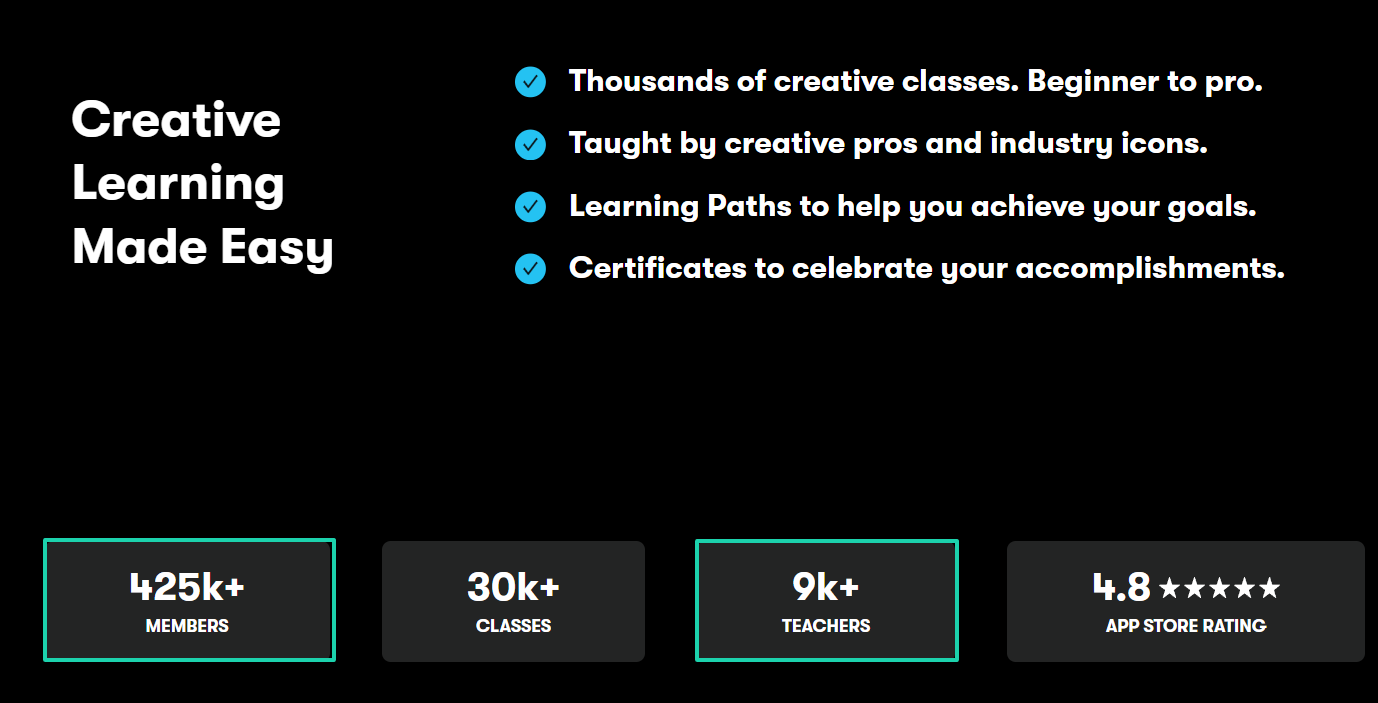
With 425,000+ students and 9,000+ teachers, it can definitely be worth listing your online course there to promote it.
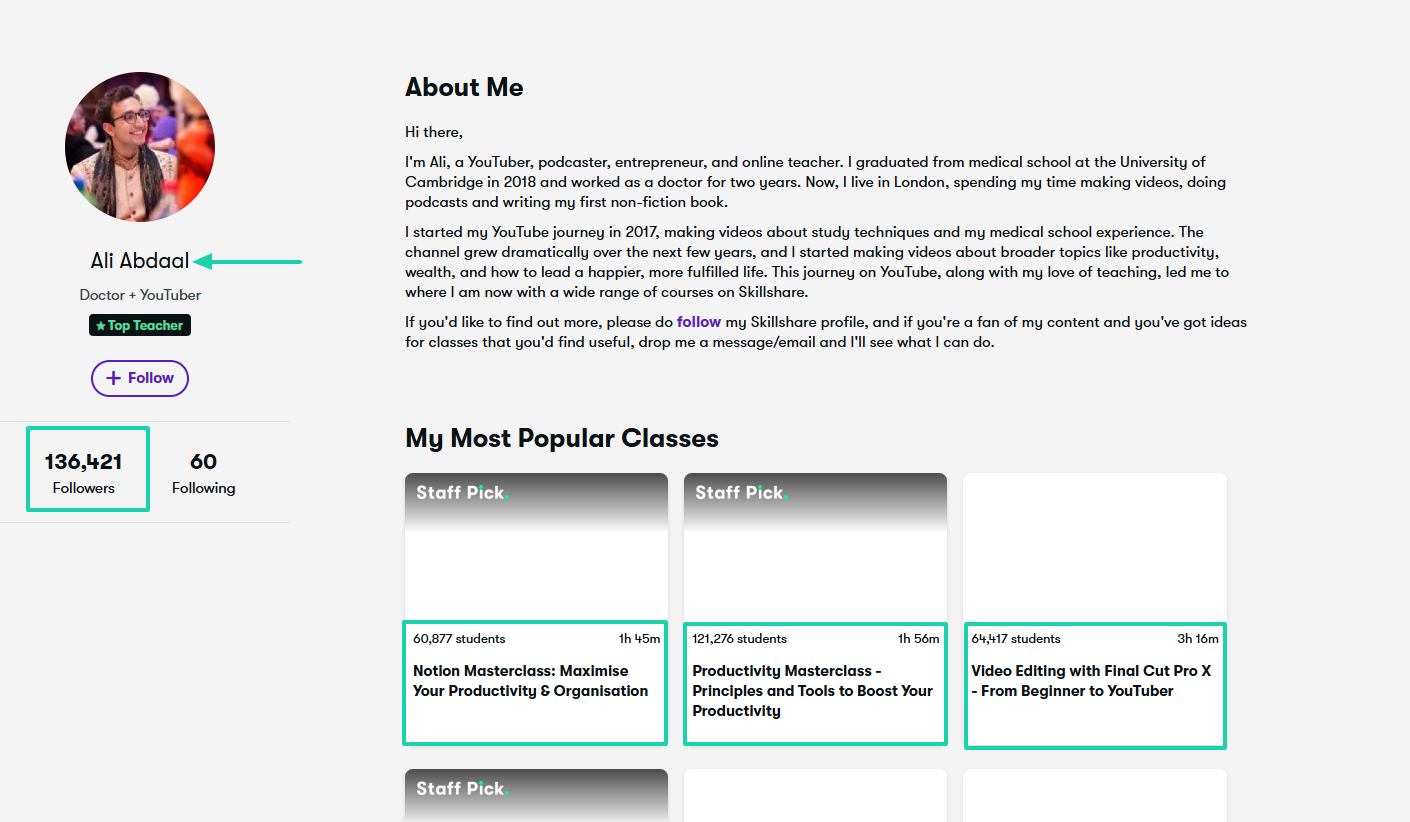
The YouTuber Ali Abdaal is among the teachers there. He has over 136,000 followers and offers many courses on productivity, Notion, and video editing, among others.
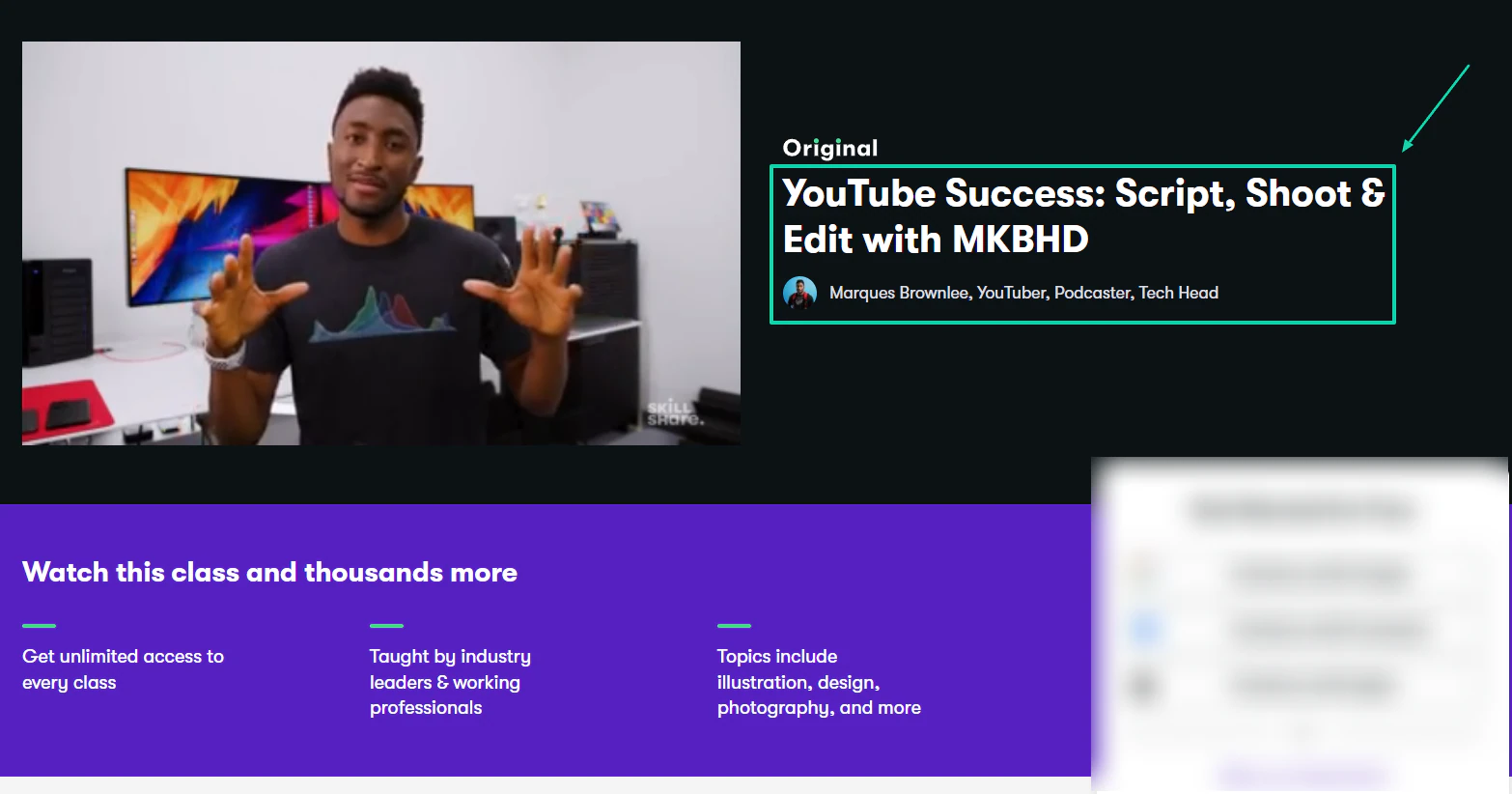
Marques Brownlee, known as MKBHD on YouTube, also lists his courses there. One of them is YouTube Success: Script, Shoot, and Edit with MKBHD.”
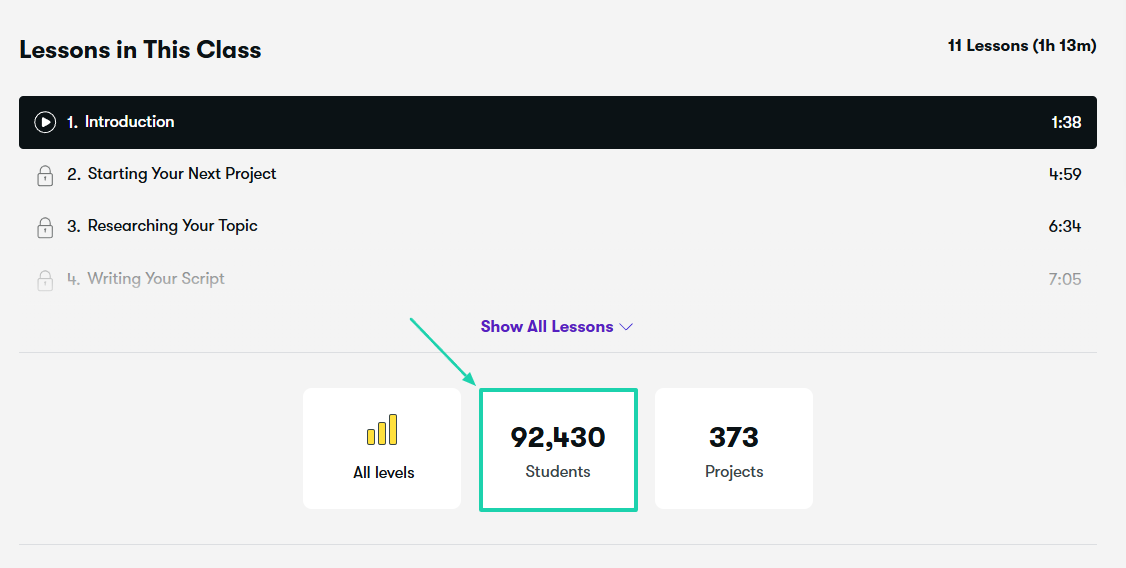
That course has 92,430 students.
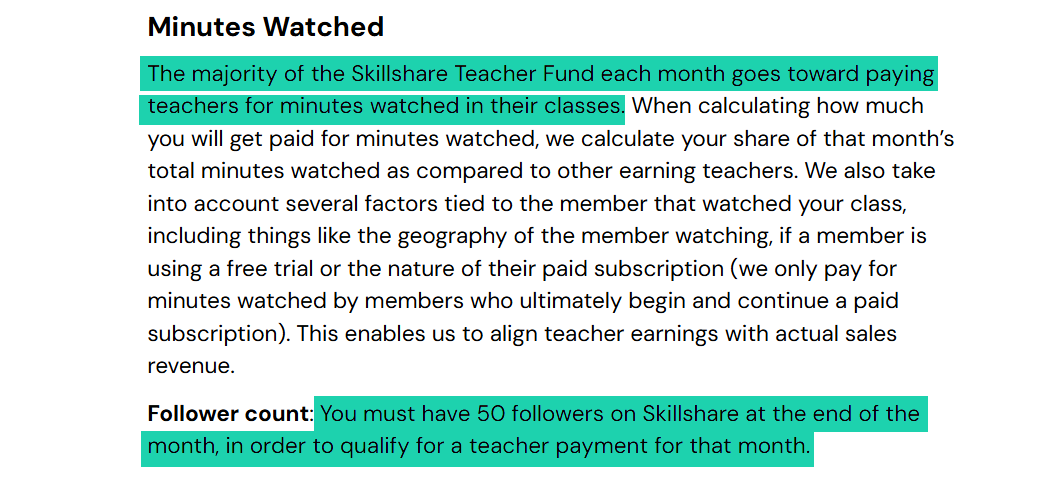
You should also know that, unlike Udemy, Skillshare doesn’t have a set percentage that teachers make there.
The platform pays you based on the number of minutes watched in your classes. Also, you need at least 50 followers to qualify for a teacher payment at the end of the month.
-
How much it costs to start: $0–$300, depending on equipment and editing quality.
-
Time to first results: 1–2 months.
-
What traffic to expect: Hundreds to thousands of class impressions monthly, depending on niche demand.
-
How likely it is to make sales: Medium - especially when paired with external funnels and email marketing.
-
Best for: Creative educators, designers, freelancers, and productivity creators.
[fs-toc-omit]21. Launch waitlists
When you launch waitlists, you can promote your online course before enrollment even opens.
The very first step is to collect interested leads before launching, even if your course is ready.
In case you don’t know, waitlists have many advantages. They:
- build anticipation
- validate interest before launch
- improve launch-day momentum
- help estimate conversions
In other words, your waitlist can help you determine whether or not to launch your course.
In one of his LinkedIn posts, Daniel Bustamante shared how he and Matthew launched a waitlist for their course and got 600+ to join.
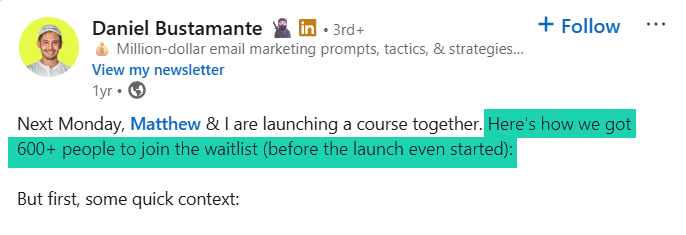
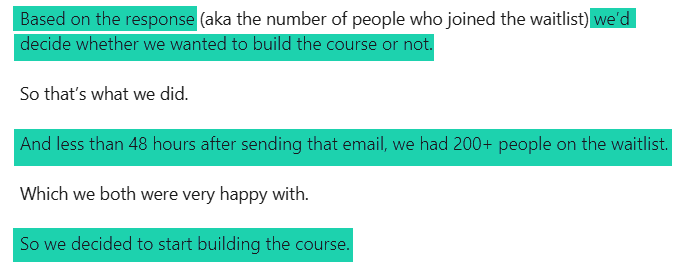
He said the response would help them decide whether or not to build the course. Surprisingly, in less than 48 hours, they had 200+ on the waitlist.
So, eventually they went ahead.
A waitlist is powerful enough to make you move forward or even stop what you’re building.
It’s a safe way to promote an online course because it gives you time to gather early feedback and make quick adjustments before the main launch.
Easytools, for example, lets you create your course and enable the waitlist.
![[fs-toc-omit]21. Launch waitlists](https://assets.easy.tools/media/images/6610200a3811b820656fdd9d/6a1acdc27c77b9e96d79531f_24e1c9a4.webp)
-
How much it costs to start: $0–$100, depending on email tools and landing pages.
-
Time to first results: 2–8 weeks before launch.
-
What traffic to expect: 100–10,000+ waitlist signups, depending on audience size
-
How likely it is to make sales: High - waitlists attract highly interested leads.
-
Best for: Creators planning launches, cohorts, or limited enrollment programs.
[fs-toc-omit]22. Scarcity campaigns with limited enrollment
Using scarcity campaigns with limited enrollment is also a way of promoting an online course.
That can even help your courses convert better because urgency pushes hesitant buyers to act. So, this is how it works.
You don’t keep enrollment permanently open. Instead, you limit:
- seats
- bonuses
- enrollment windows
- launch periods
When potential customers see that, they are forced to make a quick decision. This can prevent endless procrastination.
When you know that a particular product(especially one you like or need) will be permanently available, you don’t feel the urge to get it.
But imagine that the same product will only be available for 10 days. It changes everything.
Ultraspeaking recently launched a program called Creator cohort. They also decided to limit the number of seats to 9 for this course.
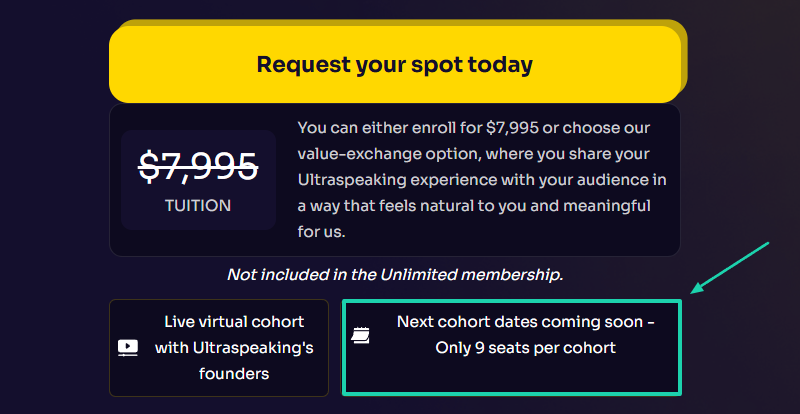
So, when you create a course on a platform like Easytools, you can limit its availability. You can clearly specify when it’ll be available and when it’ll no longer be available.
You can even enable the countdown timer.
![[fs-toc-omit]22. Scarcity campaigns with limited enrollment](https://assets.easy.tools/media/images/6610200a3811b820656fdd9d/6a1ace090e5ac090ff15a265_f41a7f25.webp)
It’ll appear at the top of your checkout and count down in real time towards the end date.
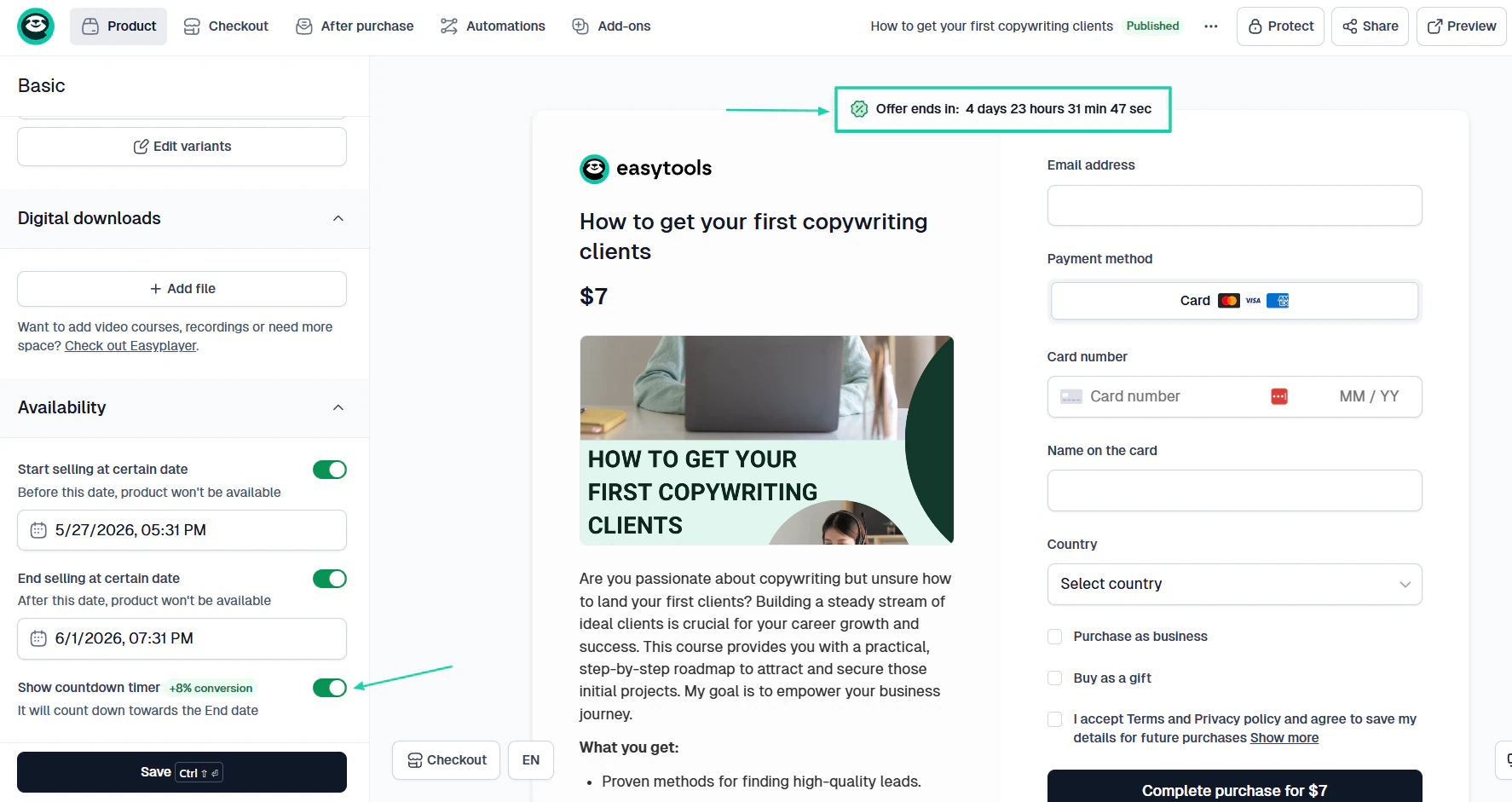
This definitely tells customers that they don’t have the whole year to make their purchase decision. In fact, it encourages faster decisions.
-
How much it costs to start: $0, besides email and funnel tools.
-
Time to first results: Immediate during launch periods.
-
What traffic to expect: Depends mostly on audience size and pre-launch promotion.
-
How likely it is to make sales: Very high - urgency often significantly increases conversions.
-
Best for: Cohort courses, premium programs, and creators with existing audiences.
[fs-toc-omit]23. Student-generated content and testimonials
Student success stories and testimonials are one of the strongest ways to promote an online course.
This is so true, especially because potential buyers or customers trust students more than marketing copy.
So, the content can be in the form of testimonials, screenshots, video reviews, transformation posts, or social proof threads.
This is something you shouldn’t forget in your course launch strategy.
That’s the first thing I noticed when I came across the 6 Figure Drop Shipper (6FDS) program, where Reza and his team teach people about e-commerce.
There is a screenshot of one of their students sharing the impact the course had on them.
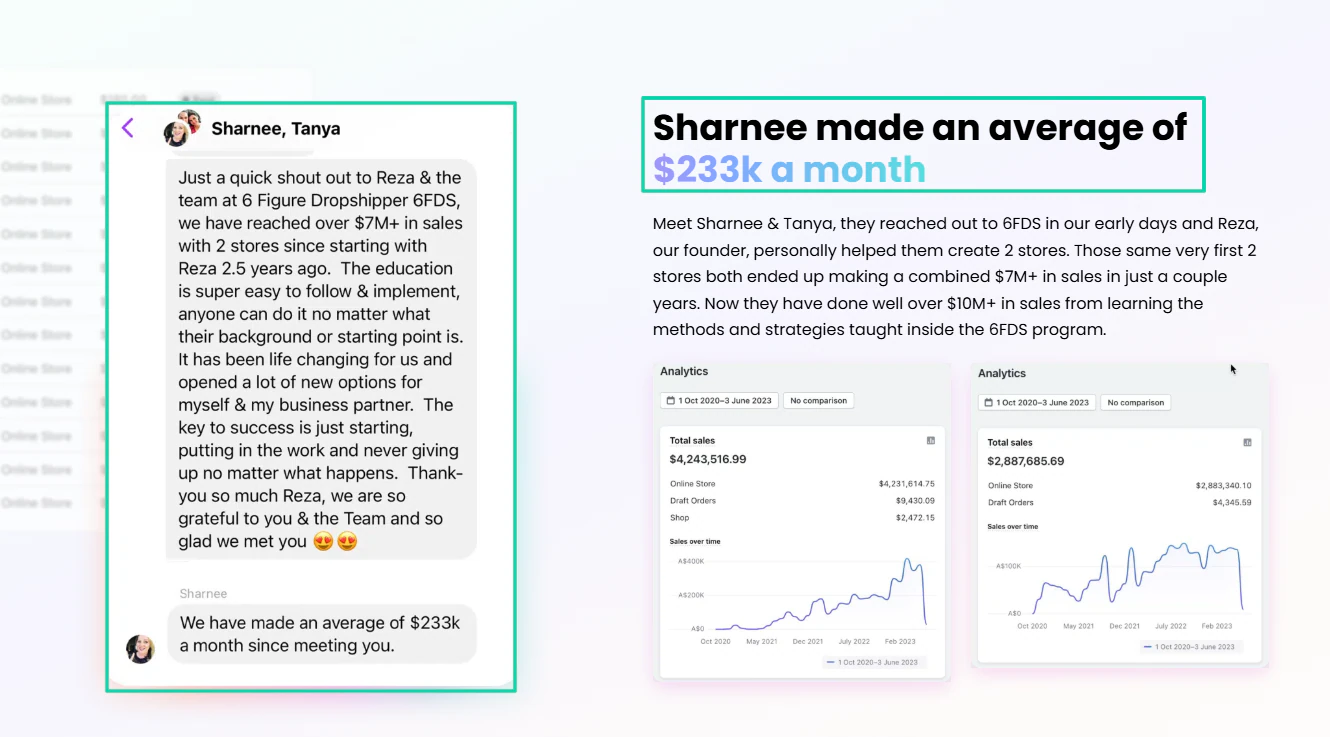
There is also a whole section with reviews from all their students.
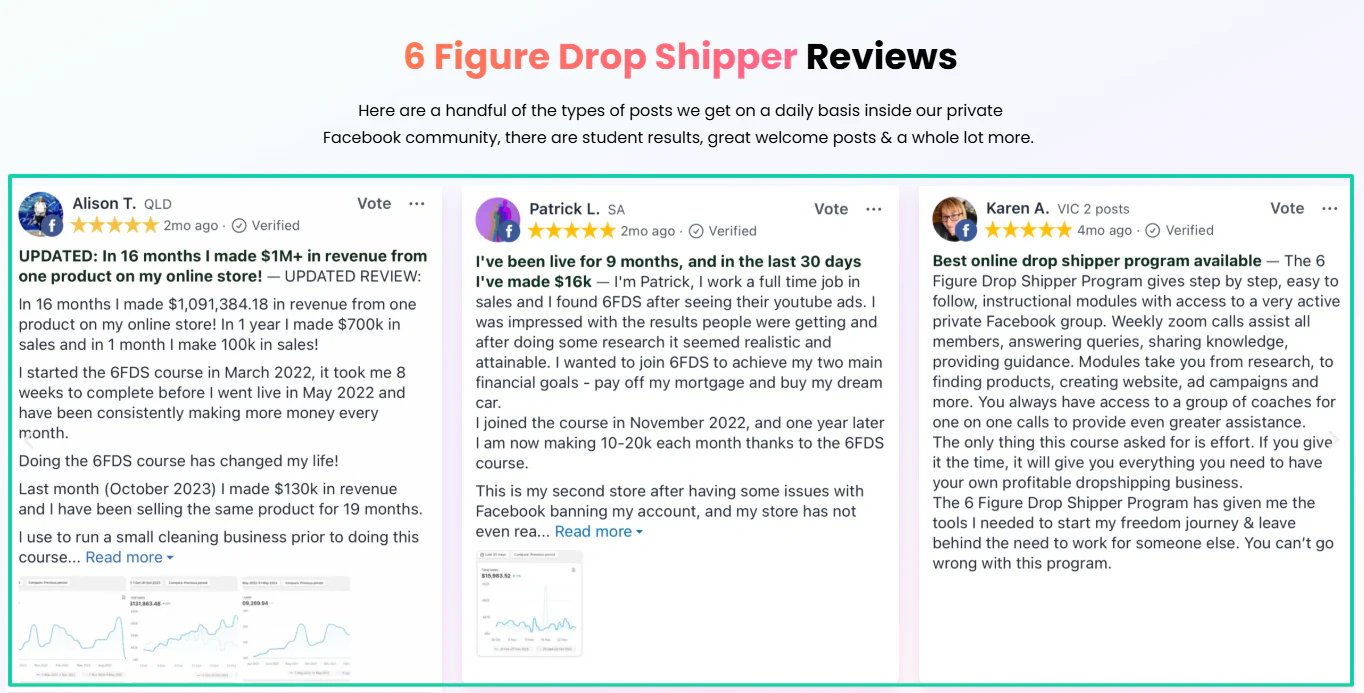
They also share video testimonials of their students. So much social proof to boost conversions.
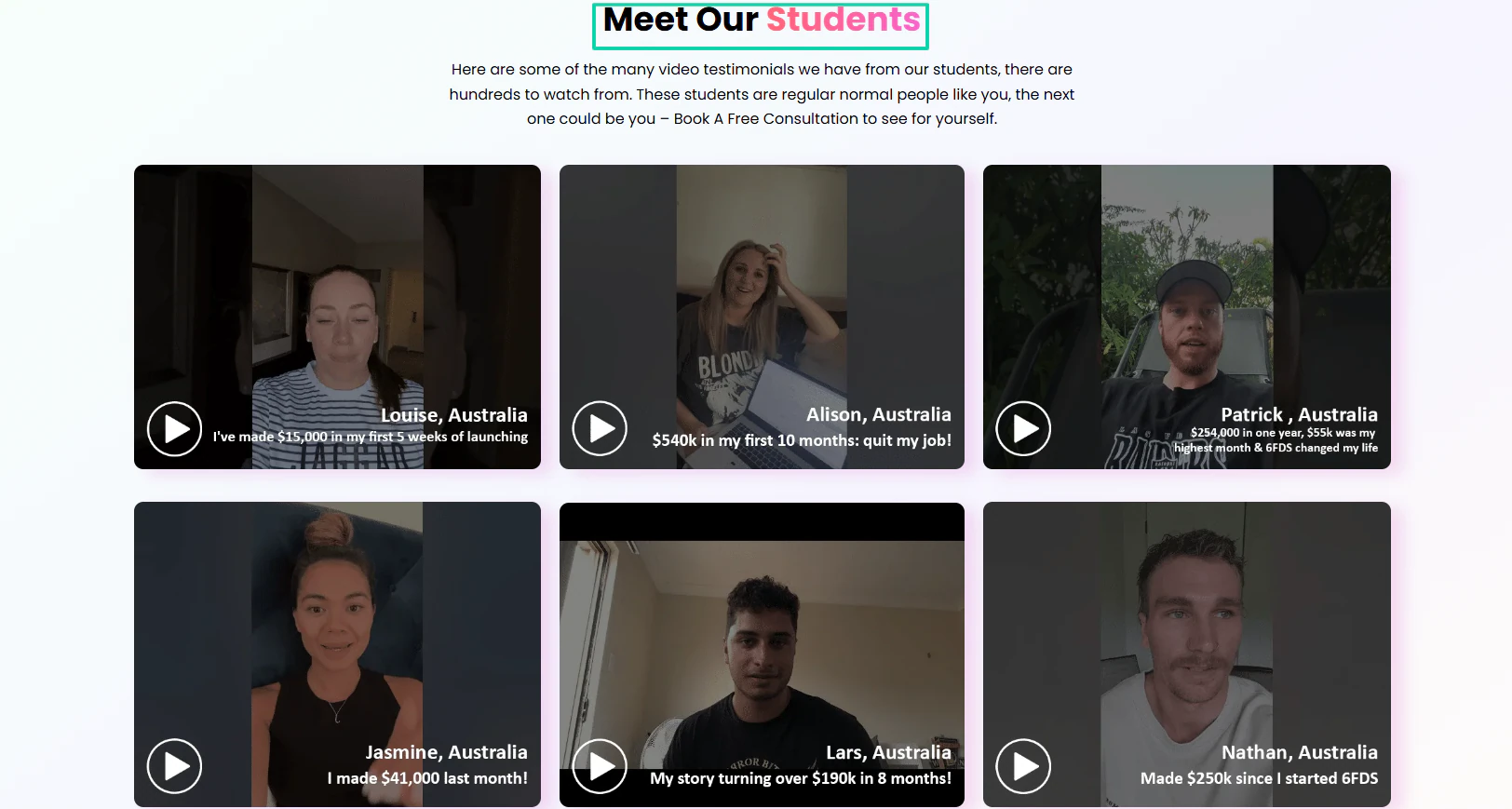
It’s important to know that testimonials:
- reduce skepticism
- increase trust
- provide proof
- help buyers visualize results
That’s why I always encourage creators to add testimonials, whether at checkout or on their website.
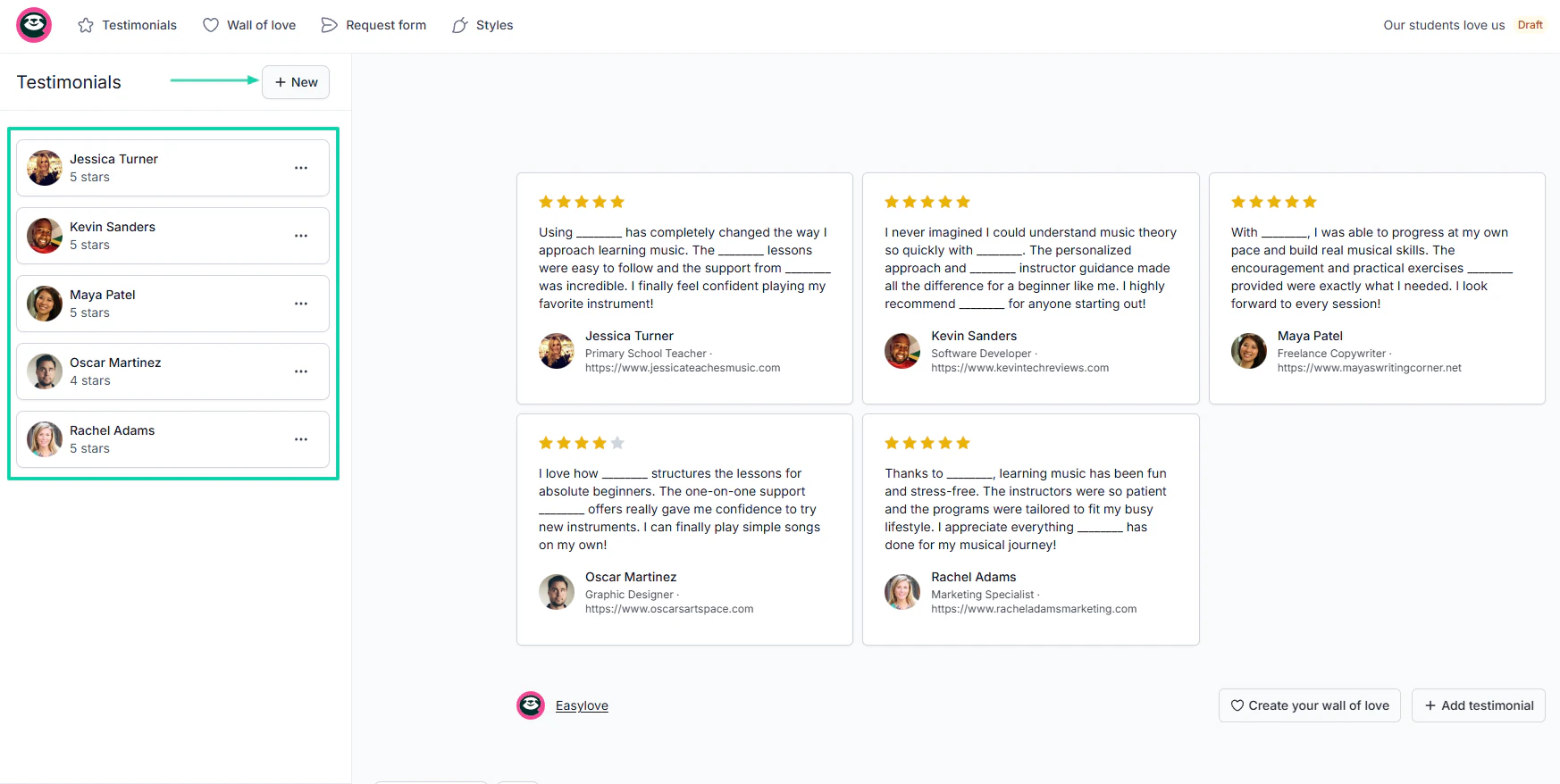
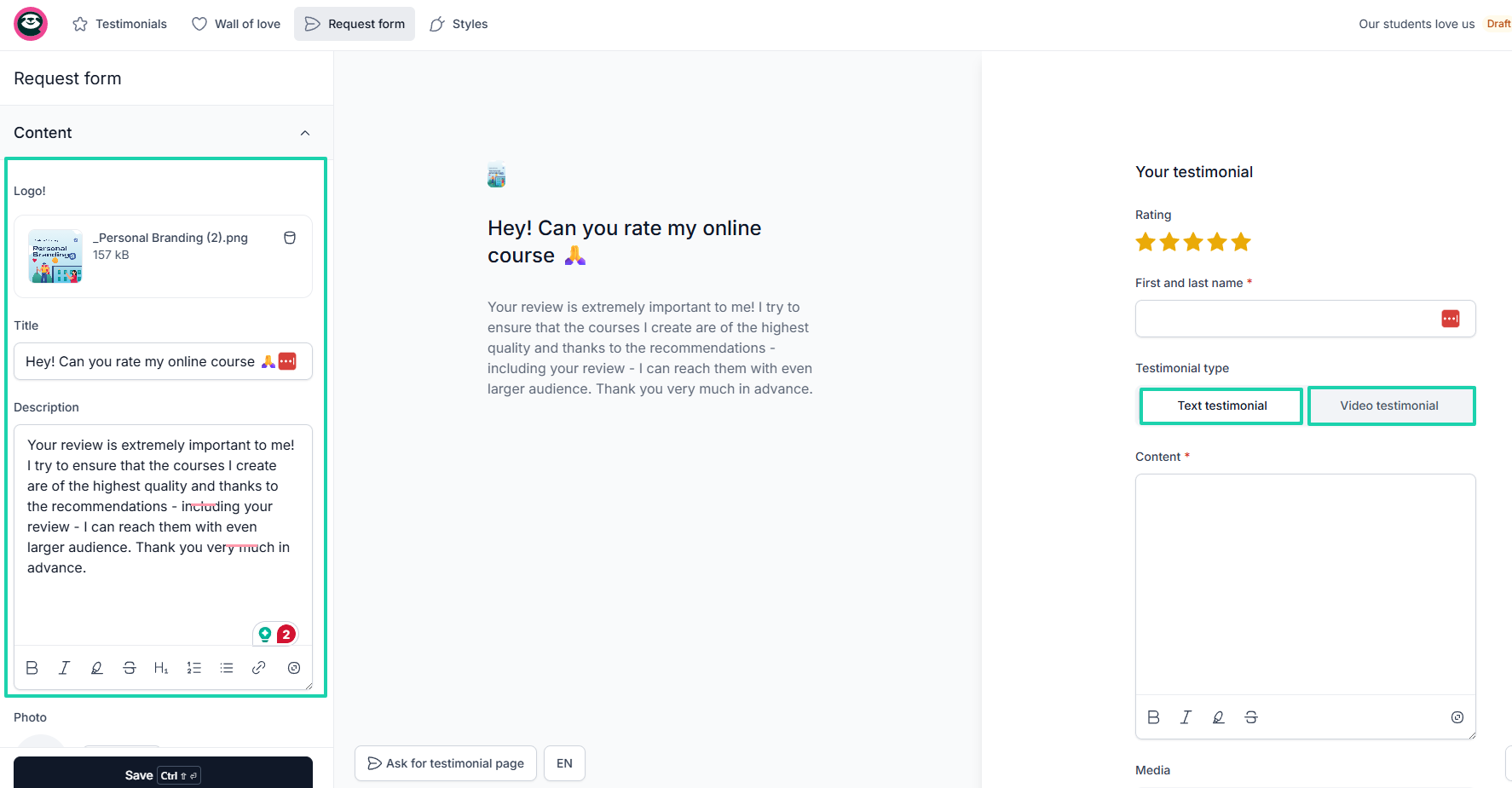
But some struggle to ask for testimonials. You don’t do it over a text message.
You have to be more professional. Use a platform that lets you request them and allows customers or students to add them as text or video.
-
How much it costs to start: $0.
-
Time to first results: Depends on student outcomes and course completion.
-
What traffic to expect: Testimonials improve conversion rates more than raw traffic volume.
-
How likely it is to make sales: Very High - social proof strongly influences buying decisions.
-
Best for: Creators with successful students and transformational outcomes.
[fs-toc-omit]24. AI-search optimization for ChatGPT and Google AI Overviews
You can’t ignore this truth if you want to promote an online course: AI search is changing how people search and discover content online.
Today, if a user wants to access educational content online, they don’t just rush to Google results. They ask tools like:
- ChatGPT
- Google AI Overviews
- Gemini
- Perplexity
- Claude
They won’t do extensive research. No!
A simple question, a simple answer, and they are good to go.
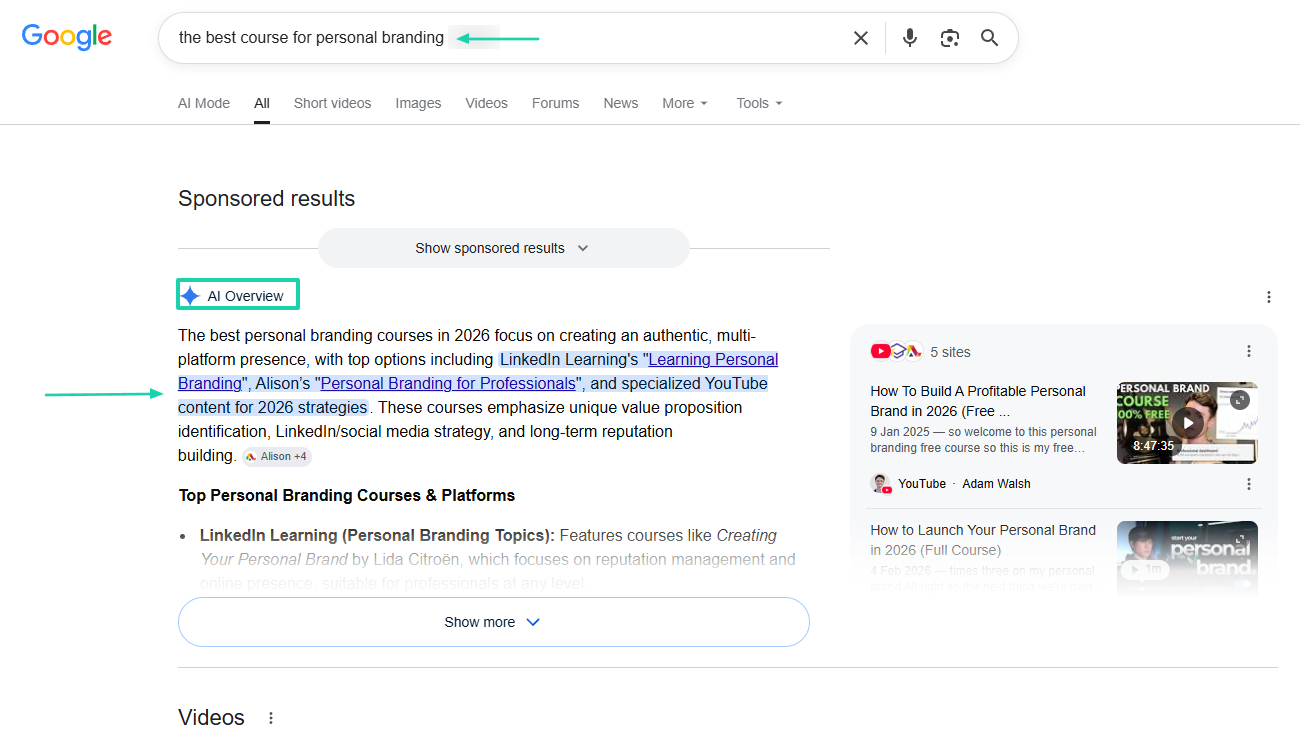
I can go to Google and type “the best course for personal branding.” The first result is from the AI overview. It gives me the course name and the instructor.
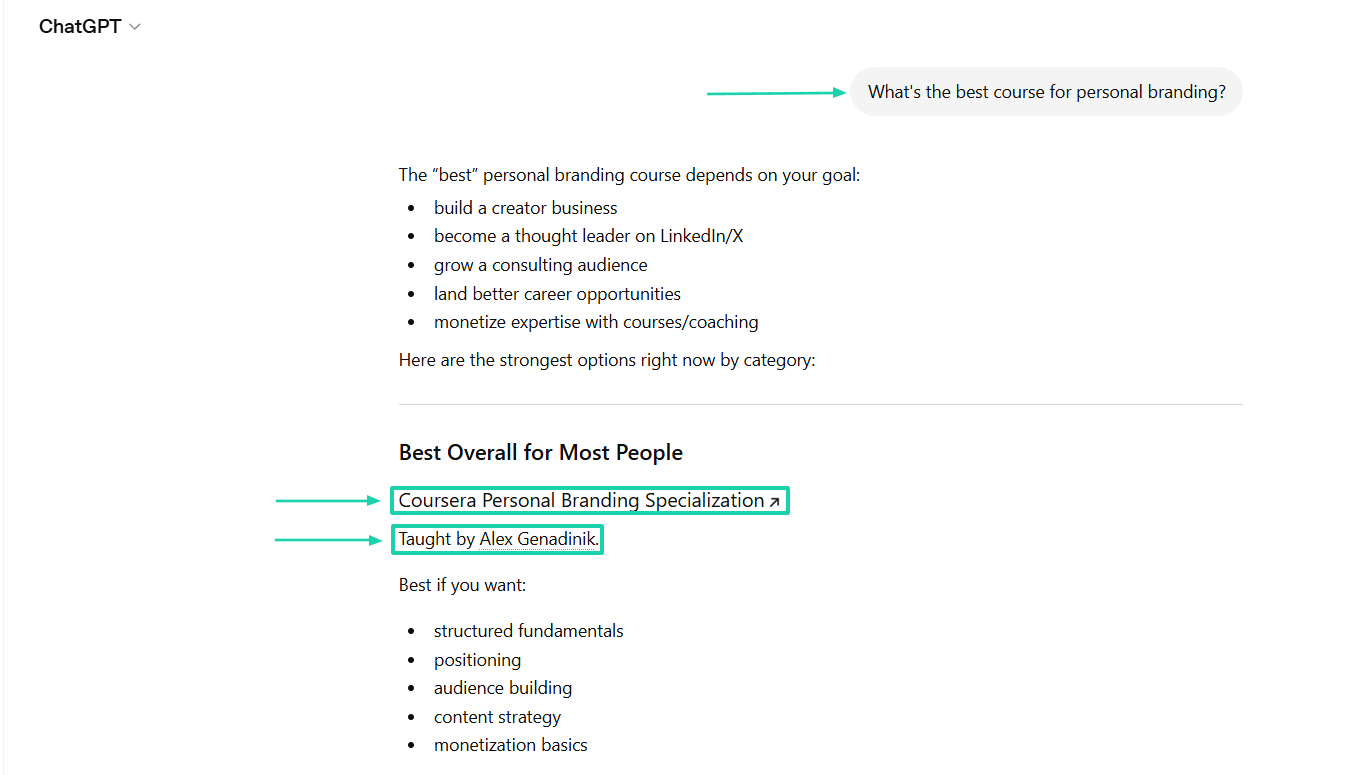
I can do the same thing on ChatGPT: “what’s the best course for personal branding?” It provides the course name, the instructor, and even adds links.
What am I trying to say?
Creators online now need content optimized for AI-generated answers. To make that happen, here are a few recommendations.
You should make sure that the content you share online has:
- clear explanations
- authority
- structured content
- topical expertise
- trustworthy sources
Below is a YouTube video by Ahrefs explaining how to rank in AI search.
-
How much it costs to start: $0–$300, depending on content production.
-
Time to first results: 2–6 months as content gets indexed and referenced.
-
What traffic to expect: Still evolving, but AI search visibility can drive highly targeted discovery traffic.
-
How likely it is to make sales: Medium–High - AI search users are often solution-focused.
-
Best for: Creators investing in SEO, educational content, and authority building.
[fs-toc-omit]25. Interactive tools or calculators
With interactive tools or calculators, users have personalized results instantly. This is a smart move to promote an online course.
Some examples include:
- SEO tools
- Calorie calculators
- ROI calculators
- Quizzes
- Pricing calculators
- AI generators
- Productivity assessments
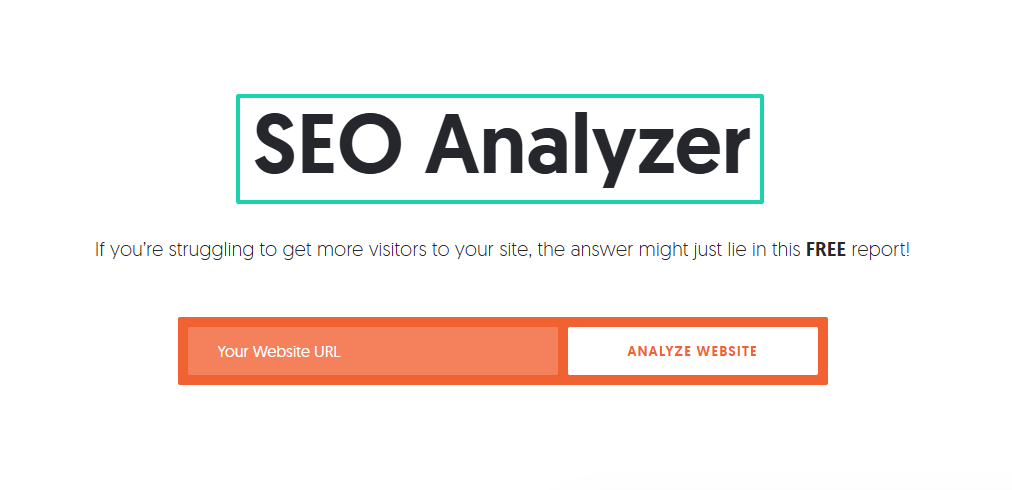
One of the tools Neil Patel offers is SEO Analyzer.
But he has many other interactive tools: AI writer, Open graph generator, A/B testing calculator, AI SEO meta tags, and many more.
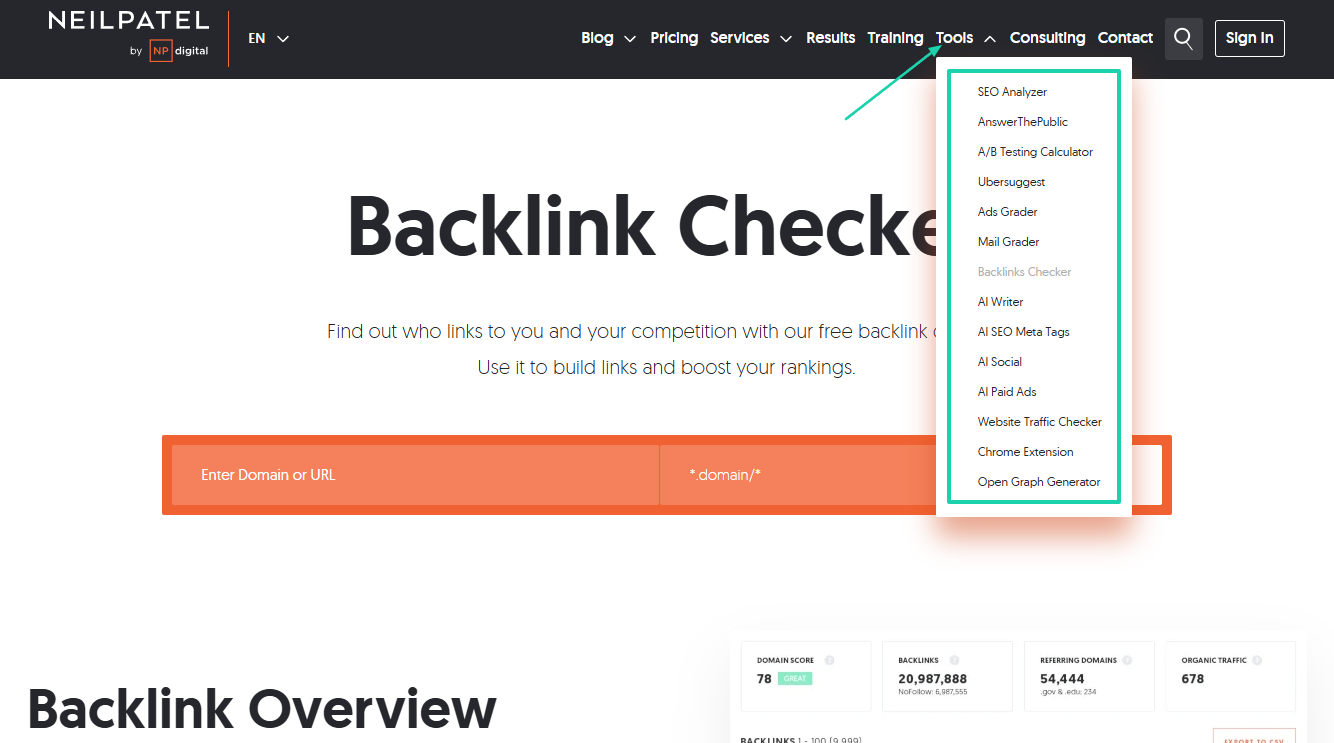
All these resources help attract customers and funnel them into Neil’s SEO training and courses. As a matter of fact, he has a whole page dedicated to digital marketing training, where you can learn SEO, Content marketing, Social Media, and Conversion Optimization.
![[fs-toc-omit]25. Interactive tools or calculators](https://assets.easy.tools/media/images/6610200a3811b820656fdd9d/6a1ace090e5ac090ff15a26e_2039421b.png)
As for Amy Portefield, she lets you take a quiz to discover your hidden bottleneck before you can propose her courses.
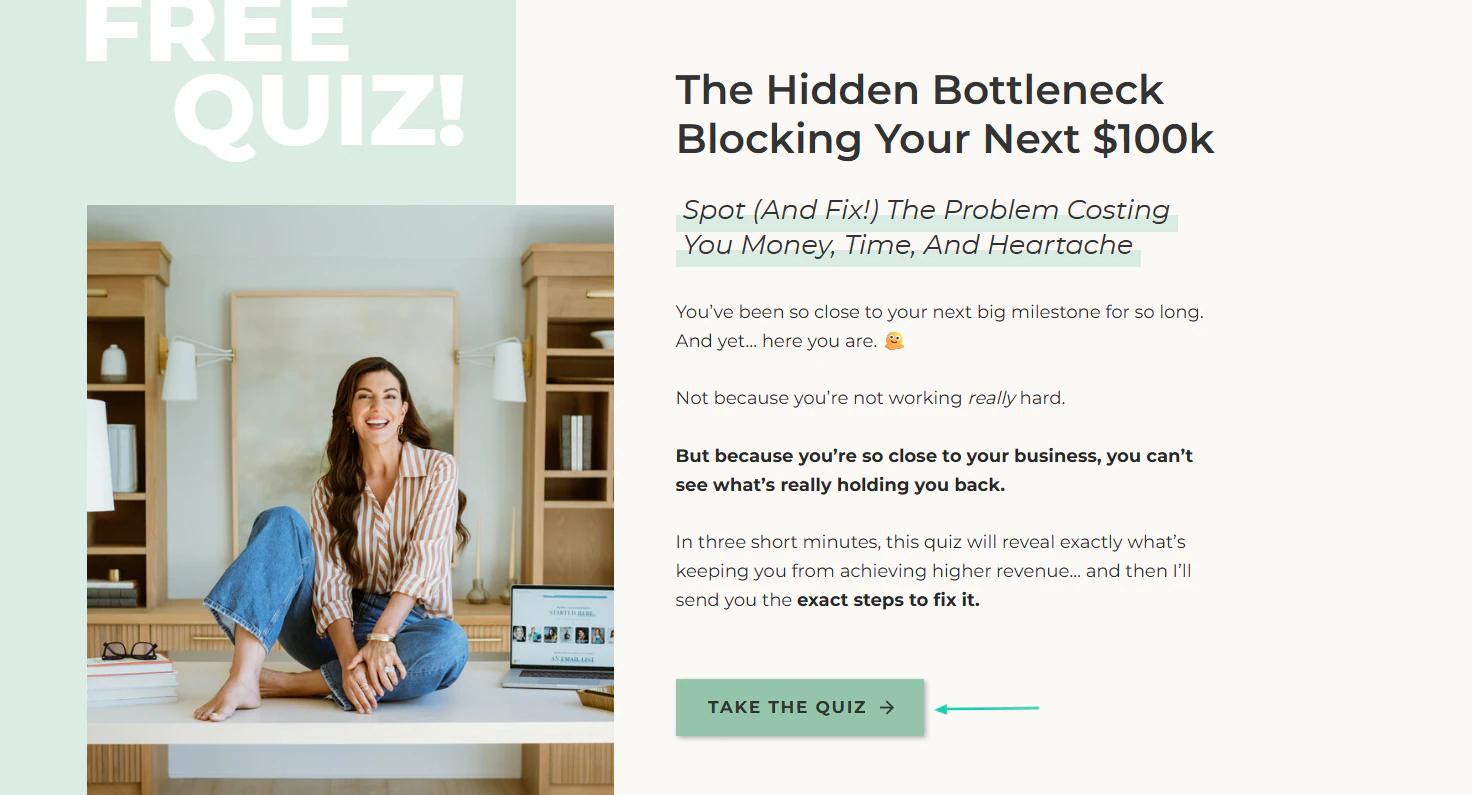
Because these interactive tools provide personalized experiences, they also increase engagement. Users can later take your course to learn more.
-
How much it costs to start: $50–$1,000, depending on tool complexity and development.
-
Time to first results: 2–8 weeks.
-
What traffic to expect: 100–50,000 visitors, depending on SEO and shareability.
-
How likely it is to make sales: Medium–High - personalization improves conversions.
-
Best for: Creators teaching systems, analytics, health, finance, or productivity.
[fs-toc-omit]26. Private mastermind or accountability groups
Private masterminds or accountability groups don’t just help you promote an online course. They also contribute to retaining students.
Why? Because usually, people stay motivated when learning with others. So, it’s not just about the course.
It’s about accountability, coaching calls, peer networking, and mastermind communities. All these make it easier to promote your course.
That’s why Ship 30 for 30 emphasizes accountability for their writing course program.
![[fs-toc-omit]26. Private mastermind or accountability groups](https://assets.easy.tools/media/images/6610200a3811b820656fdd9d/6a1ace090e5ac090ff15a274_96327f72.webp)
One of the students even said, “I came for the writing, but I stayed for the community.”
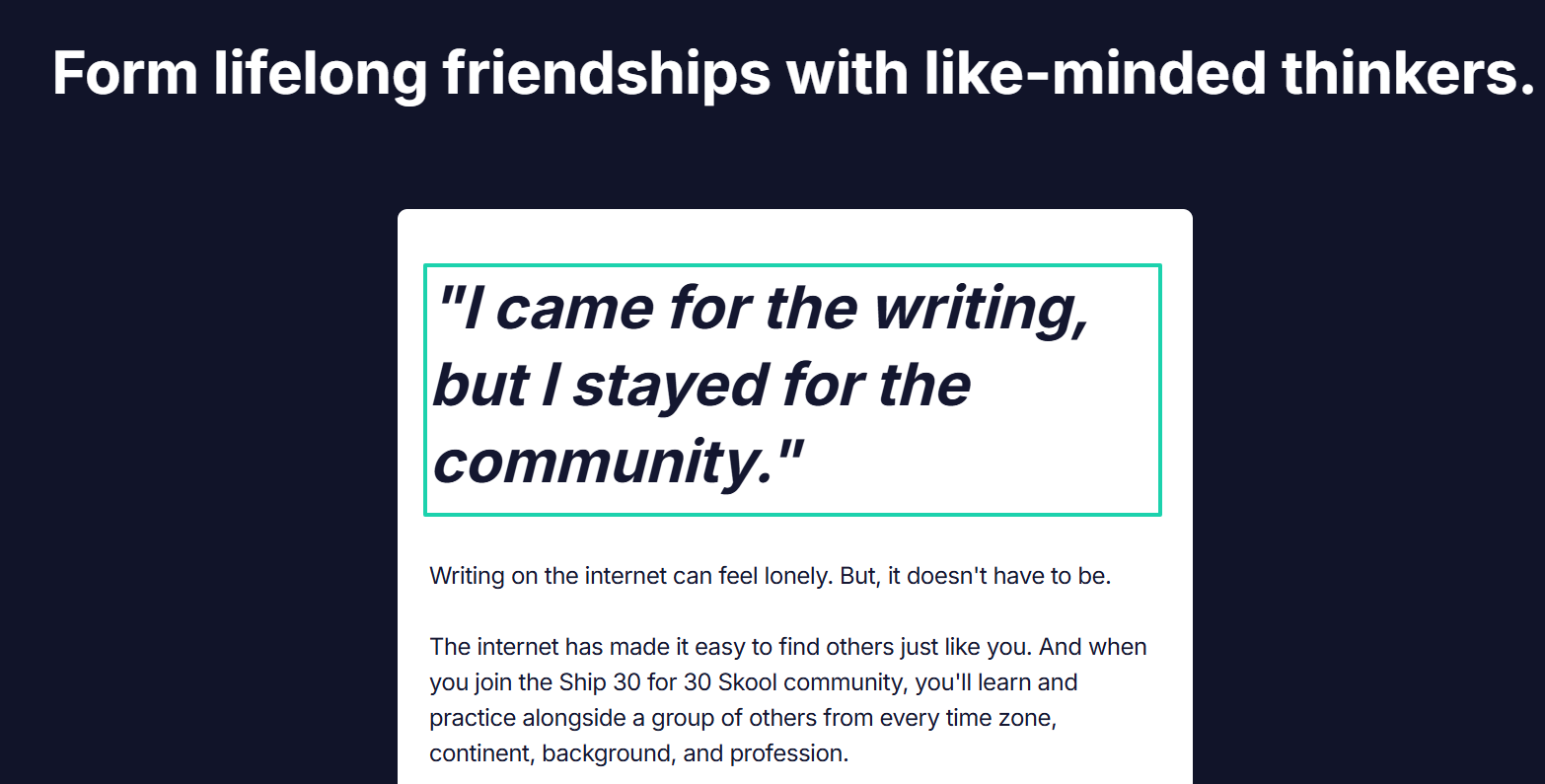
That’s how they can charge $350 for a course.
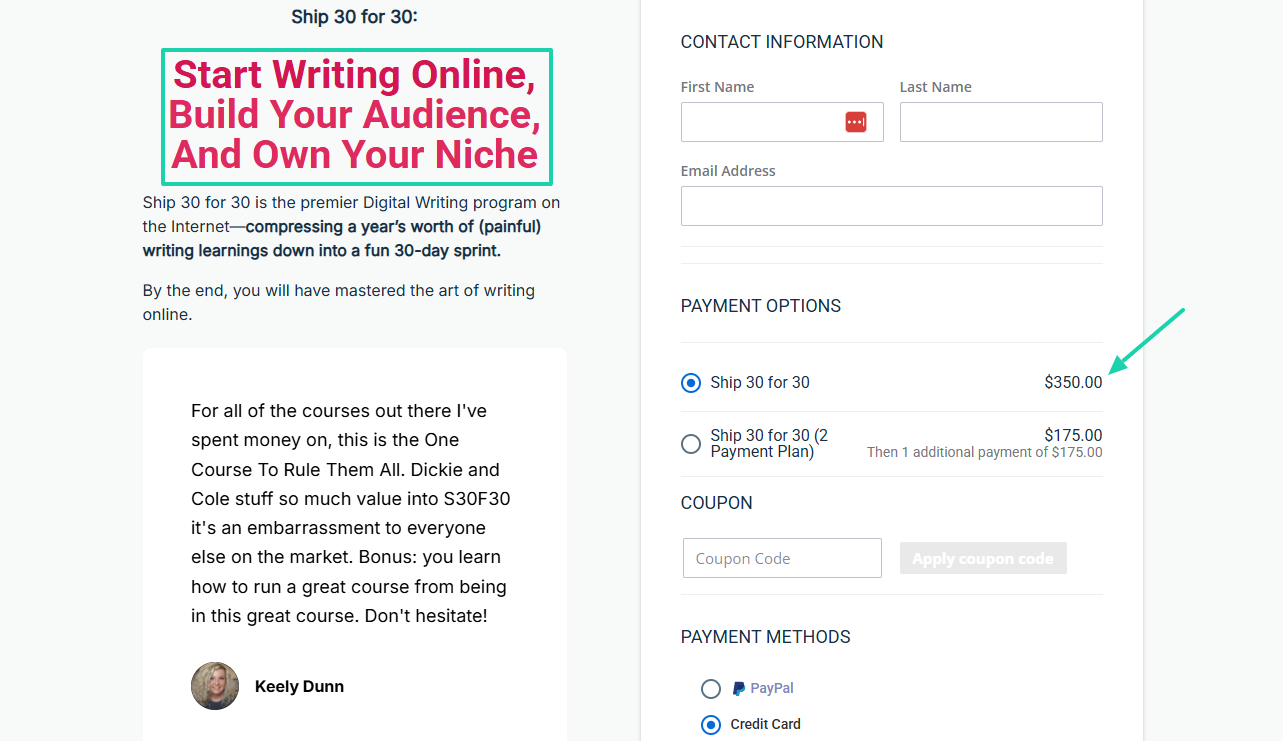
You see, that’s how many course creators can charge premium prices. Not just because of the course, but the experience.
-
How much it costs to start: $0–$200, depending on the community and meeting tools.
-
Time to first results: 1–2 months.
-
What traffic to expect: Smaller but highly qualified audiences.
-
How likely it is to make sales: Very High - community support improves perceived value significantly.
-
Best for: Coaches, consultants, cohort educators, and transformation-focused creators.
[fs-toc-omit]27. Local workshops or virtual events
You know you can also promote an online course through local workshops or virtual events. This is even better because it lets people experience your teaching live before they buy.
You see, when you do live teaching, it builds trust, credibility, and emotional connection. Exactly what you need to promote an online course.
There are plenty of ways to go about it. You can host:
- Zoom workshops
- local seminars
- online bootcamps
- live trainings
- networking events
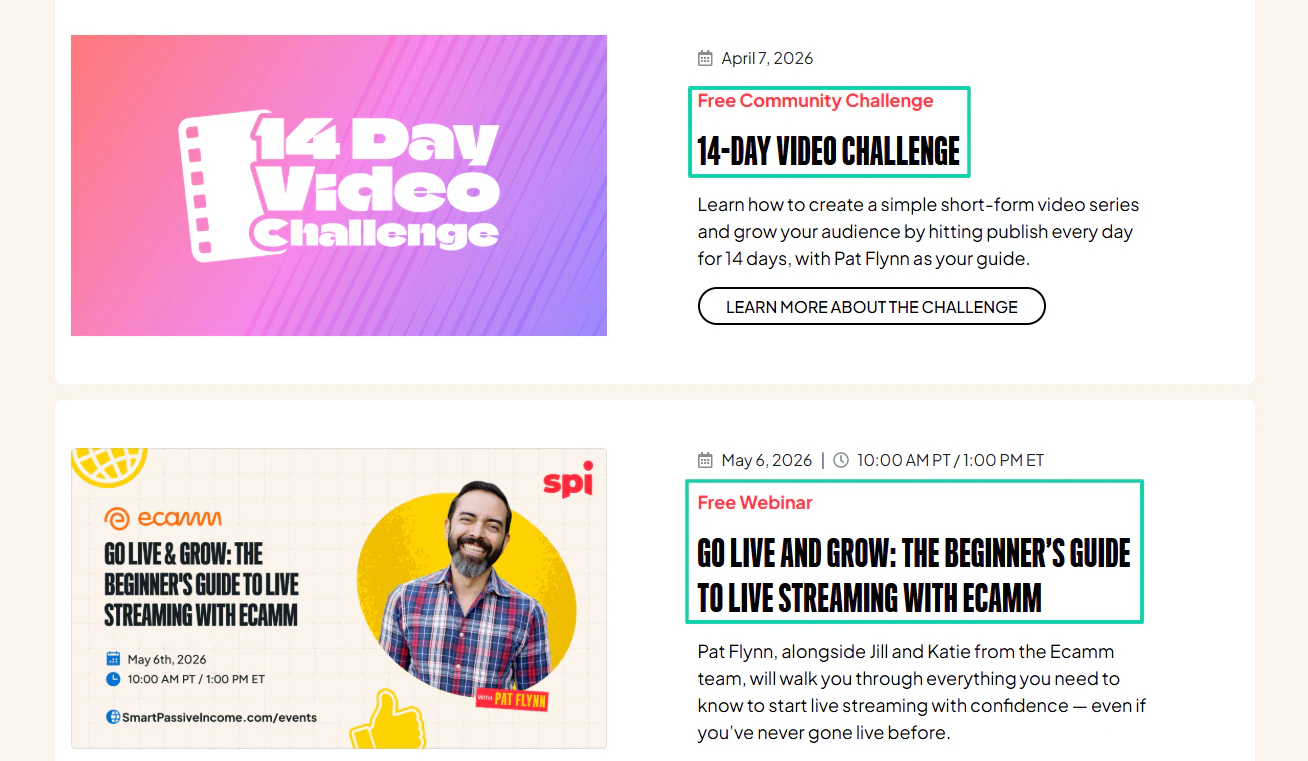
The course creator and podcaster Pat Flynn from SPI organizes live events that 12,500+ enjoy every year.
![[fs-toc-omit]27. Local workshops or virtual events](https://assets.easy.tools/media/images/6610200a3811b820656fdd9d/6a1ace090e5ac090ff15a27d_c7daaf79.png)
He has a calendar for all his virtual events, where he teaches how to create a simple short-form video series and also how to start streaming.
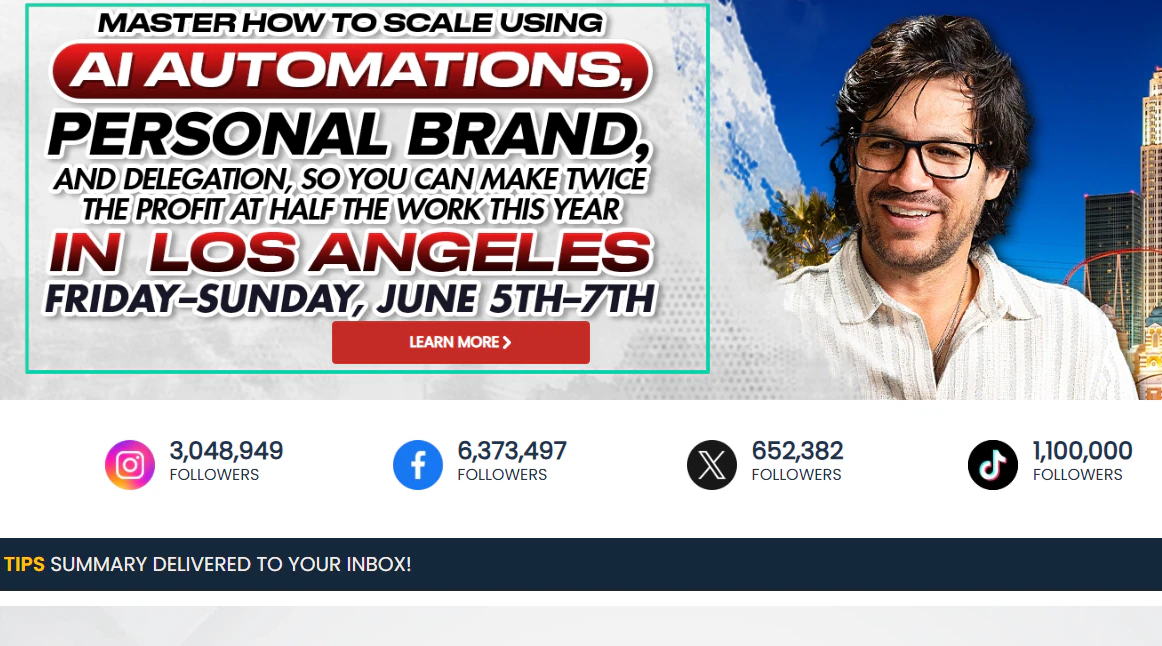
The same is true for Tai Lopez. He often organizes local workshops where he trains people on how to scale using AI automation, personal branding, and delegation.
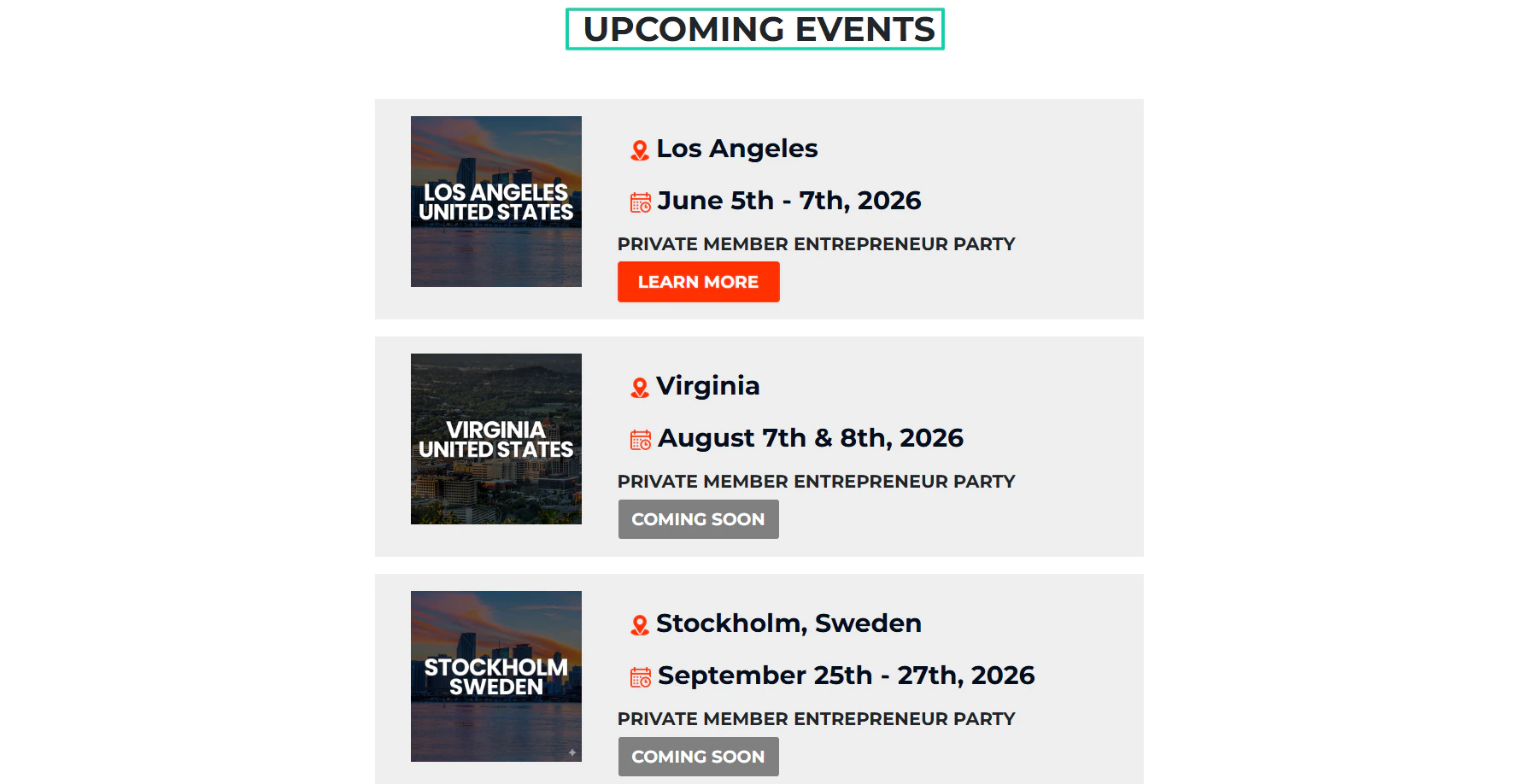
He even has a dedicated page for his upcoming events.
Their strategy is to train people based on the courses they already have. This way, it becomes easier for them to promote and sell.
Now, you can create a live event using any platform of your choice. I suggest you do a few things at the end of the live session:
- special bonuses
- limited-time enrollment
- Q&A sessions
- live walkthroughs of the course
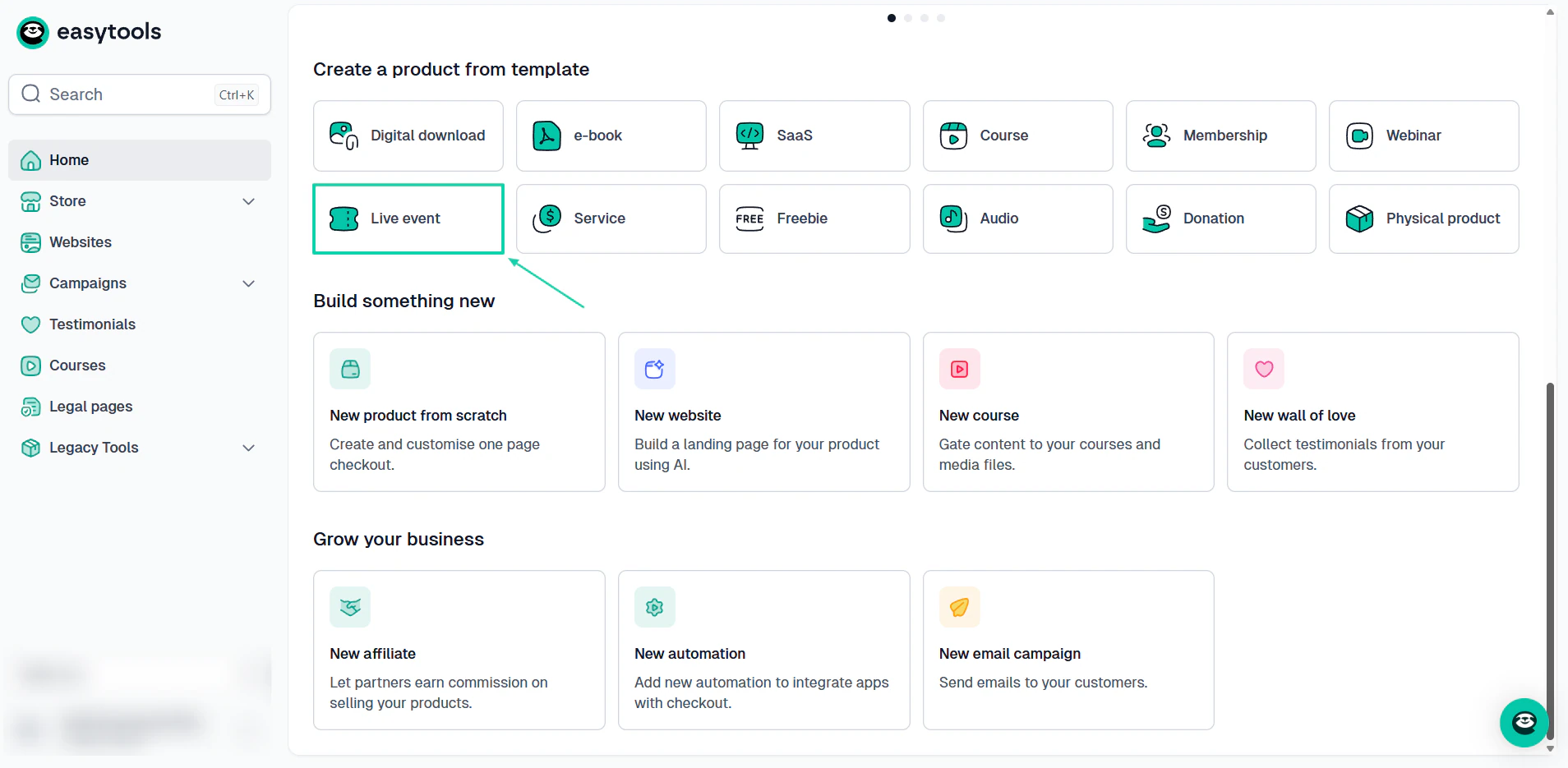
I’m sharing these tips to help you promote your course easily and improve your student acquisition strategy.
-
How much it costs to start: $0–$500, depending on venue, webinar tools, and promotion.
-
Time to first results: Immediate after the event.
-
What traffic to expect: 20–5,000 attendees, depending on promotion and audience size.
-
How likely it is to make sales: High - live interaction improves trust and conversions.
-
Best for: Creators comfortable teaching live and interacting directly with audiences.
Additional ways to promote an online course
Apart from the promotional strategies in the list above, you can also choose from these 3 extra ways to promote an online course.
28. Podcast guest appearances
Like many course creators, you can go on podcasts to share useful tips and mention your course naturally.
This way, you can reach a new audience that already trusts the podcast host.
Amanda Robinson, for example, was a guest on the Agents of Change Podcast with Rich Brooks. She joined the host, Rich Brooks, to discuss “what’s working in Facebook Ads now.
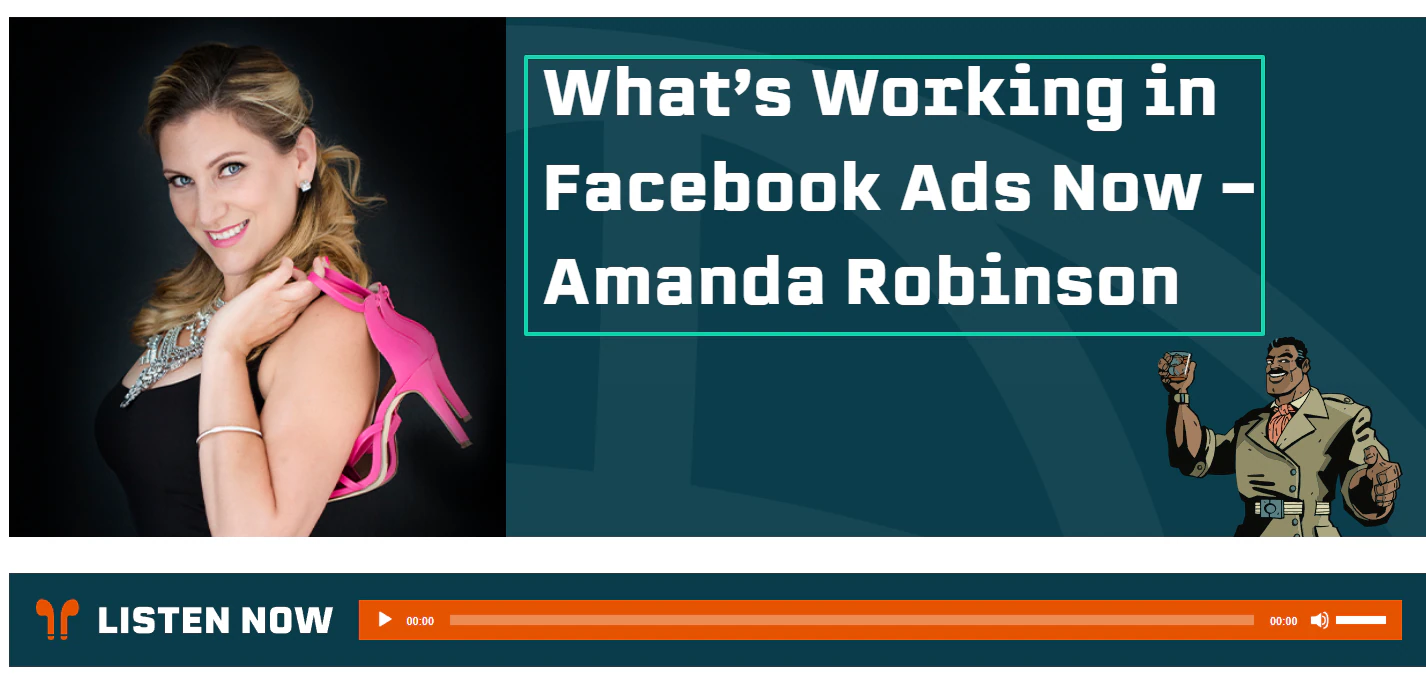
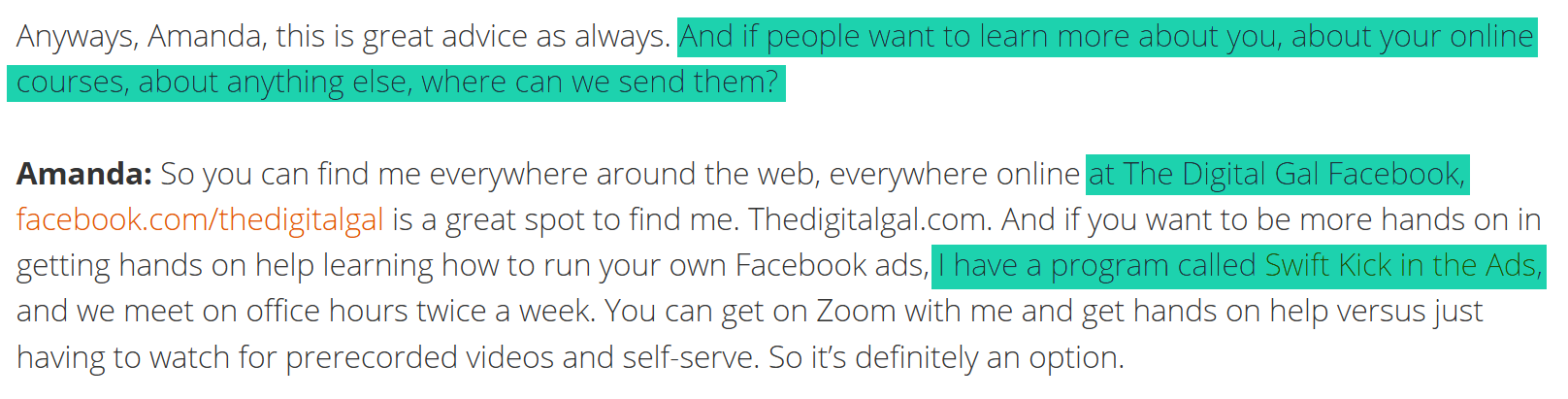
During the discussion, Rich asked Amanda about her online courses, in case people wanted to learn more.
She grabbed that opportunity to share her Facebook profile. Then she mentioned her program, Swift Kick in the Ads.
It’s an online course where she teaches people how to run their own Facebook ads.
29. Quora answers
Quora lets creators and writers answer questions related to their course topic. When they offer genuinely helpful answers, they build trust and sometimes link to their course or newsletter.
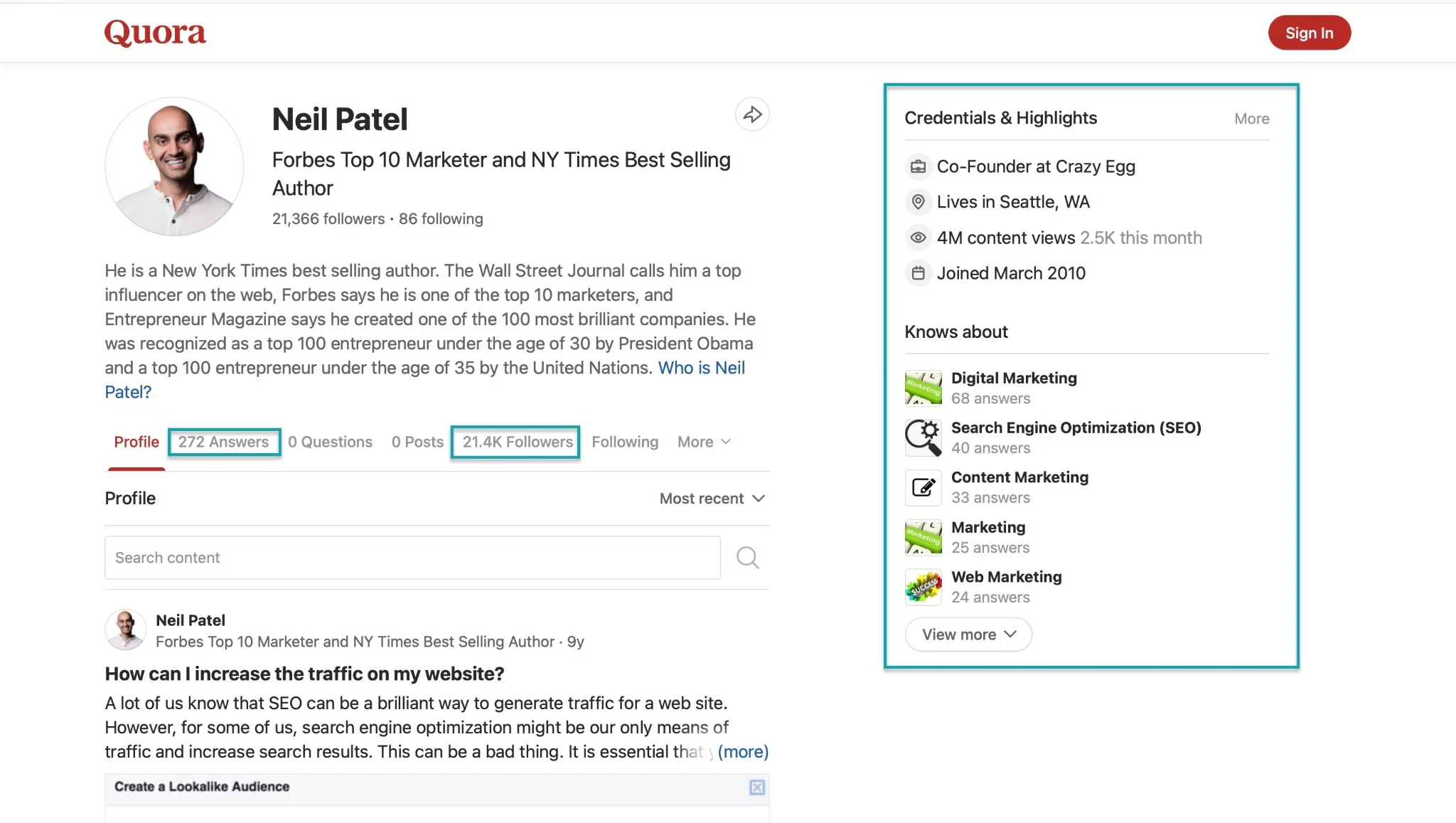
Neil Patel has used Quora for years to answer marketing questions and drive people to his educational content and courses.
He positions himself as an expert in digital marketing, SEO, content marketing, web marketing, SMM, email marketing, and more.
Neil has provided 200+ answers on Quora with 4M+ content views, and has 21,000+ followers. He can definitely promote and sell his online courses to this audience.
30. Facebook groups and communities
Course creators grow their course by building or joining Facebook groups.
In these groups, their followers ask questions and share advice. Over time, members begin to trust the creator and check out their course.
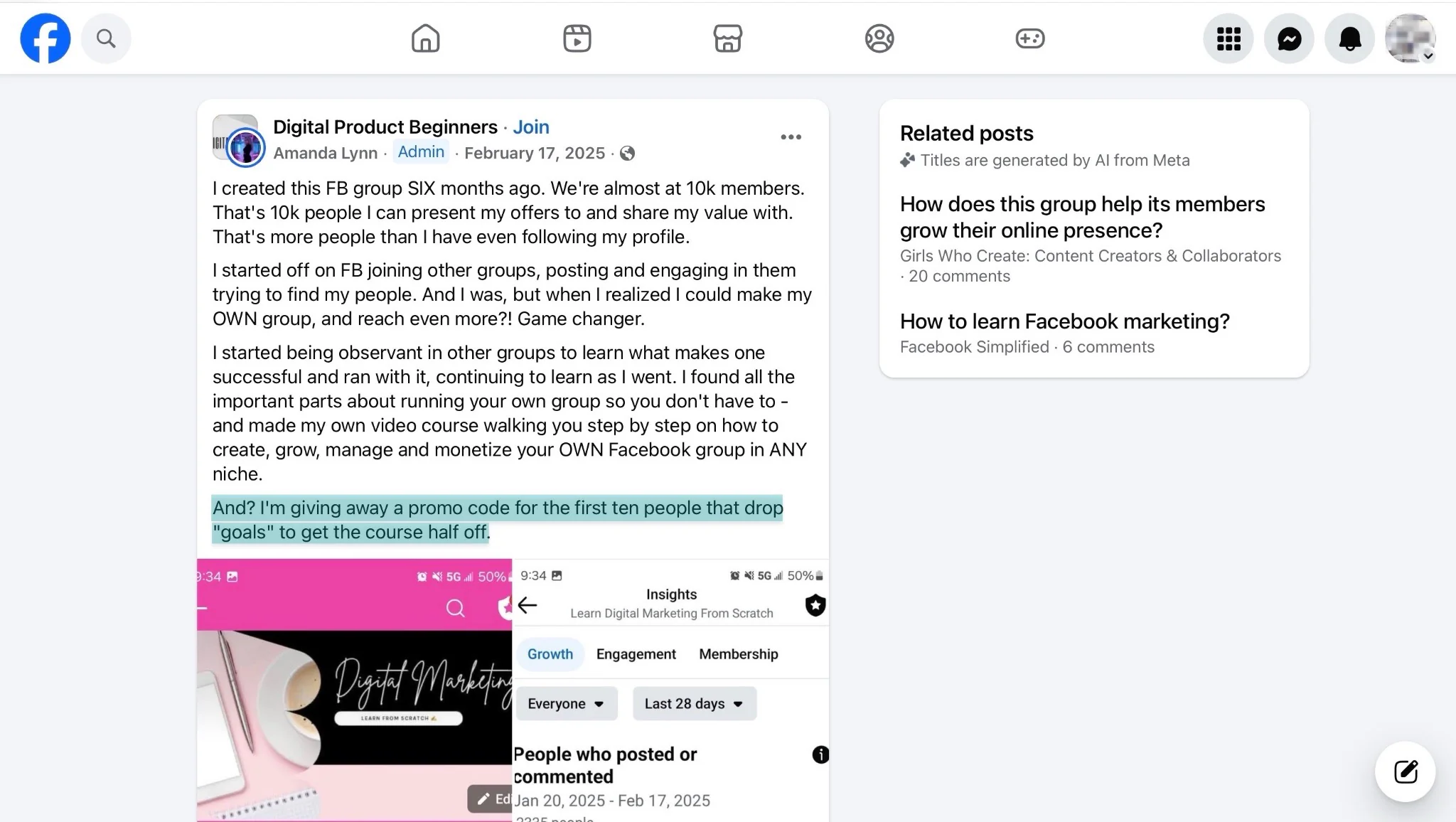
Take digital creator, Amanda Lynn, for example. She built a Facebook group called Digital Product Beginners.
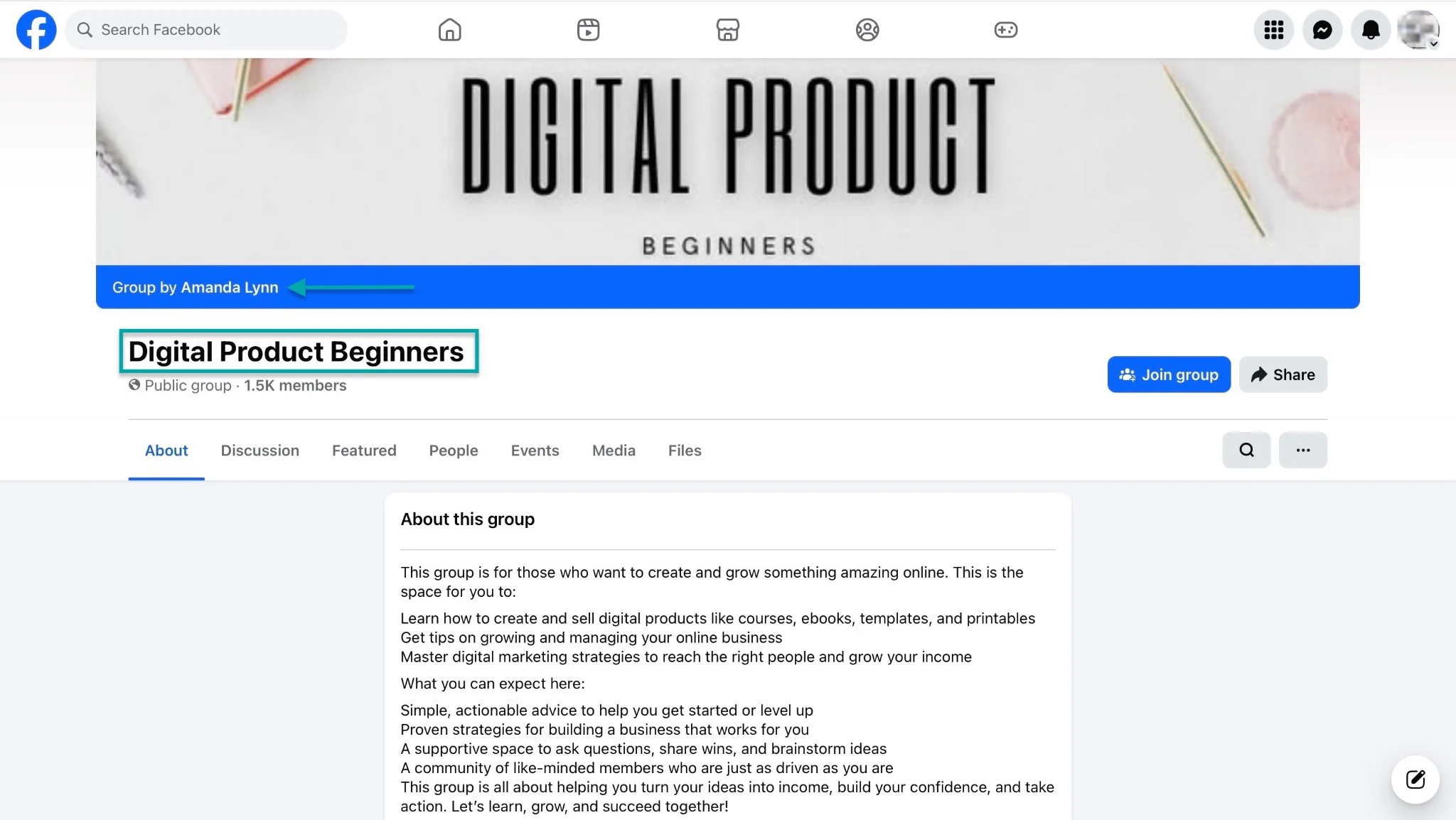
Group members trust her, so now she can promote and sell her online course to them.
Start promoting an online course
If you didn’t have a plan before, you do now.
Now, you can promote an online course by using any one or a combination of the strategies we discussed.
From my experience, getting people to discover your course is often the easier part. The real challenge is creating a course that provides value and meaningful solutions.
And the online course has to do this well enough for learners to eventually decide to enroll.
So, promotional strategies matter. But make sure you’re directing learners to a course that’s genuinely worth buying.
FAQs
How long does it take to promote an online course?
Promoting an online course takes 2 to 4 weeks or 3 to 6 months, depending on the strategies you use and your audience size. If you use email newsletters and nurture sequences for an audience size of 100 to 1,000, you will see results in 1 to 3 months. On the other hand, using Instagram Reels will help you see results in 1 to 2 weeks. Especially if you have a large following and your content provides value.
Which platforms are best for promoting an online course?
Platforms best for promoting an online course include Udemy, Skillshare, Easytools, YouTube, LinkedIn, Instagram, Facebook, and X (formerly Twitter). On LinkedIn, you can position yourself as an authority in your niche by consistently sharing thought leadership content and industry insights. With Easytools, you can create mini courses, free webinars, and lead magnets to grow an audience and promote your course through (automated) email marketing campaigns and nurture sequences.
Can I promote an online course without ads?
Yes, you can promote an online course without ads. You can write SEO blog content targeting high-intent keywords. You can offer free lead magnets tied to your online course topic, and more. Even though these are organic course promotion strategies, they’ll still get you good results.
Is email marketing necessary to promote an online course?
No, email marketing is not necessary to promote an online course, but it’s one of the most effective and reliable promotional strategies available. With email marketing, you have direct ownership of your audience, unlike platforms like Udemy and Skillshare. It also allows you to build trust, share testimonials, provide value over time, and gradually guide potential students to buy your course. On Easytools, you can automate email campaigns and nurture sequences to consistently promote and sell your course 24/7 without lifting a finger.
Can social media help promote an online course?
Yes, social media platforms like LinkedIn, Instagram, Facebook, X, and YouTube can help promote an online course. If you sell your online course on Easytools, you can simply copy your course checkout link and share it in your social media posts, videos, or promotional campaigns. Interested learners can then buy your course in just a few clicks.