
Digital Products
20 min readHow to make money on YouTube in 20 easy ways (A simple and practical guide)
Discover 20 practical ways to make money on YouTube, from affiliate marketing and sponsorships to selling digital products and courses. This beginner-friendly guide explains how creators can build multiple income streams and grow a profitable YouTube business.
- Written by
- Greg Rog
- Reviewed by
- Marta Jagosz
- Updated on
- May 27, 2026
- Published on
- May 18, 2026


For some, YouTube is just a hobby. While for others, it’s a source of income.
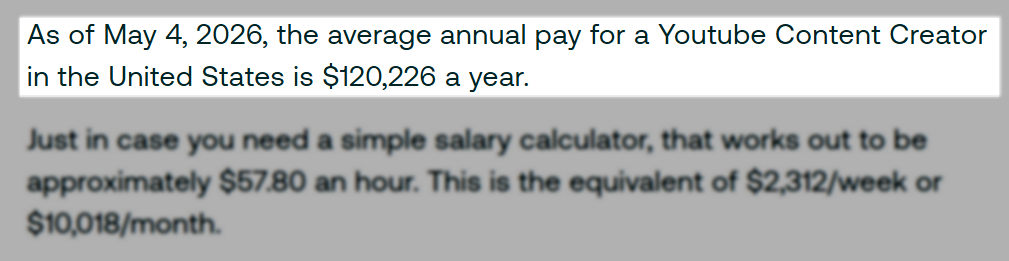
The average YouTube content creator makes $120,226 a year. This translates to $57.80 an hour.
In other words, there’s an opportunity to monetize your YouTube channel. And if you’re struggling to do so, that’s exactly why I wrote this article!
I’ll share the top 20 ways to make money on YouTube. You’ll also learn how to choose the best methods.
Let’s go!
TL;DR
-
To make money on YouTube, you can:
-
1. Join the YouTube Partners Program (YPP)
-
2. Sell digital products
-
3. Sell physical products or merchandise
-
4. Sell services
-
5. Get sponsorship deals
-
6. Set up crowdfunding
-
7. Do affiliate marketing
-
8. Sell stock footage
-
9. Build and monetize a newsletter
-
10. Offer paid memberships
-
11. Monetize live streams
-
12. Create and sell online courses
-
13. License your content to media companies
-
14. Build a paid community
-
15. Repurpose content for other platforms and monetize there
-
16. Drive traffic to a blog/website
-
17. Become a brand ambassador
-
18. Sell templates, presets, or tools
-
19. Build a personal brand
-
20. Offer consulting or coaching
-
To choose the best way to make money on YouTube, you should align your monetization with your audience, start with what you can control, stack revenue over time, and optimize for profit, not just views.
How to make money on YouTube
1. Join the YouTube Partners Program (YPP)
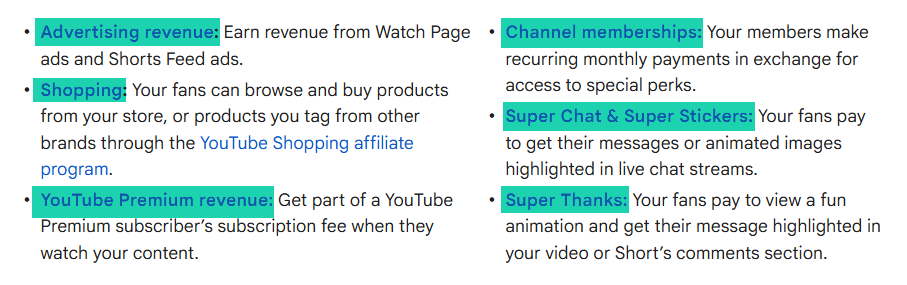
The YouTube Partners Program (YPP) is the most popular way creators make money on the platform. It allows people to earn from:
- Advertising revenue
- Shopping
- YouTube Premium revenue
- Channel memberships
- Super Chat and Super Stickers
- Super Thanks
This is exciting, but the YPP comes with its own set of requirements. For example, you need 1,000 subscribers or 4,000 hours of watch time.
Which means that showing interest in joining the program isn’t enough. Here’s a table showing both the requirements and the threshold.
| Requirement | Threshold |
|---|---|
| Subscribers | 1,000+ |
| Watch time | 4,000 hours (last 12 months) OR 10M Shorts views |
| Policy compliance | Required |
Once you meet those requirements, you can apply for the program. Watch the video below to learn how to apply.
There are many examples online of creators disclosing how much YouTube pays them each time. Marina Lotaif from the channel Yes To Tech is one of them.
In one post, she shared her YouTube earnings. It goes as follows:
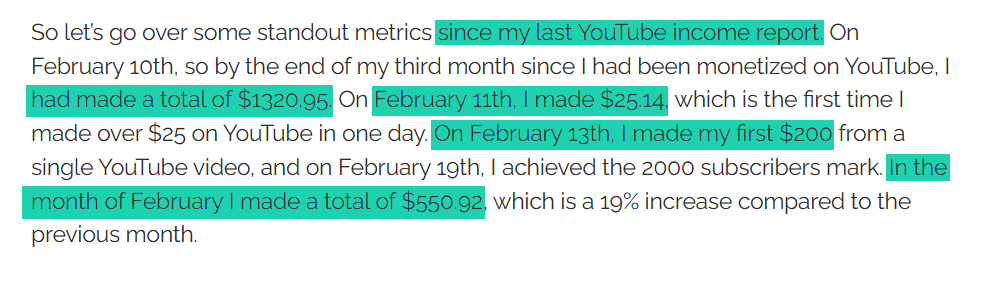
- 3 months after monetizing her channel, she earned $1,320.95.
- A day later, she made $25.14
- After 2 days, $200
- In February alone, she generated a total of $550.92
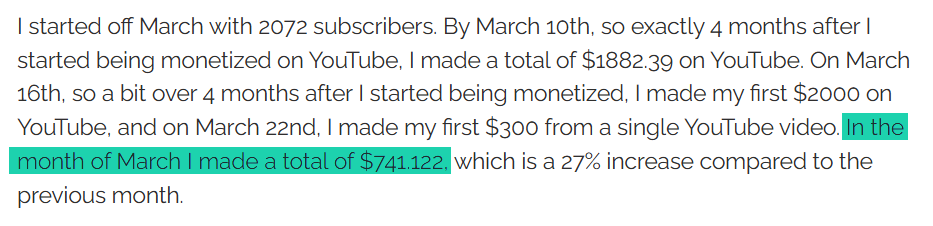
The following month, March, she made a total of $741.122.
In April, YouTube paid her $1,143.92.
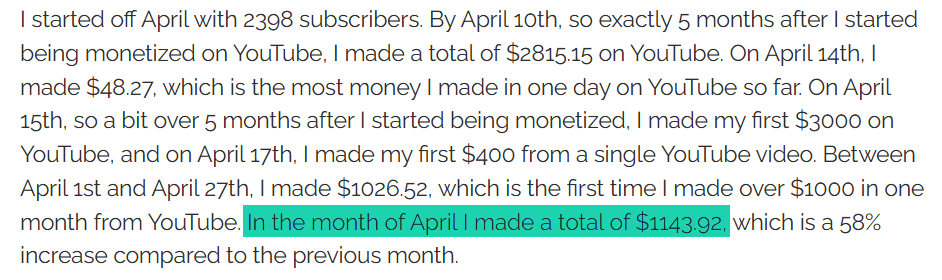
If you followed Marina’s story, you’d realize that she was just a small creator, yet YouTube was paying her.
Joining the YPP can be a really reliable way to make money on YouTube. Let’s move on to the next method.
2. Sell digital products
You can also make money on YouTube by selling digital products.
A digital product is a non-physical good created and sold online, delivered to the customer immediately. It can be downloaded or streamed.
Examples of digital products include:
- E-books
- Online courses
- Templates
- Webinars
- Printables
- Services
- SaaS
- Memberships
- Live events
- Audio
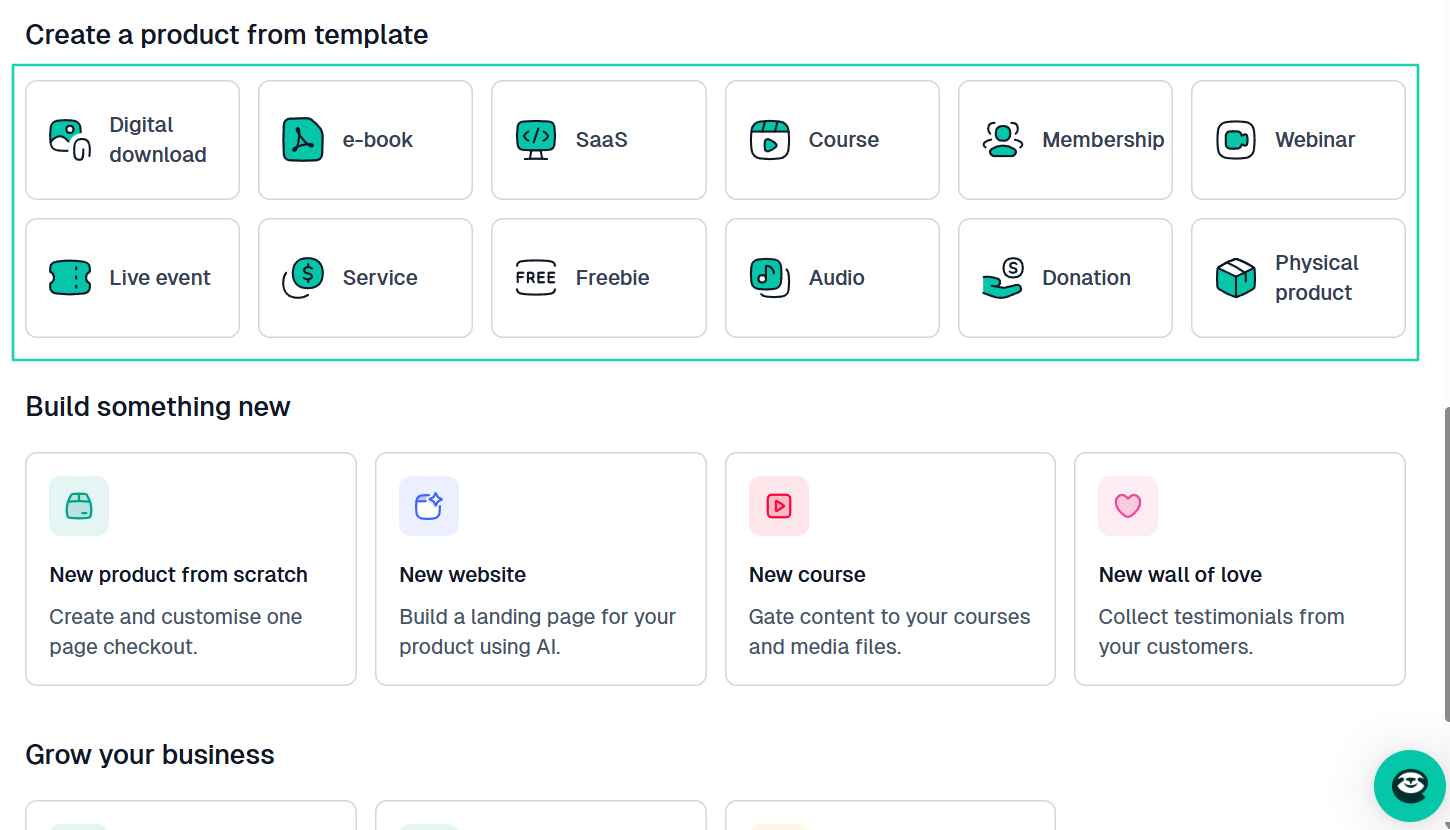
Selling digital products can be very profitable because margins are very high. And revenue isn’t tied solely to views.
Say you want to sell an e-book on YouTube, your first step should be to create it. So, you’ll use a platform that can help you achieve that.
The process is simple on Easytools, for example. First, select the product type.
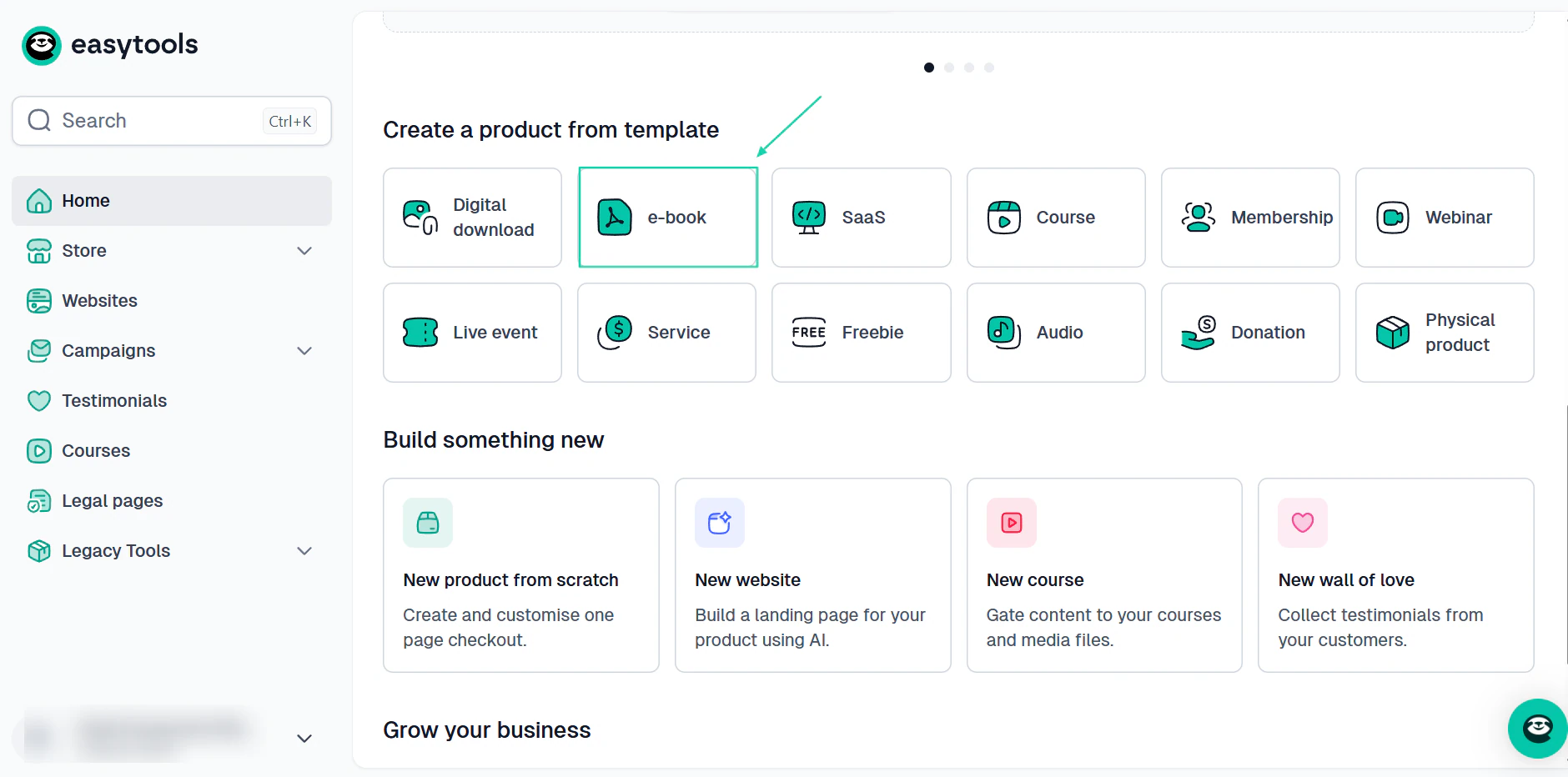
Then add a name, description, and cover image.
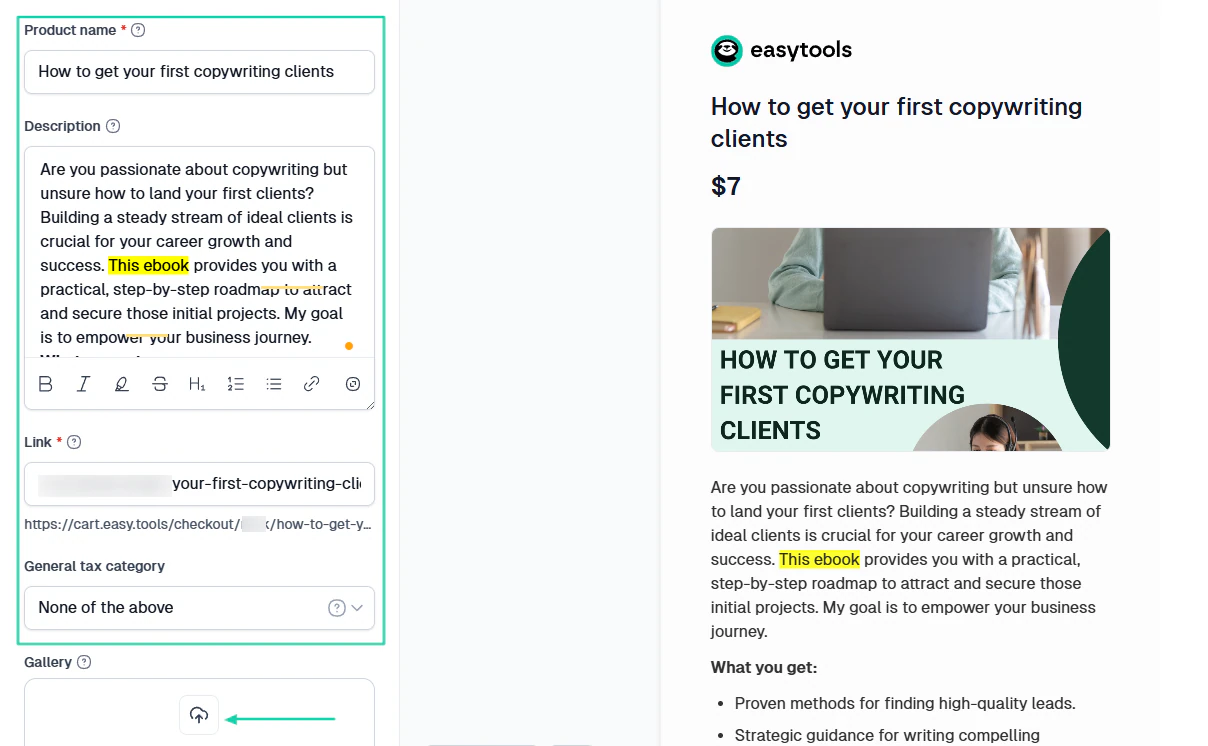
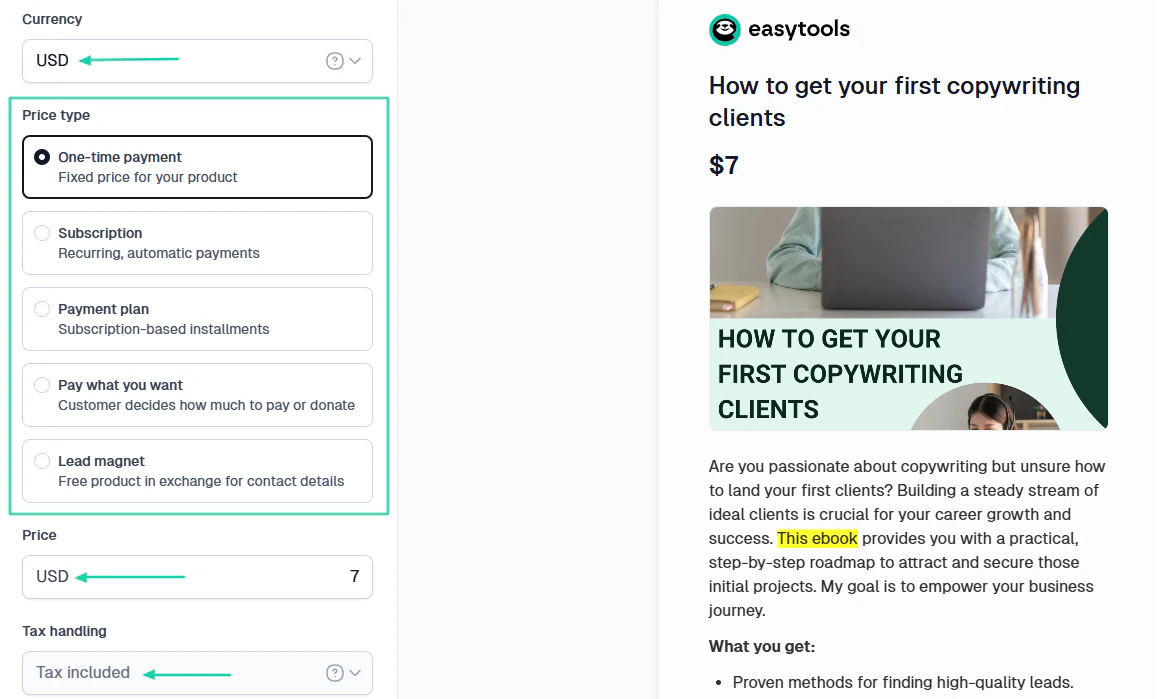
You will also specify the currency, the price type, and the price. You then decide how taxes should be handled.
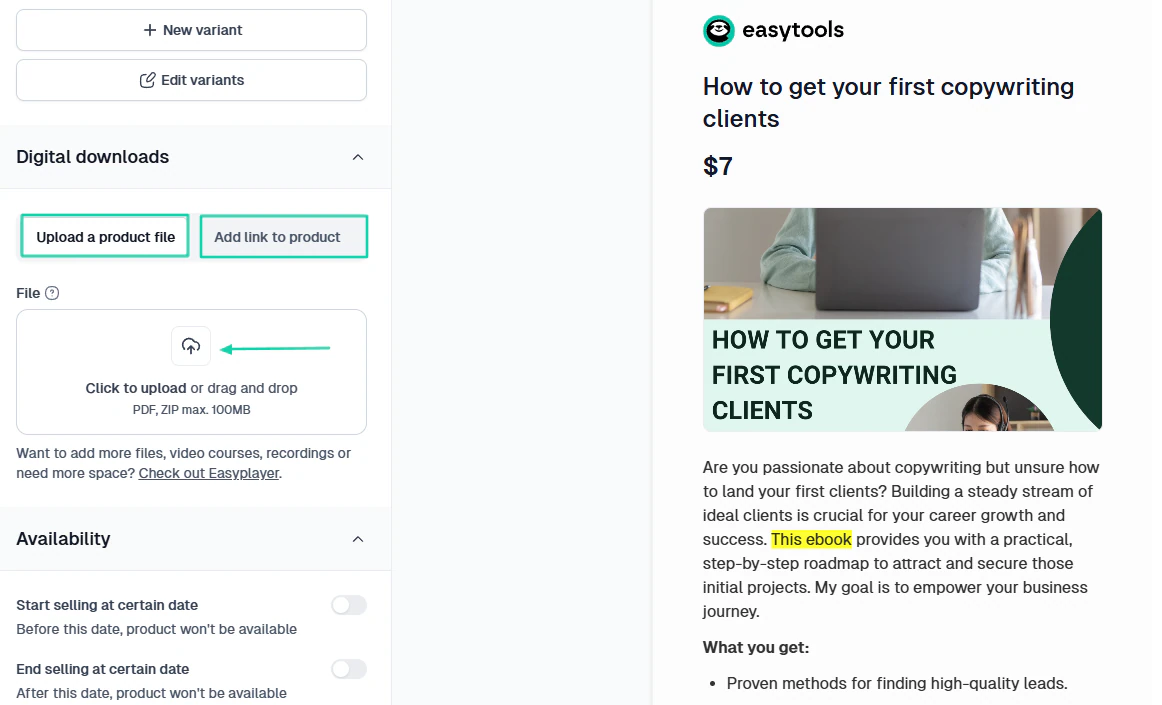
After that, you can either upload the product file or simply add its link.
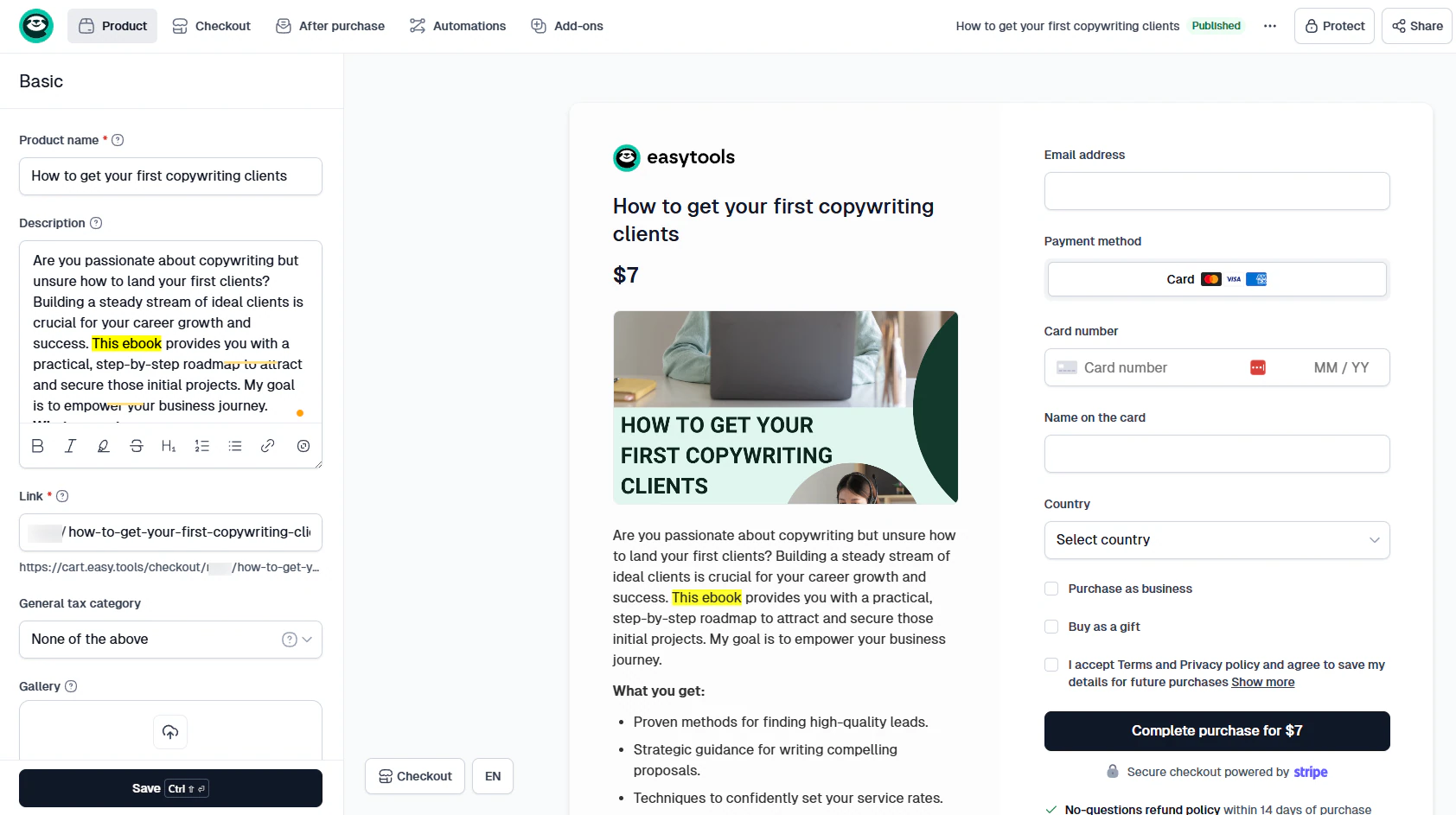
In less than 10 minutes, you can publish a high-converting checkout for your digital product.
Now, once you start making videos on YouTube, find a subtle way to discuss your e-book. Then add the checkout link in the description.
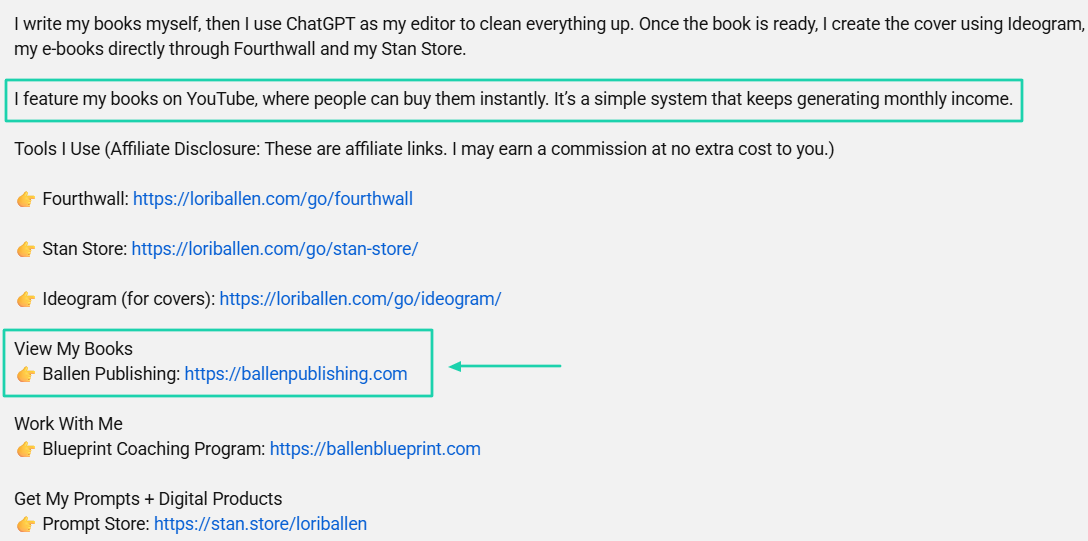
That’s how you make money as a content creator. It’s exactly what Lori Ballen did in her video “How I made $1,000 a month selling e-books.”
This is what she said in the description:
“I feature my books on YouTube, where people can buy them instantly. It’s a simple system that keeps generating monthly income.”
Then, she added the link to her e-books.
It’s basically the same process for any other digital product you want to sell. Even if it’s Notion templates.
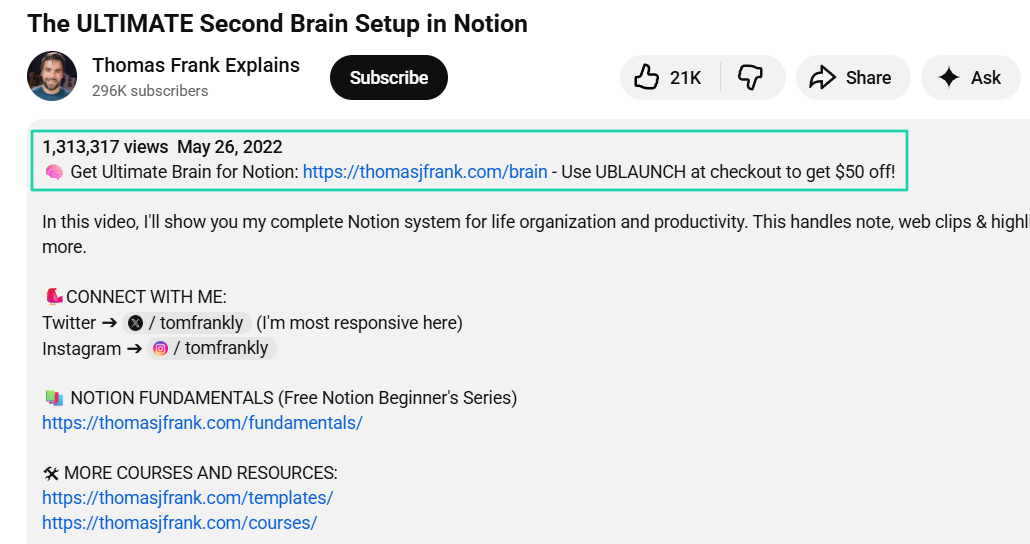
Frank Thomas, for example, uses his YouTube channel to discuss a Notion template he has on sale. It’s called “The Ultimate Second Brain,” as you can see in the video below.
In the video description, he added his checkout link so people can buy. That video alone accumulated over 1 million views.
By selling digital products, you turn YouTube into a scalable business.
Watch this video to start selling digital products with ease.
3. Sell physical products or merchandise
While some sell digital products to make money on YouTube, others sell physical products or merchandise.
The goal is to be comfortable with what you choose to do.
Selling physical goods or merchandise can help you make money as a content creator. But it works best for creators with strong audience loyalty and a clear brand identity.
You can’t just start YouTube today, launch a hoodie, and expect to make lots of sales.
You should first think about building an audience. You can do that on social media or by building an email list.
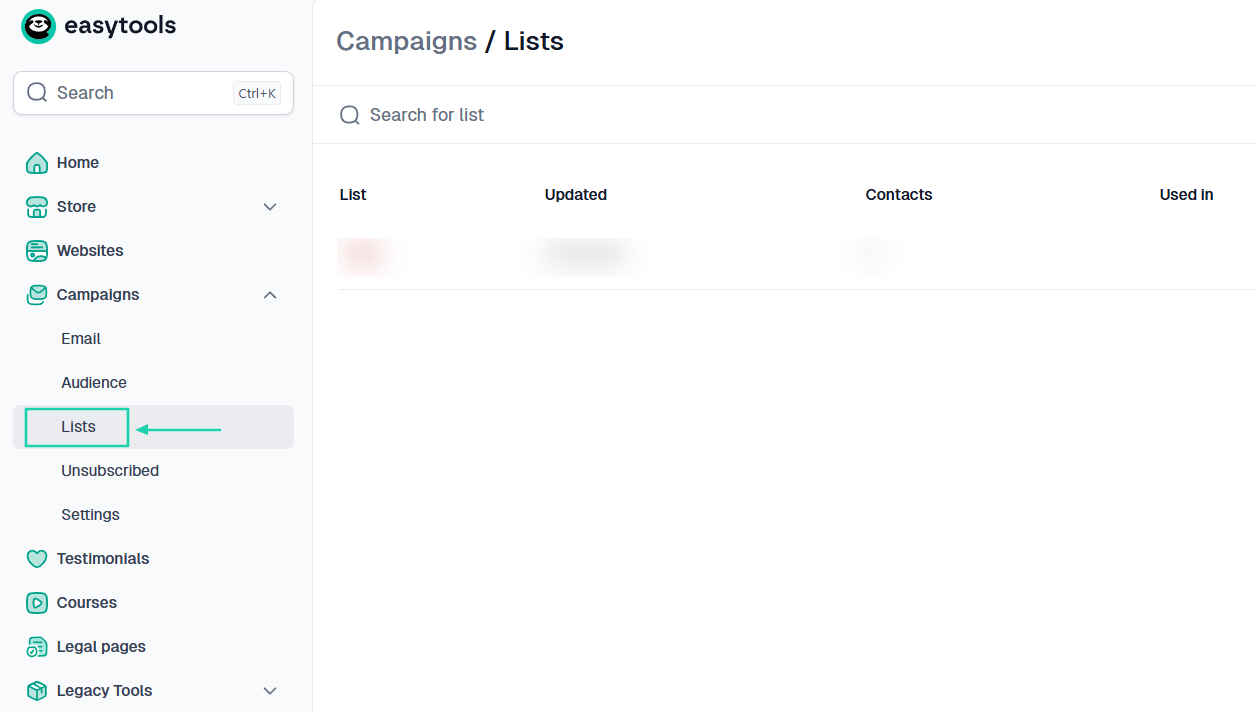
You can send newsletters to your audience to keep them engaged.
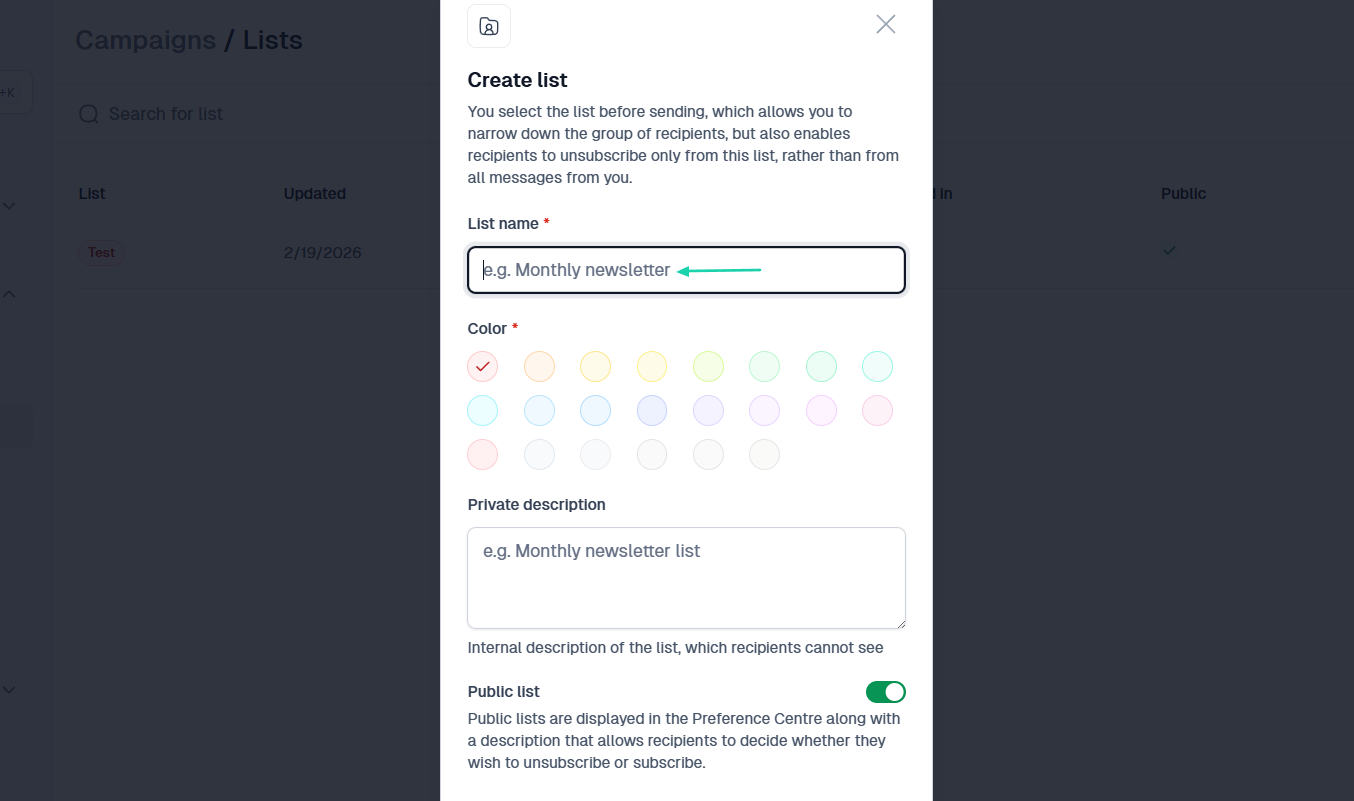
This way, the day you start selling your physical goods, you know there are people ready to buy because they know you enough.
Now, you should be strategic when selling physical products on YouTube.
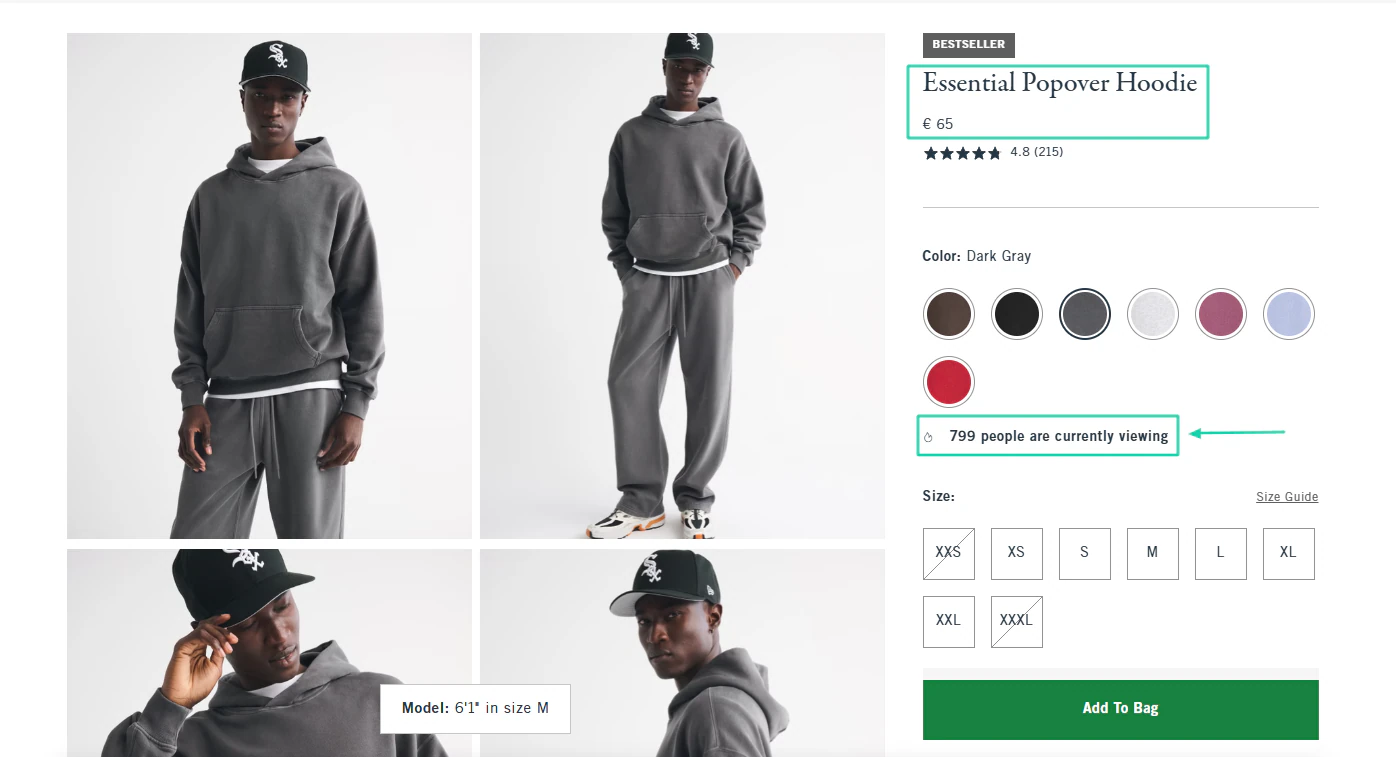
For example, Aaron Ramirez sells his by discussing the 5 best hoodies you need in your wardrobe. This gives the impression that he’s simply comparing hoodies without really selling.
But below, you’ll see the link to one of the hoodies (the one he’s selling).
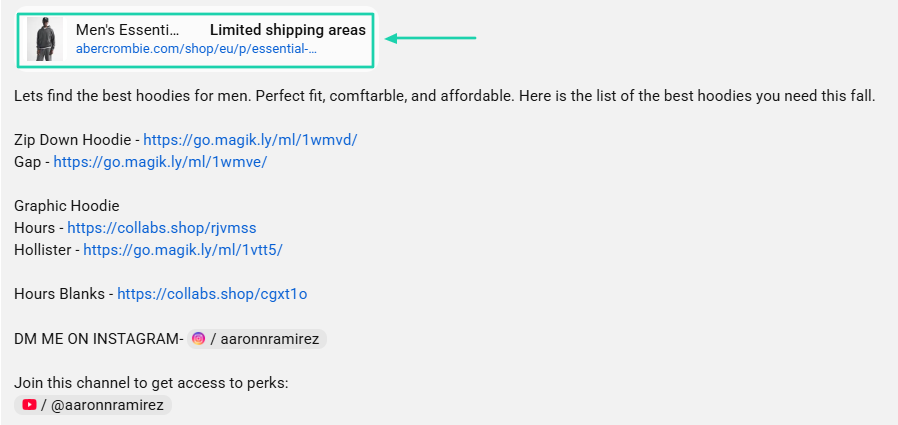
By clicking the link, you’ll see the price of the hoodie. Also, Aaron’s “Essential Popover Hoodie” has a 4.8-star rating from confirmed buyers.
With about 799 people viewing the item, there are many potential buyers.
When starting, you only need a simple checkout link to add under your YouTube videos.
As you start selling more products, you will need to create a storefront to display them.
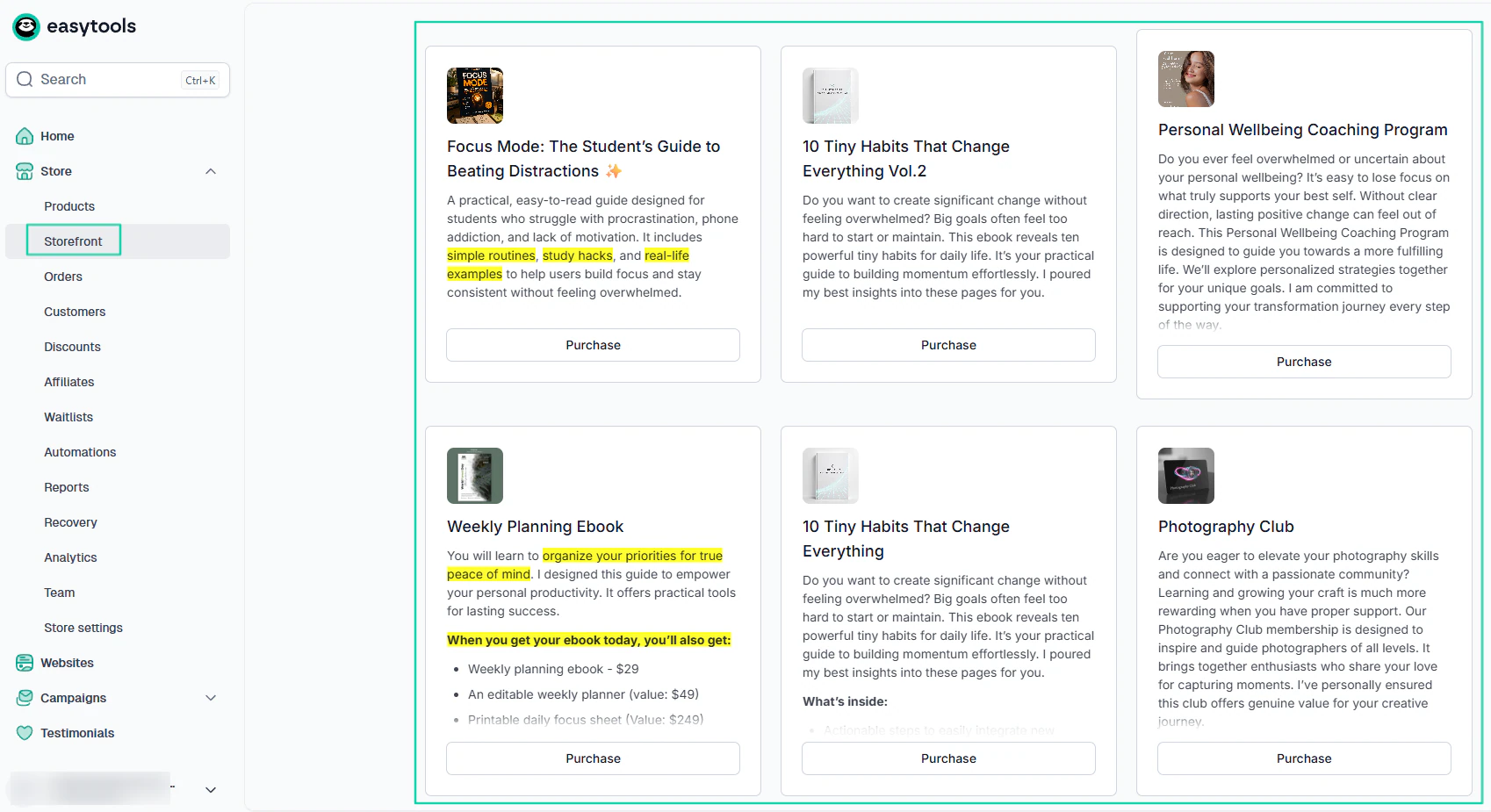
That’s the way to go with this YouTube monetization method.
4. Sell services
Selling services can help you make money on YouTube even with a small audience.
You simply monetize expertise and trust. You do that by creating valuable content that demonstrates your skill, then convert viewers into paying customers.
For that to work, you must be known for something specific. For instance, Luisa Zhou’s YouTube channel is dedicated to business coaching.
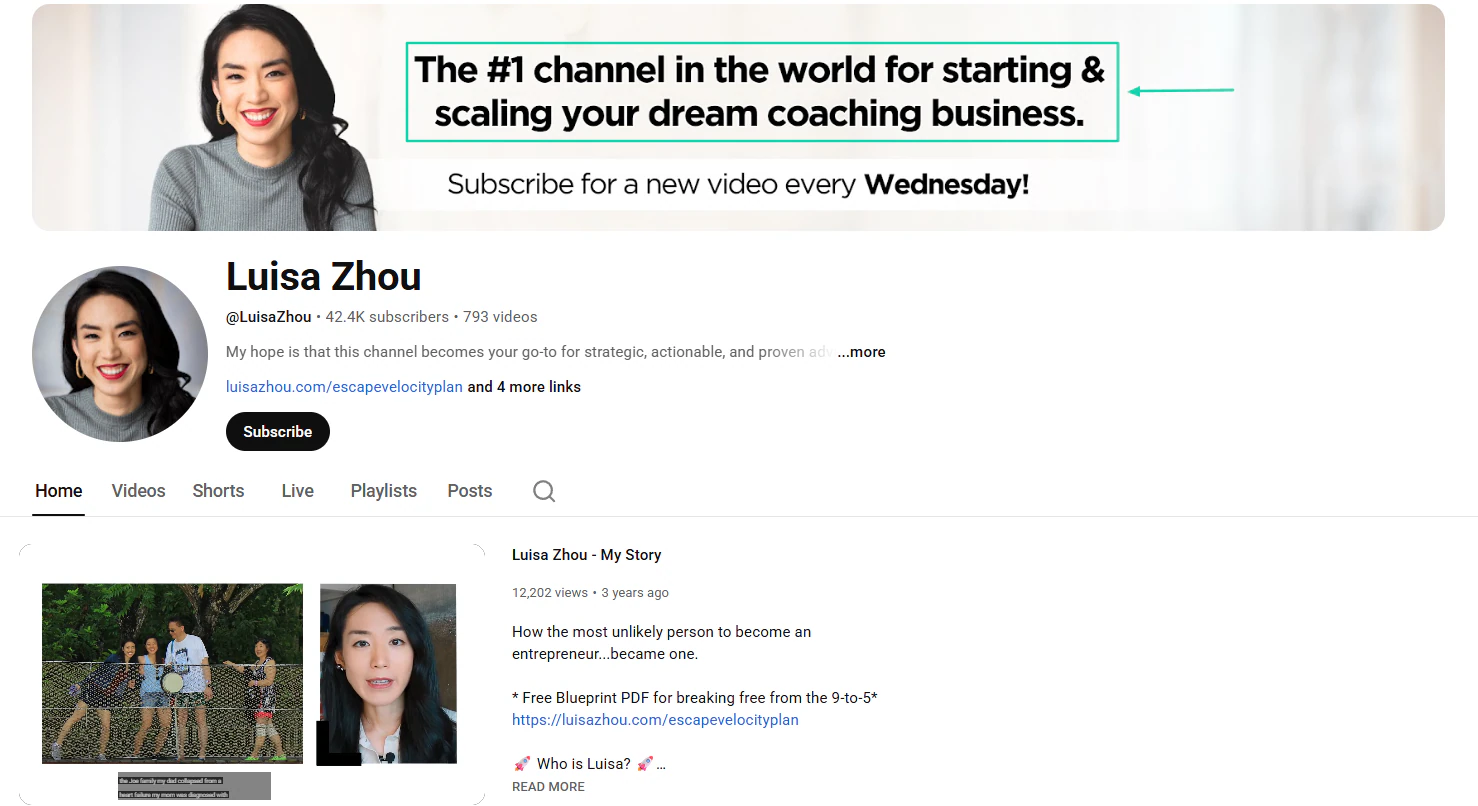
She makes lots of videos on this topic to show she knows her game. She’s demonstrated expertise and built authority.
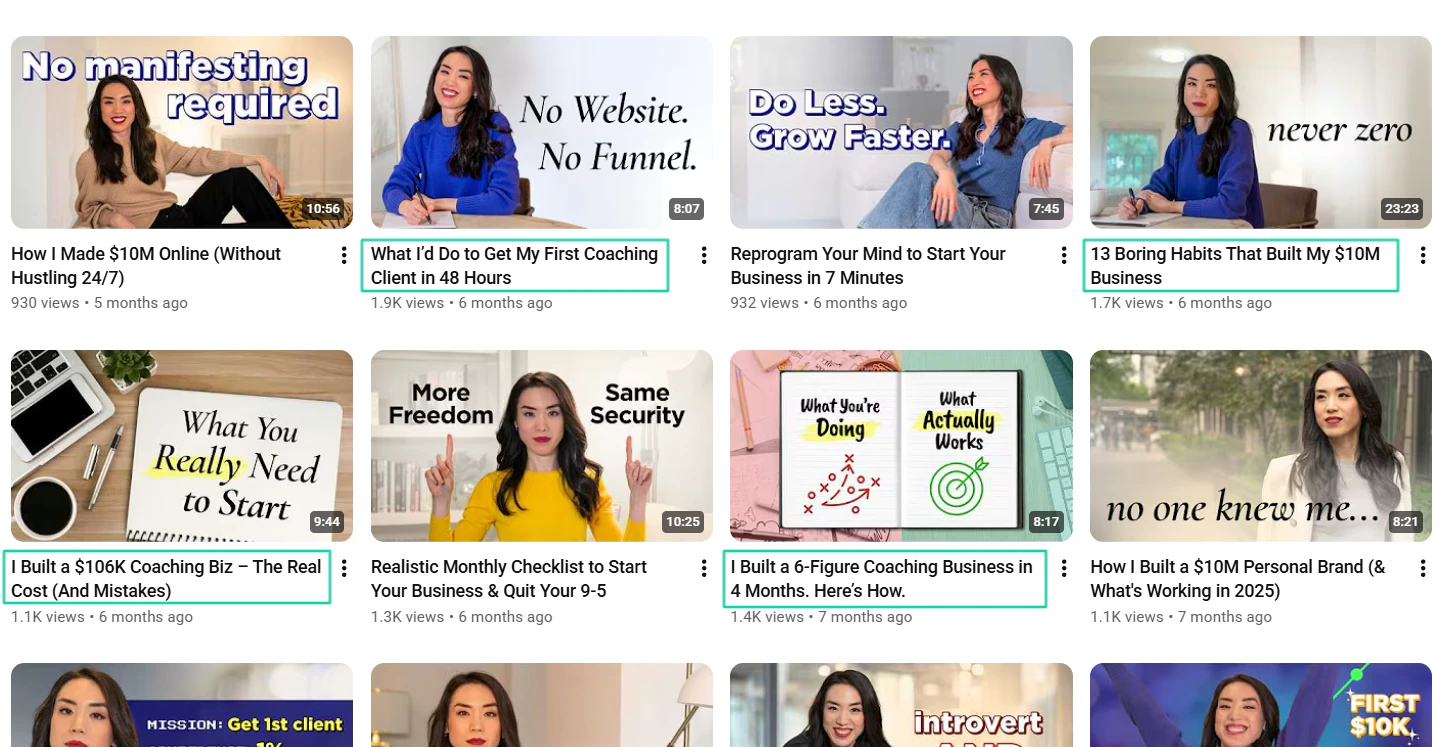
She doesn’t just educate people. She also adds links to sell more.
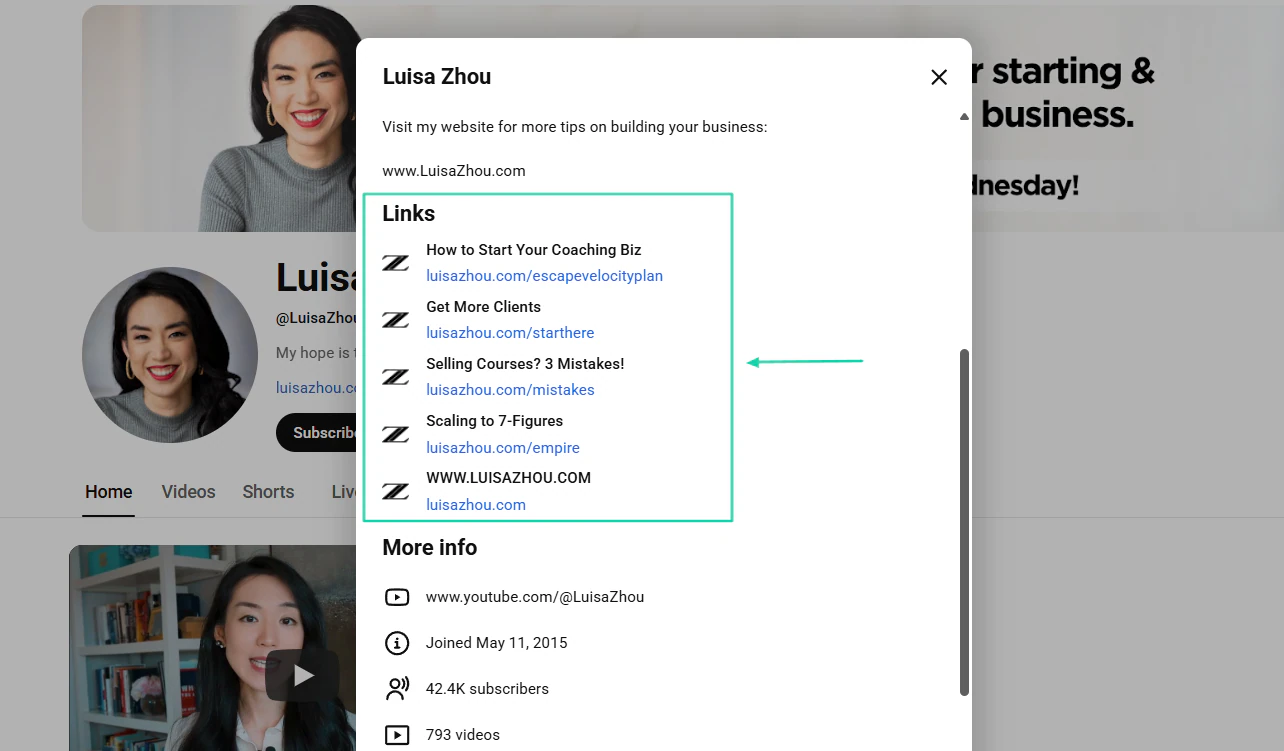
luisa zhou profile description on youtube
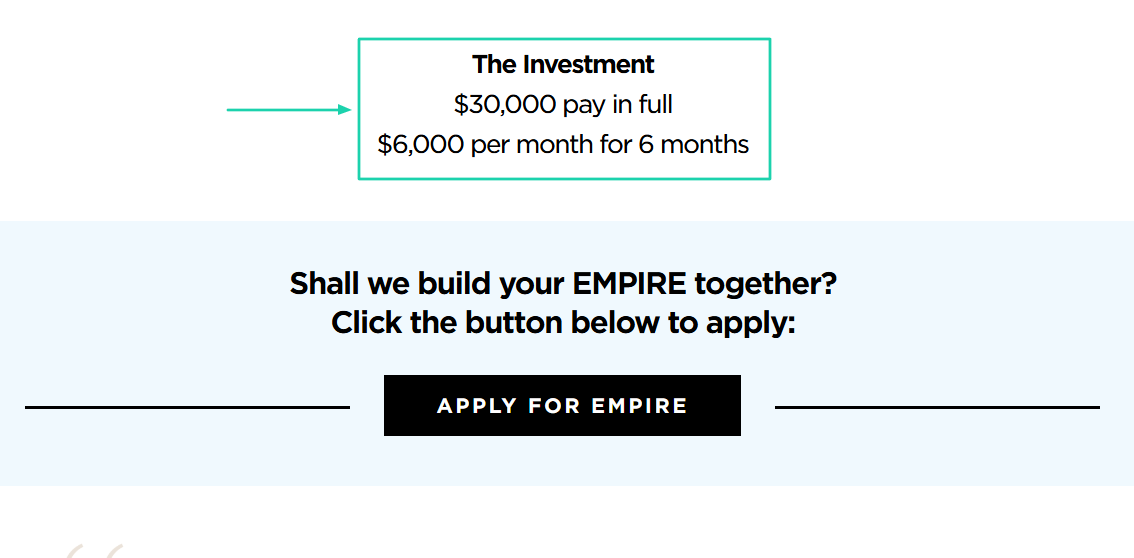
One of the links takes you to her website, where you’ll see her private coaching program.

Because she’s built so much authority in the coaching business, she can charge $6,000 per month for 6 months or $30,000 for a pay-in-full option.
You can also replicate the same process. Start by creating a website to showcase your services.
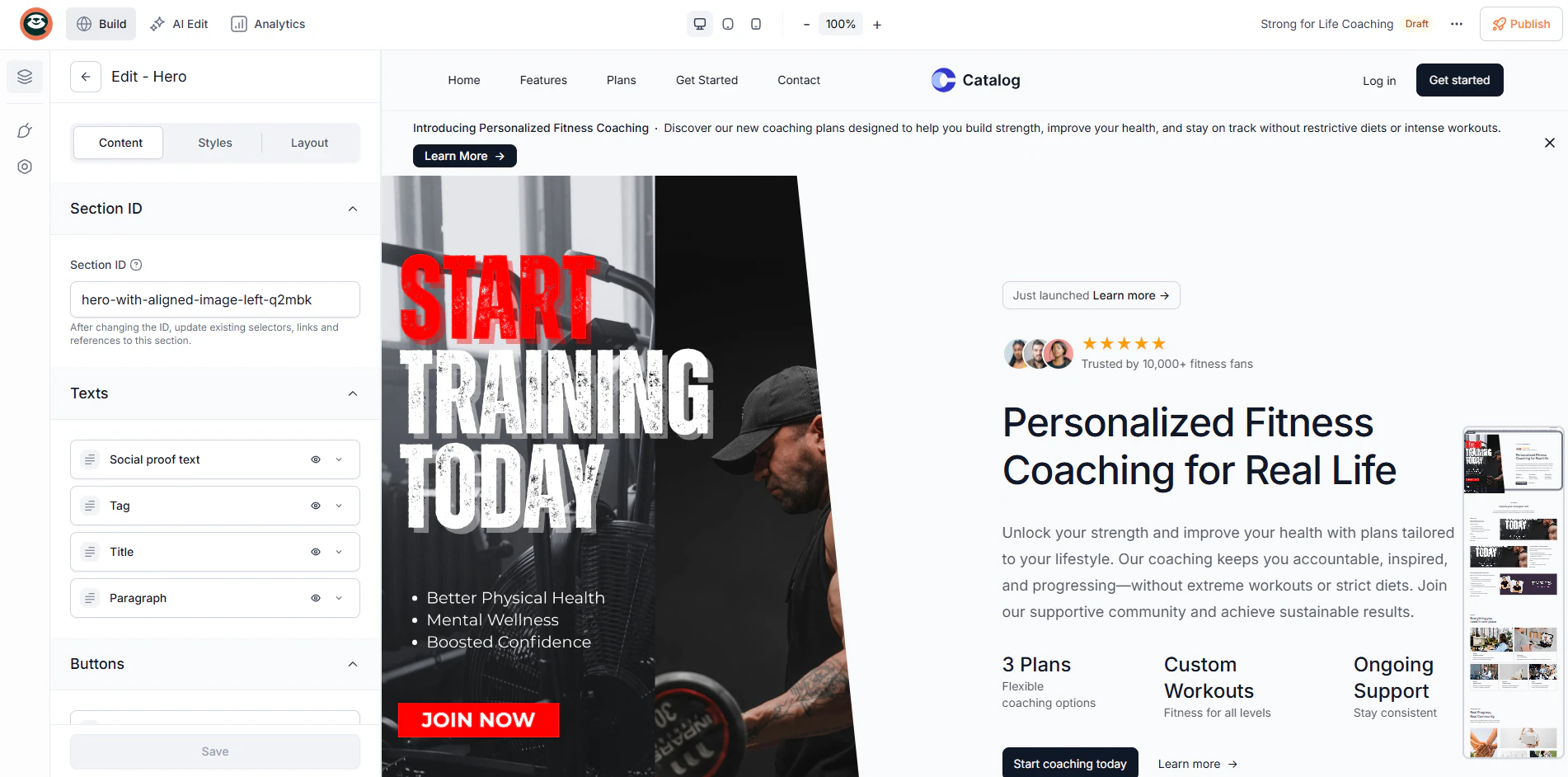
It should show your different plans (if you have more than one). This way, people are free to choose the one that resonates with them.

You should also collect and display testimonials. It’s important to build trust when selling a service.
Potential customers want to know what others think before making up their own mind. It’s human nature to seek social proof.
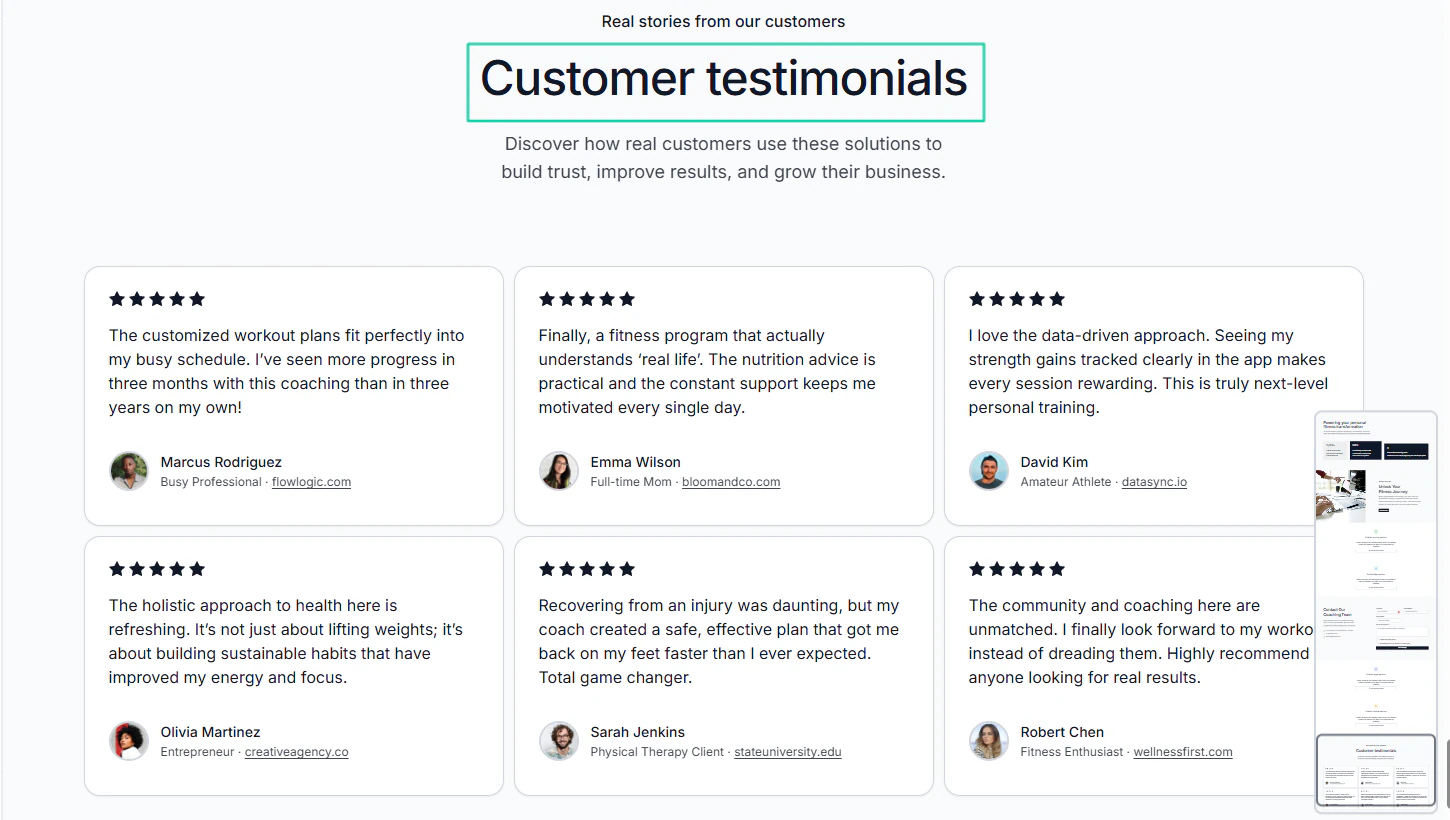
Once your landing page is ready, you can start creating YouTube videos. Then, educate people about your service and demonstrate your expertise.
Then add links to your website to turn your viewers into customers. You don’t need many customers. You only need the right ones.
For that reason, you should find a specific niche and provide so much value. This will make it easy to sell your service.
5. Get sponsorship deals
This is another way of making money on YouTube. Sponsorship deals mean brands pay you to promote their product.
It can be through dedicated videos, integrated mentions, or product placements.
It’s not something you get overnight. You must be ready to play the long game, but it’s definitely rewarding.
The financial advisor, Treyton, explains how he got his first brand deal. He published his first video in 2020, just 2 weeks after launching his business.
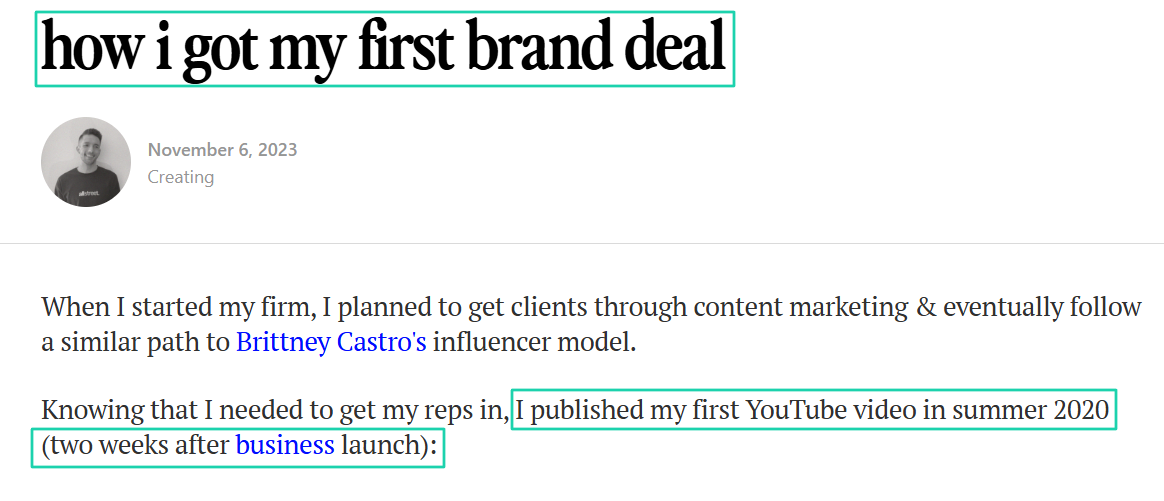
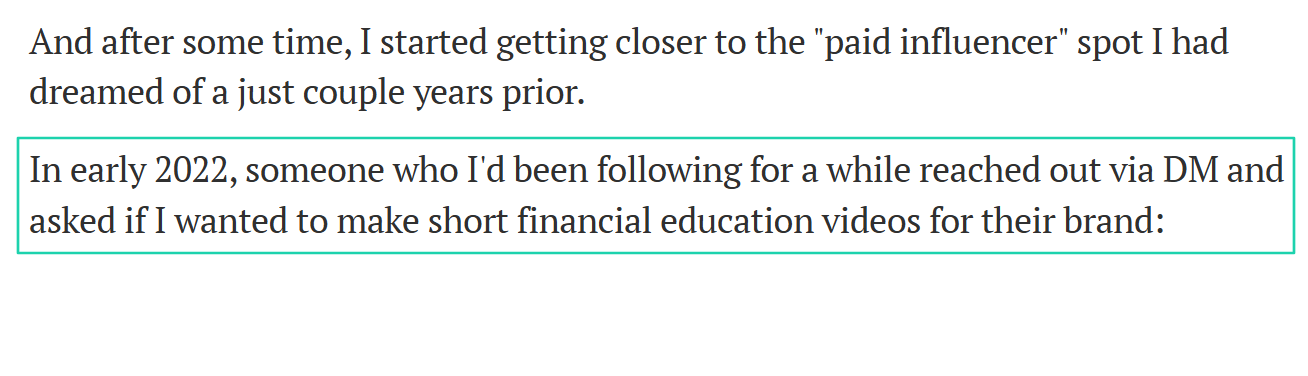
Then, after consistently publishing videos, he received a DM from someone. They asked him if he wanted to make short financial education videos for their brand.
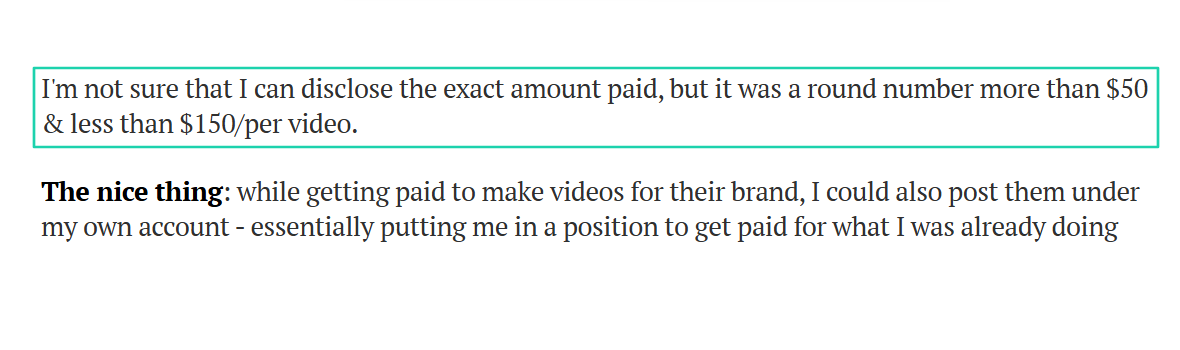
The brand paid him between $50 and $150 per video.
There is also Justin Moore, a sponsorship coach. He has generated $5M+ in brand partnerships.

In one of his YouTube videos, he shared the sponsorship strategy that earned him $5M.
The two examples I shared prove there is no limit to how much you can make.
Pro tip: Only promote products you actually trust. Integrate them naturally into content, and build long-term brand relationships.
6. Set up crowdfunding
You can set up crowdfunding to make money on YouTube. This is where you allow your audience to support you directly.
Most of the time, you do that in exchange for perks, exclusive content, or simply to help you keep creating content.
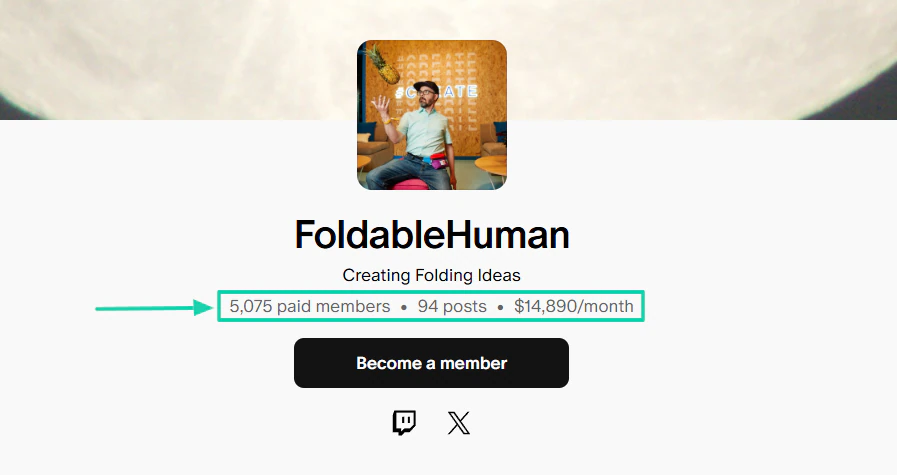
That’s what Dan Olson from Folding Ideas does. He’s a documentarian who makes videos on a broad range of subjects rooted in stories.
He adds a crowdfunding link to Patreon in his video descriptions.
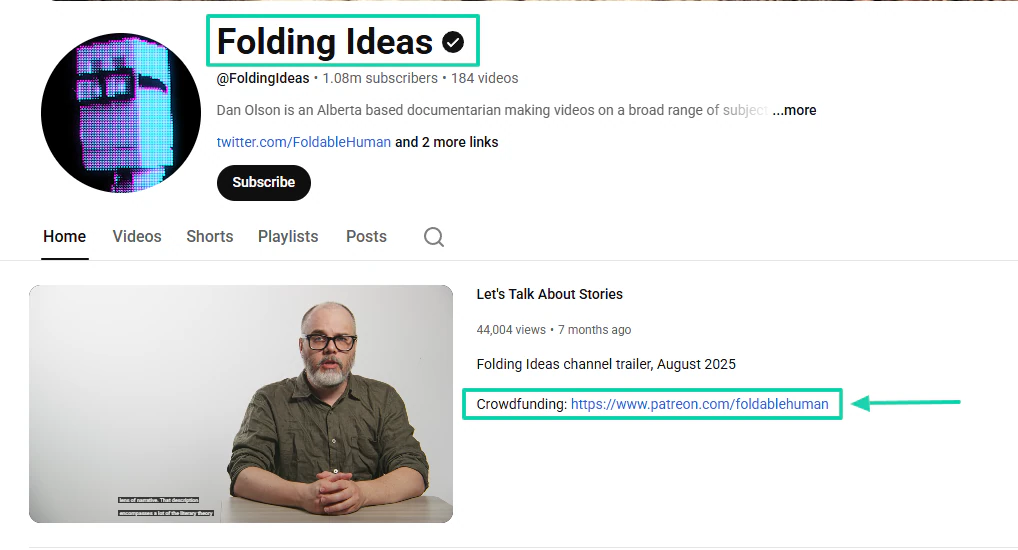
He has 5,075 paid members, and the monthly fee is at $14,890. Do the math.
This means he makes a little over $75,000 every month.
But you don’t need to ask fans to pay a fixed amount. You can allow them to pay what they want.
You simply create a “buy me a coffee” link and add it to your YouTube videos.
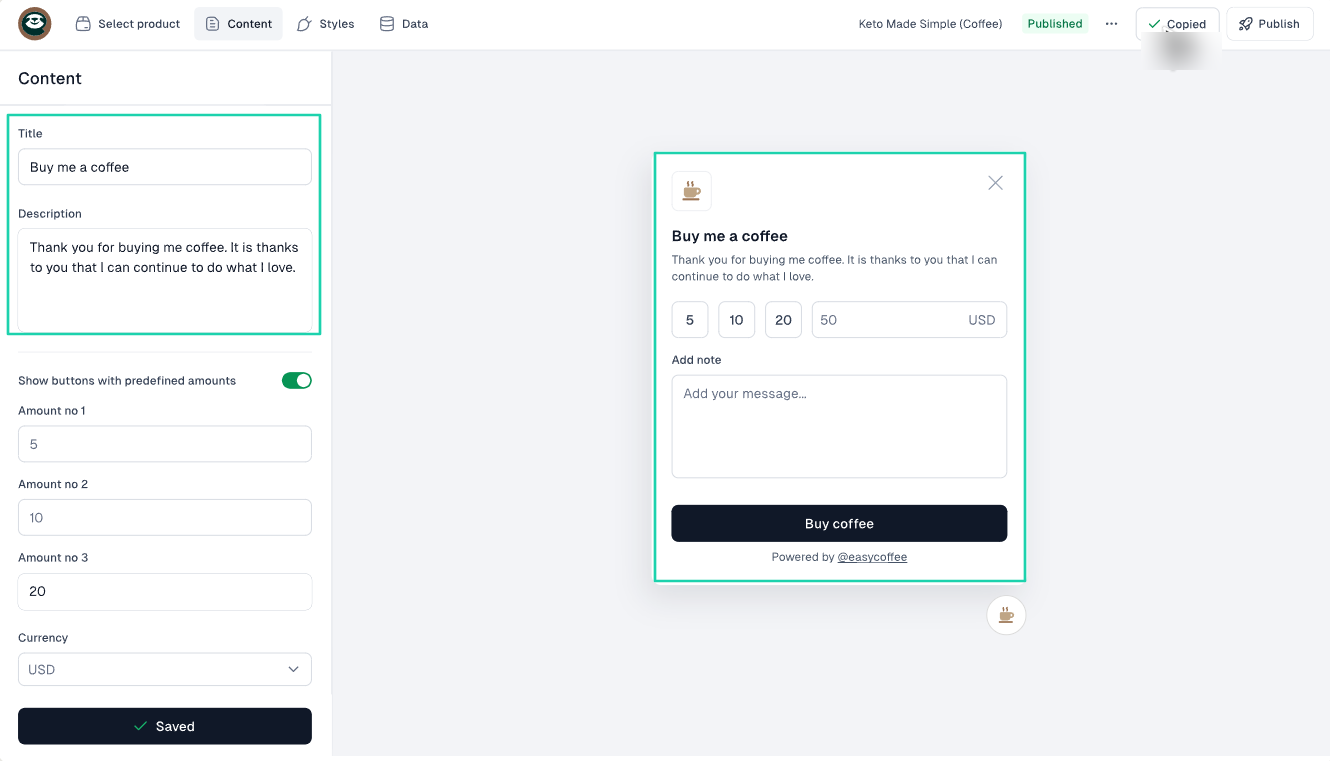
This strengthens the creator-audience relationship and works even without massive views. But you should also explain what they will gain from supporting you.
7. Do affiliate marketing
This is one of the easiest ways to make money on YouTube. “Easiest” in the sense that it doesn’t require much when starting.
You are not creating any product or selling services. You promote someone else’s product through affiliate links and receive a commission after a customer uses these links to make a purchase.
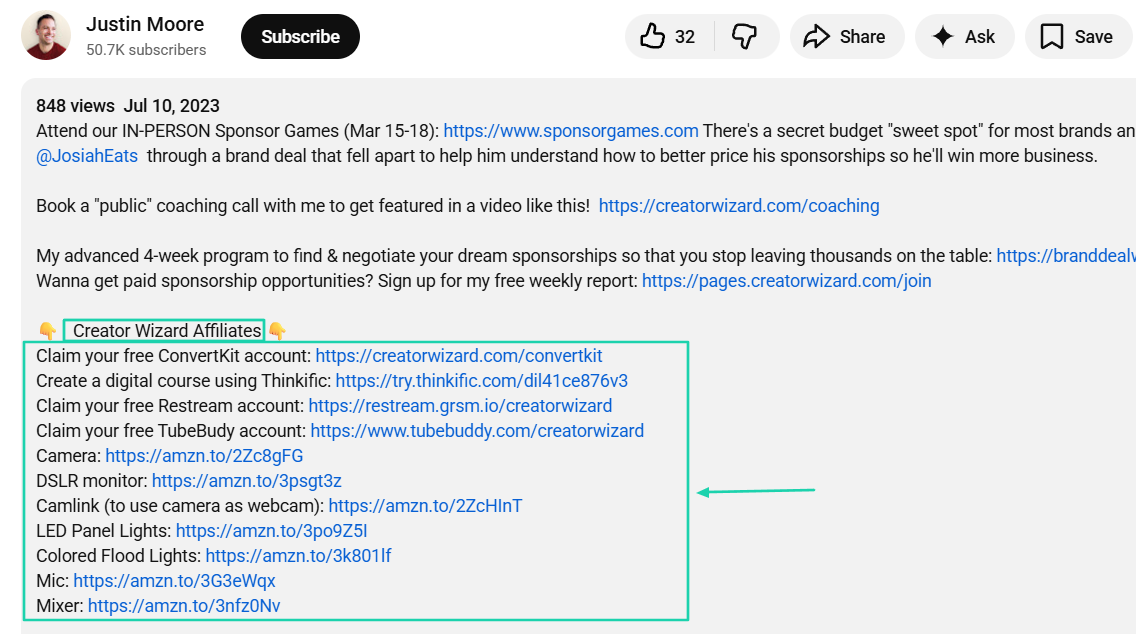
It’s very common among YouTube creators. They always list their affiliate links in the descriptions of their videos.
Let’s start with Justin Moore, the sponsorship coach I discussed earlier. He adds all his affiliate links.
Another example is Jade Beason’s YouTube video titled “Ultimate Guide to Email Marketing.” In the video, she explains why Flodesk is the right tool.
She explicitly mentioned that her audience/viewers will get 50% off if they purchase the tool through her affiliate links.
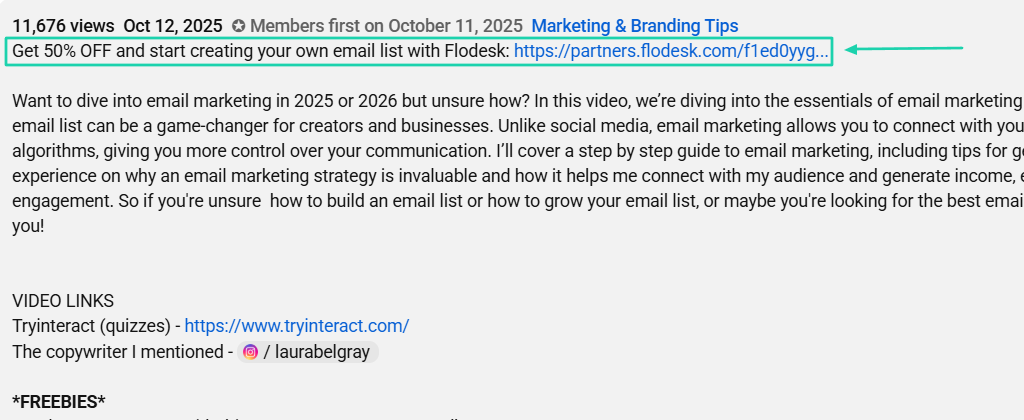
It’s as simple as that. You recommend a product and get paid when a viewer follows that recommendation.
This is something even beginners can do.
8. Sell stock footage
If you’re creative enough and can create high-quality visuals, you can also sell them, especially the unused clips, as stock footage. This is a way photographers and creators make money on YouTube.
The cinematographer Drew B. Darby does that for a living. He uses YouTube to share some of his exclusive footage and explains how he shot it.

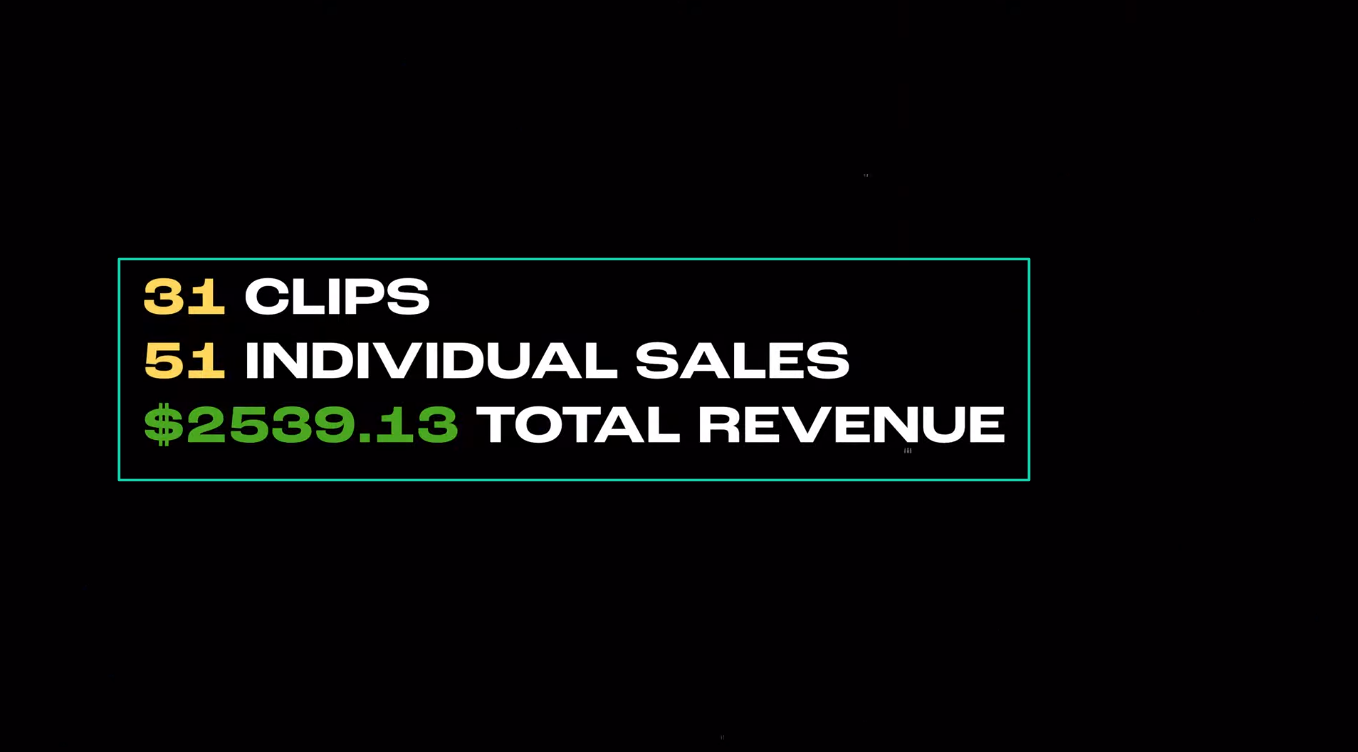
In one of the videos, he shared his sales figures for stock footage. He revealed he shot 31 clips and made 51 individual sales. This generated a total of $2,539.13.
Matt Johnson has also been doing so since 2015. And he keeps selling.
According to the YouTube video he posted, he made approximately $10,000 in 2024.
You should know that it’s a very competitive marketplace. To increase your chances of selling stock footage, you need to :
- Focus on evergreen clips (business, lifestyle, tech)
- Shoot in 4K for higher demand
- Upload consistently (Shutterstock, Adobe Stock, Pond5)
Selling stock footage can be a solid side income stream, especially for those who are already filming high-quality videos.
9. Build and monetize a newsletter
Just having a channel and subscribers isn’t enough to make money on YouTube. You can build and monetize a newsletter.
You will no longer rely on YouTube’s algorithm. A newsletter will allow you to own your own audience.
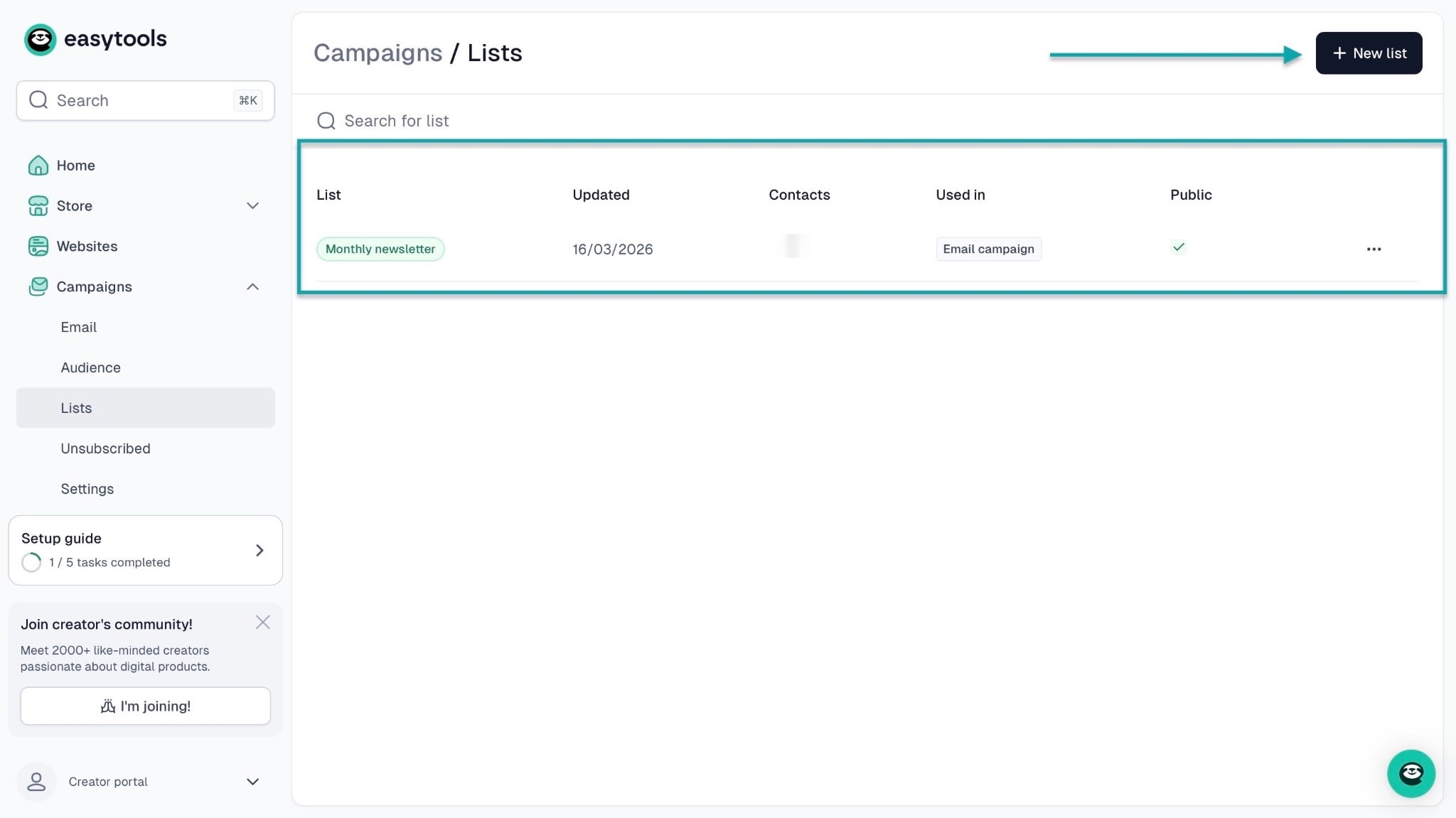
This is how it works. You will:
- Use YouTube to drive traffic to an email list
- Send regular emails with value
- Monetize through paid subscriptions, sponsorships, or product sales.
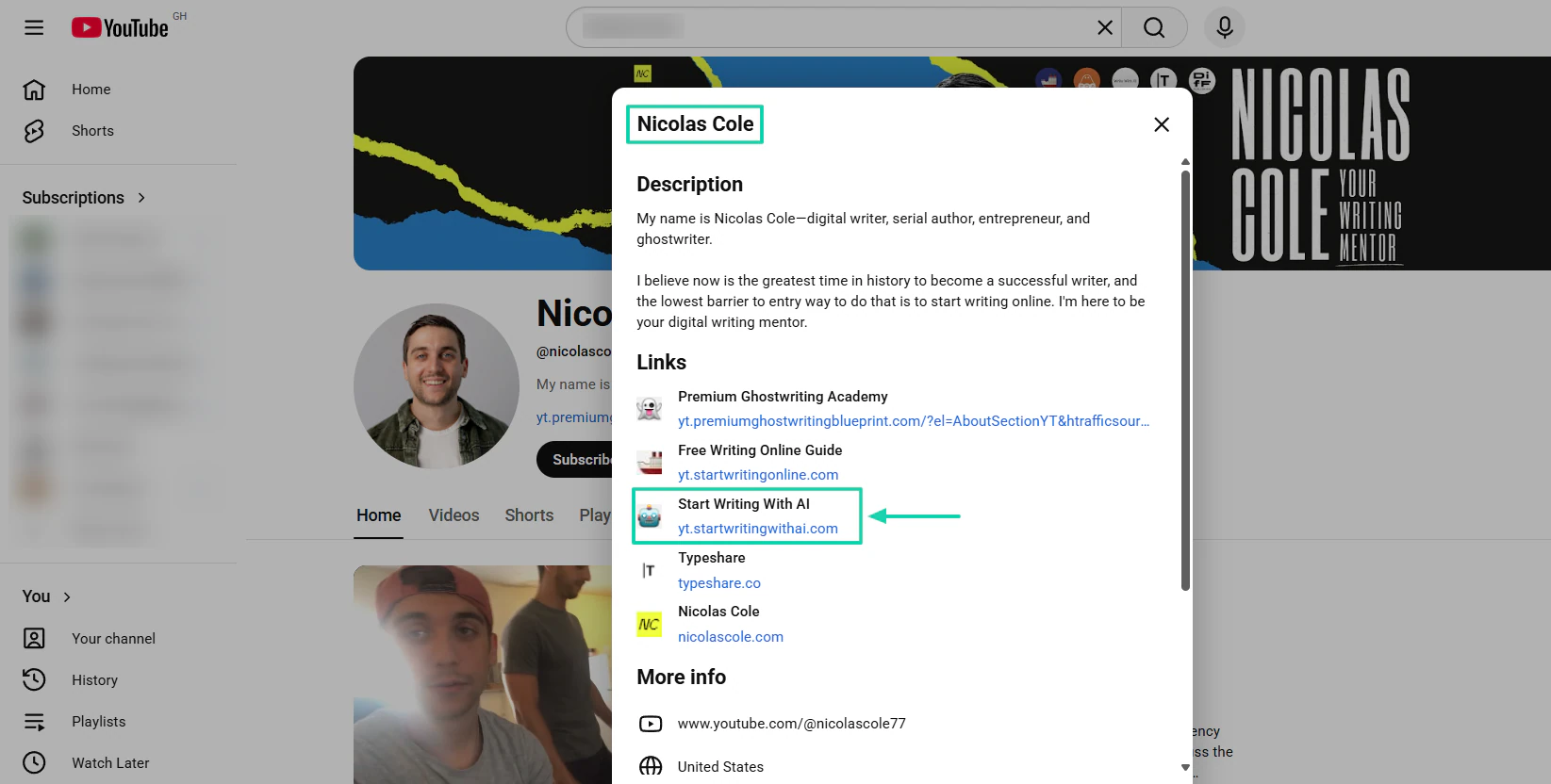
Take the ghostwriter and YouTuber Nicolas Cole, for example. Among the links he shares on his YouTube channel is his newsletter “Start Writing With AI.”
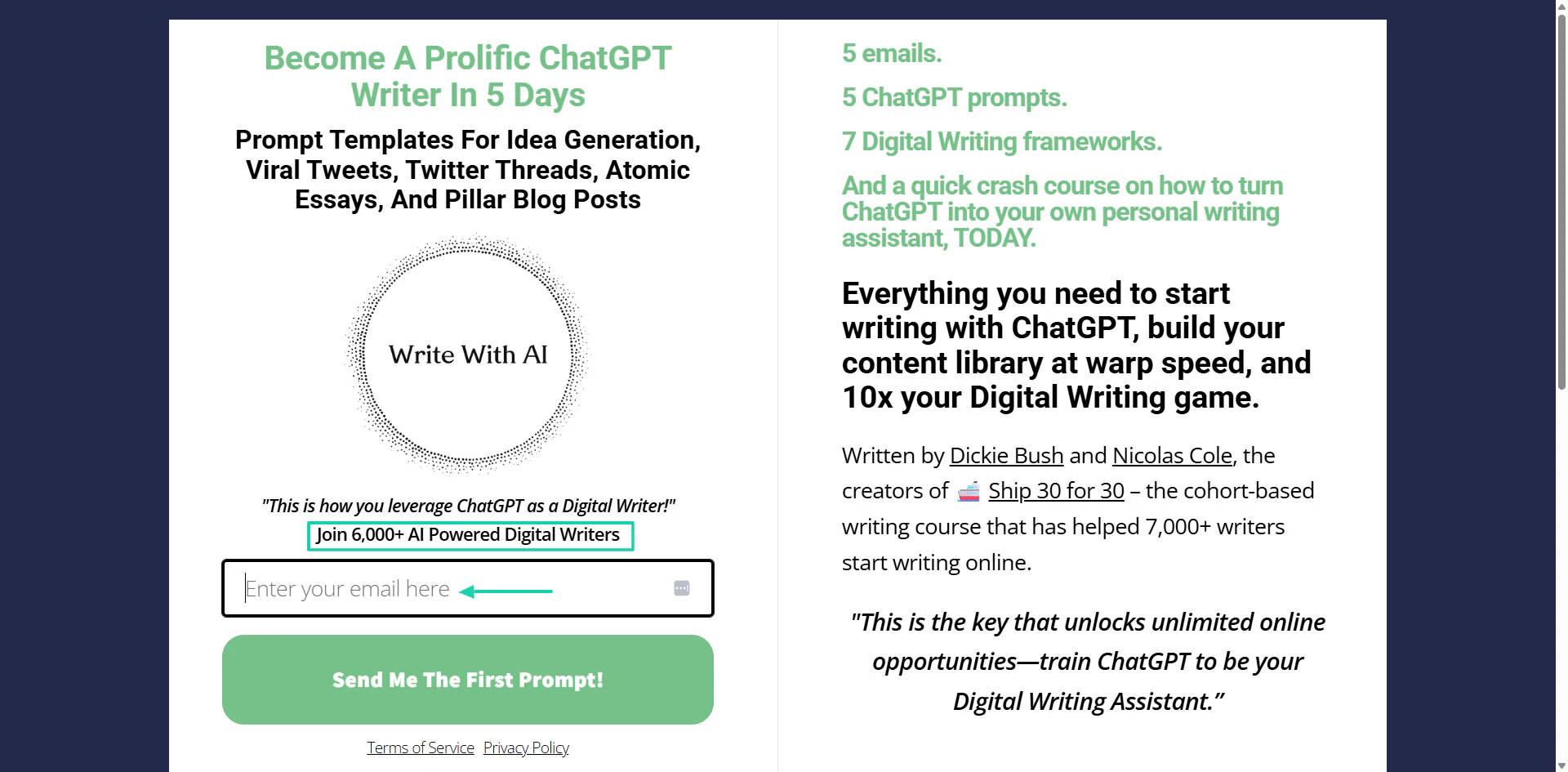
When you click on the link, you’ll see that 6,000+ people are already on board. You’ll need to enter your email address.
Then, you must choose a subscription plan to access this newsletter. The free plan gives you “occasional public posts.”
This makes the paid plans more appealing. And they range from $20/month, $180/year to $200/year.
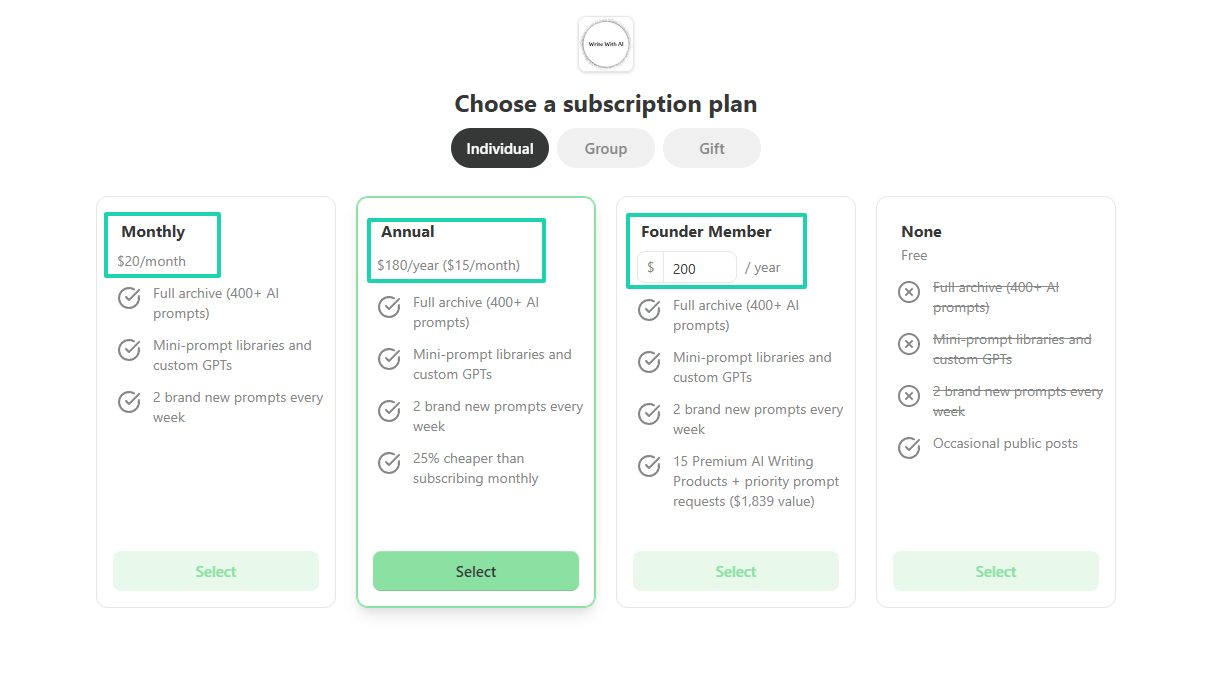
So, he has over 6,000 subscribers to his newsletter. That’s easily bringing in $120,000, assuming all his subscribers are on the monthly paid plan.
He even shared a video on how to build a paid newsletter that earns $ 200,000 per year.
That’s something you can do to make money as a content creator. First, mention your newsletter in every relevant video
Then, offer a lead magnet, and add links in the description, a pinned comment, or the channel banner.
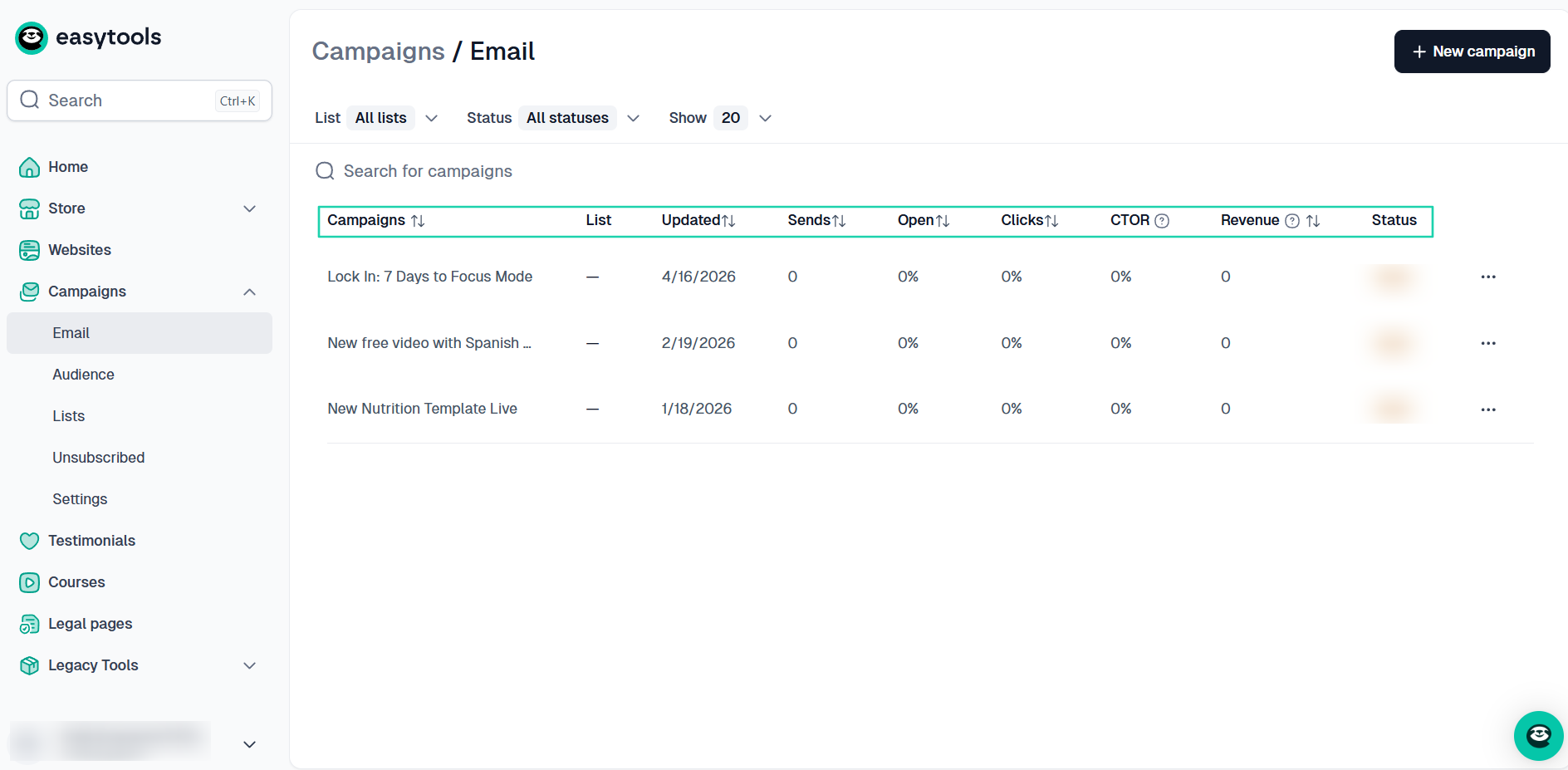
Regarding the newsletter, make sure you use a platform that lets you track its performance. At least, you should know how many emails were sent, the number of clicks, and the number of opens.
And if you’re using a good platform, it’ll track your revenue (if you add links to products or subscriptions).
10. Offer paid memberships
Thanks to paid memberships, creators can earn recurring monthly or yearly income directly from their audience. This is also how you can make money on YouTube.
YouTube has a built-in system called channel memberships, where you can offer exclusive perks in exchange for a monthly fee:
- Members-only videos
- Early access to content
- Badges and emojis
- Private community posts
You can watch the video below to learn more about how YouTubers make money through channel memberships.
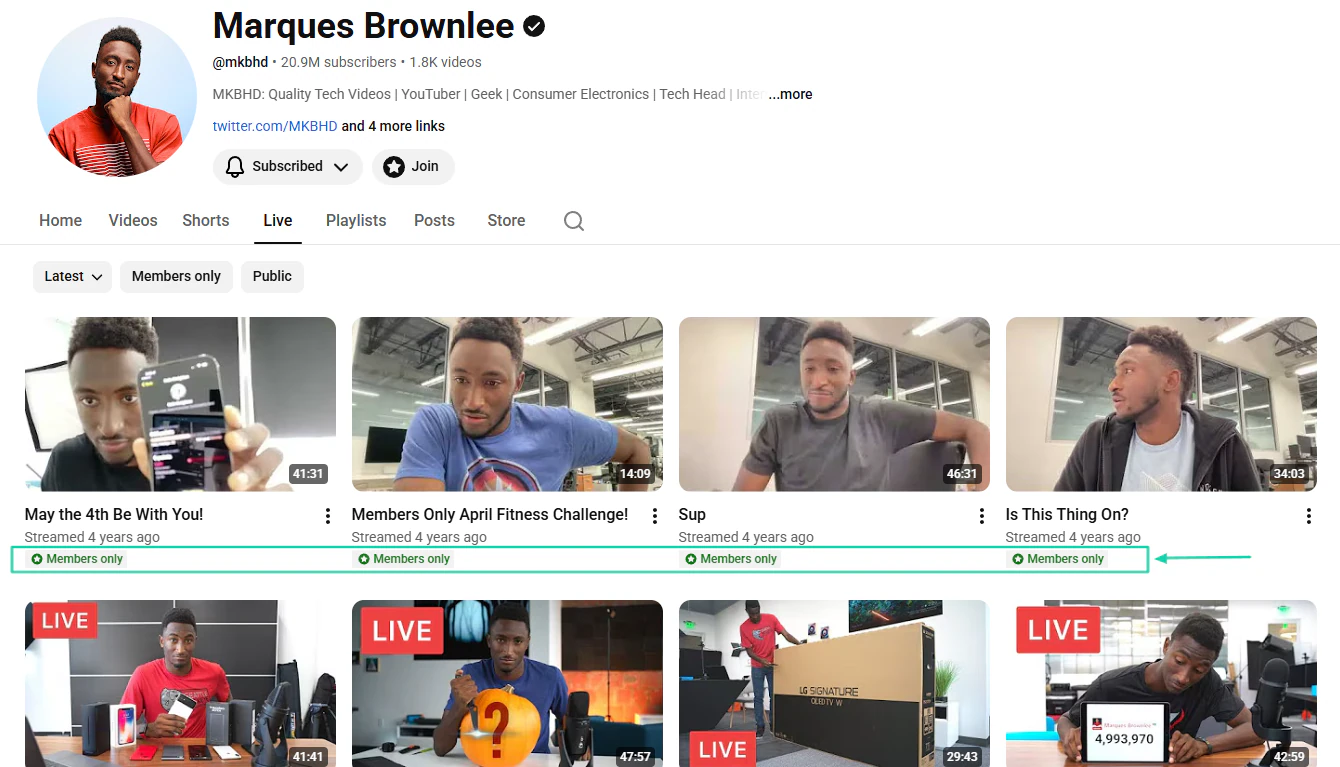
Many YouTube creators offer paid memberships. Marques Brownlee is one of them. You can see the “Join” button on his YouTube channel, MKBHD.
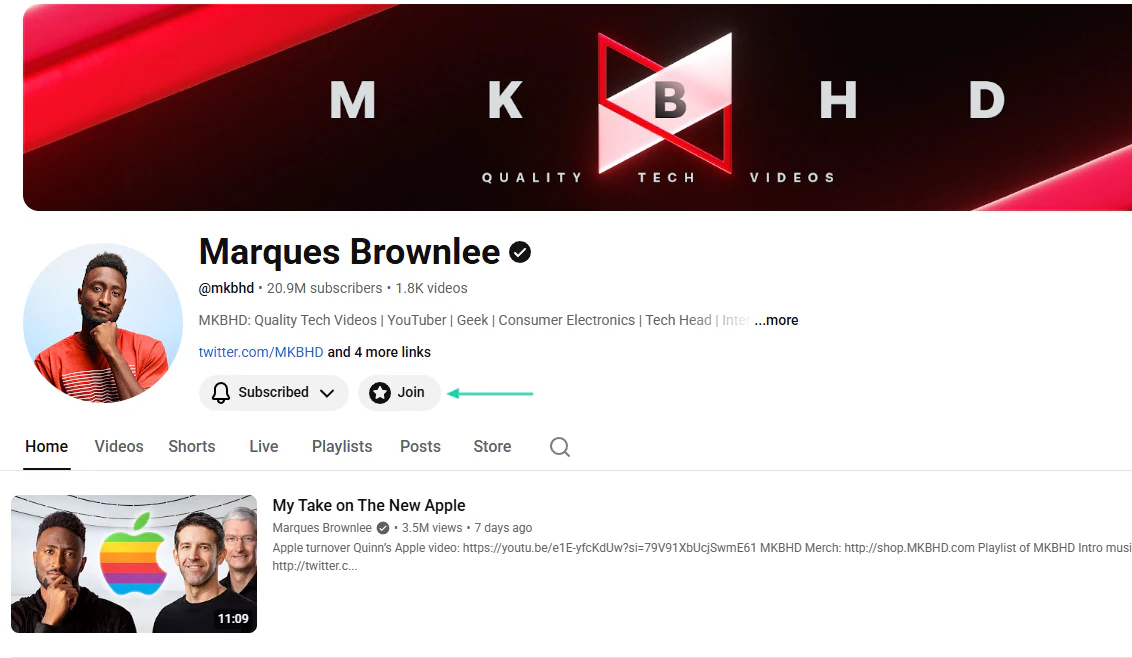
It’s at $5.95/month.
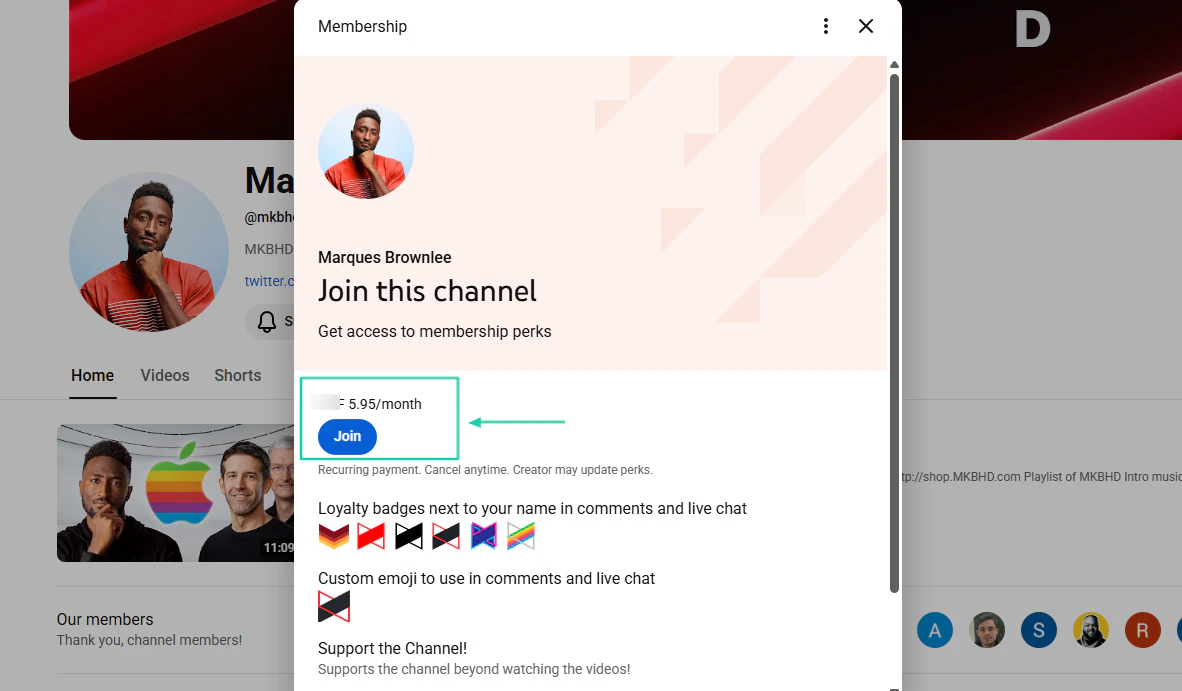
You can only access his “members only” content after you pay.
If you don’t want to create your membership on YouTube, there are platforms you can use.
You will be able to better control your pricing, the billing period, and the renewal frequency.
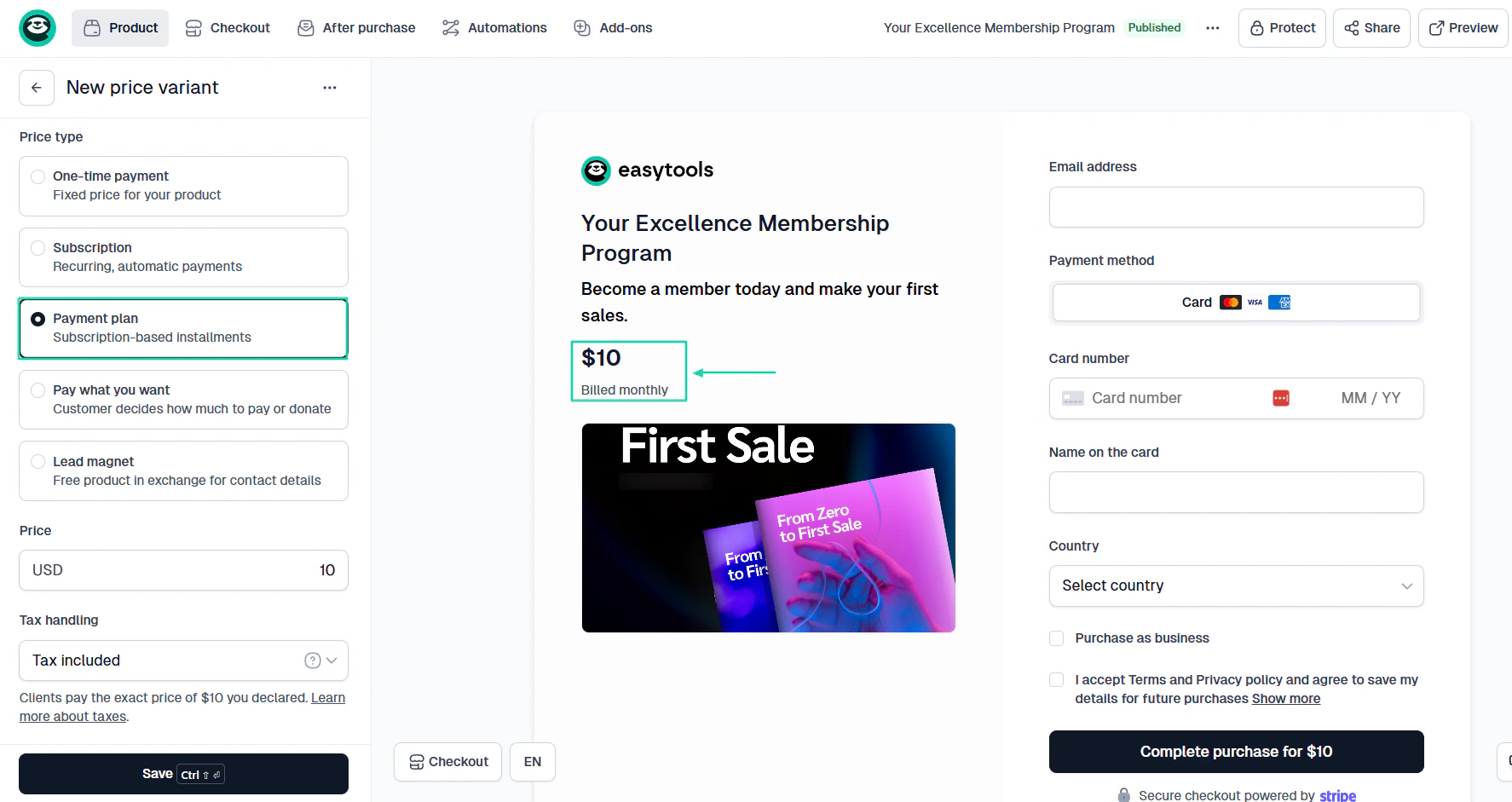
The best thing about offering paid memberships is that you know exactly how much you’ll have in your pocket at the end of the day.
We aren’t done yet. We’re only halfway through the article, so keep reading for more YouTube monetization methods.
[fs-toc-omit]11. Monetize live streams
Let’s continue with the next method for making money on YouTube: monetizing your live streams.
This allows creators to earn while interacting directly with their audience. During live streams, viewers can send Super Chats (paid highlighted messages) and Super Stickers.
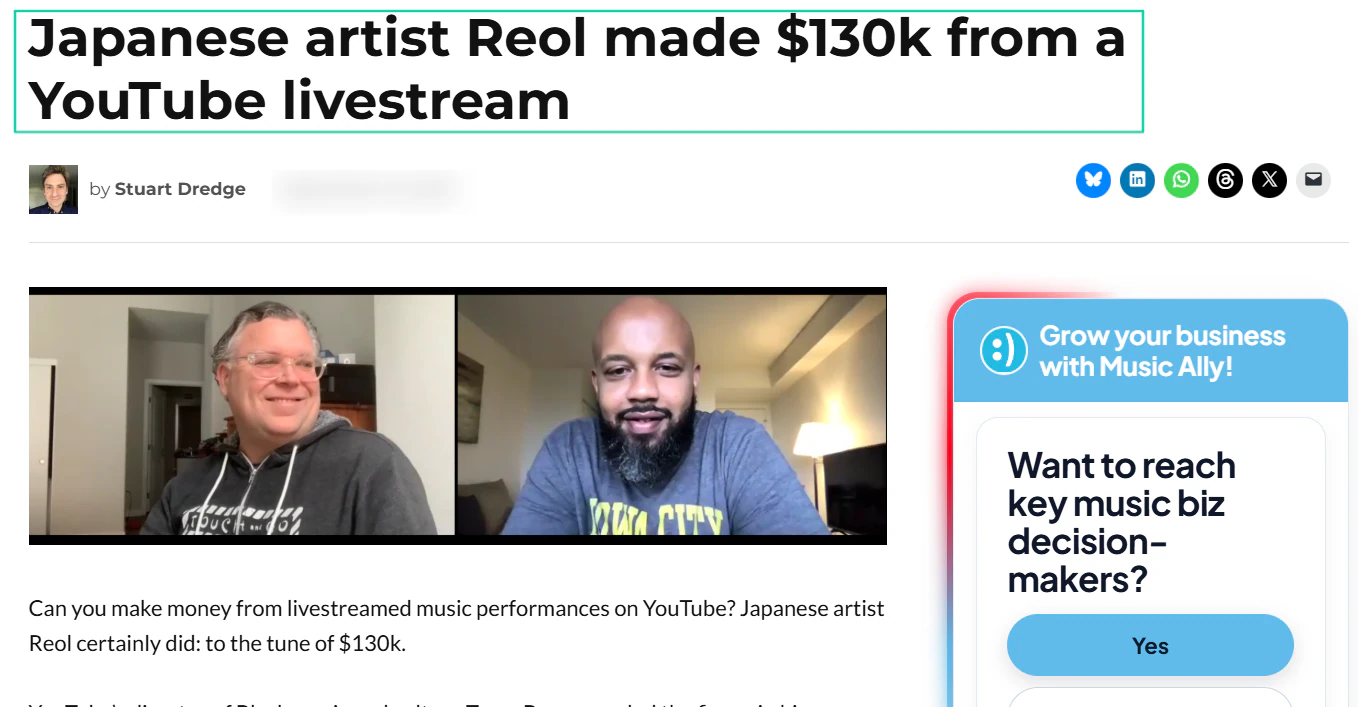
This is how the Japanese artist, Reol, made $130,000 from a YouTube livestream.
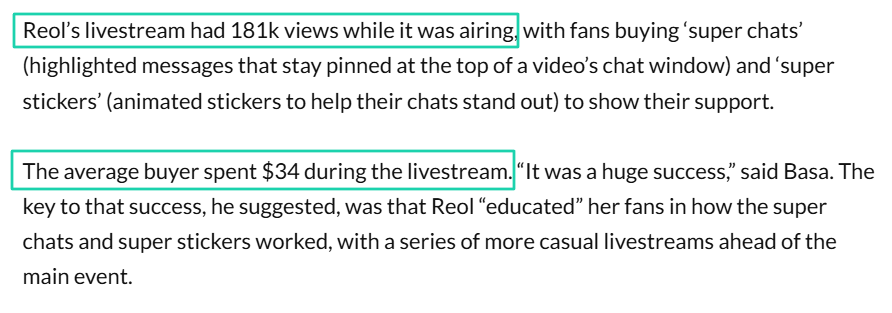
His livestream had 181,000 views while it was airing. Many fans were buying those super chats and super stickers.
Apparently, the average buyer spent about $34 during the livestream. And that’s how he could make this amount ($130,000).
If you’d like to do this, YouTube has a video on the topic. Check it out:
[fs-toc-omit]12. Create and sell online courses
If you have some specific knowledge or expertise, you can turn that into courses and sell them to make money on YouTube.
Online courses are among the highest-leverage YouTube monetization methods. The way it works is, you:
- Create educational YouTube content
- Build authority in a niche
- Offer a structured paid course
Take the YouTuber, Sander Stage, for example. When he started posting about his courses on YouTube, this is what he realized:
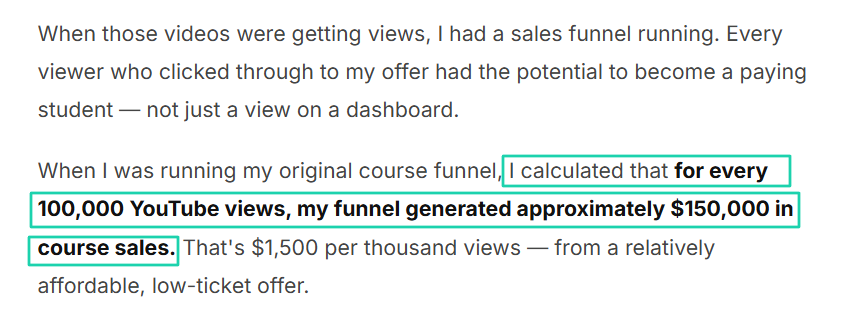
For every 100,000 YouTube views, he could generate $150,000 in course sales.
When he upgraded his course, he made closer to $200,000 per 100,000 views in course revenue.
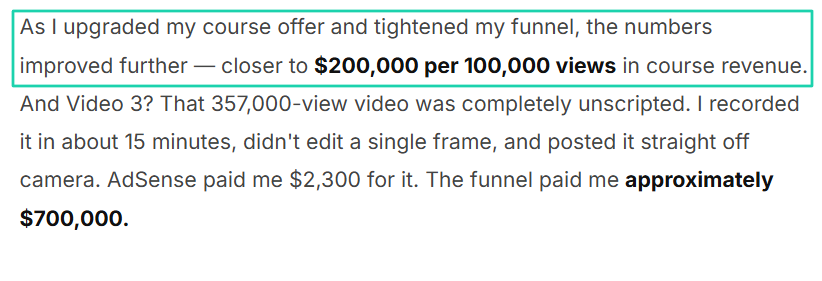
Sander used YouTube to promote his online courses. So what does it mean for you?
Say you already post on YouTube, you can use a course platform to turn those videos into a full online course.
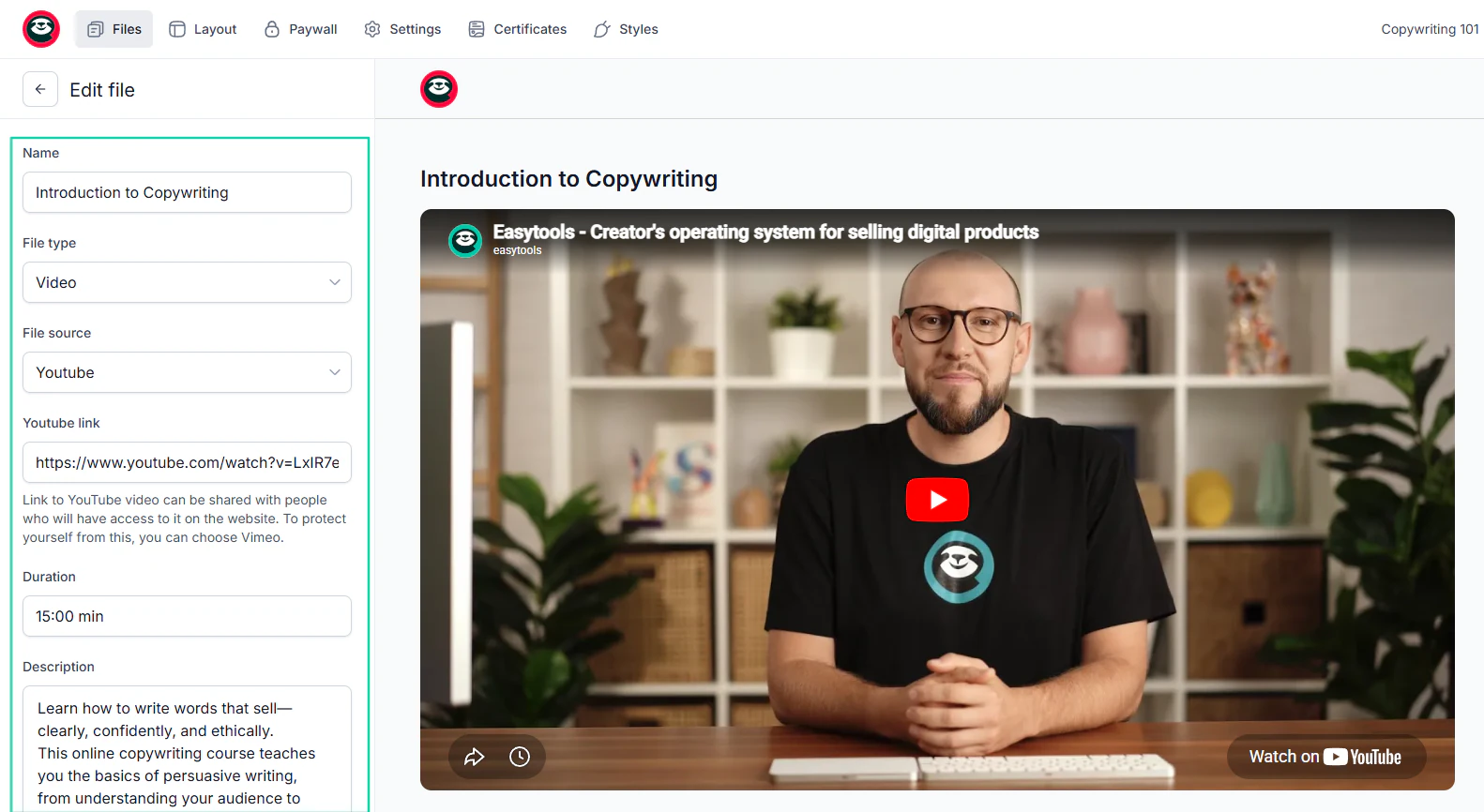
On Easytools, you will choose the file type (video), the file source (YouTube), and add your YouTube link (unlisted/private video).
You may also specify the duration and description.
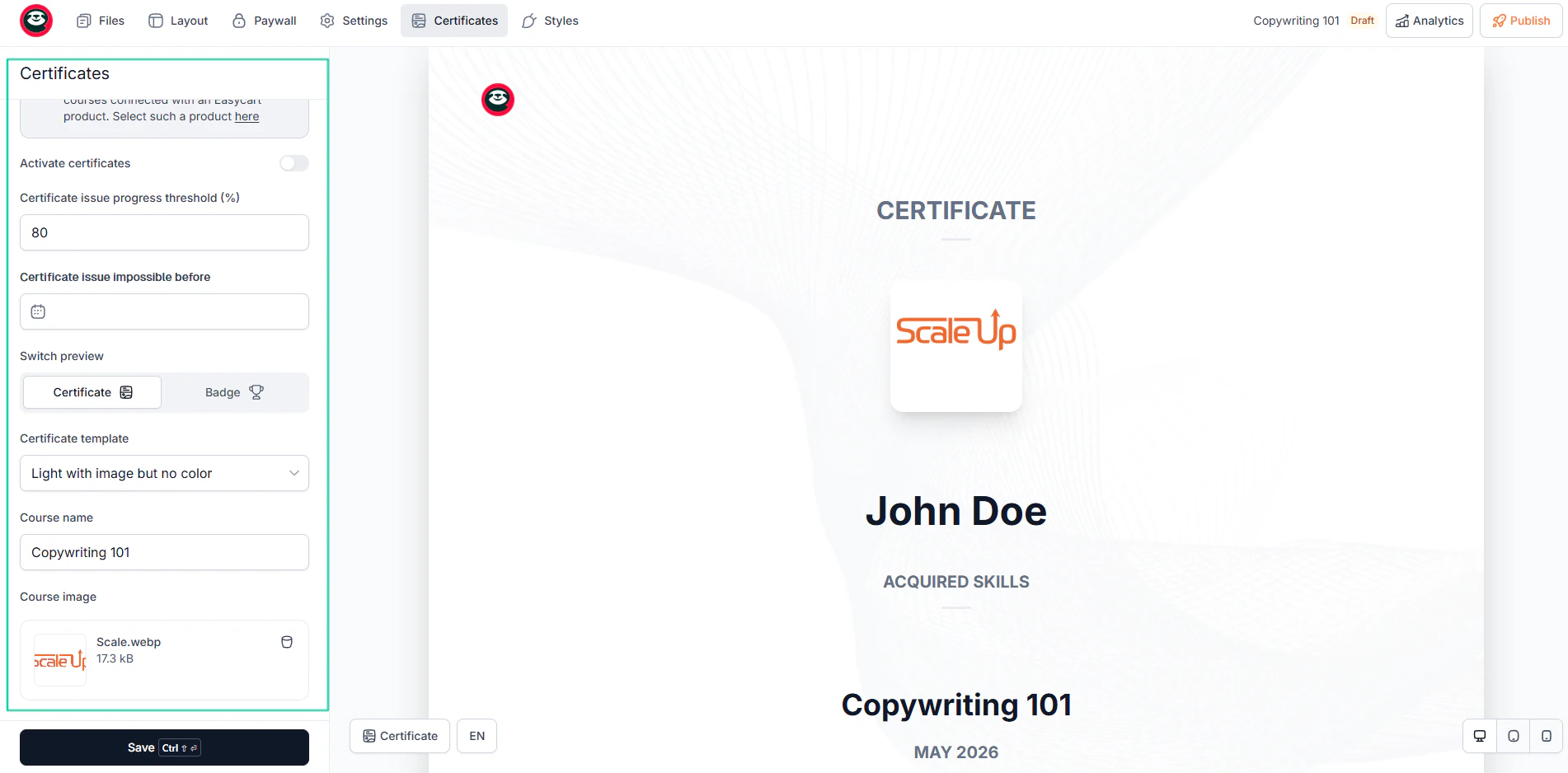
The advantage of course platforms is that you can even issue certificates to your students or customers.
You can definitely make a lot of money selling online courses, but you should know how to do so.
You can start with a small course, use a good course platform, validate demand through YouTube content, and use testimonials and case studies.
[fs-toc-omit]13. License your content to media companies
After creating your content, you can license it to media companies as a way of making money on YouTube.
In other words, you allow agencies, brands, or publishers to reuse your content in exchange for payment.
Usually, when a video goes viral or contains unique footage, media outlets may want to:
- Repost clips
- Use footage in documentaries
- Include segments in TV broadcasts
- Publish clips on news websites or social media
As a creator, you can license your content for a fee rather than granting permission for free.
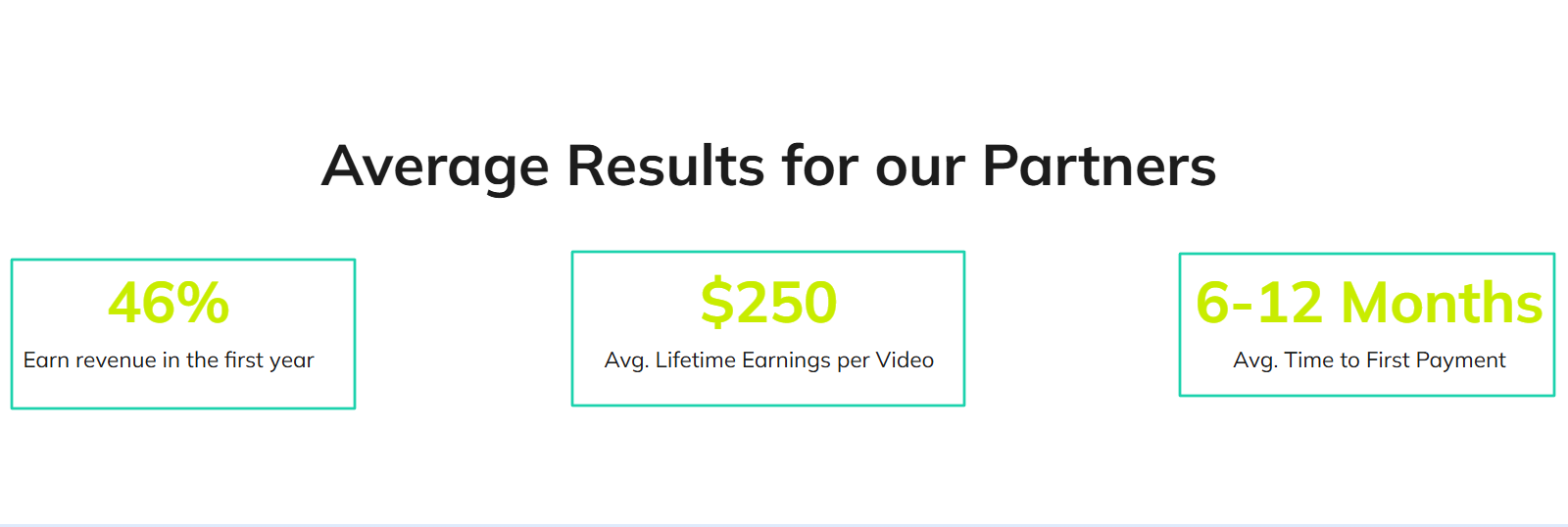
Jukin Media is one of the most popular licensing agencies.
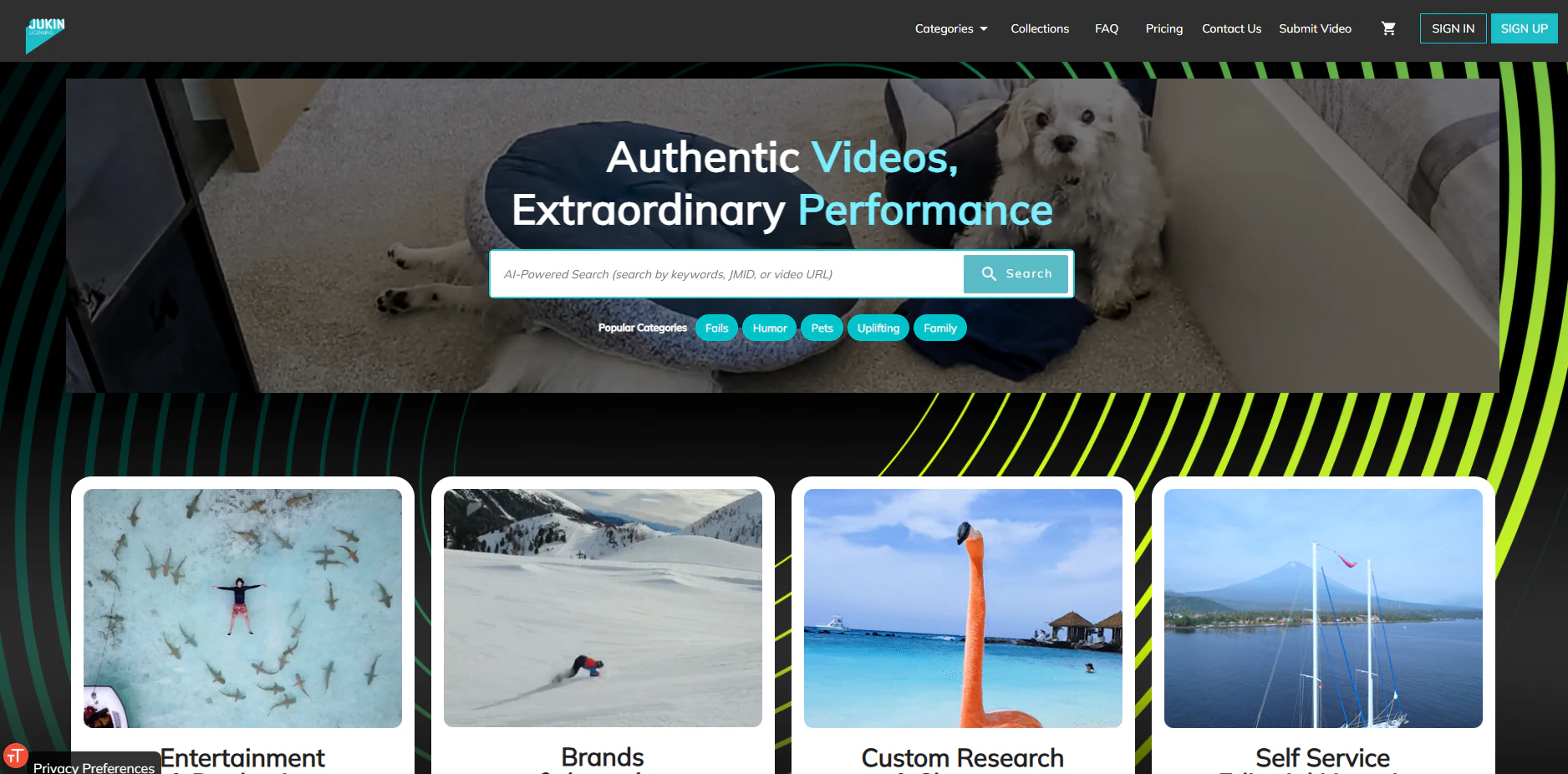
Their average lifetime earnings per video are $250, and it takes between 6 and 12 months to receive the first payment.
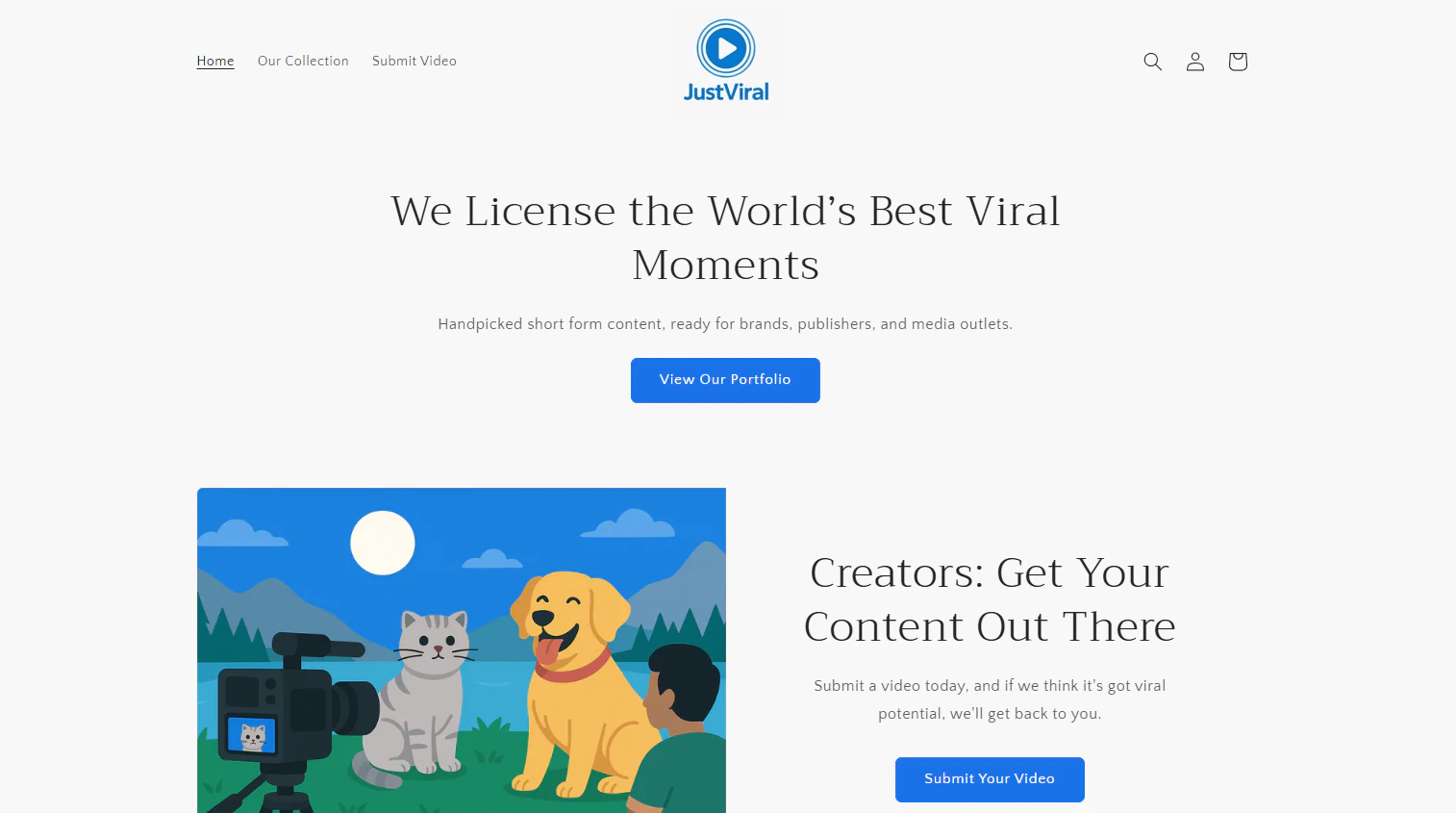
There is also JustViral, another agency that helps license viral videos. You submit a video on their platform, they analyze it, and get back to you.
The truth is that viral success is often unpredictable. So just because you post a video today doesn’t mean you should license it.
[fs-toc-omit]14. Build a paid community
A paid community is a great way to make money on YouTube. It’s more than just content.
You monetize access, accountability, networking, or even exclusive interaction.
This is how Roberto Blake does that. The first YouTube link he recommends is the description of his Pro Group community, “Awesome Creator Academy.”
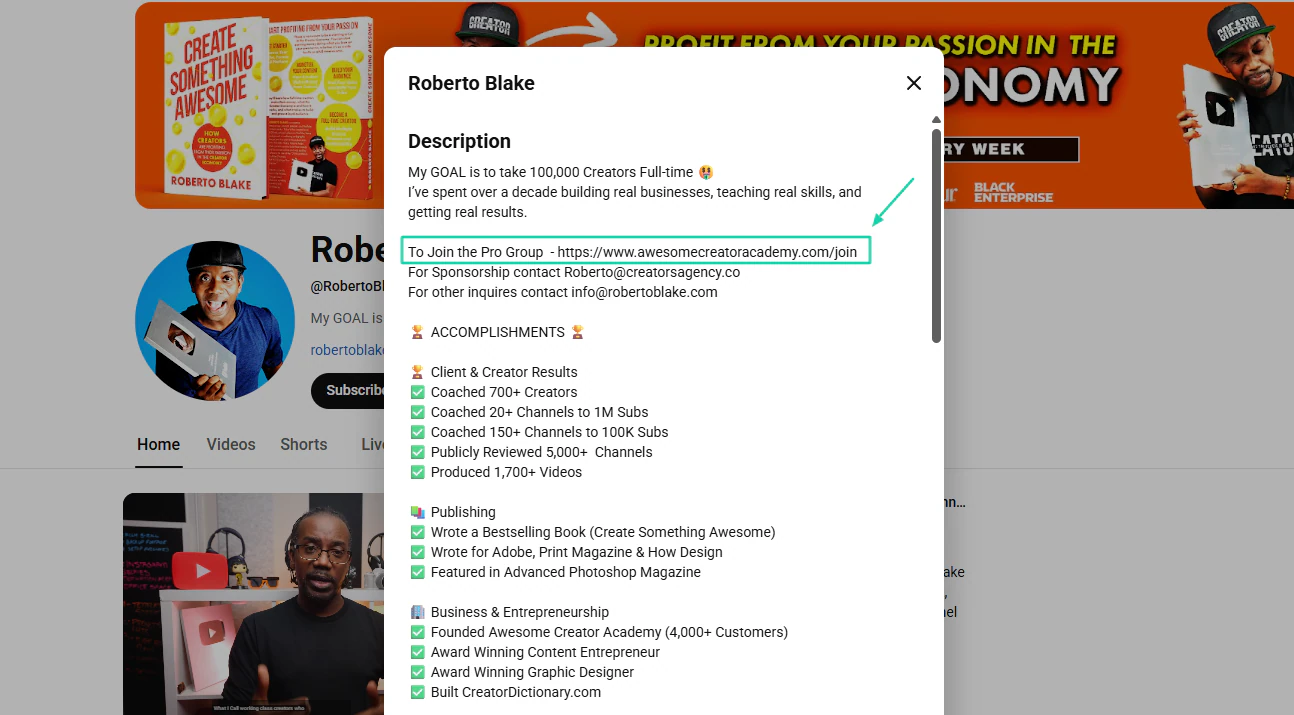
When you click, you will see three plans ranging from $59/month, $499/year, to $999/year.

As you can see, some of the perks on each plan are exclusive stuff, access, accountability, and networking.
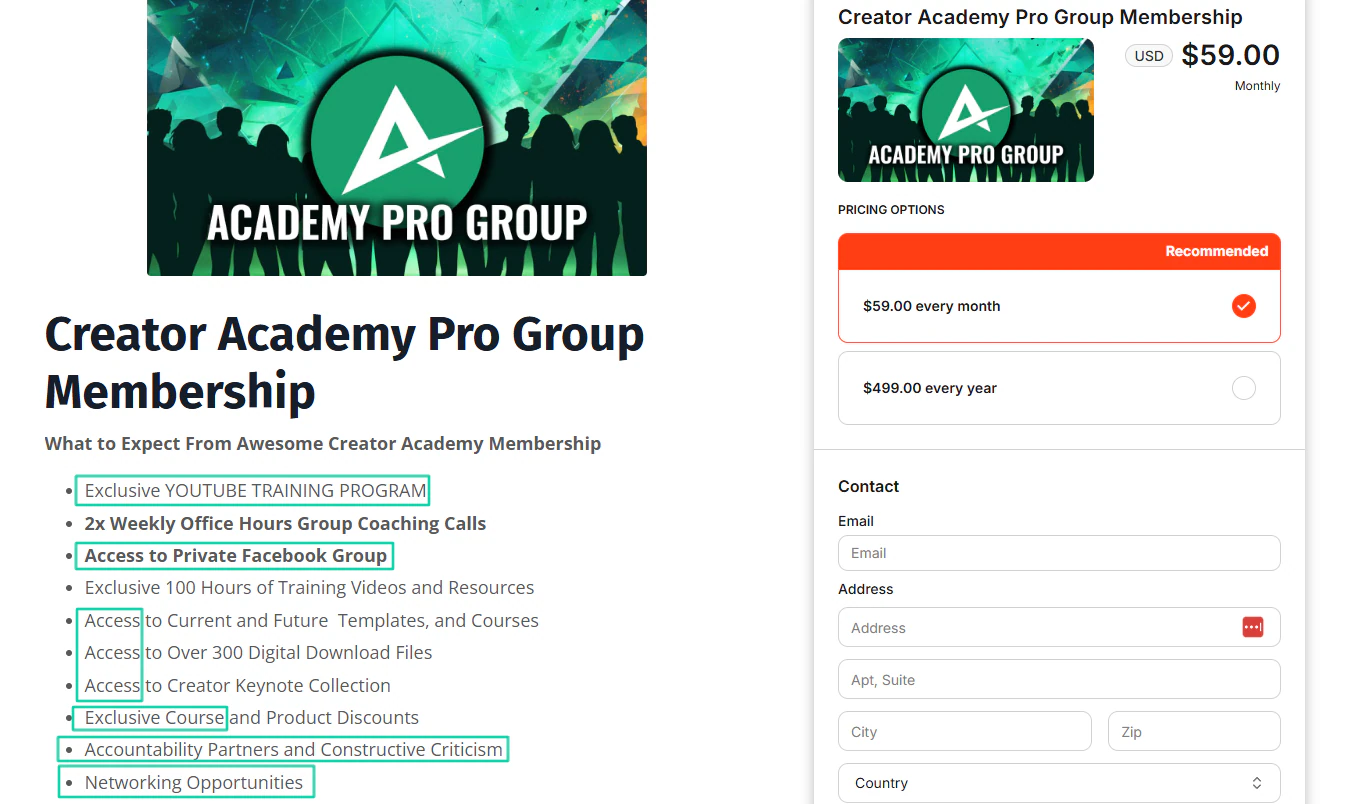
If you want to build your paid community, you should be able to offer such advantages to your audience. By offering that value, they see the need to join.
[fs-toc-omit]15. Repurpose content for other platforms and monetize there
If you’re looking to make money on YouTube, consider repurposing your content for other platforms.
You will be surprised to know that one YouTube video can become dozens of monetized content pieces across other platforms.
No need to create more content, just distribute the same one better.
So, basically, you can repurpose a single long-term YouTube video into:
- TikToks
- Instagram Reels
- YouTube Shorts
- X/Twitter posts
- LinkedIn content
- Podcasts
And the amazing thing is that each platform creates additional monetization opportunities.
By repurposing content, you can gain more visibility, potentially attracting new subscribers and converting them into paying customers.
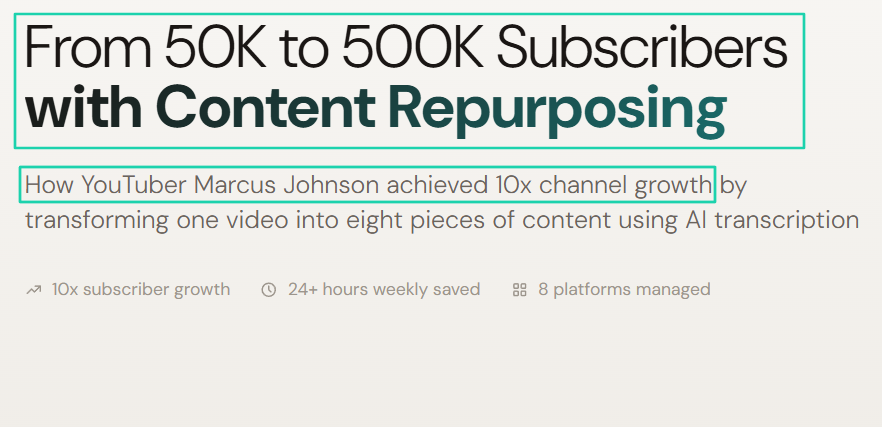
This is the strategy that helped the YouTuber Marcus Johnson move from 50,000 to 500,000 subscribers.
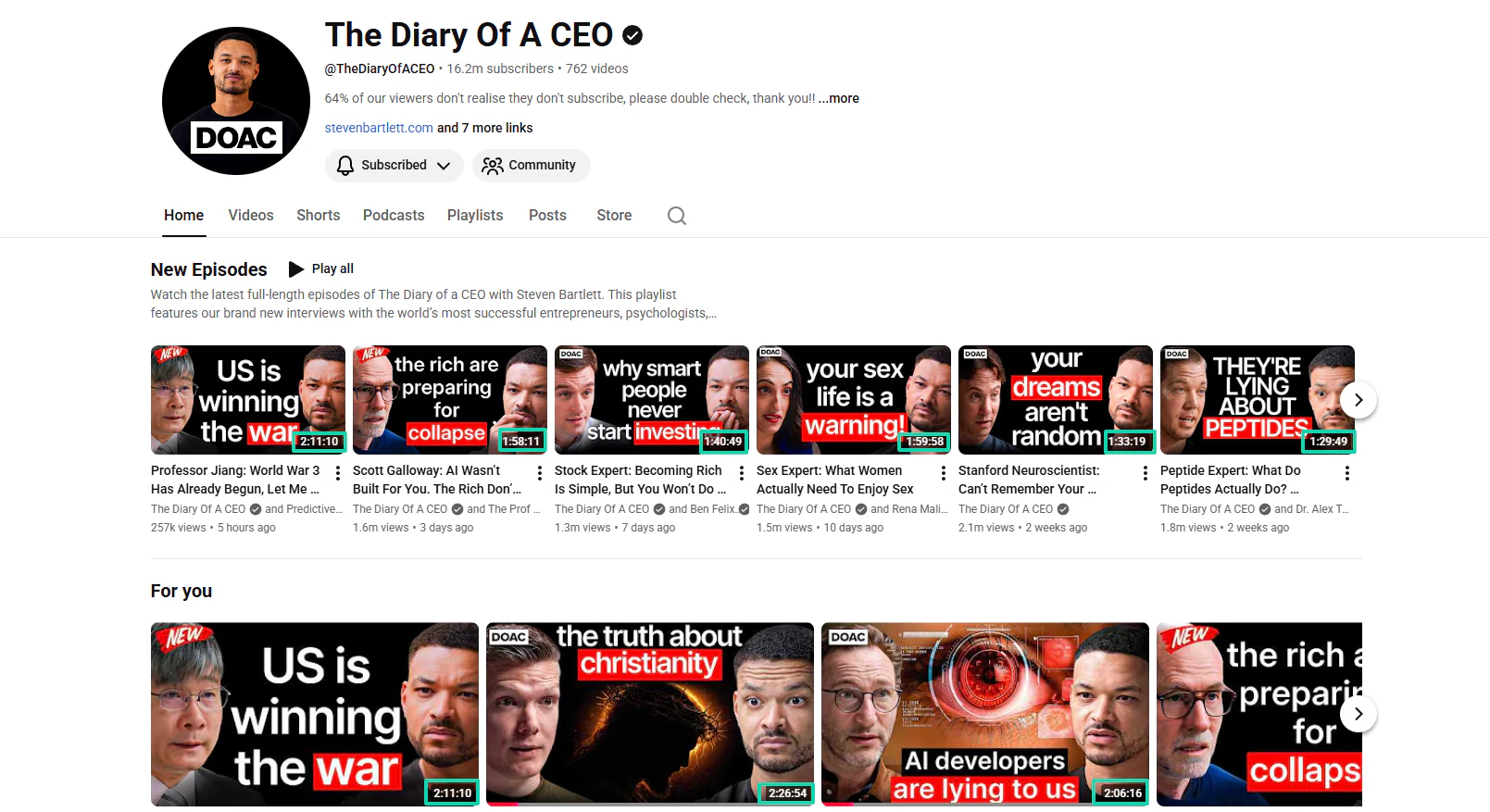
Take a look at the popular YouTube channel “The Diary of A CEO” with Steven Barlett as the host.
This is where they post long-form videos (2h+).
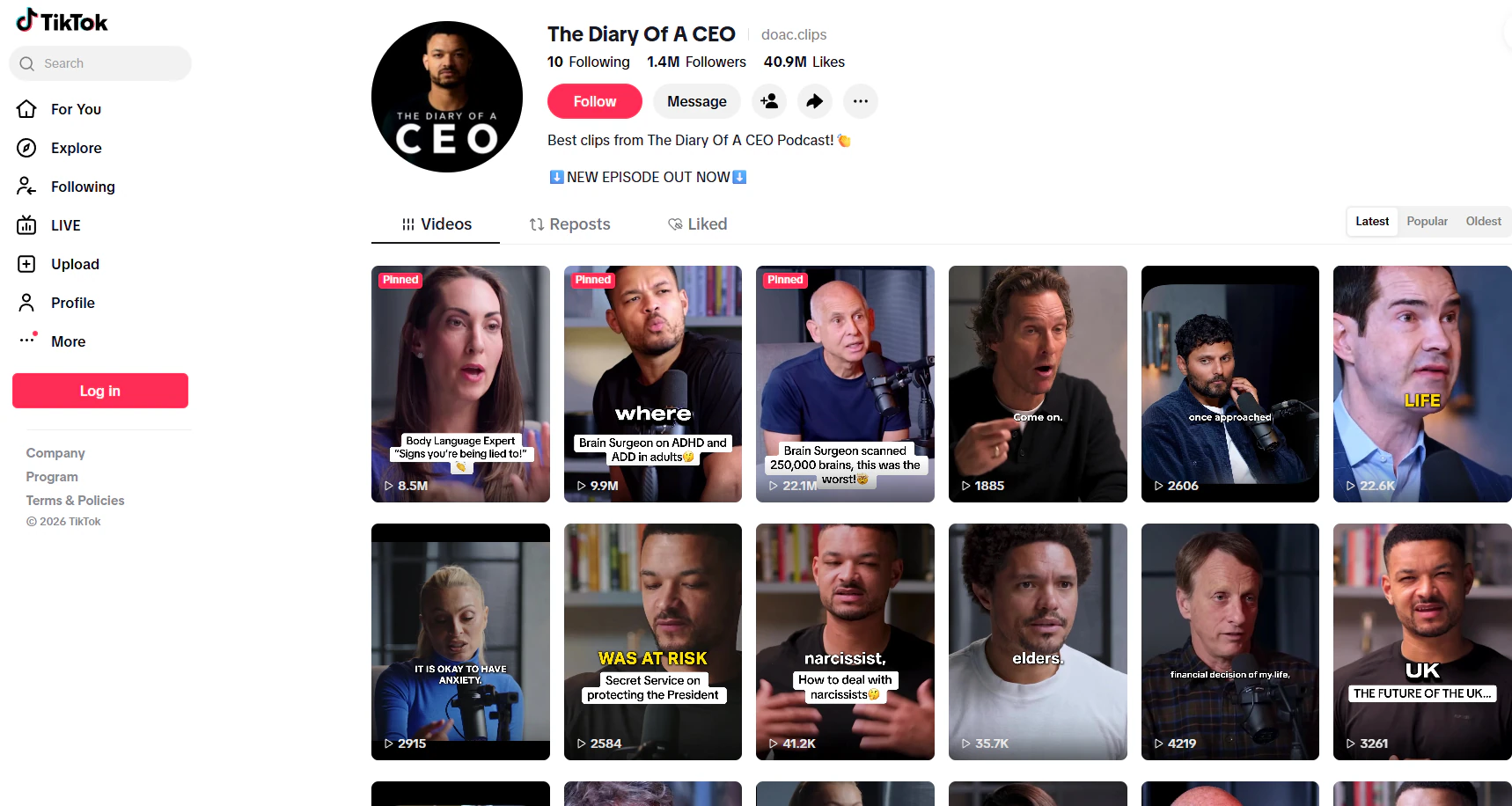
They use clips of those videos and post them on TikTok.
They also do that on Instagram.
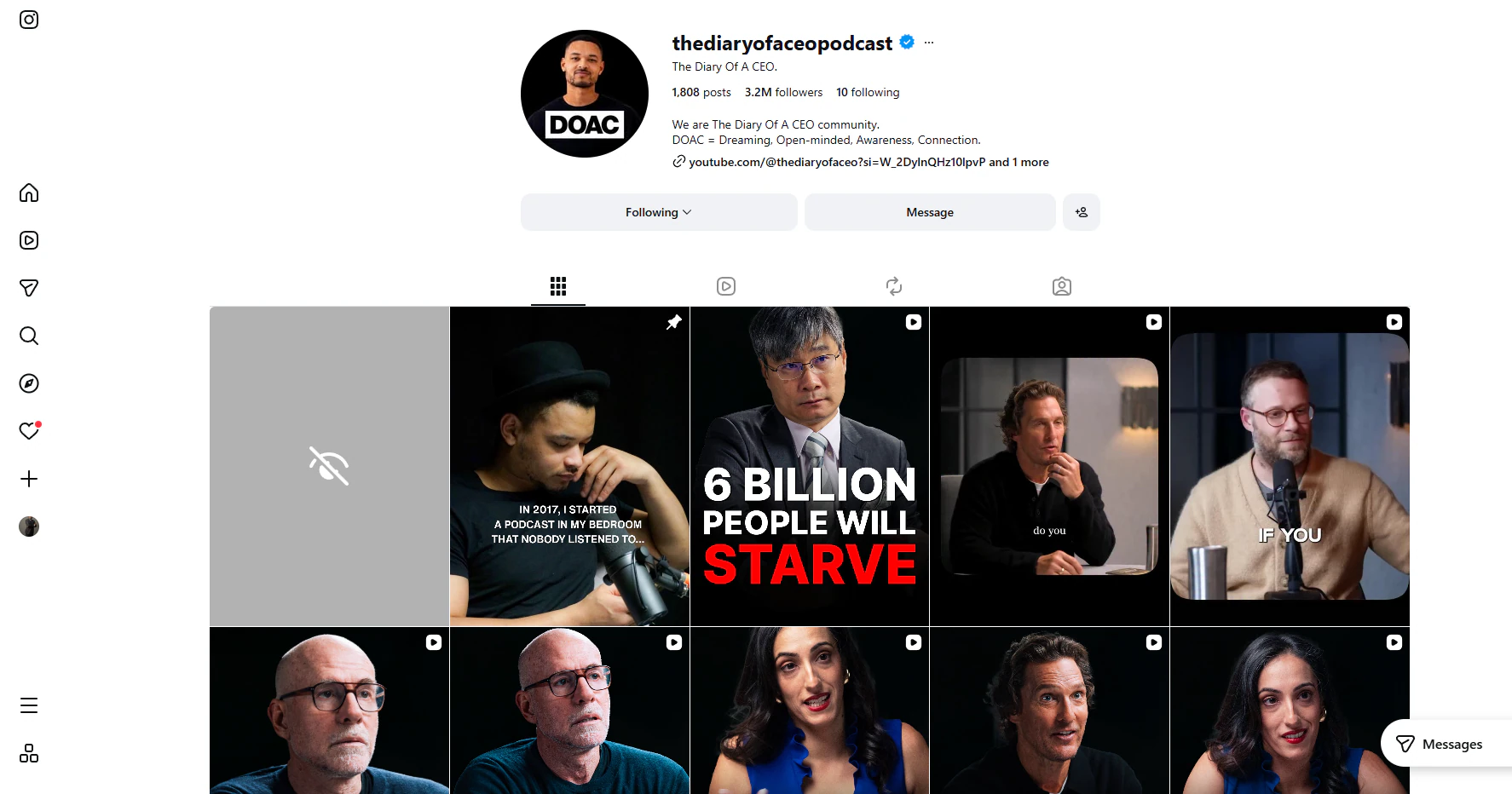
This is content repurposing. There are platforms like Repurpose.io, Beehiiv, or Opus Clip to help you achieve that.
The good news is that repurposing multiplies both reach and revenue without requiring entirely new content every day.
[fs-toc-omit]16. Drive traffic to a blog/website
Another way to make money on YouTube is to drive traffic to your blog or website.
This is what many creators do. They use YouTube as the top of their marketing funnel and direct viewers to their website, where they have more opportunities to make extra money.
With a website, you have:
- Full ownership of your audience experience
- SEO traffic from Google
- Multiple monetization methods on one platform
If you can attract website visitors, you can monetize them through ads, affiliate marketing, digital products, email capture, or services.
Mia, who is a content and business coach, shared on YouTube how she’s driving traffic to her blog in 2026.
Right below the video, she added the link to her website.
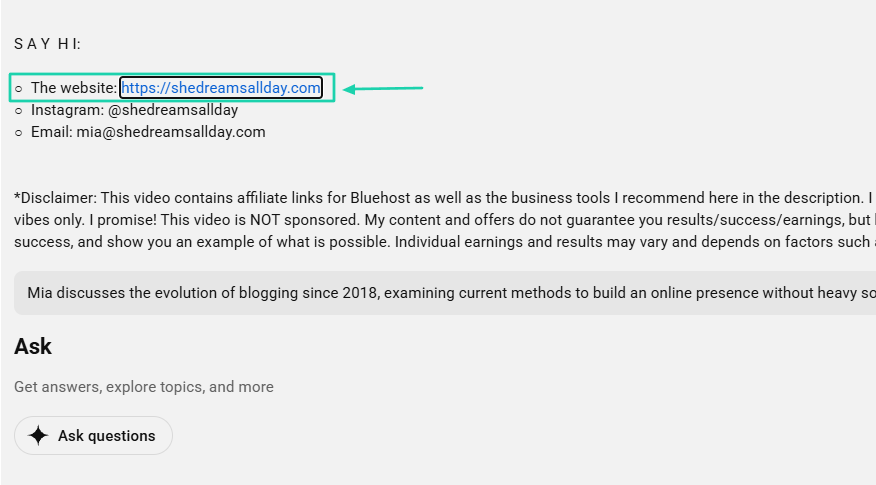
It takes you to her blog.
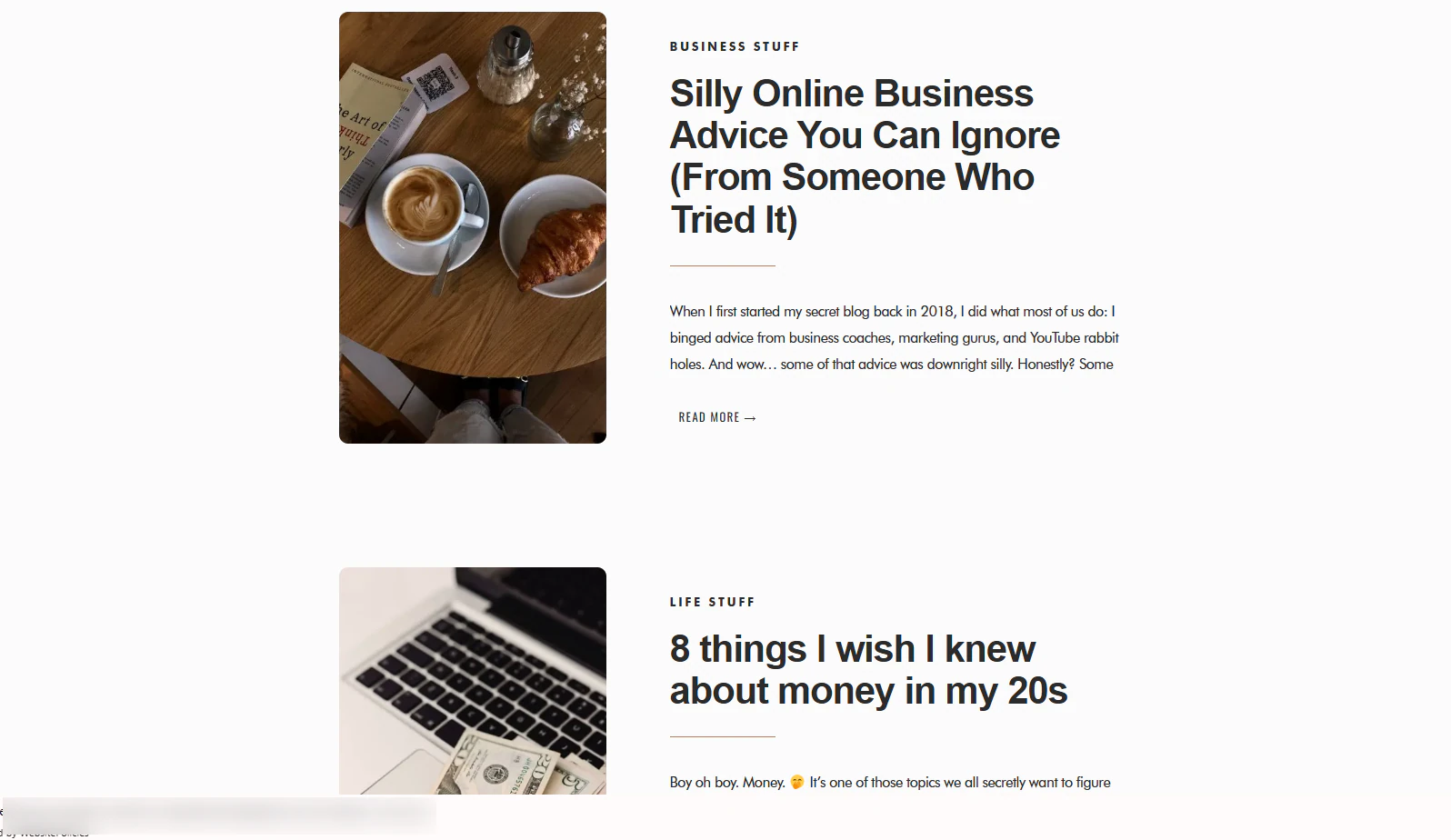
She posts ads all over one of her blogs titled “Silly Online Business Advice You Can Ignore (From Someone Who Tried It).”
Mia said in that same post that she makes around $1,000 from ads, and her email list generates $7,000+ per month.
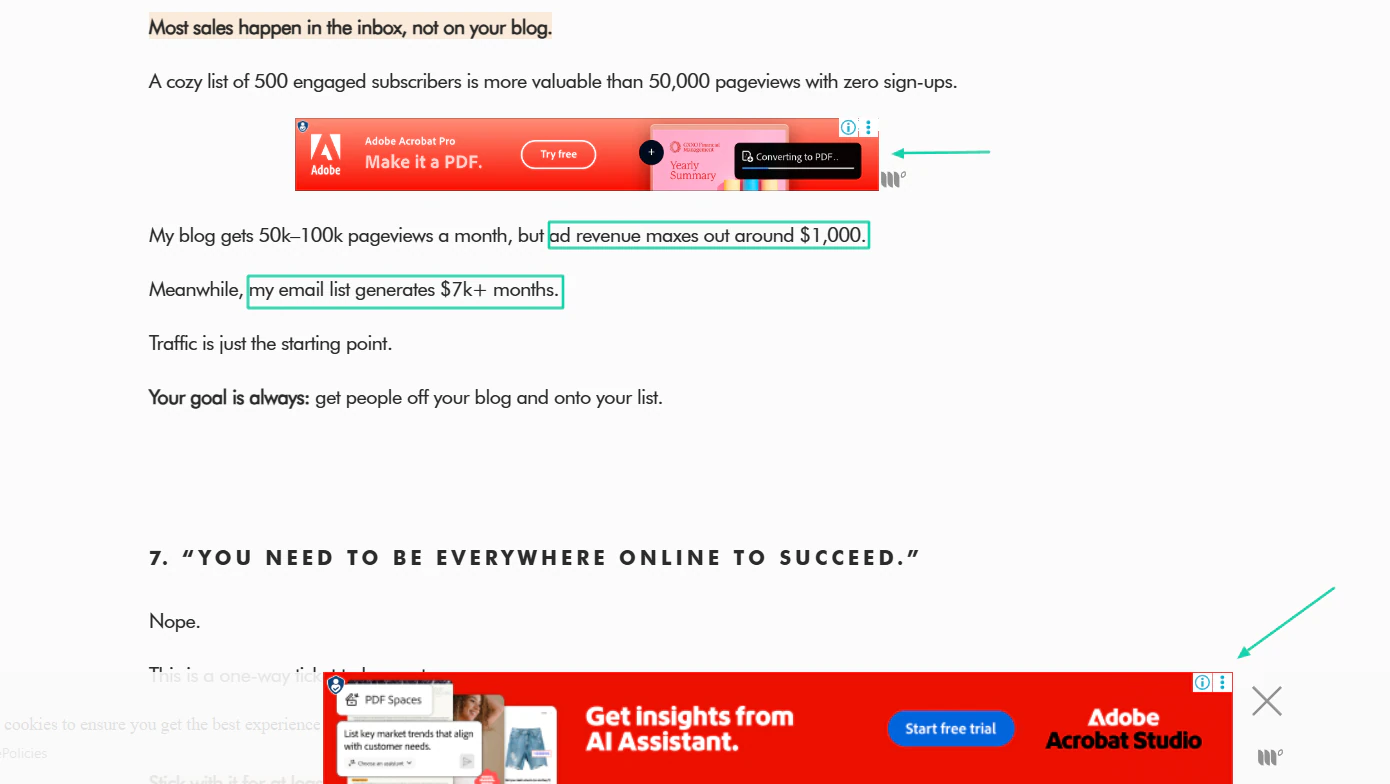
That’s the strategy. Through her YouTube channel, she can promote her website and blog, attract more readers, and make more money.
This shows that many revenue streams can coexist.
[fs-toc-omit]17. Become a brand ambassador
Making money on YouTube can also come from becoming a brand ambassador. This is a long-term partnership where you consistently represent a company or brand.
It goes beyond one-off sponsorships since you become the face of the brand. And it can include:
- Monthly campaigns
- Product integrations
- Social media promotion
- Event appearances
- Affiliate partnerships
YouTuber Shannon discussed in a video how being a brand ambassador was rewarding. In that particular video, she was seen holding a cheque for $1,180, a payment she received from the brand she works with.
One reason brands increasingly prefer ambassadors over one-time sponsors is that long-term partnerships feel more authentic.
Another reason is that trust compounds over repeated exposure.
After all, there is no harm in becoming a brand ambassador. So you may as well give it a try.
[fs-toc-omit]18. Sell templates, presets, or tools
As a content creator, it’s possible to make money on YouTube by selling templates, presets, or even tools.
Creators package systems or workflows into downloadable assets. Many things can count as templates or tools:
- Notion templates
- Canva templates
- Lightroom presets
- LUTs for video editing
- Spreadsheet systems
- AI prompt packs
- Automation workflows
You can sell any of them based on your skills and make money over and over.
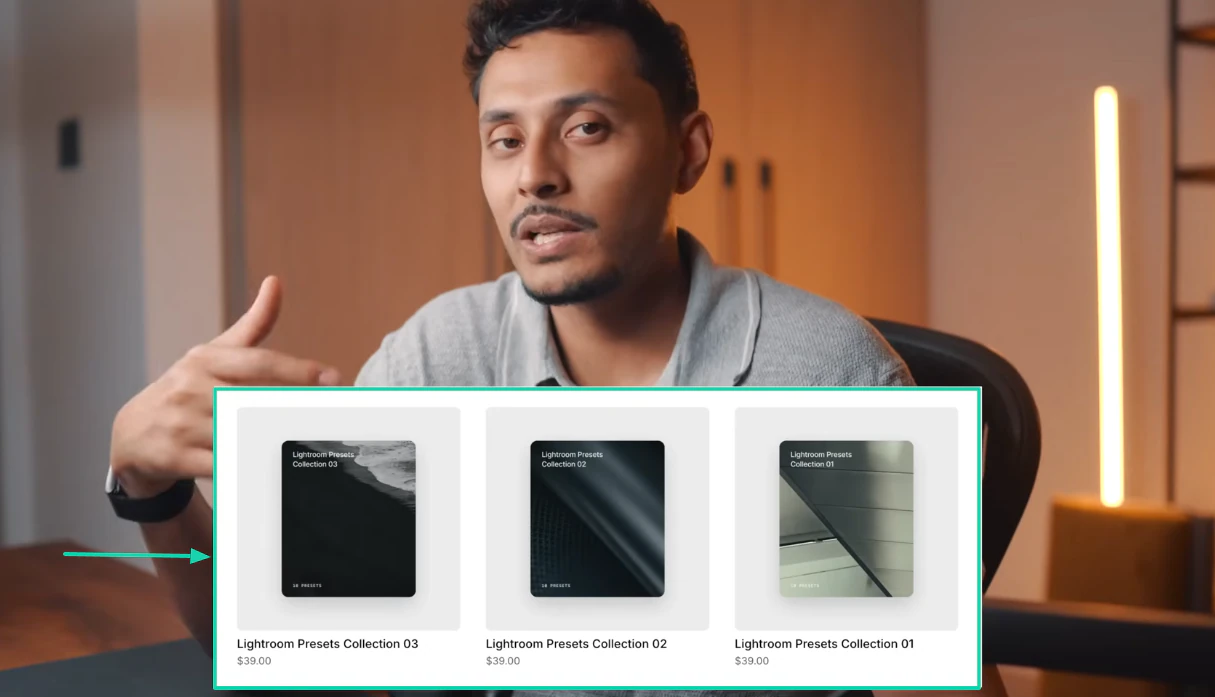
Oliur explains in a video how he made $200,000+ selling presets.
In that same video, he shared the three collections of Lightroom presets he’s sold. Each costs $39.
He went on to display other iPhone ProRAW presets he sells. Each preset is also at $39.
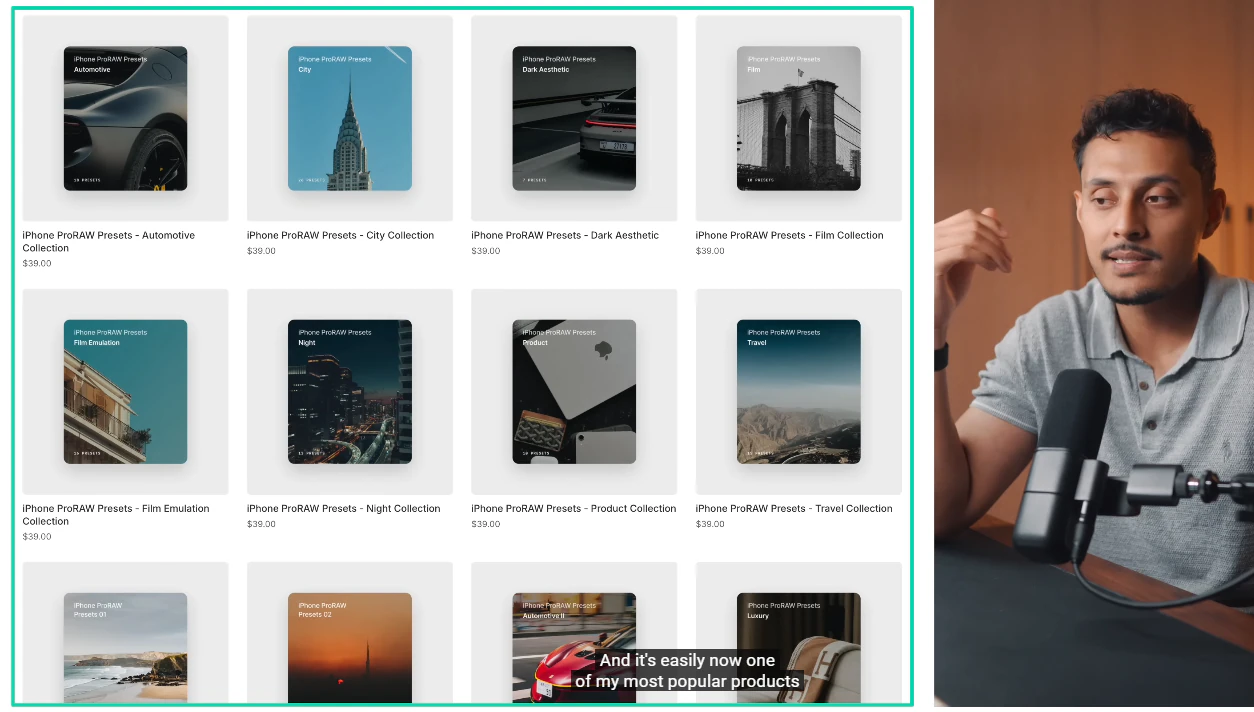
You can see how Oliur uses YouTube to sell presets, and from the look of things, he has been doing extremely well.
This is something you create once and sell repeatedly.
If you believe you can do this, go ahead. Teach the workflow on YouTube, show real use cases and transformations.
Once you start selling, people will definitely buy.
[fs-toc-omit]19. Build a personal brand
If you’ve read to this point in the article, then you’re really interested in making money on YouTube.
Quick question: have you ever considered building a personal brand?
You can use YouTube to build a recognizable personal brand that opens doors to much larger opportunities.
A strong personal brand can lead to:
- Speaking engagements
- Book deals
- Business ventures
- Investments
- Media appearances
- Partnerships
Remember, we spoke about the Diary of A CEO? His YouTube channel has posted 700+ videos and accumulated over 16M subscribers.
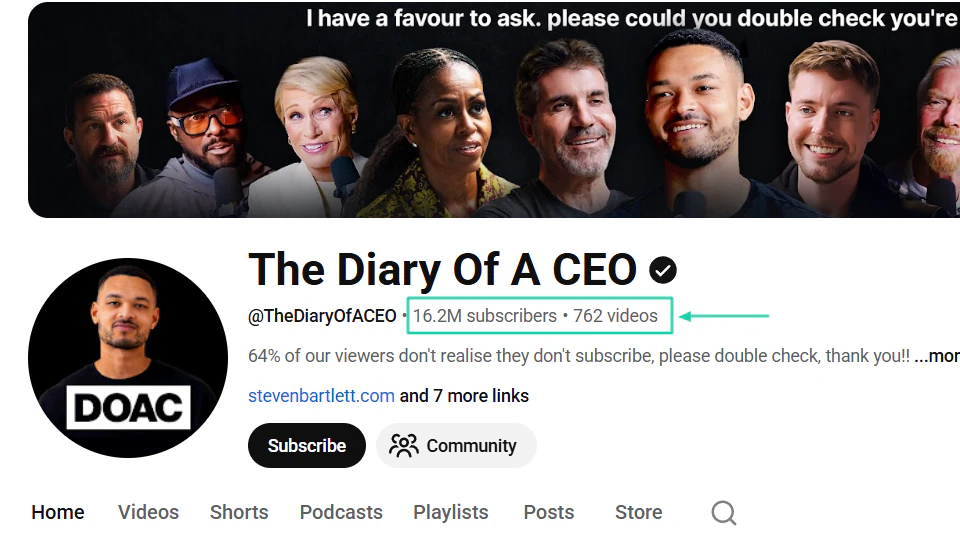
The face behind this YouTube channel, Steven Barlett, has his own website.
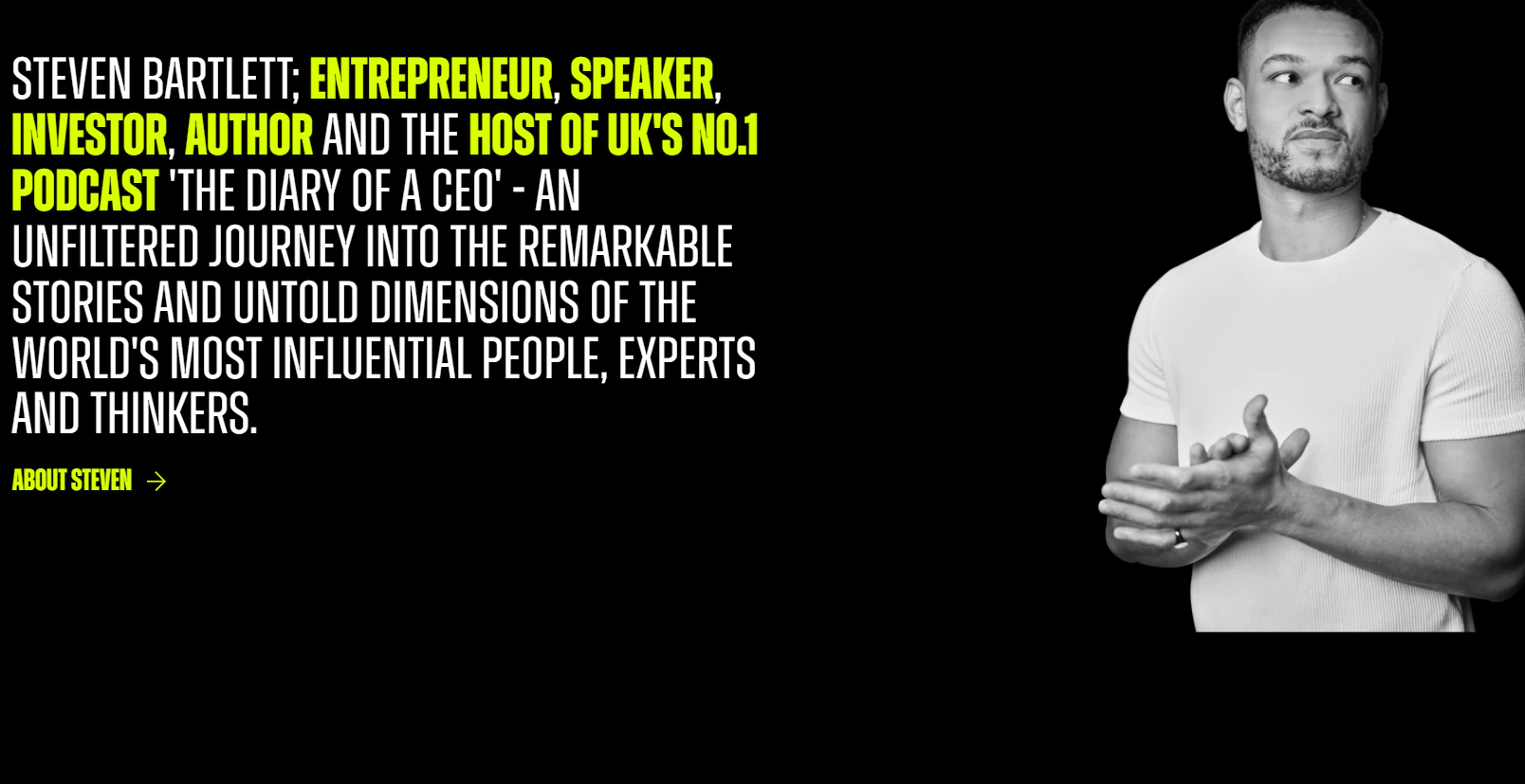
He’s built his personal brand so much that he has a dedicated page for his speaking engagements.
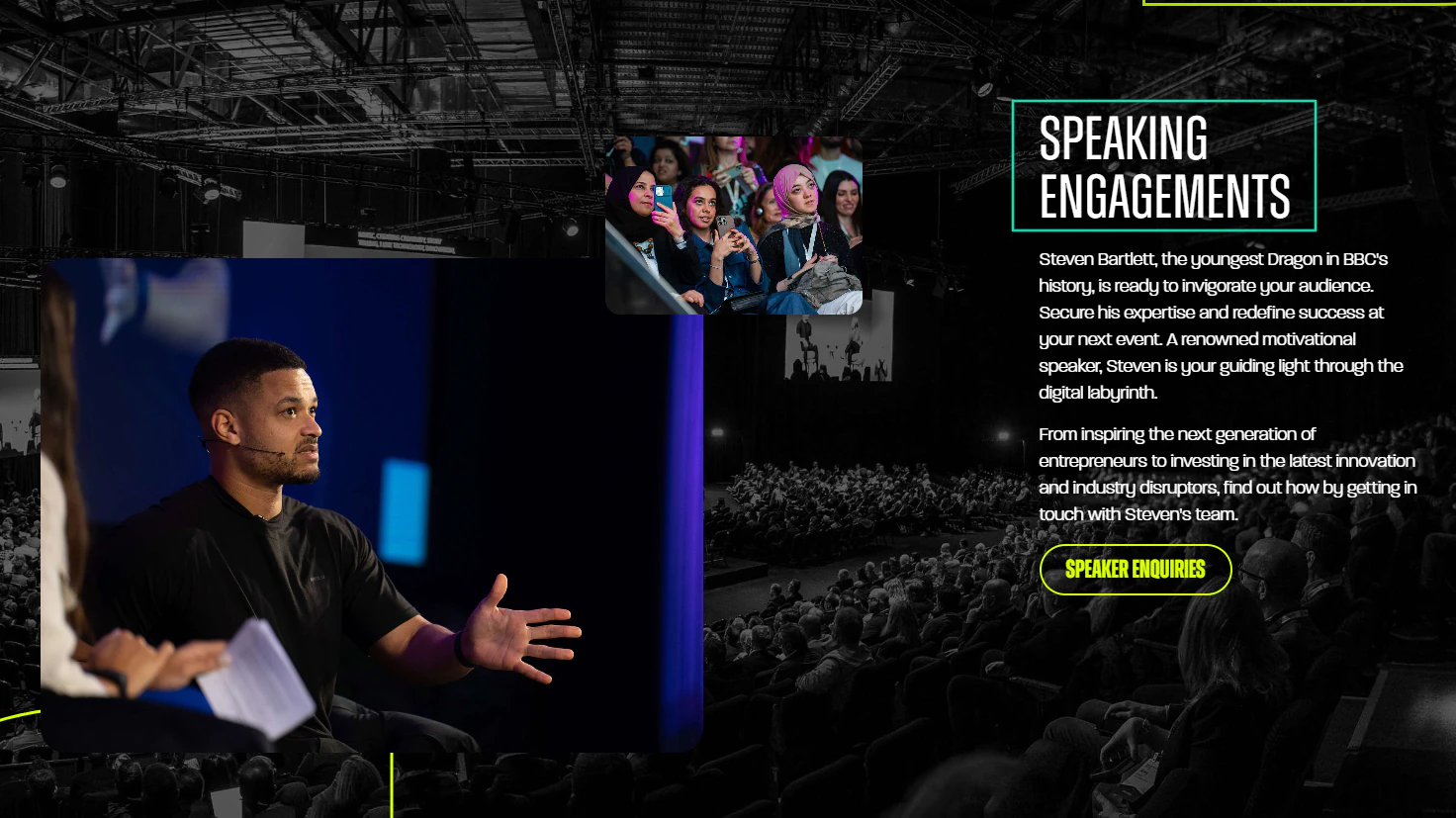
Like I said before, building a personal brand can open many doors.
One thing to do is consistently publish content that aligns with a clear identity or expertise, and have a professional website. Then, monetize your reputation and influence across multiple industries.
If you still want to know more, this 6-hour course from Caleb Ralston may help.
[fs-toc-omit]20. Offer consulting or coaching
Offering consulting or coaching is the last method we’ll discuss to help you make money on YouTube. But it’s certainly not the least.
The way it works is you publish educational or authority-driven videos, build trust and credibility, then offer personalized guidance through:
- Consulting calls
- Coaching programs
- Group sessions
- Strategy audits
But remember, it will be very challenging to offer consulting or coaching if you are not seen as an expert in a specific area.
Tom Youngs is an example of someone who has been building authority in the consulting space. He posts regular videos about consulting and coaching, including how much you can make monthly.
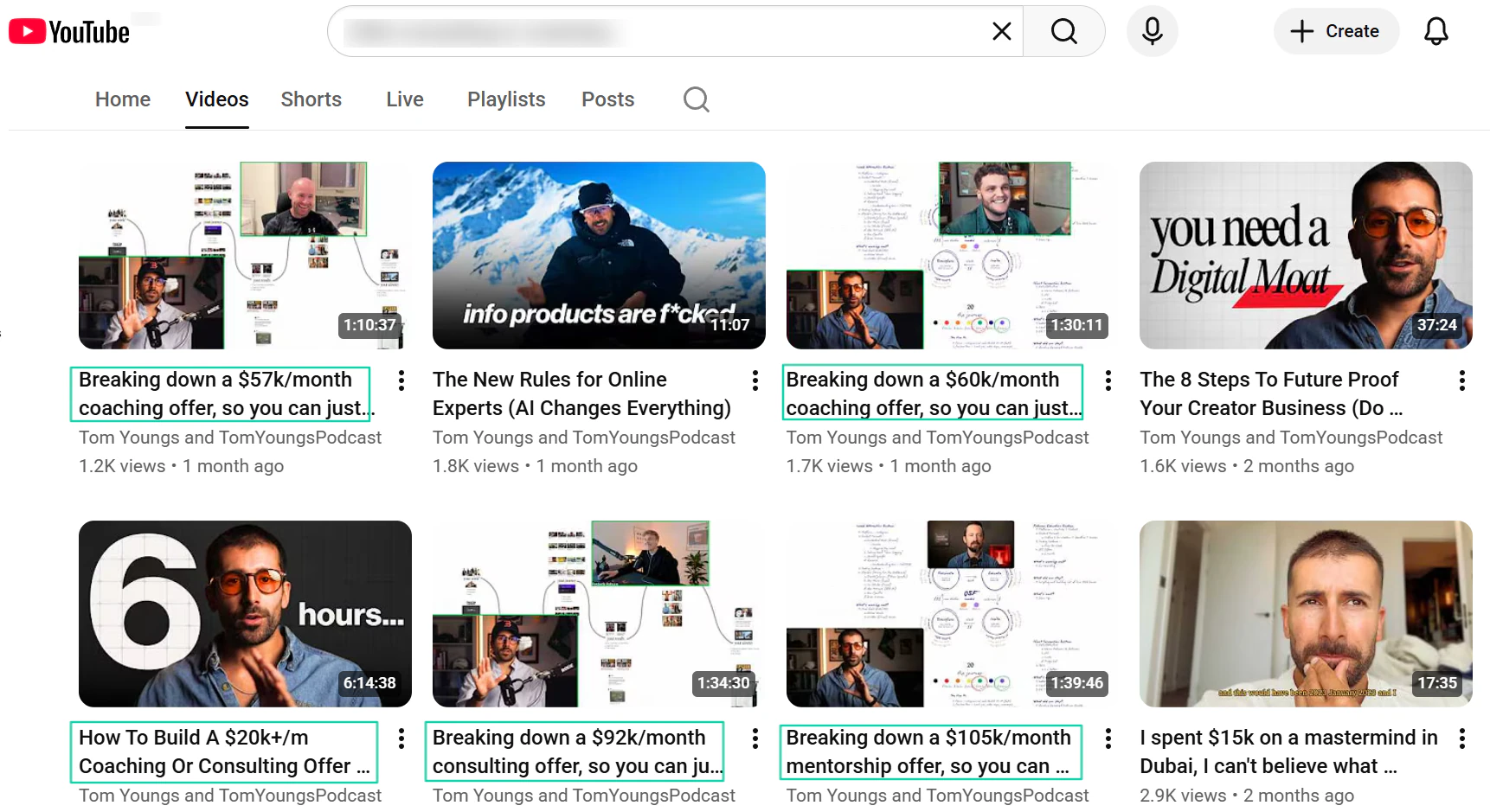
In one of his videos, he said he made about $329,000 over 4 months as a solo consultant.
If you want to offer consulting services, you can use YouTube content to show your expertise. After that, share social proof on your website, and allow people to book calls with you.
By the time viewers book that call with you, they already know your style, understand your expertise, and feel familiar with you.
Tips for making money on YouTube
To choose the best way to make money on YouTube, you should:
- 1. Match your monetization to your audience type
- 2. Start with what you can control
- 3. Stack revenue over time
- 4. Optimize for profit, not just views
Let’s take a look at each one.
1. Match your monetization to your audience type
Let’s start with this uncomfortable truth: you can’t really make money on YouTube if you don’t match your monetization to your audience type.
Different audiences buy different things. Because of that, you should first understand who watches your videos and what they value.
For example, if you have a business-focused audience, they are likely to pay for consulting or courses.
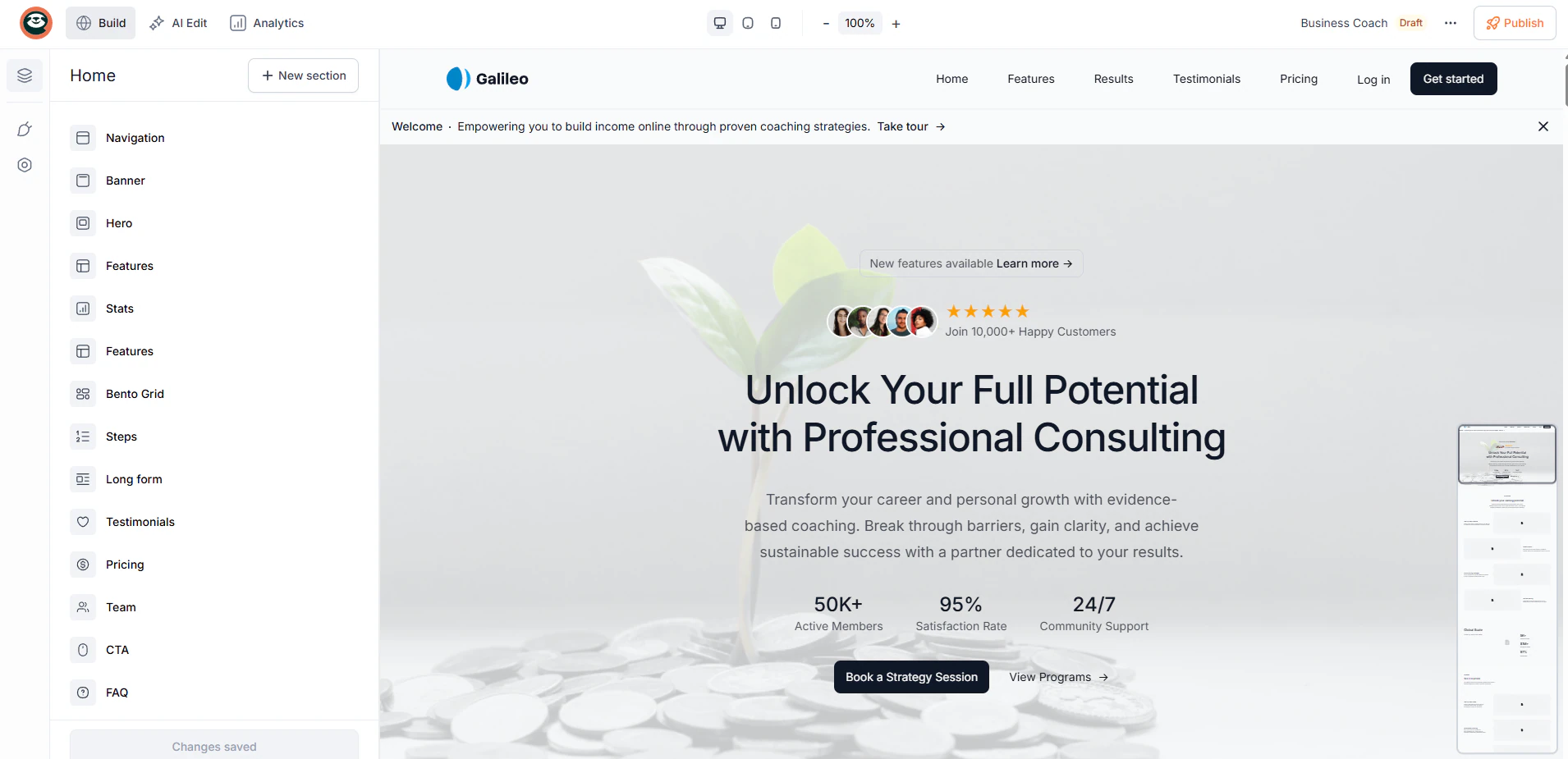
An education and productivity-focused audience may respond well to digital products or newsletters.
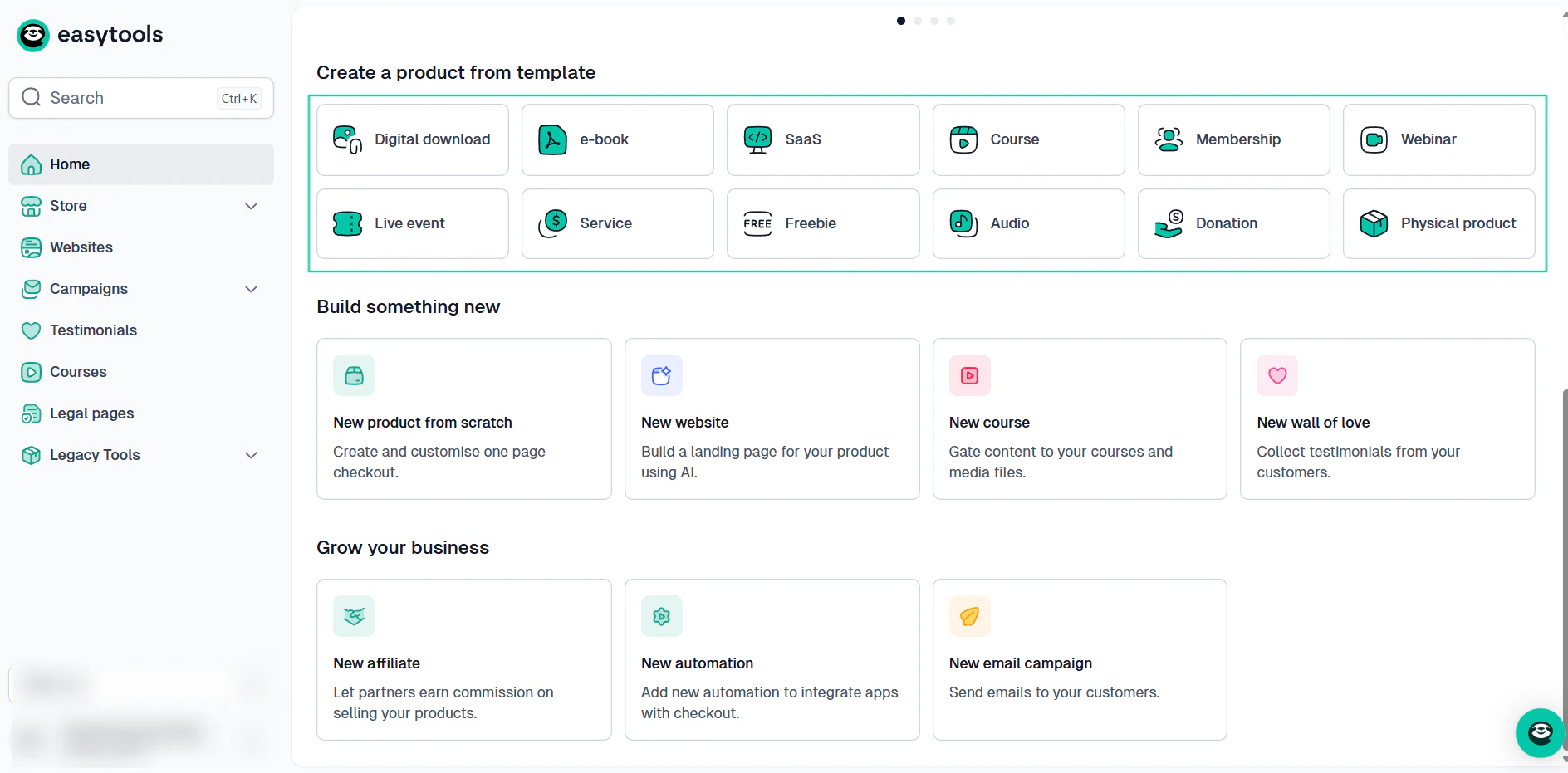
Meanwhile, a fitness audience may buy workout plans or coaching programs.
At this stage, the audience size doesn’t matter. If they trust your recommendations, they will become customers.
Finding out what your audience already spends money on will guide your YouTube monetization strategy.
Now, to give you more clarity, here’s a table showing the best YouTube monetization methods for each audience type.
| Audience type | What they want | Best monetization methods |
|---|---|---|
| Finance/Business | Results, tools, education | Courses, affiliates, consulting |
| Gaming | Entertainment, community | Sponsorships, memberships, live streams |
| Tech | Product recommendations | Affiliate marketing, sponsors |
| Fitness | Transformation | Coaching, courses, programs |
| Education/Productivity | Skills and systems | Digital products, courses, newsletters |
| Lifestyle/Vlogs | Personality connection | Merch, sponsorships, brand deals |
| Do it yourself (DIY)/Crafts | Tutorials and tools | Affiliate links, templates, products |
With that in mind, analyze your audience, what they want, and choose the right YouTube monetization method.
2. Start with what you can control
To make money on YouTube, start with what you can control. This is because many creators focus too much on options like YouTube AdSense when they start.
The issue is that YouTube ad revenue depends on views, watch time, CPM rates, and platform policies. These are beyond your control.
You have to start with income sources you control more directly. A few examples are:
- Digital products
- Freelance services
- Affiliate marketing
- Coaching or consulting
- Sponsorship outreach
- Selling templates, guides, or courses
For example, if you teach music on YouTube, you can create a coaching program or a course on Easytools to help beginners learn the basics.
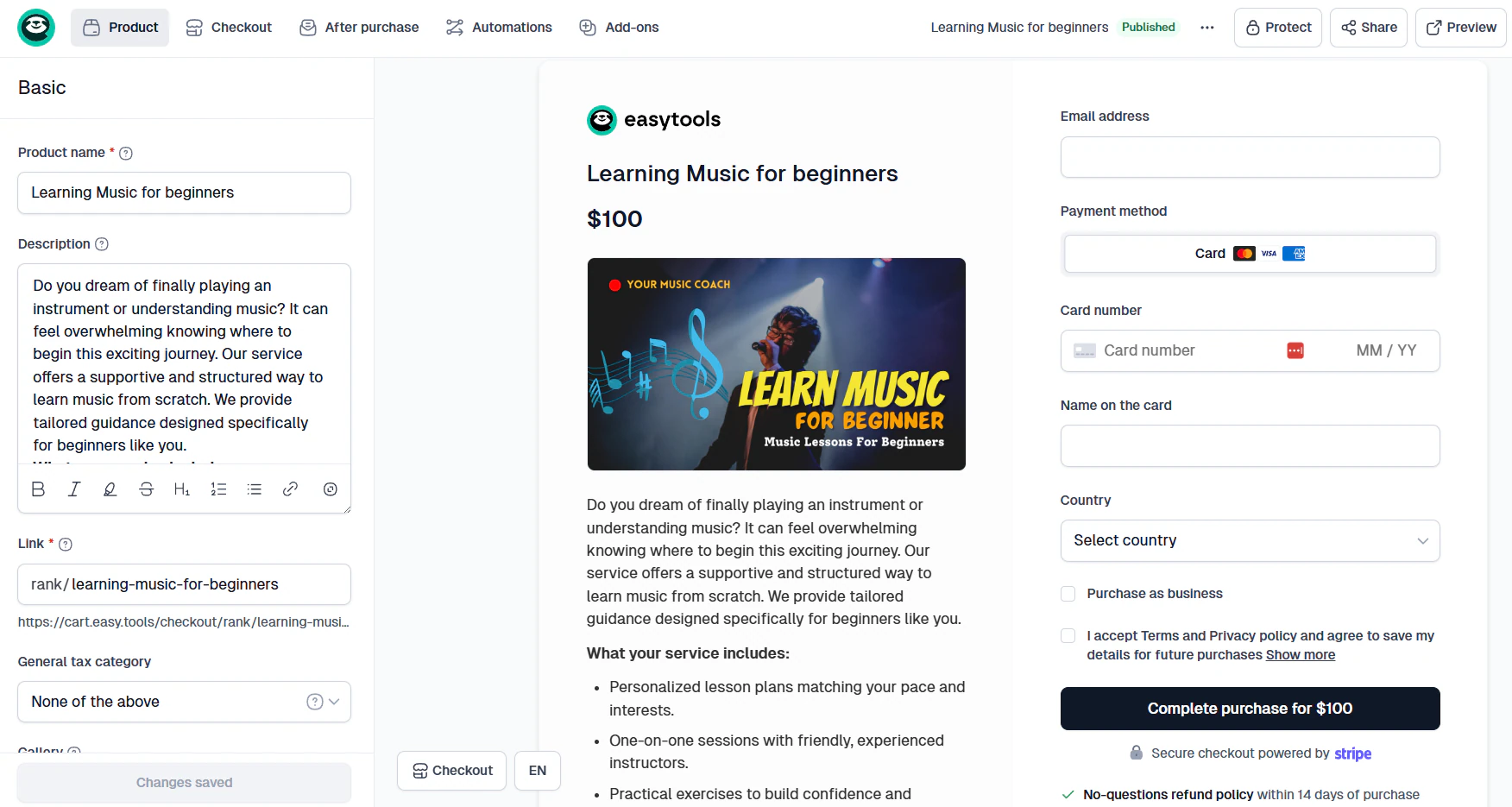
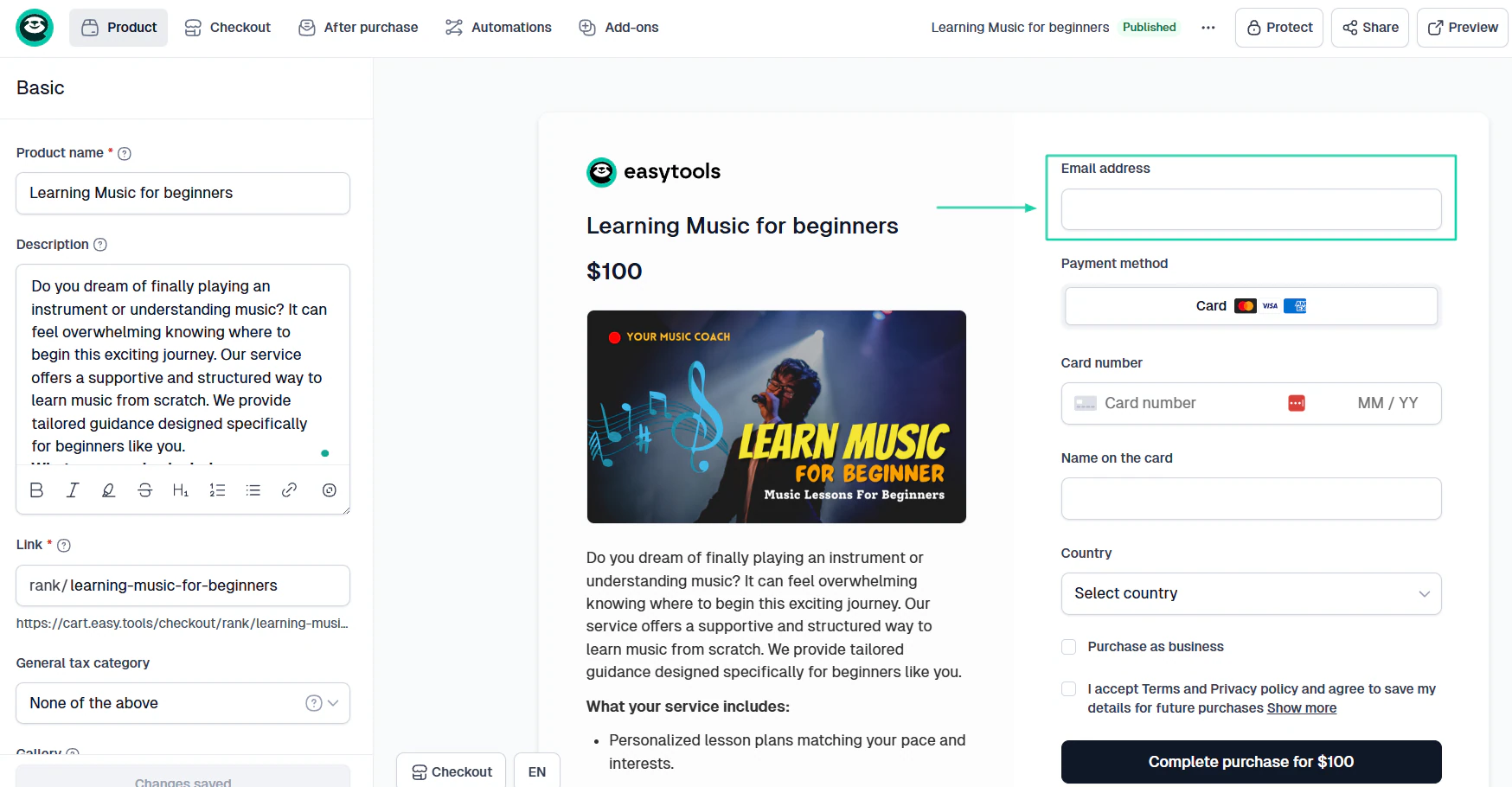
Easytools will automatically collect buyers’ email addresses during payment.
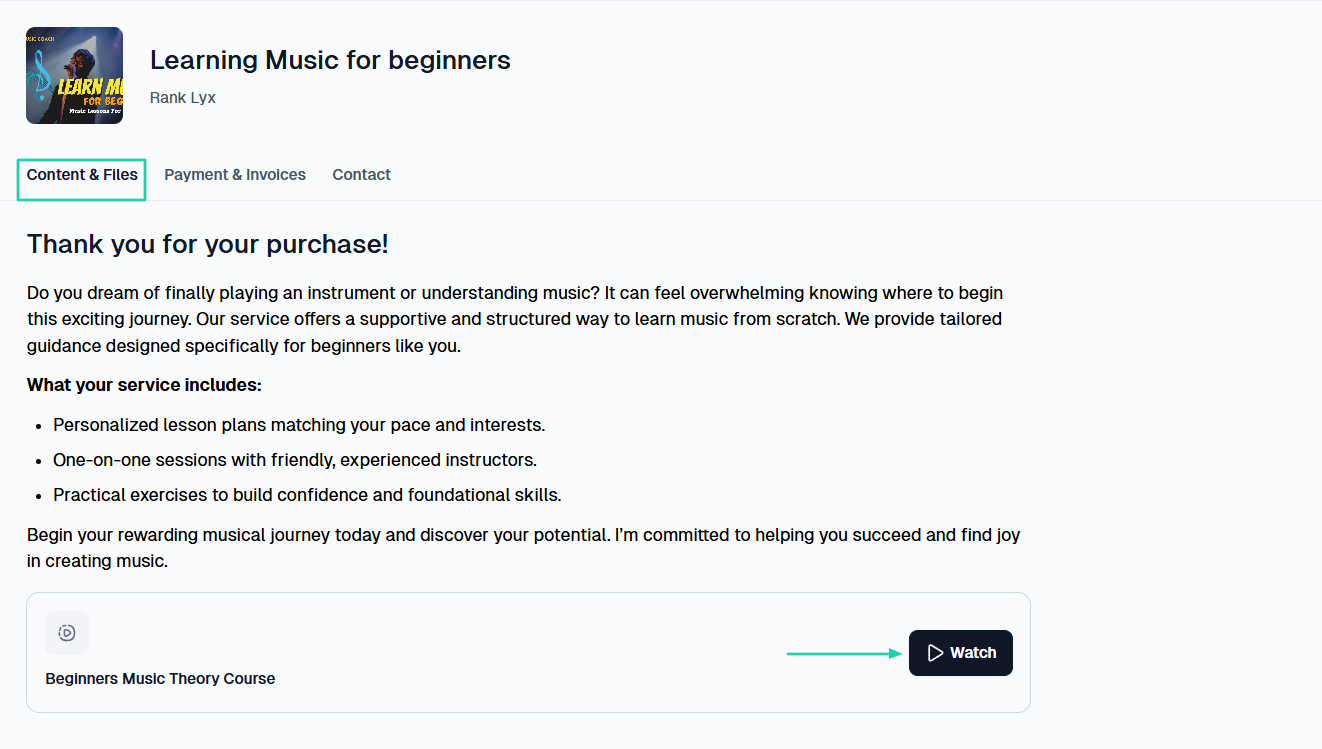
Also, after purchase, they can access your content.
Easytools gives you full control over your email list. This way, you can always reach out to your customers, send campaigns, nurture them, or even upsell them.
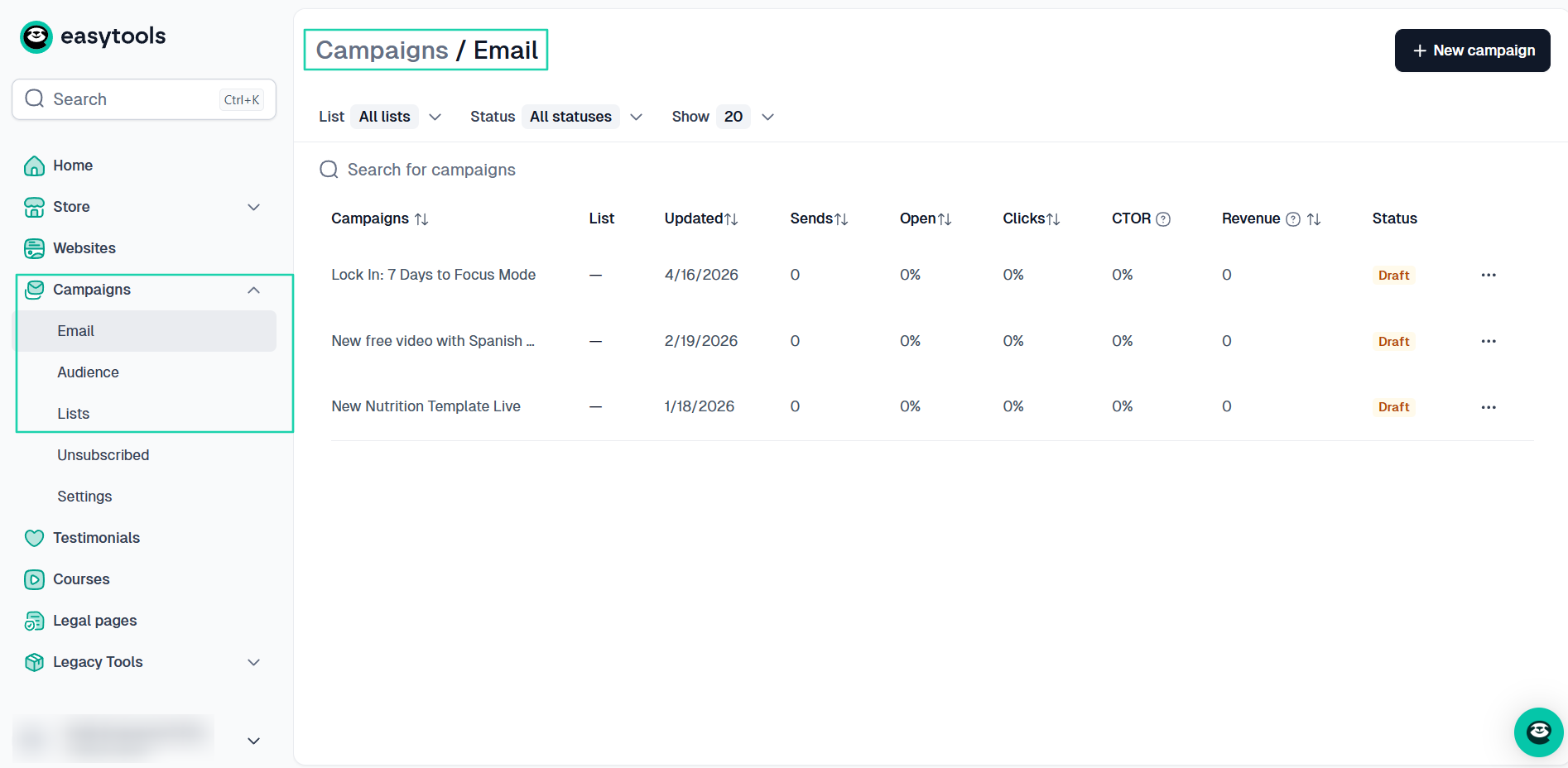
This is something you can easily control.
Using this approach, you can start earning earlier while growing your YouTube channel.
3. Stack revenue over time
You should stack revenue over time to make money on YouTube. It may sound too technical, but it simply means that you should have many income streams.
It may be a mistake to depend solely on a single source of income. For example, if you rely solely on YouTube ad revenue, you may earn less during slow ad seasons.
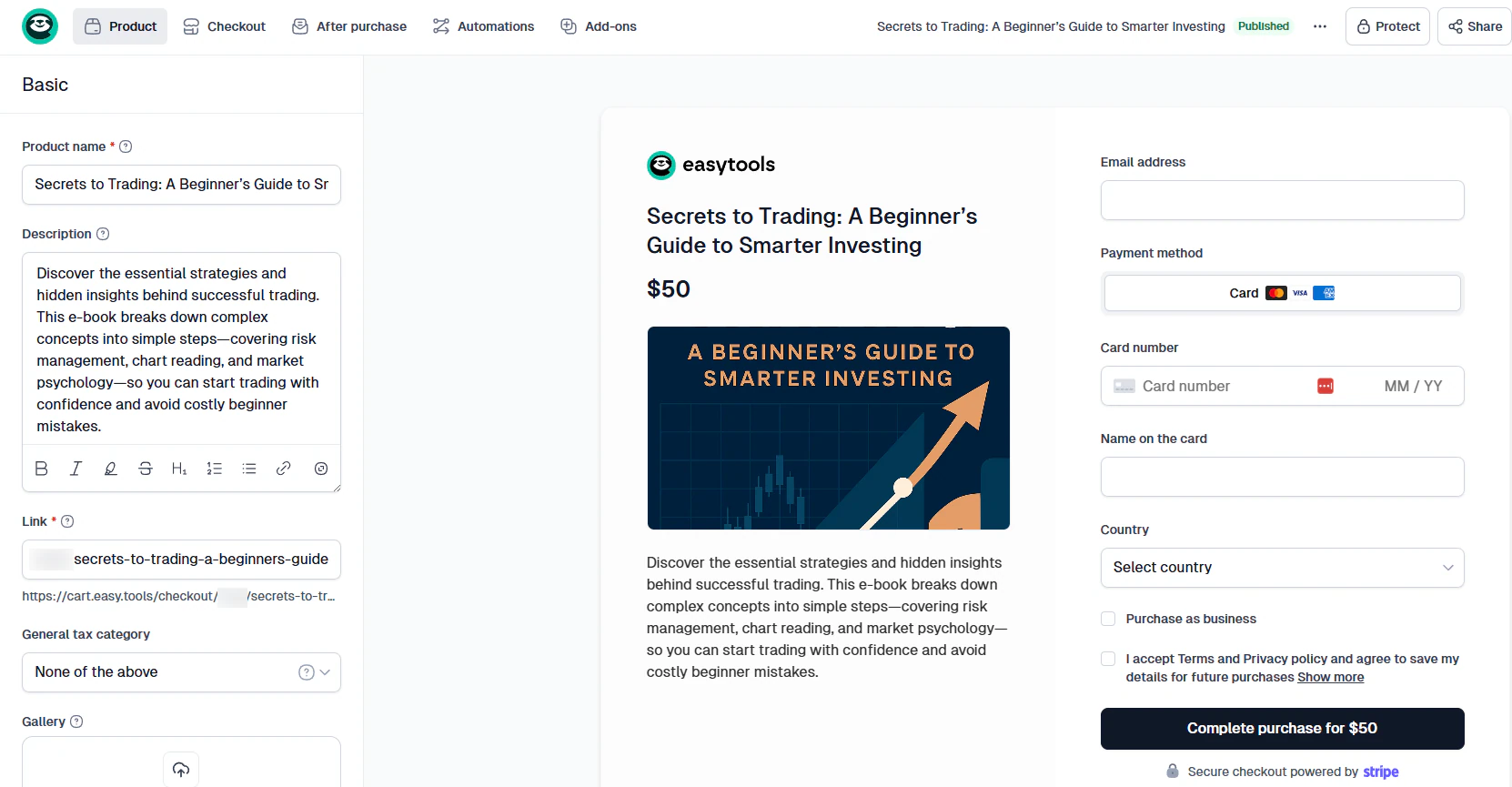
You can start with affiliate marketing. Then you launch a digital product. It could, for instance, be a guide to trading, since you may be a good trader.
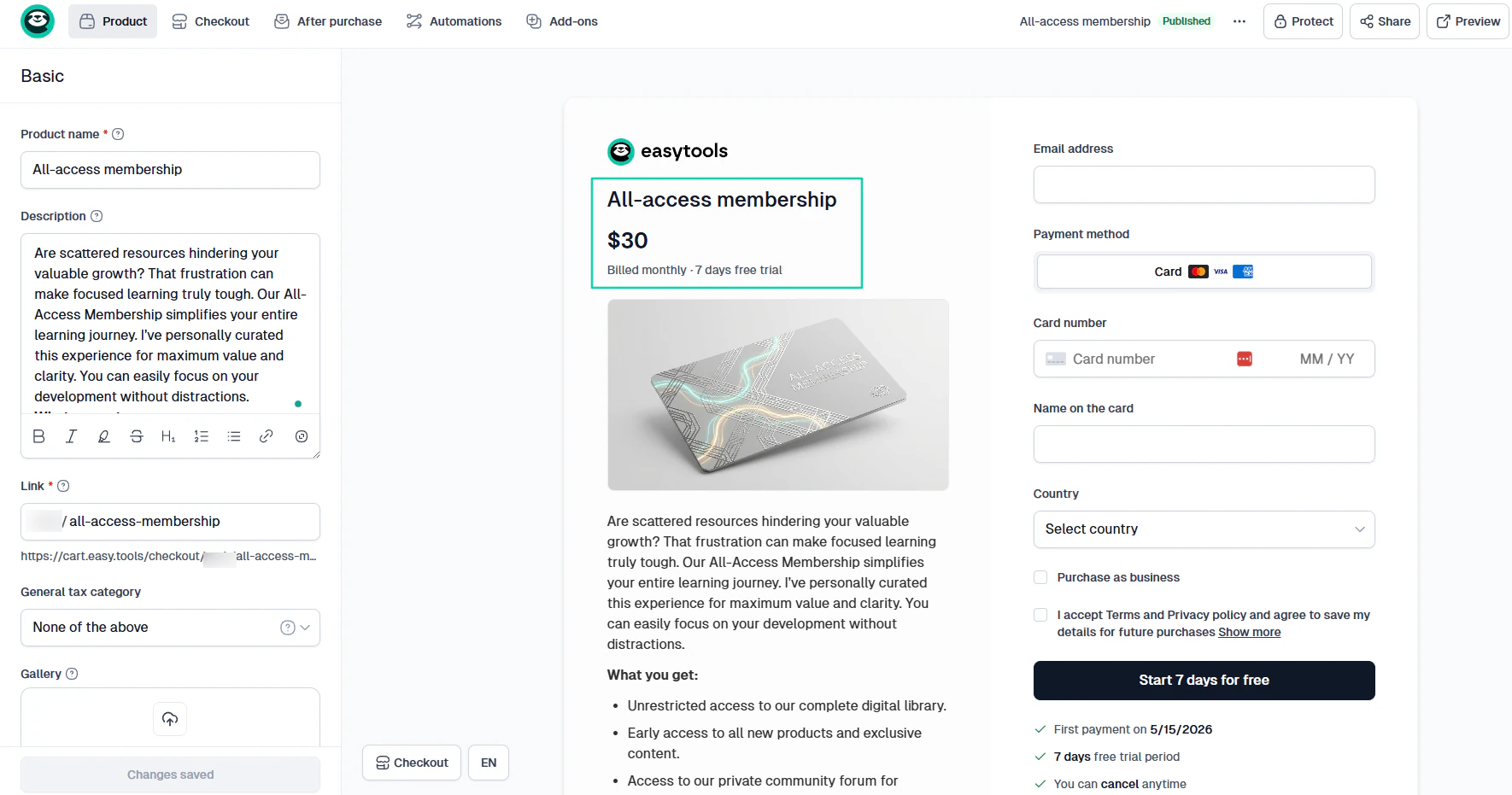
After that, you offer paid memberships.
You can also offer consulting services using your own website.

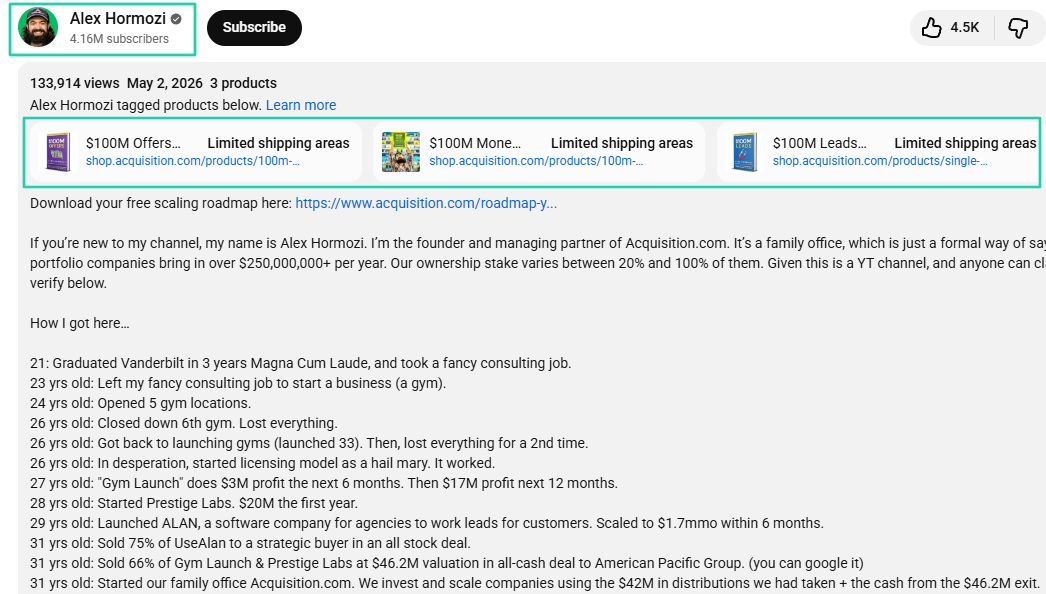
Alex Hormozi does something similar on his YouTube channel. While I was watching one of his videos, “What makes the perfect business,” a sponsored ad suddenly appeared.

Aside from that, he always tags his books in the description.
This creates (financial) stability. This way, if one income source drops, the others you have can still support the business.
4. Optimize for profit, not just views
It’s good that you want to make money on YouTube. But are you aware that more views do not always mean more money?
In other words, a creator with 10,000 loyal viewers can often make more money than one with 1 million entertainment views.
The reason is simple.
- Targeted audiences attract better sponsors
- Loyal viewers buy more products
- Educational and business content often has higher advertising rates
- Trust increases conversions
Your goal shouldn’t be to chase viral videos all the time. You should rather focus on creating content that attracts the right audience.
To help you understand better, consider YouTuber Allie Ostrander. She revealed that one of her videos had 1.5M views, yet YouTube paid her $356.52.
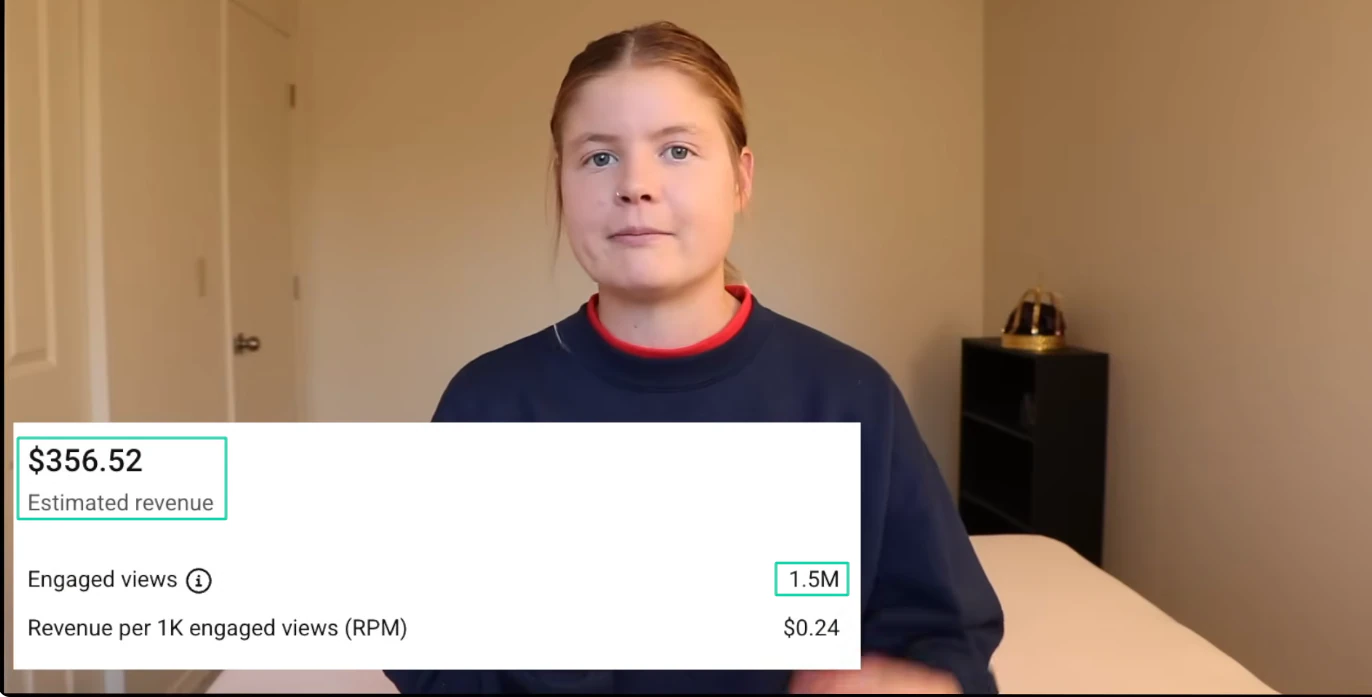
In a different video, her views were lower (711.8K), but she made $6,657.48.
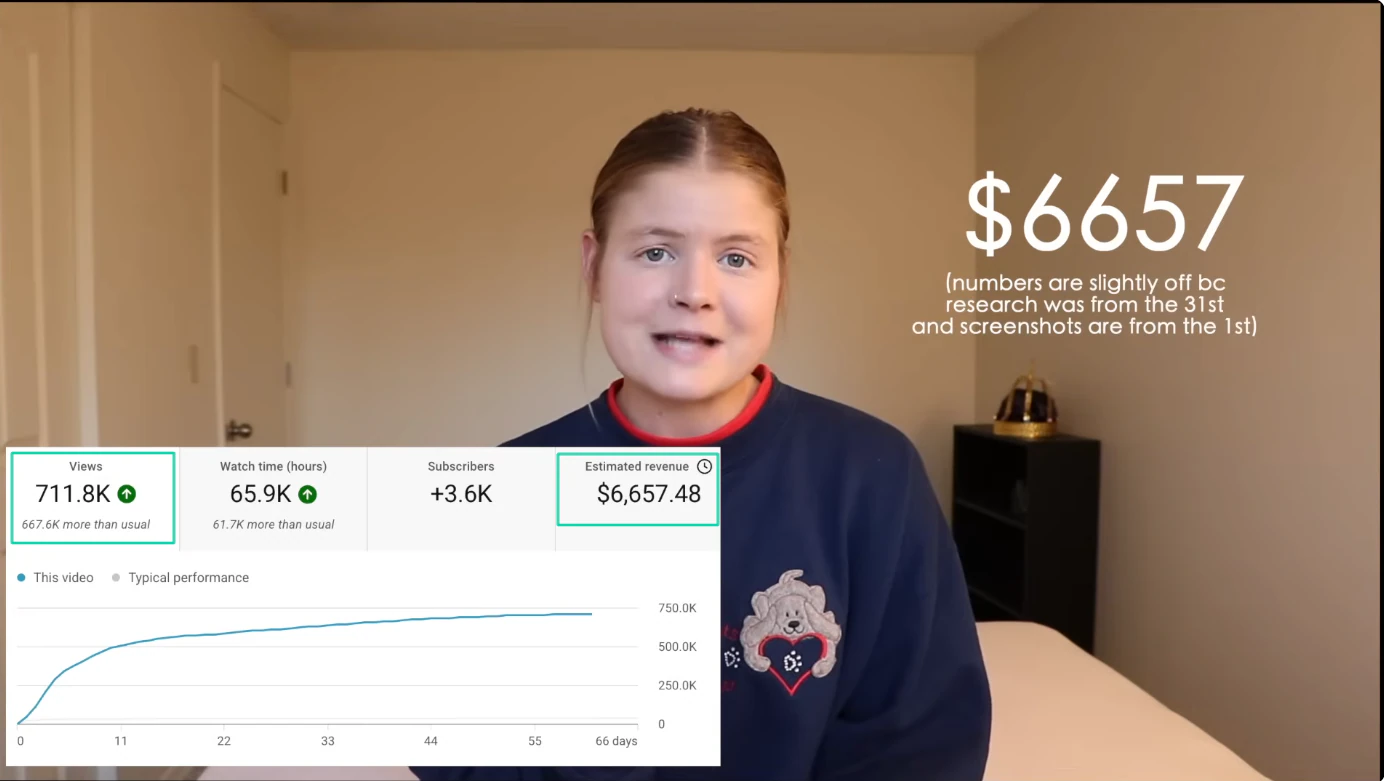
You see the huge gap? From $356 to $6,657.
This should tell you that the problem is not always the views you generate.
That’s why I am asking you to optimize for profit and not just for views. Because views do not guarantee “quit your job” money.
These are the questions you should ask yourself:
- Are these viewers likely to buy something?
- Do they trust my recommendations?
- Can I help them solve a valuable problem?
Remember that a profitable YouTube channel is built on value, trust, and audience quality. Not only the view count.
Start making money on YouTube
And that is where it ends!
In this article, I shared 20 ways to help you make money on YouTube. The goal isn’t to use them all but only the ones that align with your audience, skills, and content niche.
Start with what you can control, stack revenue over time, and optimize for profit instead of chasing views.
It’s easy to make money on YouTube if you take the time to put in place a plan and monetization methods that work.
FAQs
How long does it take to make money on YouTube?
It can take anywhere from 3 to 6 months to start making money on YouTube. The timeline depends on your niche, upload consistency, video quality, and YouTube monetization strategy.
What types of videos make money on YouTube?
The types of videos that make money on YouTube include tutorials, product reviews, educational videos, finance content, tech videos, and other high-value niches with strong advertiser demand. These videos also perform well for affiliate marketing and sponsorships.
What is the easiest way to make money on YouTube?
The easiest way to make money on YouTube is through affiliate marketing, since you can start without creating your own product or building a large audience. You recommend other people’s products or tools and earn a commission.
Can you make money on YouTube part-time?
Yes, you can make money on YouTube part-time by consistently uploading videos while working a job, freelancing, or studying. You can also use your channel to sell digital products, do affiliate marketing, and even join the YouTube Partners Program.
Is it possible to make money on YouTube without ads?
Yes, it is possible to make money on YouTube without ads. You can create digital products, upload them to Easytools, create a checkout link, and add it to your YouTube video descriptions. You can also do affiliate marketing, sponsorship, or offer paid memberships.
Can you make money on YouTube without showing your face?
Yes, you can make money on YouTube without showing your face. Some popular faceless formats include animation, tutorials, gaming, commentary, and documentary videos.
Do you really need 1,000 subscribers to make money on YouTube?
No, you do not really need 1,000 subscribers to make money on YouTube because you can earn through affiliate links, sponsorships, services, and product sales before joining the YouTube Partner Program.
Is making money on YouTube realistic for beginners?
Yes, making money on YouTube is realistic for beginners. They should focus on consistency, valuable content, and audience trust rather than just chasing viral views. Aside from that, they also opt for affiliate programs or sell digital products.
Can you make money on YouTube with shorts?
Yes, you can make money on YouTube with Shorts through ad revenue sharing, sponsorships, affiliate marketing, and by driving viewers to products, services, or long-form videos.
How do you monetize a YouTube channel quickly?
You can monetize a YouTube channel quickly by combining multiple income streams, like affiliate marketing, sponsorships, and digital products. You should also focus on a specific niche and solve clear problems.